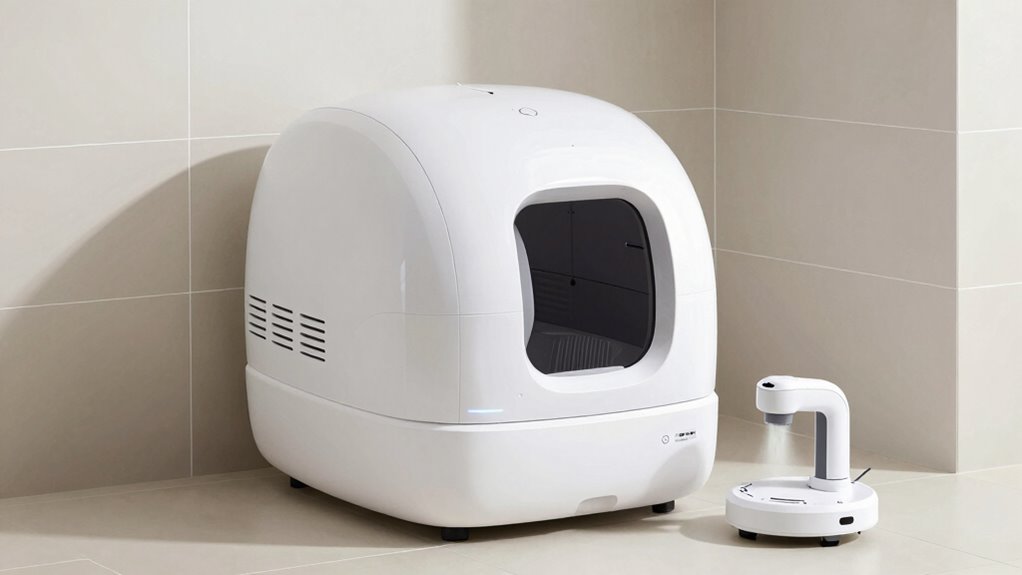

Automatic litter boxes are designed to keep your space odor-free and safe for your cat. They use sensors like infrared and weight detection to guarantee safe operation, and many feature odor control systems such as carbon filters, ventilation, and sealed compartments. While self-cleaning mechanisms work well to reduce mess, regular maintenance is essential for effectiveness and reliability. To discover how these features truly perform and guarantee safety, explore more details below.

Get health and wellness essentials delivered free with Prime
- Fast, free delivery on millions of items
- Prime Video, Amazon Music and more included
- Member-only deals all year
Key Takeaways
- Automated litter boxes use odor control features like carbon filters, ventilation, and odor-absorbing litters to minimize smells effectively.
- Safety sensors such as infrared motion detectors and weight sensors prevent accidents and ensure reliable operation.
- Regular cleaning, sensor maintenance, and proper placement are essential for optimal odor control and device longevity.
- Effectiveness varies by model; some units may not fully remove waste, requiring user monitoring and proper setup.
- Proper pet training and placement in quiet, accessible areas enhance safety, acceptance, and consistent use of the device.
automatic litter box with odor control
As an affiliate, we earn on qualifying purchases.
As an affiliate, we earn on qualifying purchases.
What Is an Automatic Litter Box and Why Are They Popular?
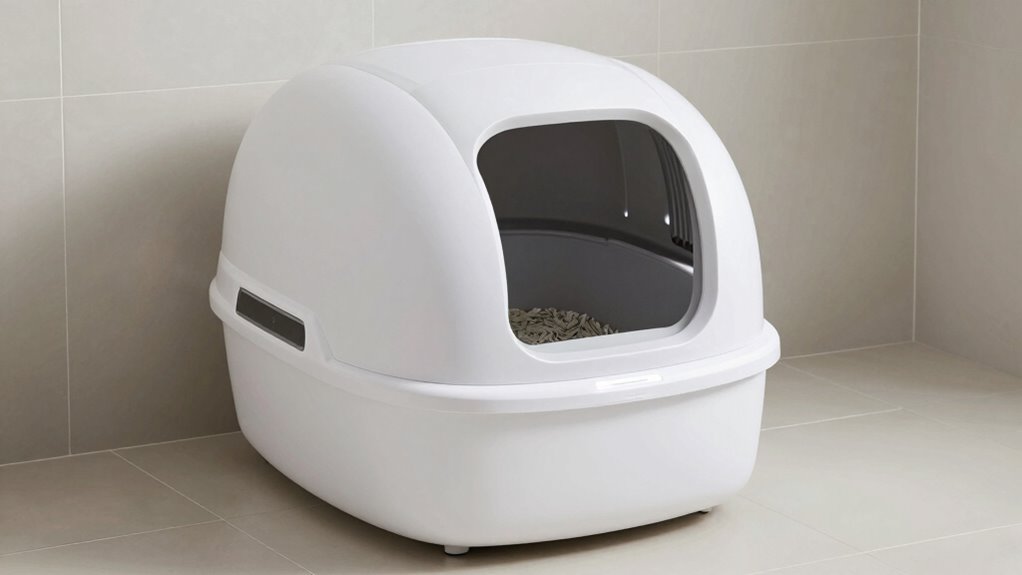
Automatic litter boxes are devices designed to clean your cat’s litter without manual effort, making pet care more convenient. Their popularity stems from how they simplify maintaining a clean environment for your cat. Proper litter box placement is essential; placing the box in a quiet, accessible spot encourages your cat to use it consistently. These boxes often include features that assist with pet training, helping your cat develop good habits by making the litter box more appealing. Automated cleaning reduces odor and mess, which is a big plus for busy pet owners. Plus, many models have sensors that detect when your cat enters or leaves, ensuring the box is cleaned at just the right time. Understanding litter box maintenance can further improve your pet’s comfort and hygiene. Overall, automatic litter boxes offer a practical solution for keeping your cat happy and your home cleaner.
self-cleaning cat litter box safety sensors
As an affiliate, we earn on qualifying purchases.
As an affiliate, we earn on qualifying purchases.
How Do Automatic Litter Boxes Control Odor?
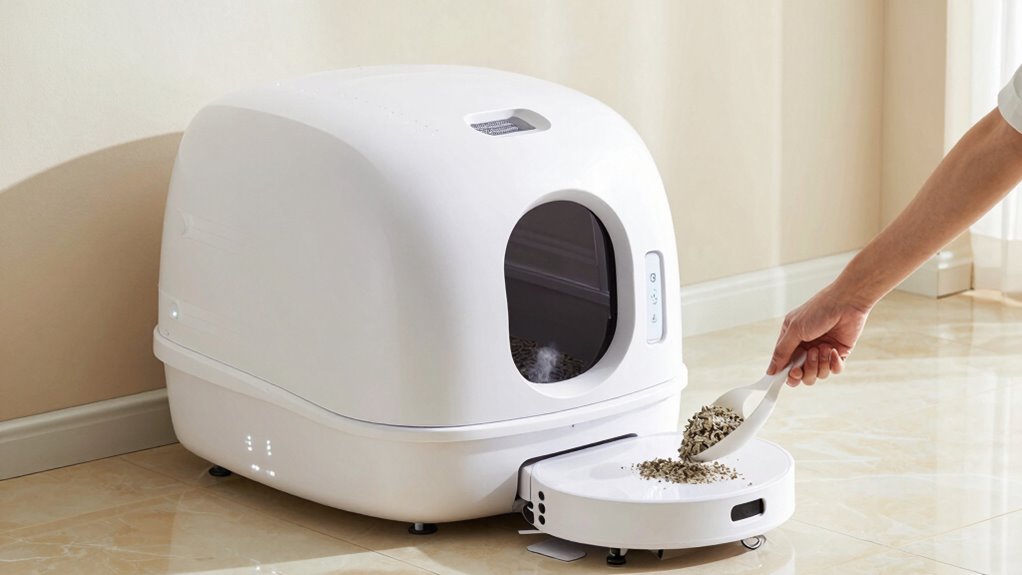
Many automatic litter boxes are equipped with features specifically designed to control and minimize odors. They use a combination of scent masking and ventilation systems to keep your home smelling fresh. Scent masking involves releasing pleasant fragrances to cover up odors, making the litter box less noticeable. Ventilation systems actively draw out odors and circulate fresh air, preventing smells from lingering. Some boxes also incorporate carbon filters that absorb odor particles. These features work together to create a more pleasant environment for both you and your pet. Here’s how they help: 1. Scent masking releases fragrances to hide odors. 2. Ventilation systems remove airborne smells. 3. Carbon filters trap odor particles. 4. Regular cleaning enhances odor control effectiveness. Additionally, air filtration systems can improve overall odor management in the space by continuously cleaning the surrounding air.
automatic cat litter box with carbon filter
As an affiliate, we earn on qualifying purchases.
As an affiliate, we earn on qualifying purchases.
What Safety Sensors Do Automatic Litter Boxes Use?
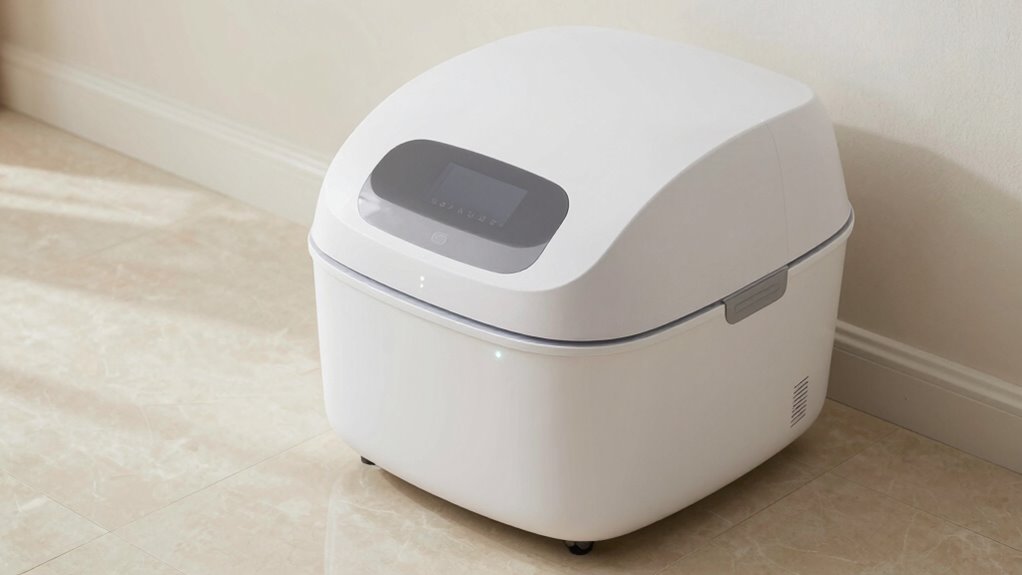
Automatic litter boxes use safety sensors like infrared motion detectors to recognize your cat’s presence and prevent accidents. Weight sensing technology helps guarantee the box only triggers when your cat is inside and not during accidental bumps. Safety shut-off features activate if any issues arise, giving you peace of mind while your cat enjoys a clean, safe space. Additionally, sensor technology advancements ensure more reliable and responsive operation for your pet’s safety. Modern sensor calibration techniques further improve the accuracy and dependability of these safety features. Incorporating real-time monitoring systems can also enhance overall safety by providing instant alerts if irregularities are detected, leveraging essential airless paint spraying tips to understand how precise calibration impacts performance and safety.
Infrared Motion Detection
Infrared motion detection is a common safety feature in modern litter boxes, helping to guarantee the device operates only when your cat is present. This sensor detects movement, ensuring the litter box activates safely and prevents accidental operation when your pet isn’t around. Proper litter box placement is vital for effective detection and pet hydration, as it minimizes false triggers caused by nearby objects or shadows. When installing, consider these key points:
- Position the litter box in a quiet, accessible area.
- Ensure the sensor has a clear line of sight to your cat’s movements.
- Avoid placing it near high-traffic or noisy zones.
- Regularly clean the sensor to maintain accurate detection.
- Understanding digital concepts involved can help optimize sensor performance and safety. For example, being aware of sensor calibration techniques can improve detection accuracy and reduce false triggers. Additionally, understanding how signal processing works can assist in fine-tuning the sensor’s response for more reliable operation. A solid grasp of electronic components can also aid in troubleshooting hardware issues that may affect sensor reliability. Moreover, staying informed about technological advancements can further enhance the effectiveness of safety sensors in modern litter boxes.
This setup helps keep your cat safe and comfortable while maintaining ideal odor control.
Weight Sensing Technology
Weight sensing technology is a reliable safety feature in modern litter boxes that detects your cat’s presence through its weight. This technology uses precise sensors to measure changes in weight, ensuring accurate detection of your cat entering or exiting the box. Sensor accuracy is essential; high-quality weight sensing technology minimizes false triggers caused by other objects or vibrations. When your cat steps in, the sensors recognize the weight and activate the cleaning cycle only when appropriate. This prevents accidental scooping or operation when the box is empty or when a different animal is nearby. Overall, weight sensing technology offers a dependable way to monitor your cat’s activity, enhancing safety and ensuring the litter box responds accurately to your pet’s movements. Additionally, the integration of safety sensors can further improve the overall reliability by providing multiple layers of detection. Incorporating advanced detection mechanisms can enhance the system’s ability to distinguish between your cat and other objects, reducing false activations even further. Incorporating redundant safety features helps ensure the system remains reliable under various conditions, which aligns with the importance of financial literacy in making informed decisions about pet care investments. Incorporating comprehensive safety protocols can also help mitigate potential malfunctions and protect both pets and owners.
Safety Shut-Off Features
To guarantee your cat’s safety, these litter boxes incorporate various safety sensors that monitor the environment and the device’s operation. When sensor activation detects an issue, the system triggers an emergency shutdown to prevent accidents. Common safety features include:
- Weight sensors that stop the cycle if your cat is still inside.
- Motion sensors that detect movement and pause operation accordingly.
- Proximity sensors that sense when a cat approaches, preventing sudden activation.
- Light or sound sensors that identify unusual environmental changes, activating safety shut-off if needed.
- Many models also include emotional well-being considerations, ensuring that safety features do not cause distress to your pet during operation. Additionally, sensor calibration is crucial for maintaining accurate detection and preventing false shutdowns. Regular maintenance and testing of these sensors help ensure their proper functioning over time. Incorporating advanced sensor technology can also improve responsiveness and reduce false alarms, making the safety features more reliable and user-friendly.
These safety shut-off features ensure the device responds immediately to potential hazards, protecting your cat from injury and giving you peace of mind during use.
odor reducing automatic litter box
As an affiliate, we earn on qualifying purchases.
As an affiliate, we earn on qualifying purchases.
Are Self-Cleaning Mechanisms Effective at Keeping Things Clean?
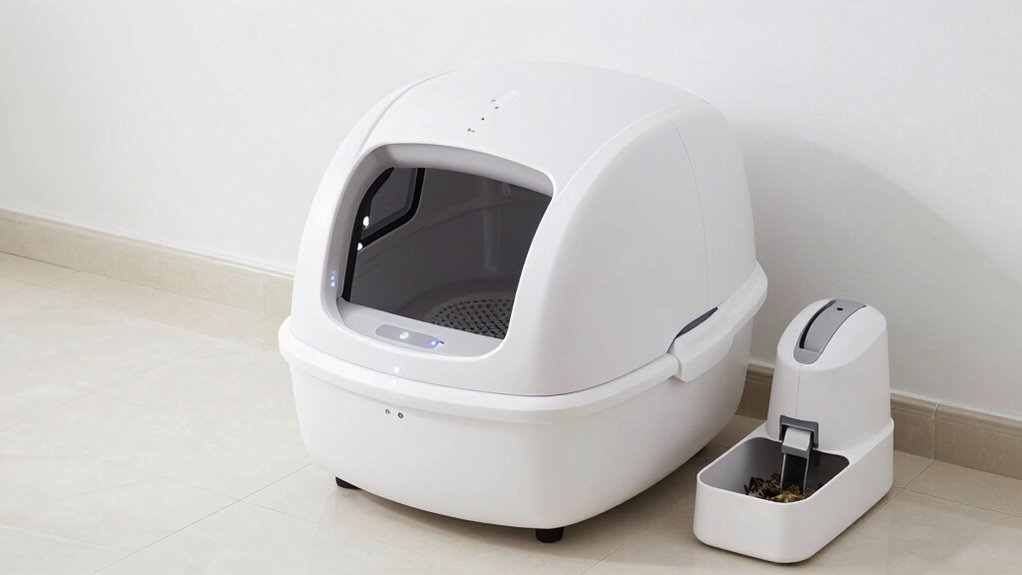
Self-cleaning litter boxes are designed to keep your cat’s space tidy without constant effort on your part, but their effectiveness varies. Their self cleaning efficacy depends on the model and how well it handles waste removal. Some units efficiently sift and separate waste, reducing mess and keeping the box cleaner longer. Additionally, not all systems are perfect—sometimes, residual waste remains, or clumps aren’t fully removed. When it comes to odor containment, many models include sealed compartments and carbon filters to minimize smells. Proper placement and regular monitoring are essential for optimal odor control, and understanding the importance of proper setup can greatly enhance performance. Proper maintenance also depends on understanding how automatic cleaning mechanisms work and their limitations. Additionally, considering best anime movies can be a fun way to relax after cleaning. While these systems can considerably reduce daily upkeep, no automatic cleaner completely replaces routine maintenance, so understanding their limitations helps you set realistic expectations about keeping things truly clean.
How Do You Maintain Your Automatic Litter Box to Prevent Odors?
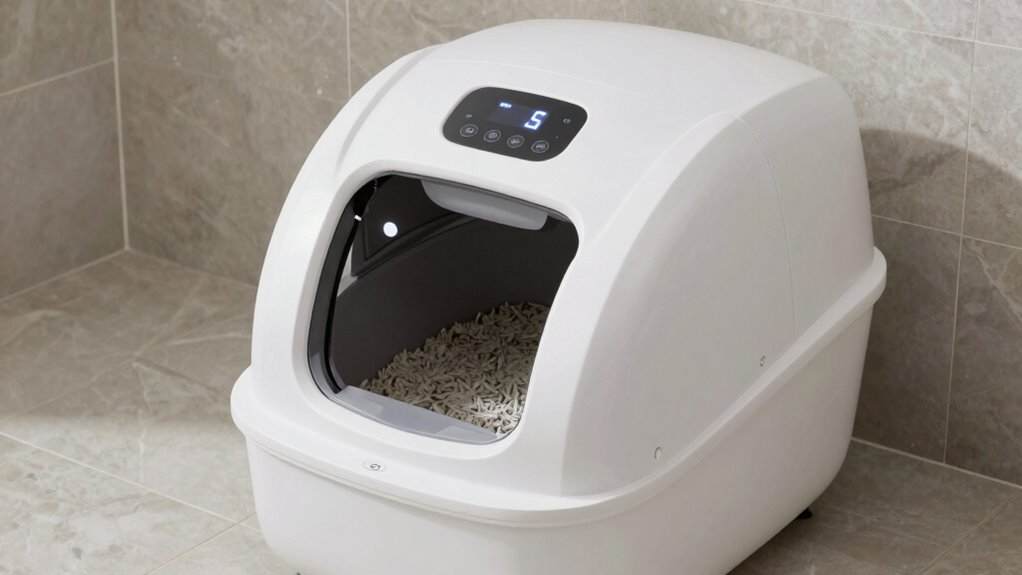
Regularly checking and cleaning your automatic litter box is key to preventing odors from building up. Proper litter box placement helps minimize smell spread, ideally in a well-ventilated area away from food and high-traffic zones. To enhance odor absorption techniques, consider using odor-absorbing litters or adding activated charcoal filters. Maintain your box by scooping waste daily and replacing the litter as needed, which reduces odor buildup. Here are some tips:
- Place the litter box in a ventilated, discreet location
- Use odor-absorbing materials or filters
- Clean the box thoroughly weekly, including sensors and parts
- Regularly replace the litter for ideal odor control
Consistent maintenance keeps your automatic litter box fresh and odor-free.
Are Automatic Litter Boxes Reliable and Safe for Pets?
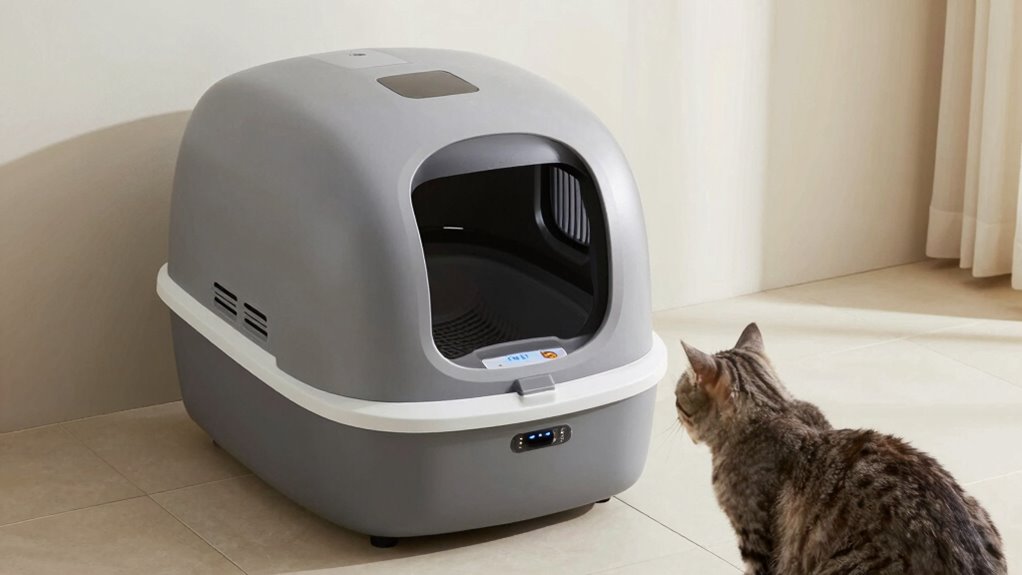
Automatic litter boxes are generally reliable and safe for pets when used correctly, but it’s important to choose models designed with pet safety features and to monitor their operation regularly. Proper pet training helps your furry friend accept the automatic box without hesitation. Also, pay attention to litter box placement; place it in a quiet, accessible spot away from high-traffic areas to reduce stress and accidents. Many models include safety sensors that prevent accidental activation or injury, but no device is completely foolproof. Regularly checking the system guarantees it functions properly and keeps your pet safe. With careful selection, proper placement, and ongoing supervision, automatic litter boxes can be a reliable and safe solution for your pet’s needs.
What Are the Main Limitations of Automatic Litter Boxes?
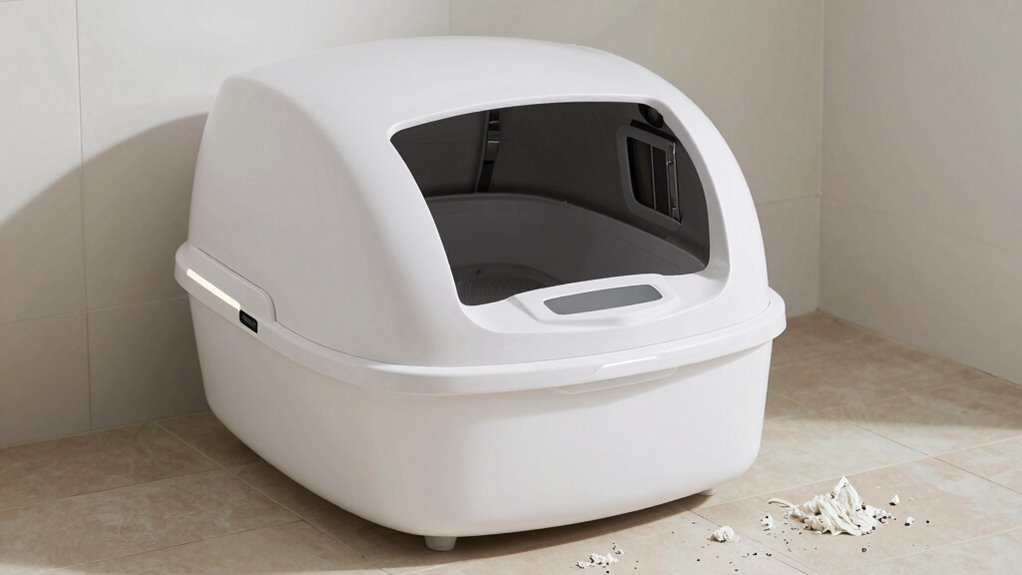
Have you considered the main limitations of automatic litter boxes before deciding if they’re right for your pet? First, user errors can cause malfunctions, like improper cleaning cycles or false triggers. Second, product durability varies; some units may break down quickly, leading to costly repairs or replacements. Third, these boxes often require frequent maintenance, such as cleaning sensors or replacing parts, which can be inconvenient. Fourth, they might not suit all cats, especially those hesitant to use unfamiliar devices or sensitive to noise. While automatic litter boxes offer convenience, understanding these limitations helps you decide if they fit your lifestyle and your pet’s needs. Being aware of potential issues guarantees you make an informed choice about investing in this technology.
Frequently Asked Questions
How Long Do Automatic Litter Boxes Typically Last Before Repair or Replacement?
You can expect your automatic litter box to last about 3 to 5 years before needing repair or replacement. Regular maintenance frequency helps prolong its lifespan, but eventually, parts may wear out or malfunction, increasing replacement costs. Keep an eye on performance and address minor issues early. Proper upkeep can delay costly repairs and ensure your cat stays comfortable with a reliable, odor-controlling litter box.
Are There Specific Litter Types Compatible With Automatic Litter Boxes?
You probably think any litter will work, but the truth is, only specific litter material guarantees top clumping efficiency with automatic litter boxes. Clumping cat litter, especially brands designed for automatic boxes, ensures smooth operation and prevents jams. Using incompatible litter types can cause malfunctions, odors, or messes, so stick to the recommended litter material for maximum performance. Your cat will thank you for a cleaner, odor-free experience!
Can Automatic Litter Boxes Be Used for Multiple Cats Simultaneously?
Yes, automatic litter boxes can be used for multiple cats, especially in multi-cat households. However, you should choose models with larger capacity and separate compartments or zones to prevent territorial disputes. Regular cleaning and maintenance are essential. Shared litter boxes work well, but monitor for any signs of stress or cleanliness issues. Ensuring each cat feels comfortable and safe helps prevent accidents and maintains harmony in your multi-cat household.
What Are the Energy Consumption Differences Among Various Models?
You’ll find that different automatic litter box models vary in power consumption, affecting your energy costs. Some models prioritize energy efficiency with low power modes, while others use more power for advanced features. To save on electricity, choose a model with good power management. Regularly turning off or unplugging the unit when not in use can also help reduce overall energy consumption, making your choice more eco-friendly and cost-effective.
How Effective Are Automatic Litter Boxes at Preventing Pet Injuries?
Automatic litter boxes are quite effective at preventing pet injuries thanks to their safety features. You’ll find sensors that detect your pet’s presence, preventing the unit from moving or operating while your pet is nearby. This reduces the risk of injury. Regularly check these safety features to guarantee they’re working properly, and always follow the manufacturer’s instructions to keep your pet safe during use.
Conclusion
Think of an automatic litter box like a trusted robot assistant—it’s there to make your life easier. While they do a good job controlling odors and keeping things tidy, occasional maintenance is key. When I first tried one, I was amazed how it transformed my daily routine, like having a personal cleaner. With proper care, these systems can reliably serve your pet’s needs without turning your home into a litter box disaster.
Columbus Day / Indigenous Peoples' Day Picks
long weekend sales
As an affiliate, we earn on qualifying purchases.