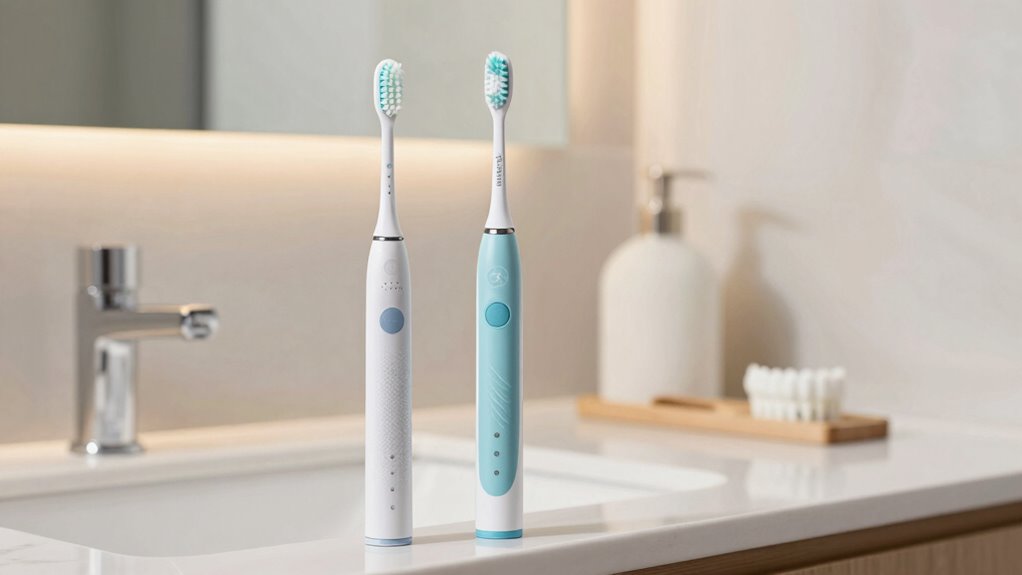

Choosing between oscillating and sonic electric toothbrushes depends on your brushing habits and goals. Oscillating models spin in small circles, ideal for targeted plaque removal, while sonic brushes vibrate rapidly for a deep clean and reach tight spaces with fluid dynamics. Consider your comfort, dental needs, and preferences. If you want details on features, effectiveness, and tips for switching, exploring further will help you pick the best option for you.
Key Takeaways
- Match your brushing style: gentle or vigorous, to choose between sonic (gentle, fluid dynamics) and oscillating (targeted plaque removal).
- Consider your dental goals: deep cleaning, sensitivity management, or whitening, to select the most effective technology.
- Evaluate comfort and noise preferences; sonic brushes tend to be quieter, while oscillating models may be more robust.
- Check compatibility: replaceable brush heads, modes, and features that align with your oral health needs.
- Assess battery life, ease of use, and maintenance to ensure the toothbrush fits your daily routine and habits.
How Do Oscillating and Sonic Electric Toothbrushes Work?
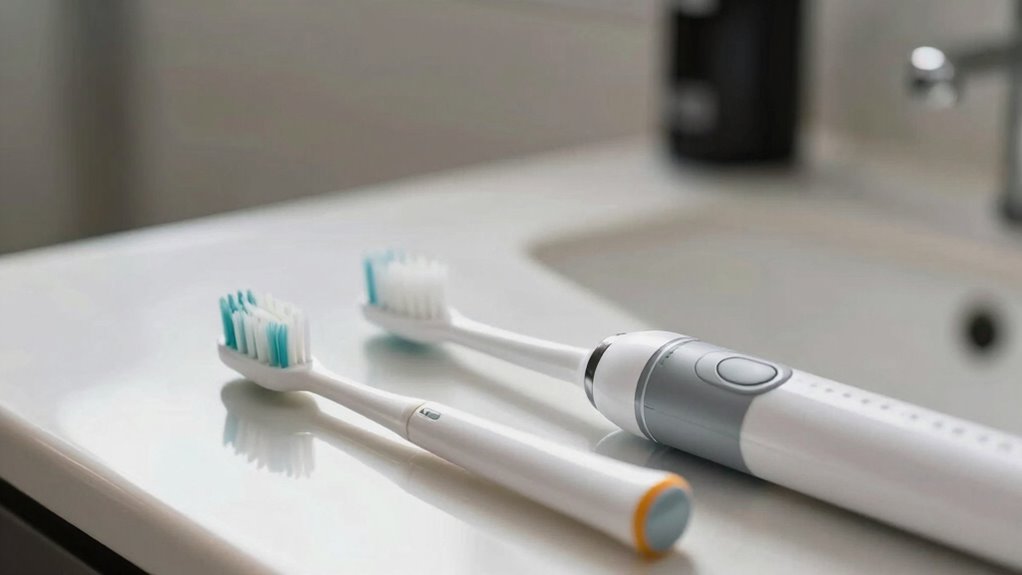
Oscillating and sonic electric toothbrushes work differently to clean your teeth effectively. The key lies in their bristle mechanics and motor technology. Oscillating brushes use a small, rotating head that spins back and forth rapidly, creating a scrubbing action. This motion helps remove plaque through mechanical agitation. Meanwhile, sonic brushes employ high-frequency vibrations powered by advanced motor technology, causing the bristles to move side to side at sonic speeds. These vibrations generate a turbulent flow of saliva and water between your teeth, enhancing cleaning beyond the bristle contact. Both types rely on precise motor design to deliver consistent motion, but their mechanics differ considerably. Understanding these differences helps you choose a toothbrush that matches your cleaning preferences and oral health needs. Free Floating technology can also influence the effectiveness of these brushes by allowing more flexible bristle movement and reducing wear over time. Additionally, motor precision plays a crucial role in ensuring consistent performance and durability of the brushes, which can be impacted by factors like technology advancements. A deeper understanding of bristle mechanics can help users select the most suitable toothbrush for their unique needs. Furthermore, water flow generated by sonic brushes can be more effective in reaching difficult spots, especially in tight spaces between teeth.
What Features Matter Most When Choosing an Electric Toothbrush?
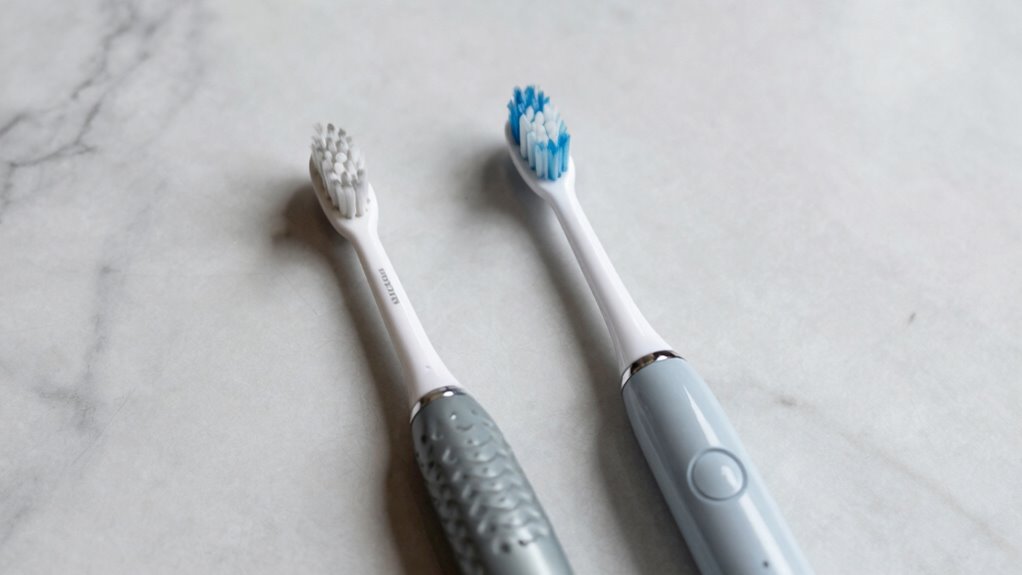
Choosing the right electric toothbrush depends on more than just its brushing mechanism. You should consider features that fit your habits and preferences. First, check the battery life—longer-lasting batteries mean fewer charges and more convenience. Second, pay attention to noise levels; quieter brushes make for more comfortable use, especially in shared spaces. Third, look for adjustable speed settings to customize your cleaning experience. Fourth, consider brush head compatibility, ensuring replacements are easy to find and affordable. These features directly impact your daily routine and overall satisfaction. Additionally, assessing scenic views and natural beauty in your chosen camping spots can enhance your outdoor experience. Maintaining a good oral hygiene routine with the right tools can significantly improve your dental health and confidence. Paying attention to cleaning and hygiene features, such as antimicrobial brush heads or easy-to-clean designs, can further improve your overall oral care. Moreover, understanding battery performance can help you choose a model that suits your travel needs, ensuring it remains reliable even during extended outings. By focusing on battery performance, noise comfort, customization options, and maintenance, you’ll select a brush that suits your lifestyle and keeps your smile healthy.
How Do These Brushes Compare in Cleaning Power and Effectiveness?
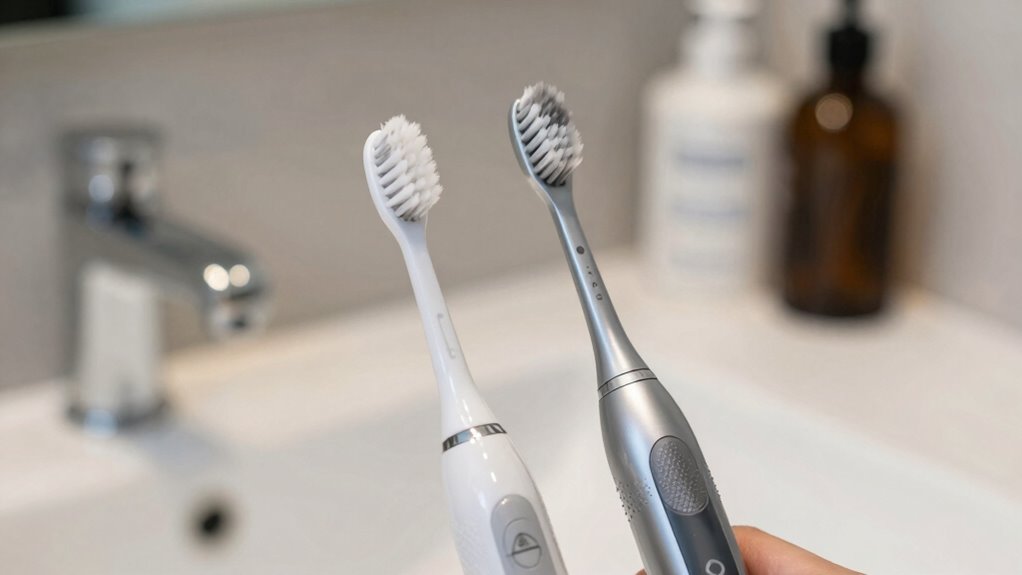
You want a toothbrush that truly cleans, so it’s important to compare their bristle movement and how effectively they remove plaque. Some models excel at deep cleaning and reaching hard-to-access areas, making a noticeable difference in your oral health. Understanding these factors helps you choose a brush that delivers the power and results you need.
Bristle Movement Effectiveness
Bristle movement is a key factor in determining how well an electric toothbrush cleans your teeth. Oscillating brushes use a back-and-forth motion, while sonic brushes generate rapid side-to-side vibrations. Here’s how their bristle motion impacts cleaning efficiency:
- Oscillating brushes spin in precise circles, targeting plaque with controlled, rotational power.
- Sonic brushes vibrate at high speeds, creating a sweeping motion that reaches between teeth and along the gumline.
- The rapid movement of sonic brushes produces a fluid dynamic effect, helping to dislodge debris.
- Oscillating brushes focus on concentrated plaque removal, while sonic brushes offer wider coverage.
- The bristle motion not only influences cleaning power but also impacts user comfort during brushing sessions.
- Additionally, the type of motion affects how effectively the toothbrush can adapt to different oral cavity shapes, enhancing overall cleaning performance.
Both types excel at cleaning, but the bristle motion directly influences their cleaning power and effectiveness.
Plaque Removal Efficiency
When it comes to removing plaque, both oscillating and sonic electric toothbrushes deliver impressive cleaning power, but they do so through different mechanisms that affect their overall effectiveness. Oscillating brushes use rapid back-and-forth motions to target plaque directly at the gumline, often providing a more thorough clean than manual brushing. Sonic brushes, meanwhile, vibrate at high frequencies, creating fluid dynamics that help dislodge plaque even between teeth. While these brushes enhance plaque removal, they don’t replace proper flossing techniques or the need for manual brushing, which still plays a crucial role in oral hygiene. Regular maintenance and understanding the benefits of SSD organization can also optimize the performance of your electric toothbrush, especially if you store and manage your brush heads and accessories efficiently. Additionally, choosing the right brush type can depend on your brushing habits and personal preferences. It is also worth noting that electric toothbrushes with powerful motors tend to be more effective at plaque removal, especially for users with braces or other dental appliances. Overall, both types outperform manual brushing, but your choice depends on your habits and how you incorporate these tools into your routine.
Deep Cleaning Capabilities
Both oscillating and sonic electric toothbrushes offer powerful deep cleaning capabilities, but they do so through different mechanisms that influence their overall effectiveness. Oscillating brushes rotate or pulsate to dislodge plaque, making them ideal for thorough cleaning with minimal effort. Sonic brushes use high-frequency vibrations to create fluid dynamics that reach between teeth and along the gumline. To visualize their cleaning power:
- Imagine manual brushing with shorter, less effective strokes.
- Envision flossing techniques that target tight spaces.
- Picture oscillating brushes rapidly moving to scrub surfaces.
- See sonic vibrations creating waves that clean beyond the brush’s reach.
- Understanding the importance of personal dental habits can help determine which brush type is best suited for your needs. Additionally, the type of plaque you encounter regularly can influence which technology provides better results for your specific oral health situation. Incorporating knowledge of advanced brushing technologies can further optimize your oral hygiene routine. Recognizing the brushing technique you prefer can also impact the effectiveness of either device, ensuring you get the most out of your investment.
Both types enhance your manual brushing and flossing efforts, but their effectiveness depends on your habits and the areas you want to target.
Which Electric Toothbrush Is Best for Your Brushing Habits and Dental Goals?
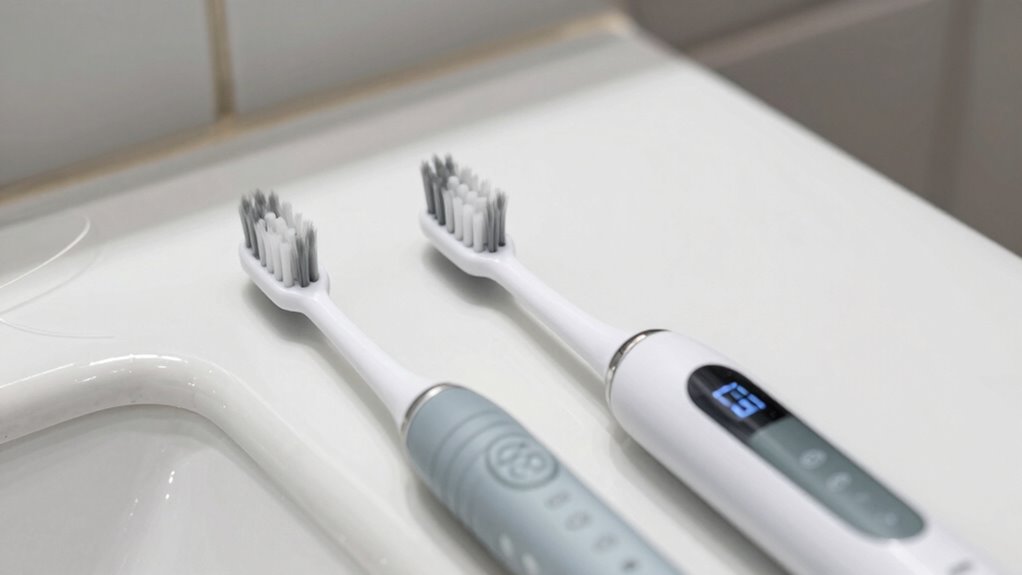
Choosing the right electric toothbrush depends on your brushing style and dental goals. You need a device that matches how you brush and helps you target specific concerns like sensitivity or plaque removal. Considering these factors guarantees you get the most effective and comfortable clean. Additionally, understanding the benefits of different brushing technologies can help you make an informed choice that supports your overall oral health.
Brushing Style Compatibility
Your brushing style plays a crucial role in selecting the right electric toothbrush, as different models cater to specific habits and dental goals. If your brushing technique is gentle, a sonic toothbrush can provide thorough cleaning without pressure. For those who prefer targeted cleaning, oscillating models excel at plaque removal. Consider your oral health habits: do you tend to brush quickly or focus on detailed areas? Here are some options to match your style:
- Light, sweeping motions suit sonic brushes for consistent, gentle cleaning.
- Short, circular movements work well with oscillating brushes for plaque removal.
- Heavy-handed brushing benefits from pressure sensors to prevent damage.
- If you’re meticulous, choose a model with multiple modes for customizable care.
Matching your brushing technique and habits guarantees essential oral health.
Dental Health Goals
Understanding your dental health goals helps narrow down the best electric toothbrush for your needs. If you’re focused on improving your brushing techniques or establishing a consistent oral health routine, consider devices that promote thorough cleaning or feature timers to ensure proper coverage. For instance, if you want to reduce plaque or prevent cavities, choose a toothbrush with multiple modes or specific brushing settings. Your goals might also include whitening or gum care, which can influence whether you opt for oscillating or sonic technology. Aligning your goals with your brushing habits ensures you select a toothbrush that supports your overall dental health. Being aware of dental health goals can help you make a more informed choice. By clearly defining what you want to achieve, you’ll find an electric toothbrush that fits seamlessly into your routine and helps you reach your dental goals effectively.
Sensitivity Considerations
If you have sensitive teeth or gums, selecting an electric toothbrush that minimizes discomfort is essential for maintaining your oral health routine. Look for features that support gingivitis prevention and enamel preservation while reducing irritation. Consider these options:
- Soft-bristled heads that gently clean without abrasion.
- Pressure sensors to prevent over-brushing and gum damage.
- Gentle brushing modes designed specifically for sensitive areas.
- Lower-frequency oscillations or sonic vibrations that reduce shock to your teeth and gums.
Choosing a toothbrush with these features helps you avoid discomfort while effectively fighting gingivitis and protecting your enamel. Sensitivity-friendly options allow you to brush thoroughly without sacrificing comfort or your long-term dental goals.
What Are the Pros and Cons of Oscillating vs Sonic Toothbrushes?
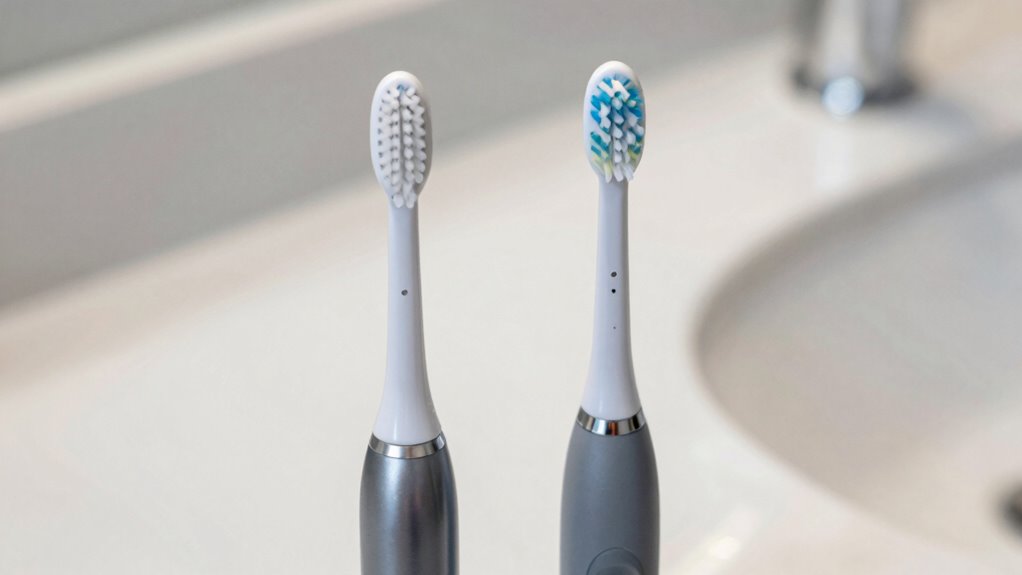
Choosing between oscillating and sonic toothbrushes depends on your specific oral care needs, as each type offers distinct advantages and drawbacks. Oscillating brushes typically feature a circular bristle design that provides targeted cleaning, making them effective at removing plaque. Their battery life tends to be longer, so you can enjoy extended use between charges. Sonic toothbrushes, on the other hand, use high-frequency vibrations and have a linear bristle arrangement, which can reach more areas through sonic streaming. They often produce more noise but deliver a thorough clean with gentle, rapid movements. Consider your preference for bristle design, noise levels, and how long the brush retains power. Additionally, suitable for various dental conditions, both types can improve your oral health, but your daily habits will help determine which is better suited for you. For example, some users find that bristle design impacts their comfort and effectiveness during brushing. Moreover, understanding testing accuracy of different models can help you select a more reliable and efficient toothbrush. It’s also helpful to review battery longevity to ensure your toothbrush maintains performance over time.
Tips for Transitioning to Your New Electric Toothbrush and Getting Great Results
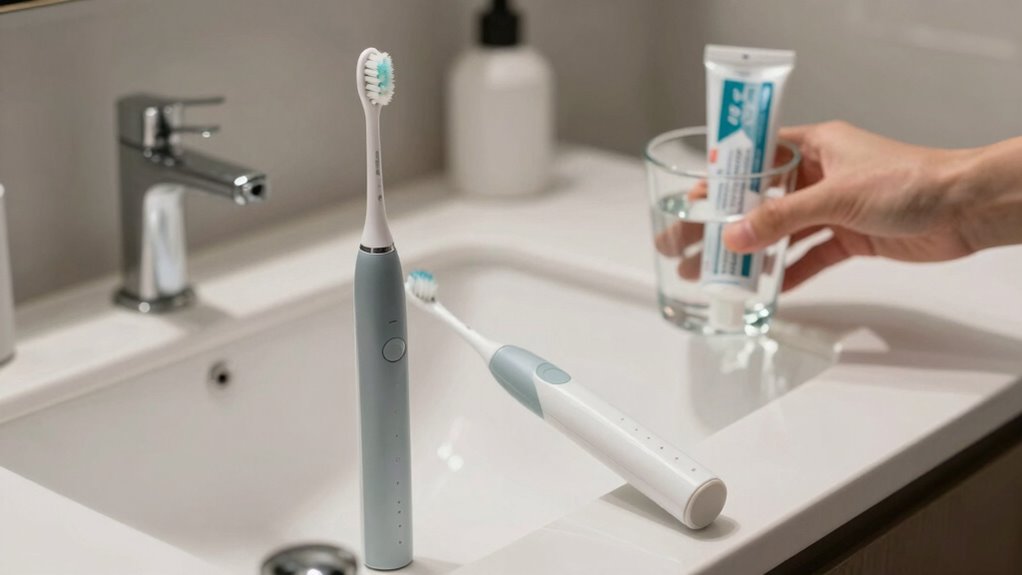
Switching to a new electric toothbrush can feel different at first, but with a few simple tips, you’ll quickly see great results. First, get familiar with your brush’s features, like how to do a proper brush head replacement to maintain effectiveness. Second, start with short, gentle strokes to avoid gum irritation, gradually increasing your brushing time. Third, pay attention to your toothbrush’s battery life; verify it’s fully charged before each use to prevent interruptions. Fourth, rotate your brush heads regularly—about every three months—to keep cleaning ideal. Consistent use combined with proper maintenance helps you achieve the best results. Remember, the key is adapting gradually and staying consistent to enjoy cleaner, healthier teeth.
Which Electric Toothbrush Should You Pick? A Quick Guide to Making the Right Choice
Selecting the right electric toothbrush depends on your specific needs and preferences. If you travel often, look for models with long battery life to avoid frequent charging. A toothbrush with a robust battery ensures you can maintain your routine without interruptions. Consider whether you prefer oscillating or sonic technology based on your brushing habits. Some models come with compact travel cases, making it easier to pack and protect your toothbrush on the go. If you want convenience, opt for a device with a quick charge feature. Think about your budget, too—more advanced brushes often offer additional features but at a higher price. Ultimately, choose a toothbrush that fits your lifestyle, delivers reliable performance, and comes with accessories like travel cases to keep your device safe while traveling.
Frequently Asked Questions
How Often Should I Replace the Brush Head on My Electric Toothbrush?
You should replace your brush head every three months to maintain effective cleaning and good oral health. The brush head lifespan varies, but a regular replacement schedule helps prevent bacteria buildup and guarantees your brush works efficiently. If your brush head shows signs of wear, fraying, or loss of bristles before three months, replace it sooner. Staying on top of this schedule keeps your brushing habits effective and your smile healthy.
Are There Specific Electric Toothbrushes Recommended for Sensitive Gums?
Sensitive gum care requires choosing a gentle, soothing electric toothbrush designed specifically for sensitive gums. Look for models labeled for sensitive teeth, featuring soft bristle heads and gentle brushing techniques. Brands like Philips Sonicare and Oral-B offer options with sensitive modes that help prevent irritation while effectively cleaning. By selecting a toothbrush focused on gentle brushing, you safeguard your gums, promote healthy habits, and guarantee a comfortable, consistent clean.
Can Electric Toothbrushes Help With Orthodontic Appliances Like Braces?
Electric toothbrushes can definitely help with orthodontic appliances like braces. They make orthodontic cleaning easier by reaching around brackets and wires more effectively than manual brushing. Using an electric toothbrush for braces maintenance helps remove plaque and food debris, reducing the risk of decay and gum issues. Look for models with oscillating or sonic technology, as they provide thorough cleaning, making your orthodontic care simpler and more efficient.
Do Electric Toothbrushes Require Special Toothpaste?
Absolutely, electric toothbrushes don’t need special toothpaste, but choosing the right toothpaste boosts brushing benefits. Look for toothpaste compatible with your dental needs, like fluoride for cavity protection or gentle formulas for sensitive teeth. Using your electric toothbrush regularly and thoroughly, you enhance cleaning frequency and effectiveness. So, stick with your favorite toothpaste, focus on consistent, careful cleaning, and enjoy healthier, happier teeth with your electric toothbrush!
How Long Does a Typical Electric Toothbrush Battery Last Before Needing Replacement?
Your electric toothbrush battery typically lasts about 2 to 3 years before needing replacement, depending on your battery longevity and charging habits. To maximize it, avoid overcharging and let the battery drain occasionally. Properly caring for your toothbrush’s battery ensures it stays reliable longer. Remember, consistent charging habits and following the manufacturer’s guidelines can substantially extend the lifespan of your electric toothbrush.
Conclusion
Choosing between oscillating and sonic toothbrushes is like picking the perfect dance partner—you want one that moves with your rhythm. Consider your habits, goals, and the features that matter most. Whichever you pick, your smile will thank you for making the switch. So, step into the world of electric brushes with confidence and let your new toothbrush lead the way to healthier, brighter teeth—your smile’s best dance move yet!