

Establishing predictable routines like consistent bedtimes, meal times, and family check-ins helps reduce household conflicts by creating structure and clear expectations. Involve everyone in setting routines, use visual charts, and reinforce positive behaviors with rewards. Calm-down techniques and device-free zones also prevent arguments and promote emotional openness. When routines are flexible and regularly reviewed, your family is more likely to stay connected and harmonious. Keep exploring to discover more strategies that foster peace at home.
Key Takeaways
- Establish predictable routines for bedtime, meals, and chores to create stability and reduce conflicts.
- Set clear expectations and boundaries to prevent misunderstandings and power struggles.
- Maintain open communication through regular family check-ins and active listening to foster trust.
- Create calming bedtime routines and sleep environments to ease nighttime tensions.
- Involve family members in routine planning and stay flexible to adapt to changing needs, promoting cooperation.
Why Routines Are Key to a Peaceful Home

Routines are essential because they create predictability and structure in your home, which helps reduce conflicts. When your kids know what to expect, bedtime calming becomes smoother, making it easier for everyone to wind down peacefully. Consistent routines also boost chore motivation, as children understand their responsibilities and feel a sense of accomplishment. By establishing a set schedule, you minimize power struggles and last-minute disagreements. Routines provide a sense of security, so children feel less anxious and more cooperative. When everyone follows a familiar pattern, chores become less of a battle, and bedtime progressions are calmer. Establishing routine consistency can further strengthen these benefits by reinforcing positive habits over time. Additionally, predictable schedules help children develop self-discipline and emotional regulation, which further diminishes household tensions. Creating daily patterns that are easy to follow can also help children feel more in control and less overwhelmed by unexpected changes.
Set Clear Expectations for Kids and Chores

Setting clear expectations for kids and chores is essential because it helps them understand what’s required of them and reduces confusion. By setting boundaries and establishing limits, you create a structured environment where kids know their responsibilities and the consequences of their actions. Clearly communicate what chores need to be done, when they should be completed, and what the standards are. This prevents misunderstandings and arguments over chores or behavior. Consistency is key; enforce the boundaries consistently so kids learn what’s expected. When everyone knows the rules and their roles, household routines run smoother, and tensions decrease. Establishing these routines early also supports the development of positive habits, making daily life more peaceful for everyone involved. Additionally, incorporating routine reinforcement helps solidify expectations and minimizes household conflicts. Setting these expectations early helps foster accountability and independence, making daily life more peaceful for everyone involved. Using effective communication strategies can further improve understanding and cooperation among family members. Furthermore, understanding how to manage indoor air quality can create a healthier environment that reduces irritability and stress within the household.
Hold Regular Family Check-Ins for Better Communication

Holding regular family check-ins helps everyone stay connected and understand each other’s feelings. You can set consistent meeting times, creating a safe space for honest sharing. Practice active listening during these talks to foster trust and reduce misunderstandings.
Set Regular Meeting Times
Scheduling regular family meetings helps guarantee everyone stays connected and on the same page. By setting consistent meeting times, you establish routine consistency that makes it easier to address concerns and share updates. These sessions offer clear family meeting benefits, such as improving communication, fostering understanding, and strengthening bonds. When everyone knows when to meet, it reduces confusion and last-minute conflicts. Making meeting times regular encourages accountability and ensures that conversations happen routinely, rather than sporadically. This consistency helps create a stable environment where family members feel heard and valued. Over time, these meetings become a trusted space for problem-solving and planning, which reduces misunderstandings and household fights. Establishing a fixed schedule also helps set boundaries that promote respect and personal space within the household. Setting regular meeting times makes family communication more predictable and effective.
Encourage Honest Sharing
Regular family check-ins create a safe space where everyone feels comfortable sharing their thoughts and feelings honestly. When you encourage honest communication, family members can express concerns or joys without fear of judgment. This emotional openness helps prevent misunderstandings and builds trust. During these check-ins, listen actively and respond with empathy, showing that everyone’s voice matters. By fostering an environment of honesty, you create an atmosphere where issues are addressed early, reducing the likelihood of conflicts escalating. Consistent routines like these also reinforce that your family values transparency and support. Over time, honest sharing becomes second nature, strengthening your relationships and creating a more harmonious household. Remember, open communication is key to understanding and resolving disagreements before they grow into bigger fights. Incorporating emotional openness into your family routines encourages ongoing dialogue and helps resolve issues proactively. Additionally, understanding the power of regular routines can further reinforce positive communication habits within your household and promote family cohesion.
Practice Active Listening
Practicing active listening during family check-ins is essential for meaningful communication. When you focus on truly hearing your family members, you demonstrate emotional validation, making them feel valued and understood. Use active listening skills like maintaining eye contact, nodding, and paraphrasing what they say to confirm understanding. Avoid interrupting or formulating responses while they speak; instead, give them your full attention. This approach helps reduce misunderstandings and builds trust, encouraging everyone to share openly. Regular check-ins provide a safe space for family members to express feelings and concerns without judgment. Incorporating listening techniques such as reflective listening can further enhance understanding and connection. Understanding the evolution of arcade games can also inspire shared family interests and conversations about gaming history. Additionally, practicing patience and emotional validation during these conversations can create a more supportive environment. Being aware of cognitive biases that influence communication can help you approach discussions more objectively. Recognizing communication patterns that may hinder understanding allows families to address issues proactively. Over time, practicing active listening fosters empathy and strengthens your family bonds, ultimately decreasing household fights and creating a more harmonious home environment.
Establish Consistent Bedtime Routines to Prevent Night Fights

When children know what to expect each night, bedtime becomes calmer and less likely to lead to fights. Establishing a consistent bedtime routine creates bedtime consistency, giving your child a sense of security. Stick to the same steps each evening, such as brushing teeth, reading a story, and dimming the lights. This predictability helps reduce anxiety and resistance. Additionally, focus on creating a sleep environment that promotes relaxation—dim lighting, a comfortable temperature, and minimal noise. When your child’s sleep environment is predictable and soothing, they’re more likely to settle down peacefully. Incorporating sustainable textile care practices into your child’s bedding can also enhance comfort and promote better sleep quality. Ensuring proper indoor air quality and humidity levels can prevent discomfort that might otherwise disturb sleep. Maintaining a proper sleep environment by controlling allergens and pollutants can further support restful sleep. Creating a calming bedtime routine can also foster positive associations with sleep and reduce bedtime struggles. Proper sleep environment and routine are crucial for reducing nighttime conflicts and setting the stage for improved sleep for everyone.
Create a Family Meal Schedule for Quality Time

Establishing a consistent bedtime routine helps create a sense of stability that can extend into other parts of family life, like shared mealtimes. To foster quality time, create a family meal schedule that everyone can rely on. Start with a clear plan for meal planning, so everyone knows when to gather. Visualize this routine with:
- Sitting down together at the same time each evening for a family dinner.
- Preparing meals as a team, encouraging collaboration and conversation.
- Putting devices aside to focus solely on family connection.
- Considering seasonal variations to make mealtimes enjoyable year-round.
- Being aware of credit card insights can help families manage their budgets more effectively and avoid unnecessary financial stress during holiday seasons or special occasions.
- Incorporating home organization tips to keep the dining area tidy and welcoming for everyone.
Teach Kids Calm Down Techniques for Conflicts

Teaching kids calm-down techniques during conflicts helps them manage their emotions and respond thoughtfully. When children learn effective calm down techniques, they gain tools to regulate their feelings instead of reacting impulsively. This empowers them to handle disagreements more peacefully and reduces escalation. Incorporate simple conflict resolution strategies like deep breathing, counting to ten, or taking a break to cool off. Encourage your kids to recognize signs of frustration early and use these techniques before conflict intensifies. Reinforcing calm-down methods consistently helps children develop emotional awareness and self-control. Over time, these skills become second nature, making disputes less frequent and less intense. By teaching kids how to stay calm, you create a calmer household environment and foster healthier ways to navigate disagreements.
Use Visual Charts to Track Routines and Rewards
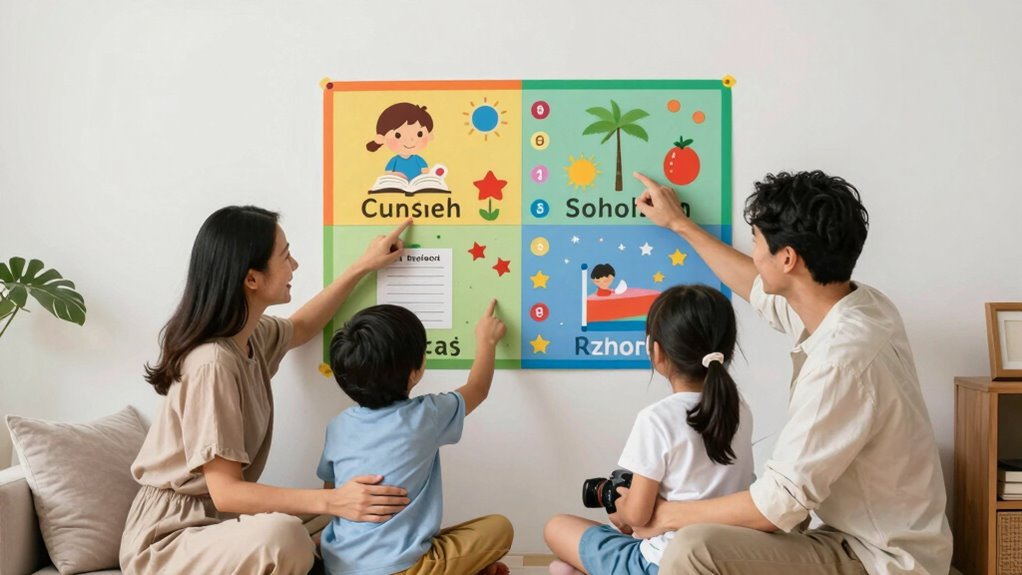
Visual charts are a powerful tool to help children understand and follow daily routines while reinforcing positive behaviors through rewards. By using visual tracking, you make routines clear and attainable. Imagine a colorful chart on the wall showing steps like brushing teeth, putting away toys, and homework time.
- You set up a chart with icons or pictures representing each task.
- Kids mark off completed routines with stickers or checkmarks, visualizing their progress.
- Reward systems are integrated, offering small incentives when routines are consistently followed.
This approach makes routines engaging and transparent, reducing conflicts. Visual charts help children take ownership of their responsibilities while encouraging positive behavior through visual tracking and rewards, creating a calmer, more organized household.
Create Tech-Free Zones and Times to Reduce Distractions

Creating designated tech-free zones and times can substantially reduce distractions and promote better family interactions. Limiting screen time helps everyone stay present and engaged, fostering meaningful conversations. Establish a device detox period during meals, family games, or bedtime, where phones and tablets are put away. This encourages eye contact and active listening, reducing the likelihood of misunderstandings or conflicts. Designate specific areas, like the dining room or living room, as tech-free zones to create a space for quality time. Consistent routines around these zones and times help family members develop healthier habits, ensuring devices don’t dominate daily life. Over time, this reduces distractions and creates a calmer environment, making it easier to connect and enjoy each other’s company without constant interruptions.
Review and Adjust Routines to Fit Your Family’s Changing Needs
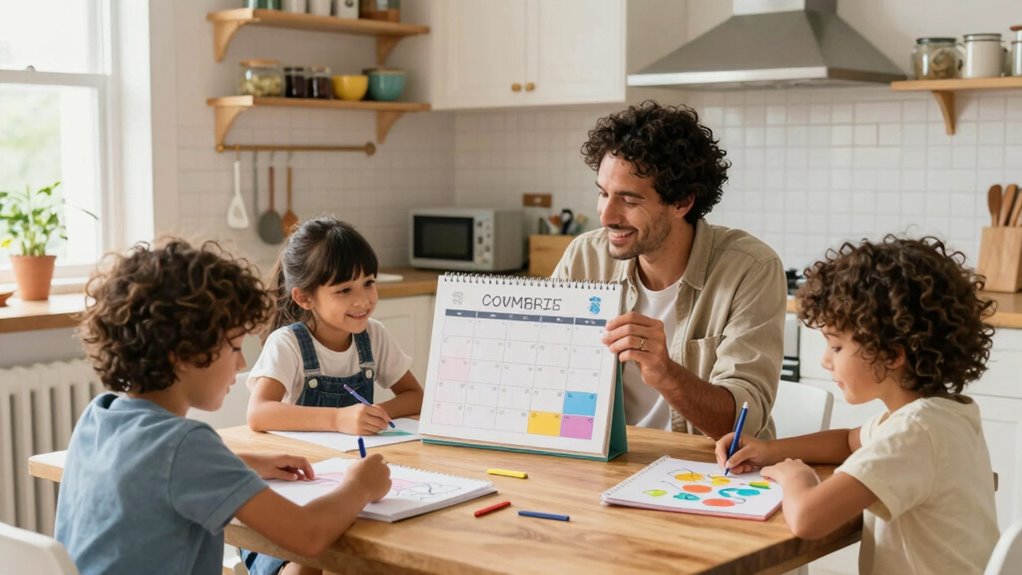
As your family grows and changes, your routines might need updates to stay effective. You should regularly review what’s working and what isn’t, making adjustments as needed. Involving everyone in these changes helps guarantee the routines fit your family’s evolving needs.
Adapting Routines Over Time
Families are constantly changing, which means routines that once worked well might no longer be effective. To keep harmony, you need to embrace routine evolution through flexible scheduling. This allows your family to adapt smoothly as needs shift. Imagine:
- Adjusting bedtimes when new school demands arise
- Reworking chore lists to fit everyone’s new commitments
- Changing meal times to accommodate sports or extracurriculars
Involving Everyone in Adjustments
To guarantee routines stay effective, it’s important to involve everyone in reviewing and adjusting them regularly. Family involvement ensures that each member’s needs and concerns are considered, fostering a sense of ownership and cooperation. When you encourage open discussions about routine flexibility, everyone feels valued and heard. This approach helps identify what’s working and what needs change as your family evolves. Regularly revisiting routines keeps them relevant, prevents resentment, and reduces conflicts. By actively involving everyone in these adjustments, you create a collaborative environment where routines support your family’s changing needs. This adaptability minimizes frustration, making daily life smoother and more harmonious for everyone.
Frequently Asked Questions
How Quickly Can Routines Start Reducing Household Conflicts?
You can start noticing a reduction in household conflicts within a few days to a week when you establish consistent routines. Keep in mind, timing expectations vary; some routines may take longer to show results. Stay flexible with your routines, adjusting as needed to fit your family’s dynamics. The key is consistency and patience. As routines become ingrained, you’ll likely see communication improve and conflicts decrease more steadily.
What if Family Members Resist Following New Routines?
When family members resist new routines, it’s like trying to steer a stubborn ship—patience and routine flexibility are key. You can gently encourage participation, listen to concerns, and adapt routines to fit everyone’s needs. Remember, consistency helps build trust. If resistance persists, break routines into smaller, manageable steps. This approach fosters cooperation, reduces tension, and gradually turns resistance into teamwork, making your household a calmer, happier place.
Are Routines Effective for Resolving Specific Types of Family Disagreements?
Yes, routines can be effective for resolving specific family disagreements. When you incorporate communication strategies and emotional regulation into routines, you create a structured way to address issues calmly and clearly. This consistency helps family members feel heard and understood, reducing misunderstandings. By sticking to these routines, you promote a respectful environment where conflicts are more likely to be resolved constructively, strengthening your family bonds over time.
How Do Routines Affect Individual Family Members’ Mental Health?
Routines positively impact your family members’ mental health by fostering emotional regulation and stress reduction. When you establish consistent daily habits, your loved ones feel more secure and in control, helping them manage emotions better. This stability reduces anxiety and promotes a balanced mental state. By sticking to routines, you create a supportive environment where everyone can handle stress more effectively and build resilience against everyday challenges.
Can Routines Help in Managing Unexpected Family Emergencies?
Yes, routines can help manage unexpected family emergencies. You can build emergency preparedness into your daily routines, making it easier to respond quickly. However, maintain routine flexibility so you can adapt when surprises occur. Practice plans regularly and involve everyone in emergency drills, which reduces panic and confusion. This approach keeps your family organized and resilient, ensuring everyone knows their roles during an unexpected situation.
Conclusion
By establishing and sticking to routines, you create a predictable environment that minimizes misunderstandings and fights. For example, imagine a family who sets a nightly bedtime routine, leading to calmer evenings and fewer arguments. When everyone knows what to expect, conflicts naturally decrease. Keep reviewing and adjusting these routines as your family grows. With consistency and patience, your home can become a more peaceful place where everyone feels secure and connected.