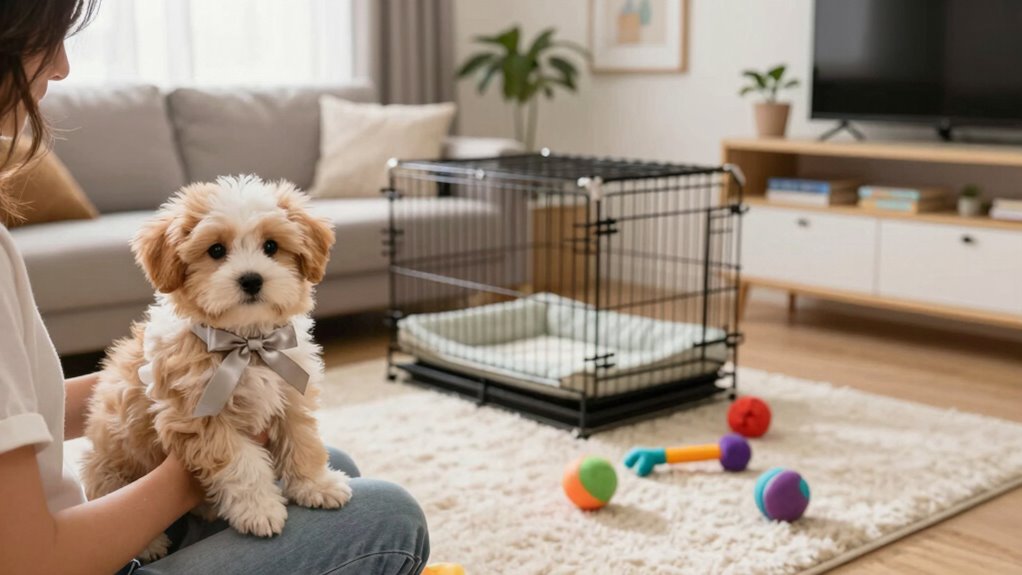

To introduce a new pet smoothly, plan ahead by preparing a safe, designated space and gathering essential supplies. Gradually socialize your pet using positive reinforcement and short, supervised meetings in neutral areas. Establish routines, set boundaries, and monitor behavior closely during the first few weeks. Avoid rushing interactions or making sudden changes that can cause stress. Staying patient and consistent helps build trust. Keep exploring these steps to ensure a peaceful, joyful start for both of you.
Key Takeaways
- Choose a neutral, quiet space for initial introductions to prevent territorial behavior.
- Use positive reinforcement and short, supervised meetings to build trust gradually.
- Pet proof the environment by securing cords, removing hazards, and setting safe zones.
- Establish consistent routines for feeding and interactions to reduce stress and confusion.
- Observe body language and responses, adjusting interactions to ensure comfort and prevent overwhelm.
Why Planning Is Key Before Bringing a Pet Home

Before bringing a pet home, careful planning is essential to guarantee a smooth transition for both you and your new companion. You need to prioritize pet nutrition to ensure your pet gets the right nutrients from the start. Consulting a veterinarian beforehand helps you understand your pet’s specific health needs and schedule necessary vaccinations. Planning also means setting up a safe environment and gathering supplies like food, bowls, and bedding. By organizing these essentials, you reduce stress and prevent emergencies. Establishing a proper environment is crucial for your pet’s comfort and safety. Ensuring cable management is well-organized around your pet’s area can prevent accidental damage or hazards. Using appropriate tracking gear can also help monitor your pet’s location and safety, especially during the initial adjustment period. Proper environmental enrichment can promote mental stimulation and reduce anxiety for your new pet. Regular veterinary care is crucial to monitor your pet’s health and catch potential issues early. Incorporating pet safety measures like secure fencing and hazard-proofing your home can further prevent accidents and ensure your pet’s well-being. Proper planning creates a solid foundation for your pet’s well-being, making the adjustment easier for everyone involved and setting you up for a happy, healthy relationship.
How to Prepare Your Space for Your New Pet
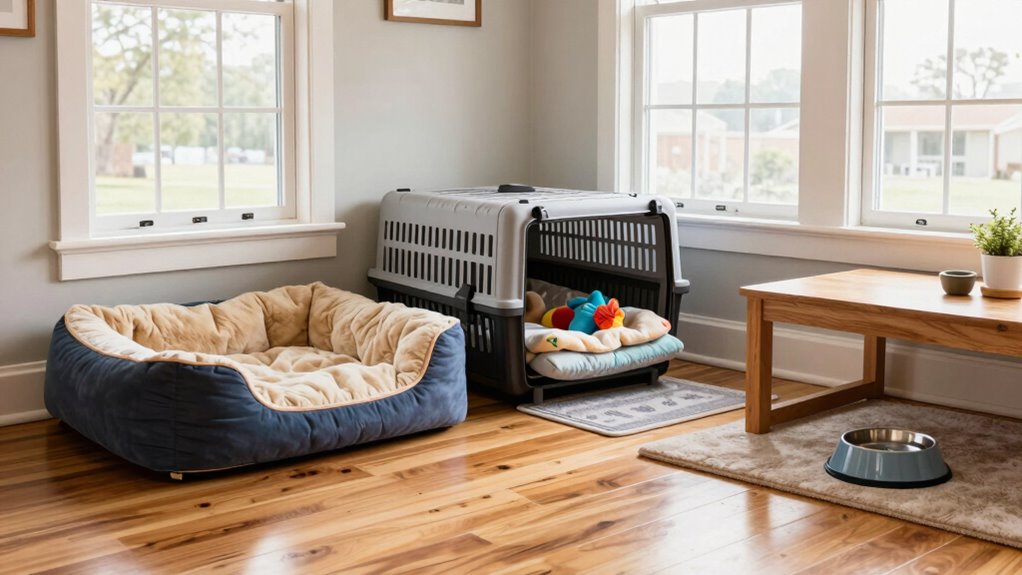
Preparing your space for your new pet involves creating a safe, comfortable environment that meets their needs from day one. Start with pet proofing tips: secure cords, remove toxic plants, and hide small objects they might swallow. Incorporate dog-proofing techniques to further ensure safety. Optimize your space by assigning specific areas for eating, sleeping, and playtime to reduce chaos. Use the table below to help you plan: Additionally, consider toxin-free materials when choosing furniture and accessories to minimize potential hazards.
When and How to Introduce Your Pet for the Best Start
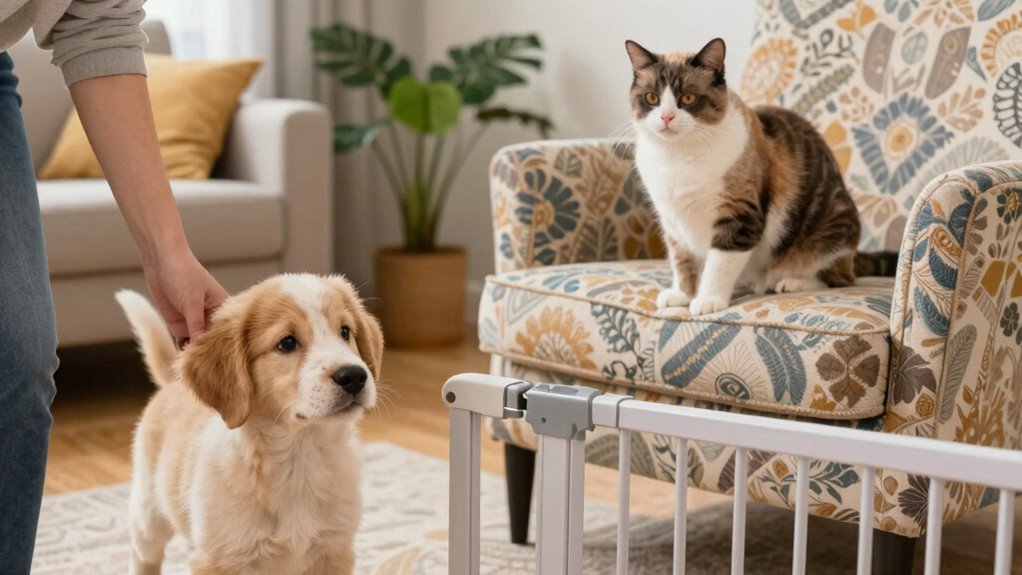
Timing is key when introducing your new pet, so plan the initial meeting carefully to set a positive tone. Choose a neutral space to prevent territorial behaviors and keep the first encounter calm. To guarantee a smooth start, consider these steps:
- Use gentle socialization techniques, gradually exposing your pets to each other’s scent before face-to-face meetings.
- Apply effective training methods, like rewarding calm behavior and avoiding punishment during interactions.
- Keep introductions short and supervised, gradually increasing duration as both pets show comfort and confidence.
- Understanding large number conversions can help you better manage and plan for the financial aspects of pet ownership. Additionally, being aware of home safety considerations can further support a secure environment for your new pet. Incorporating appropriate enrichment activities can also promote positive interactions and reduce stress during this transition.
This approach helps reduce stress and encourages positive associations. Patience and consistency are essential, and always observe body language to intervene if tension rises. A well-timed, thoughtful introduction lays a strong foundation for your pets’ relationship.
Managing First Interactions to Reduce Stress and Conflict

When your new pet first meets your existing one, keep the encounters controlled and brief to prevent overwhelming them. Set up a calm environment with minimal distractions to help everyone stay relaxed. Using appropriate pet photography gear, such as a quiet camera with a fast shutter, can also help capture their interactions without causing additional stress. Incorporating emotional regulation techniques during initial meetings can further reduce anxiety for both animals. Recognizing common animal behavior signs can help you respond appropriately and intervene if needed. By managing these initial interactions carefully, you reduce the chances of stress and conflict for both animals.
Controlled First Encounters
How can you guarantee that your new pet’s first interactions with other animals or people go smoothly? The key is controlled first encounters. Start by introducing your pet in a calm, quiet environment. Use crate training to help your pet feel secure and reduce anxiety during initial meetings. Remember, patience is vital—allow your pet to approach at their own pace. Incorporating transparent communication about your pet’s needs can further ease the process. Consider these steps: 1. Keep initial meetings brief and supervised to prevent overstimulation. 2. Use positive reinforcement, like treats, to reward calm behavior. 3. Gradually increase exposure time, always prioritizing your pet’s comfort. Additionally, understanding animal behavior cues can help you better interpret your pet’s responses and prevent misunderstandings. Being aware of stress signals can help you identify when your pet is overwhelmed and needs a break. Recognizing body language can also help you respond appropriately and build trust with your new pet.
Calm Environment Setup
Setting up a calm environment is essential for ensuring your pet’s first interactions go smoothly. Create a quiet, comfortable space where your new pet can feel safe and secure. Use pet enrichment tools like cozy bedding, toys, and hiding spots to reduce stress and encourage positive behavior. Keep stimuli minimal—avoid loud noises or sudden movements that could startle your pet. Incorporate gentle training techniques, such as calm voice commands and gradual introductions, to help your pet associate new experiences with safety. Maintain a relaxed atmosphere, and avoid overwhelming your pet with too many new faces or activities at once. Additionally, consider using smart security devices to monitor your pet’s environment remotely, ensuring their safety even when you’re not nearby. By managing the environment carefully, you set the stage for stress-free interactions and help your pet build confidence from the start. Managing first interactions is crucial for establishing trust and reducing anxiety in your new pet. Also, incorporating environmental enrichment can promote positive emotional responses and ease your pet into their new surroundings. Being aware of accessibility features can help you customize the environment further to suit your pet’s specific needs and comfort levels. Paying attention to symbolic cues within your setup can also subtly communicate safety and calmness to your pet.
Establishing Routines and Boundaries for a Smooth Transition
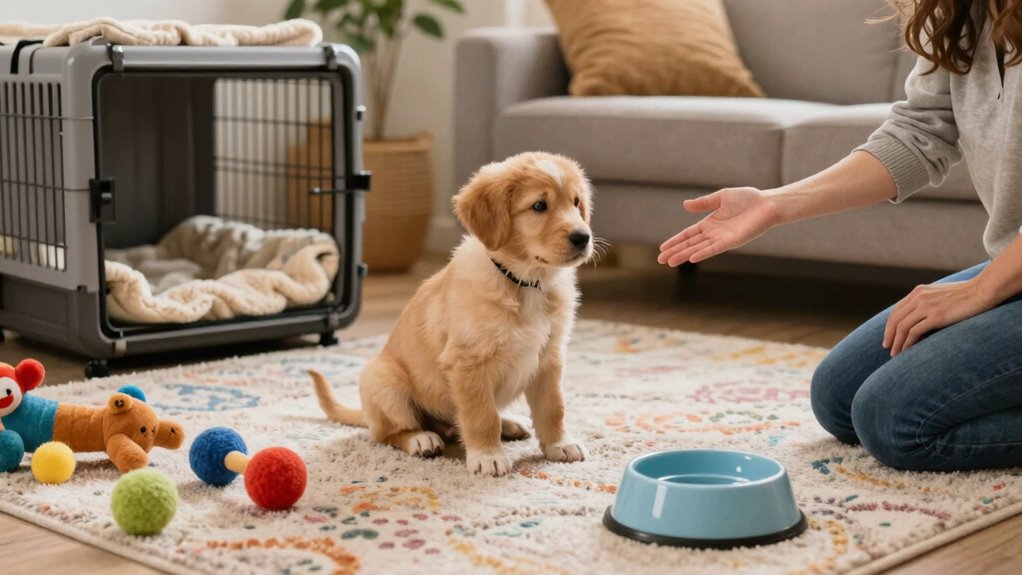
Setting a consistent feeding schedule helps your pet feel secure and understand what to expect. Clearly defining house rules prevents confusion and encourages good behavior. Establishing designated pet spaces creates boundaries that make everyone feel comfortable and help your pet settle in smoothly.
Consistent Feeding Schedule
Establishing a consistent feeding schedule is essential for helping your new pet feel secure and understand what to expect. When you maintain feeding consistency, your pet learns to anticipate meals, reducing anxiety and promoting schedule stability. To create a reliable routine, consider these key points:
- Feed your pet at the same times daily to reinforce schedule stability.
- Stick to a specific portion size to prevent confusion or overeating.
- Avoid sudden changes in meal times or types of food, ensuring smooth adaptation.
- Consistent color accuracy in feeding routines helps your pet associate specific cues with mealtime, further reducing stress.
Clearly Defined House Rules
After creating a consistent feeding schedule, it’s important to define clear house rules to help your pet understand what’s expected. Establish routines that include pet training signals for behaviors like sitting or waiting, making expectations clear. Set boundaries around areas where your pet is allowed or not allowed, reinforcing them with positive reinforcement. Incorporate grooming essentials into daily routines so your pet gets used to handling and grooming, reducing stress during vet visits. Consistent rules help your pet feel secure and prevent confusion or misbehavior. Be patient and persistent, and always use positive reinforcement to encourage good behavior. Clear house rules set the foundation for a smooth progression, making your pet’s adjustment easier and household harmony more achievable. Understanding household safety measures and pet-specific needs can further enhance your training approach.
Designated Pet Spaces
Creating designated pet spaces helps your pet feel secure and understand where they belong in your home. Clear boundaries reduce chaos and make routines smoother. Start by choosing a specific area for your pet, incorporating pet furniture choices that suit their size and preferences. Verify this space is safe by pet proofing essentials like securing cords and removing hazards. Additionally, best laundry detergents can help keep pet bedding clean and fresh, promoting a healthier environment for your furry friend. Using vetted materials when selecting furniture and accessories ensures longevity and safety for your pet’s designated area.
Monitoring Behavior and Adjusting During the First Weeks

During the first few weeks, closely monitoring your new pet’s behavior helps you understand their unique needs and personality. Use behavior tracking to note how they respond to different environments, people, and routines. This insight allows you to identify signs of stress, comfort, or curiosity. Based on your observations, you can implement adjustment strategies such as modifying their space or routine to reduce anxiety. Pay attention to their body language and vocal cues, which reveal how they’re coping. Consistently tracking behaviors helps you recognize patterns and tailor your approach, ensuring your pet feels secure and supported. Regularly switching your methods based on their responses creates a smoother transition and fosters a trusting relationship from the start.
Common Mistakes to Avoid When Introducing Your Pet

Introducing a new pet is exciting, but rushing the process or making assumptions can lead to setbacks. To prevent frustration, watch out for common pitfalls that can hinder smooth introductions.
Introducing a new pet requires patience to avoid setbacks and ensure a smooth integration.
- Ignoring signs of stress or discomfort: Pushing pets together too quickly can cause fear or aggression, creating miscommunication pitfalls.
- Overlooking individual personalities: Assuming all pets will instantly get along ignores their unique temperaments and needs.
- Failing to set boundaries: Not establishing clear rules and safe spaces can lead to confusion and territorial disputes.
Tips for Building a Happy, Lasting Bond With Your New Pet

Building a strong, lasting bond with your new pet begins with patience and consistency. Focus on pet socialization by gradually introducing new experiences and people to foster confidence. Use positive reinforcement and effective training techniques to encourage good behavior and trust. Remember, every interaction shapes your relationship, so stay patient and persistent.
| Tip | Why it Matters |
|---|---|
| Regular socialization | Builds confidence and reduces fear of new situations |
| Consistent training | Reinforces boundaries and creates clear communication |
| Gentle approach | Prevents fear and promotes trust |
| Daily quality time | Strengthens emotional connection |
| Patience and praise | Encourages your pet to repeat positive behaviors |
Frequently Asked Questions
How Long Does the Entire Pet Introduction Process Typically Take?
The entire pet introduction process usually takes about one to two weeks, depending on your pets’ personalities. The duration timeline involves several introduction stages, starting with scent exchanges and supervised meetings. You should observe their reactions carefully during each stage. Rushing the process can cause issues, so stay patient and consistent. By following this timeline, you help make certain a smooth, harmonious shift for your new pet and existing companions.
What Are Signs of a Successful First Interaction With a New Pet?
A promising first encounter shows subtle bonding cues like relaxed body language and gentle sniffing, indicating comfort. Play behavior, such as soft paw taps or gentle chasing, also signals familiarity and trust. If your pet approaches calmly, maintains eye contact, and responds positively to gentle touch, these are signs of a successful initial interaction. You’re fostering a connection that’s likely to deepen as your new pet feels more secure and at ease.
How Can I Handle Unexpected Behavioral Issues During the Transition?
When unexpected behavioral issues arise, stay calm and observe for behavioral red flags like aggression or withdrawal. Use positive reinforcement to encourage good behavior, rewarding small successes consistently. If issues persist, consider consulting a veterinarian or professional trainer for tailored advice. Remember, patience and understanding help your pet adjust, reducing stress for both of you and preventing escalation of behavioral problems during the shift.
Should I Seek Professional Help for Behavioral Problems Early On?
Think of your pet’s behavior as a delicate garden that needs expert pruning. Yes, seeking professional help early on is smart—it’s like hiring a gardener to guide your training consistency and environmental adjustments. Early intervention prevents weeds of bad habits from taking root. A trainer or behaviorist can help you create a tailored plan, ensuring your pet’s growth stays healthy and stress-free, avoiding bigger issues down the line.
How Do I Know if My Pet Is Truly Comfortable in the New Environment?
You can tell your pet is comfortable when their body language shows relaxed cues like a wagging tail, soft eyes, and a loose posture. Environmental cues, such as exploring calmly and settling in without signs of stress, also indicate ease. If your pet avoids eye contact, hides, or shows tense body language, they might not feel fully secure yet. Observe these signs closely to gauge their comfort level in the new environment.
Conclusion
Remember, the key to a smooth shift isn’t just planning—sometimes, the unexpected moments teach us the most. As you prepare and introduce your new pet, stay flexible and attentive; you might find that a simple change or a chance encounter unexpectedly deepens your bond. In those subtle coincidences, you’ll discover the true magic of welcoming a new companion—turning chaos into harmony, one thoughtful step at a time.