To manage household allergies and pets effectively, you should vacuum with a HEPA filter regularly and clean soft furniture and bedding weekly. Keep pets out of bedrooms and practice outdoor grooming to reduce dander spread. Use air purifiers and open windows for ventilation, and maintain low indoor humidity to prevent mold and dust mites. Consistently using allergen-resistant covers and gentle cleaning tools will help keep allergens in check. Learn more tips to keep your home allergen-free.
Key Takeaways
- Regularly vacuum with HEPA filters and clean upholstery to remove pet hair and dander from soft surfaces.
- Use HEPA air purifiers and ensure proper ventilation to reduce airborne allergens.
- Bathe pets weekly and groom outdoors to minimize dander spread indoors.
- Wash pet bedding frequently with allergen-resistant covers and pet-safe detergents.
- Maintain consistent cleaning routines, including wiping surfaces and managing indoor humidity levels.
How Pet Dander Affects Your Allergies: And What You Can Do About It
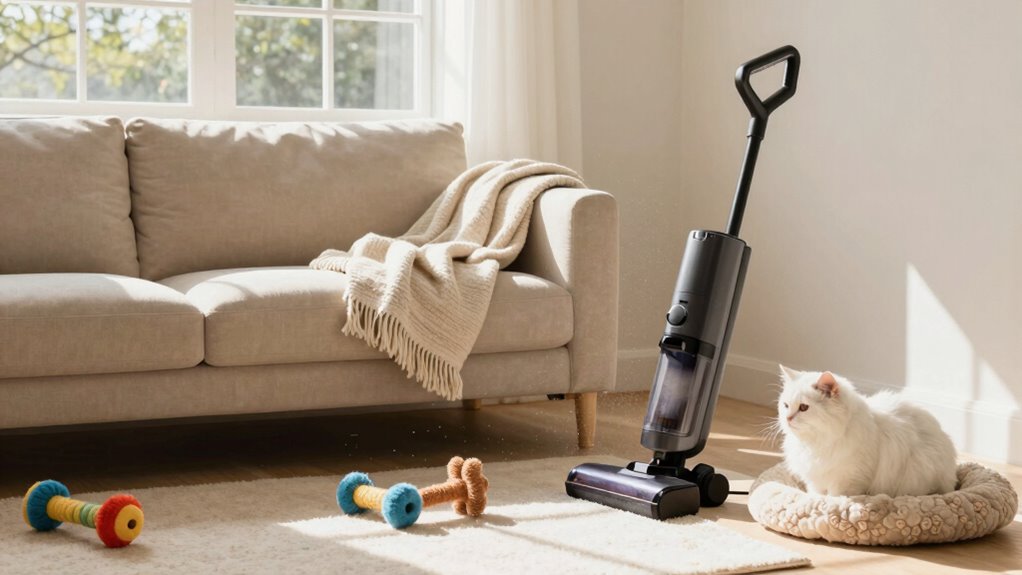
Pet dander is a common trigger for allergy symptoms, especially if you have sensitivities to pet allergens. When you’re exposed to pet dander, your immune system reacts, causing sneezing, itchy eyes, and congestion. Effective pet dander management is key to reducing these symptoms. Regular cleaning, such as vacuuming with a HEPA filter and dusting often, helps remove dander from surfaces. Bathing your pet weekly can also cut down on allergen spread. You might consider air purifiers to filter airborne particles. These steps can markedly improve allergy symptom relief, making your home more comfortable. Remember, consistent cleaning and smart habits are your best tools for controlling pet dander and minimizing its impact on your allergies.
Choosing the Right Tools to Reduce Pet Allergens
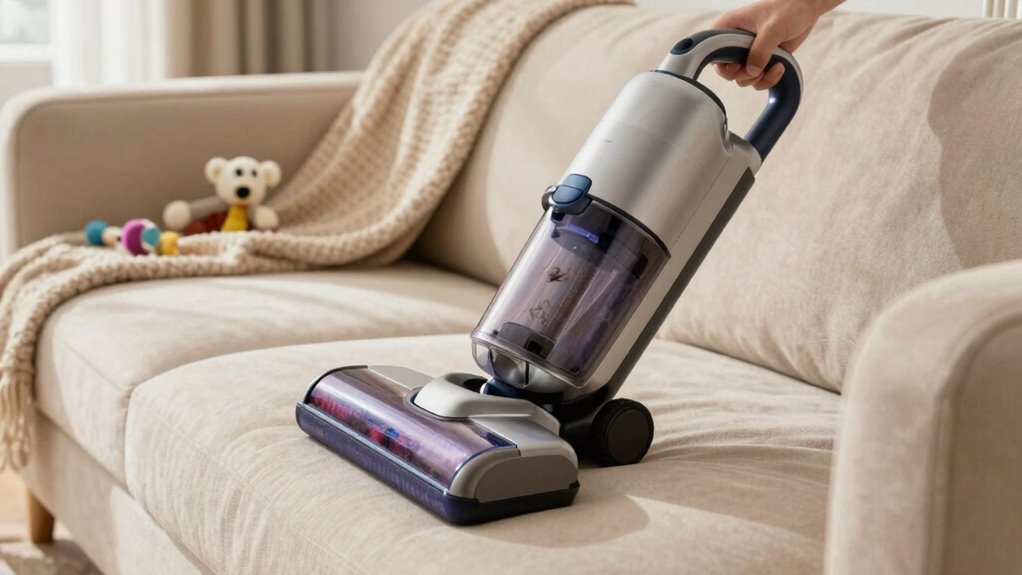
To effectively reduce pet allergens in your home, choosing the right tools is essential. Start with pet grooming tools like gentle brushes and de-shedding gloves to minimize loose fur and dander. Use allergen-proofing supplies such as HEPA-filter vacuum cleaners and air purifiers to trap airborne particles. Regularly washing pet bedding with allergen-resistant covers also helps. Consider investing in tools designed for allergen control to make cleaning more effective. Understanding testing accuracy related to measurement tools can also help you select the most effective cleaning equipment for your needs. Additionally, selecting tools with validated performance ensures that your cleaning efforts are based on reliable results. Being aware of the color accuracy of your cleaning devices can further enhance your ability to spot areas needing extra attention. Employing tools with consistent results can further improve your cleaning routines and allergen reduction efforts.
Daily Habits to Keep Pet Allergens in Check
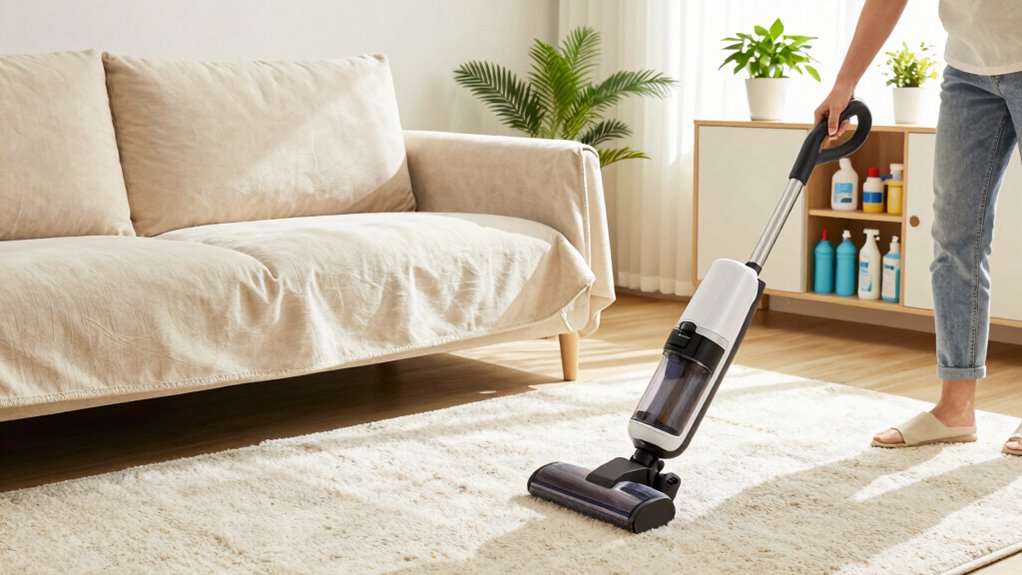
Establishing daily habits is essential for maintaining a pet-friendly environment with fewer allergens. Regular pet grooming helps remove dander before it spreads, reducing allergen levels in your home. Creating effective allergen barriers, like washable slipcovers and air purifiers, minimizes allergen transfer. Daily routines include:
Daily habits like grooming, cleaning, and allergen barriers help keep your home pet-friendly and allergen-free.
- Brushing your pet outdoors or in well-ventilated areas
- Wiping surfaces and furniture to catch loose pet hair and dander
- Washing pet bedding and toys frequently
- Keeping pets out of bedrooms and off furniture
- Using allergen barriers like HEPA filters and washable covers
- Regularly checking and maintaining air filtration systems to ensure optimal allergen removal
- Incorporating hydrating skincare products can also help reduce skin irritation caused by allergens and improve your skin’s resilience.
- Practicing consistent home cleaning routines helps prevent allergen buildup and maintains a healthier environment.
- Additionally, choosing hypoallergenic pet breeds can further reduce allergen production and make living with pets more comfortable.
- Implementing proper ventilation techniques can significantly reduce indoor allergen concentrations and improve overall air quality.
Vacuuming Tips for Effective Allergen Removal
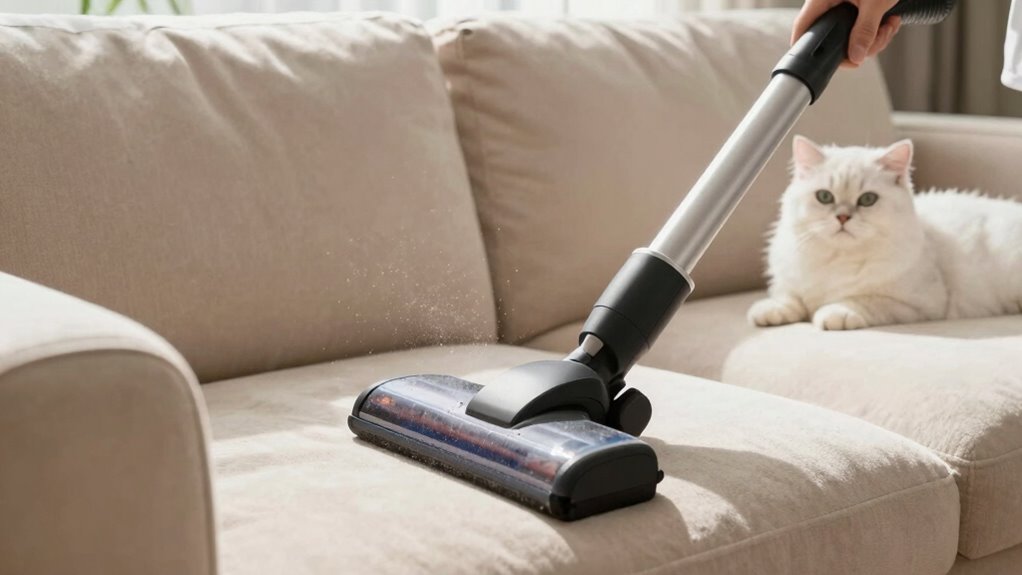
Regular vacuuming is one of the most effective ways to reduce pet allergens in your home. To maximize allergen removal, use a vacuum with a HEPA filter, which traps pet hair, dust, and tiny particles like carpet fibers. Make sure to vacuum thoroughly, focusing on carpets, rugs, and upholstery where pet hair and fibers tend to hide. Move the vacuum slowly over surfaces to loosen embedded allergens, especially in high-traffic areas. Don’t forget to vacuum under furniture and along baseboards. Empty the vacuum bag or canister frequently to prevent re-releasing allergens into the air. Incorporating proper filtration methods can further enhance allergen removal efficiency. Using effective cleaning routines can help maintain a healthier indoor environment and reduce allergen accumulation over time. Additionally, scheduling regular professional deep cleaning can target allergens that are difficult to remove with regular vacuuming. This simple step can make a noticeable difference in managing pet-related allergies, especially when combined with other cleaning habits like dusting and air purification. Implementing consistent cleaning schedules can also contribute to ongoing allergen control.
How to Clean Pet Bedding and Soft Furniture
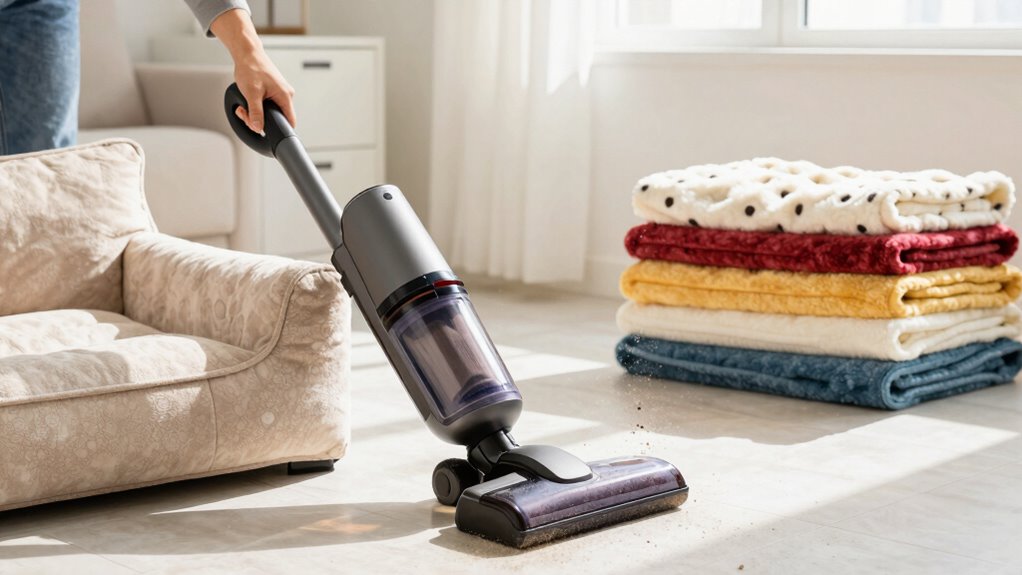
To reduce allergens, wash your pet’s bedding weekly using a pet-safe detergent. Regularly vacuum soft furniture to pick up pet hair and dander. These simple steps make a big difference in keeping your home allergy-friendly. Additionally, ensure your vacuum cleaner has a HEPA filter to effectively trap allergens and improve air quality. Consider using floating gear such as inflatable pontoon boats or hot tub cover lifters to create a relaxing environment that can help reduce stress-related allergy symptoms. Maintaining proper indoor humidity levels can also prevent mold growth and dust mites, further contributing to a healthier home environment. Incorporating air purifiers with HEPA filters can further enhance air quality and reduce airborne allergens. Using effective cleaning techniques tailored to allergen control can also make a significant impact.
Wash Bedding Weekly
Have you ever wondered how often you should wash your pet’s bedding and soft furniture to keep allergens at bay? Washing weekly is key to reducing pet hair buildup and allergens. When you do, focus on pet hair removal and use allergy-proof bedding to minimize dust mites and dander. To maximize effectiveness, consider:
- Using hot water settings to kill allergens
- Adding allergen-reducing laundry additives
- Regularly vacuuming soft furniture beforehand
- Choosing washable, allergen-resistant covers
- Ensuring thorough drying to prevent mold growth
Proper decontamination processes can help you better understand and manage your household environment, making allergy control more effective. Additionally, maintaining good hygiene practices contributes significantly to reducing allergen levels. Incorporating allergy-proof bedding can also provide a barrier to allergens and improve overall comfort for allergy sufferers.
Use Pet-Safe Detergent
Since harsh chemicals can aggravate allergies, choosing pet-safe detergents is essential for effective cleaning. Opt for a pet-safe detergent that’s designed for allergy-friendly cleaning to reduce irritants on pet bedding and soft furniture. These detergents are free from strong fragrances, dyes, and harsh chemicals that can trigger allergic reactions. When washing pet beds, upholstery cushions, or soft furniture covers, ensure you use the correct amount of detergent and rinse thoroughly to remove any residue. Using an allergy-friendly cleaning product helps eliminate pet dander, dirt, and allergens without compromising your pet’s or your own health. Regularly switching to a gentle, pet-safe detergent supports a cleaner, healthier environment, making your home safer for allergy sufferers. Additionally, proper ventilation during and after cleaning can help disperse airborne allergens and improve indoor air quality.
Vacuum Soft Furniture Regularly
Regularly vacuuming soft furniture is one of the most effective ways to remove pet dander, hair, and allergens that can trigger allergic reactions. It helps maintain a healthier environment and reduces allergen buildup. When performing furniture cleaning, focus on areas where pet hair tends to accumulate. Use a vacuum with a HEPA filter for better pet hair removal and allergen capture. For thorough cleaning, consider these tips:
- Use upholstery attachments for deep cleaning
- Vacuum in multiple directions for effectiveness
- Regularly empty the vacuum to prevent clogging
- Spot-clean any stains promptly
- Incorporate a fabric brush to loosen hair and dander
- Digital frames and interactive murals can also add a touch of allergy-friendly decor that’s easy to clean and maintain.
Consistent furniture cleaning minimizes allergens, making your space more comfortable for allergy sufferers and pet owners alike.
Using Air Purifiers and Ventilation to Cut Down Allergens

Using air purifiers and proper ventilation can considerably reduce household allergens. Make sure your air purifier has a HEPA filter and runs regularly for maximum effectiveness. Also, maintain your equipment and open windows or use exhaust fans to keep fresh air circulating.
Air Purifier Effectiveness
Air purifiers can substantially reduce airborne allergens in your home when used correctly. Their effectiveness depends on choosing the right model and maintaining it properly. High-quality air purifiers excel in pet dander filtration, ensuring allergens from furry friends are captured efficiently. To maximize air purifier effectiveness, consider these points:
- Use a purifier with a HEPA filter rated for your room size
- Keep doors and windows closed during operation
- Regularly replace filters as recommended
- Place the purifier in high-traffic or allergen-prone areas
- Combine with good cleaning habits for ideal results
Proper Ventilation Techniques
Effective ventilation complements air purifier use by actively reducing indoor allergen levels. You can improve air exchange by opening windows or doors to create cross ventilation, which allows fresh air to flow through your space. Cross ventilation helps carry away airborne allergens like pet dander, pollen, and dust mites that may linger indoors. When you consistently use ventilation techniques alongside your air purifier, you’re ensuring a continuous flow of clean air. This reduces the concentration of allergens, making your environment healthier for allergy sufferers. Be mindful to ventilate during times when outdoor allergen levels are lower, such as after rain or in the evening. Proper ventilation is a simple yet effective way to complement your cleaning habits and maintain a fresher, allergen-reduced home.
Regular Maintenance Practices
Regular maintenance is essential for keeping indoor allergens at bay, and combining the use of air purifiers with proper ventilation maximizes their effectiveness. Regularly grooming your pets reduces the spread of dander, one of the main allergens, while creating allergen barriers helps contain pet hair and dust. Use air purifiers equipped with HEPA filters to trap airborne particles, and guarantee your home is well-ventilated by opening windows or using exhaust fans. Consider these practices:
- Schedule pet grooming sessions regularly outside the home
- Use allergen barriers like washable covers on furniture
- Replace air purifier filters as recommended
- Open windows daily for fresh airflow
- Clean vents and exhaust fans to prevent dust buildup
Implementing these habits minimizes allergens, making your living space healthier for allergy sufferers.
Creating a Routine That Balances Pet Care and Allergy Relief
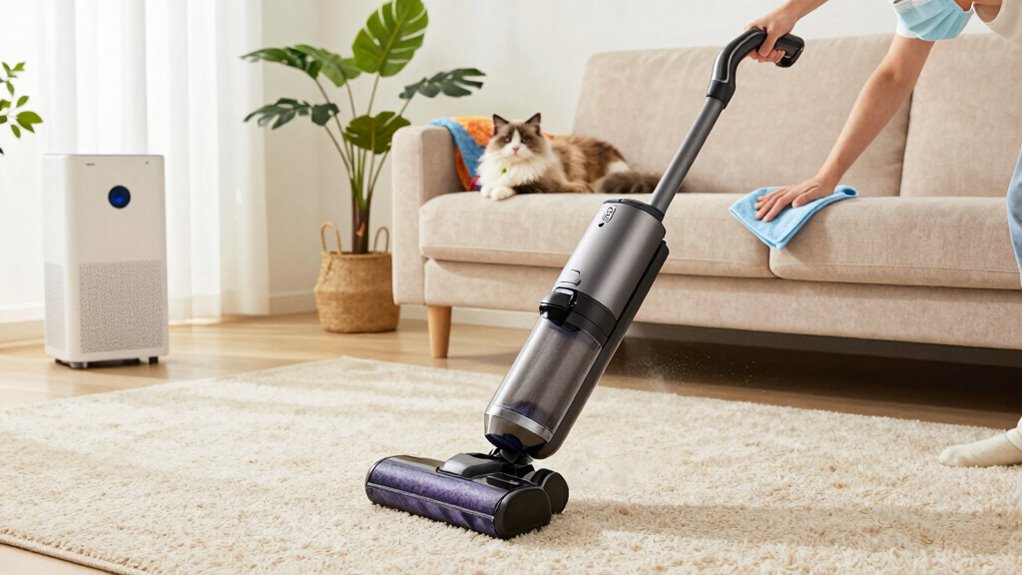
Balancing pet care with allergy relief requires establishing a consistent routine that keeps your home comfortable for everyone. Start with regular pet grooming to reduce dander, using the right tools and techniques. Incorporate allergen testing periodically to monitor your pet’s allergen levels and identify triggers. Setting specific times for grooming and cleaning helps prevent allergens from accumulating. Make certain your pet’s bedding and living areas are cleaned frequently. Consistent routines make it easier to spot allergy flare-ups early and adjust your habits accordingly. By integrating pet grooming and allergen testing into your schedule, you create a balanced approach that keeps your pet happy while minimizing allergy symptoms, making your home a more comfortable space for everyone.
Common Cleaning Mistakes That Make Allergies Worse
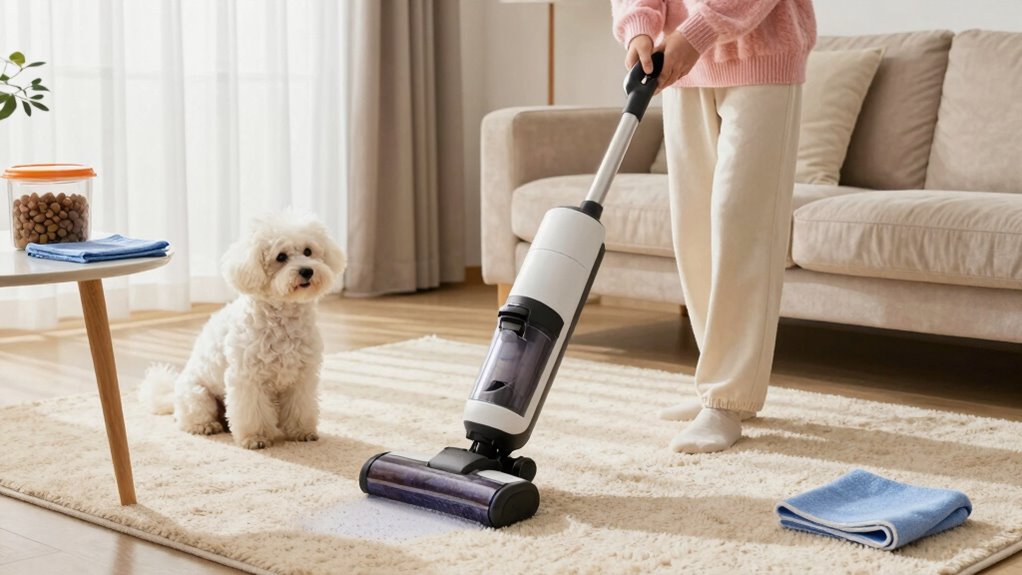
One common mistake that can worsen allergy symptoms is using improper cleaning techniques or products that stir up dust and allergens. When you neglect to clean thoroughly, pet saliva residues and dust mites remain on surfaces, worsening allergies. Using harsh chemicals can also irritate sensitive nasal passages. Additionally, failing to vacuum with a HEPA filter spreads dust mites and pet dander into the air.
- Not vacuuming furniture and carpets regularly
- Using outdated or ineffective cleaning products
- Ignoring hidden spots like under furniture or behind appliances
- Forgetting to wash pet bedding frequently
- Neglecting to clean air vents and filters
These mistakes lead to increased allergen levels, making symptoms worse and prolonging allergy flare-ups. Proper, targeted cleaning helps reduce pet saliva and dust mites, easing your allergy symptoms.
Tips for Maintaining a Low-Allergen Home Over Time
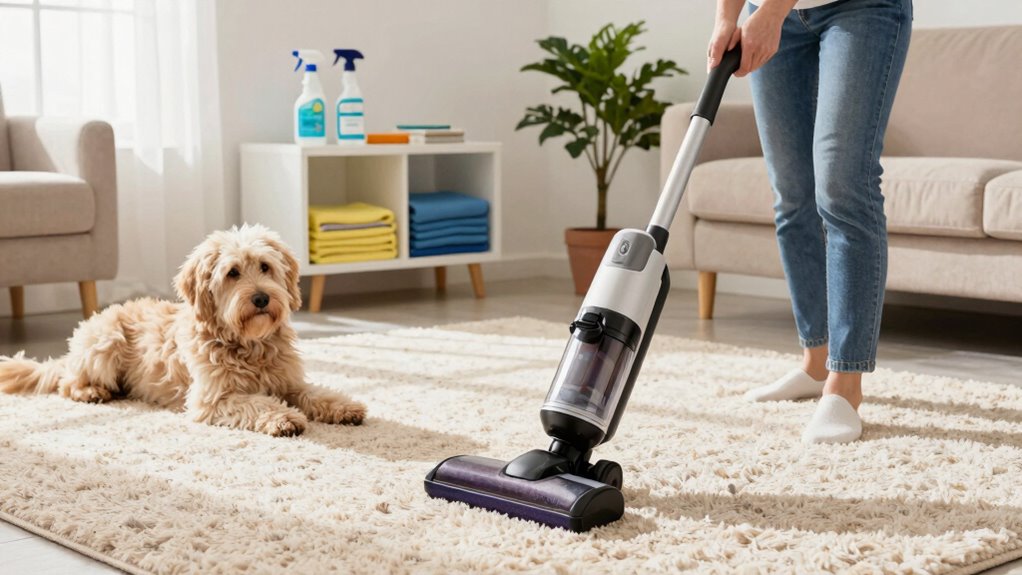
Maintaining a low-allergen home requires consistent effort and mindful habits that minimize dust, pet dander, and other triggers. Regular pet grooming is essential; brush your pets frequently outside and bathe them as needed to reduce dander. Keep pets out of bedrooms and off furniture to limit allergen spread. Incorporate allergy-friendly plants like orchids or Boston ferns, which help purify the air without releasing pollen. Vacuum carpets and upholstery at least twice a week with a HEPA filter vacuum. Use washable covers on bedding and furniture, and wash them regularly. Maintain good ventilation, and avoid clutter that can trap dust. These small but consistent steps will help you keep your home healthier and more comfortable over time.
Frequently Asked Questions
Can Certain Dog or Cat Breeds Cause Fewer Allergy Symptoms?
Yes, breed selection can influence allergy mitigation. Some dog and cat breeds, like Poodles or Sphynx cats, produce fewer allergens because they shed less or have hair instead of fur. You can reduce allergy symptoms by choosing these breeds, maintaining regular grooming, and cleaning your home frequently. While no breed is completely hypoallergenic, selecting the right one helps minimize allergic reactions and makes pet ownership more comfortable.
How Do Humidity Levels Impact Pet Allergen Dispersion?
Humidity levels directly influence pet allergen dispersion by affecting airborne particles. When humidity is too low, allergens like pet dander become dry, light, and easily airborne, increasing allergy symptoms. Conversely, high humidity causes allergens to settle more quickly, reducing airborne particles. To keep allergens at bay, you should focus on humidity control, maintaining a balanced level that minimizes airborne particles and keeps your home healthier and allergy-friendly.
Are Hypoallergenic Pets Truly Allergen-Free?
Hypoallergenic pets aren’t completely allergen-free, but they tend to produce fewer allergens. You can reduce your allergy symptoms by regularly grooming your pets and using allergen-proof bedding. These habits help minimize dander and pet hair in your home. While no pet is entirely allergen-free, consistent cleaning and grooming make it easier to enjoy their company without triggering allergies.
What Natural Remedies Help Reduce Pet Allergy Symptoms?
You can try natural remedies like herbal sprays to soothe allergy symptoms, which may reduce inflammation and calm your eyes and nose. Additionally, using effective vacuum techniques, such as a vacuum with a HEPA filter and frequent cleaning, helps remove pet dander from your home. Combining these methods can considerably lessen your allergy symptoms, making your environment more comfortable without relying solely on medication.
How Often Should I Replace Air Filters for Optimal Allergen Control?
You should replace your air filters every 30 to 60 days to guarantee ideal allergen filtration intervals. Regular air filter maintenance helps remove pet dander, dust, and other allergens effectively. If you have pets or allergies, consider checking filters monthly and replacing them more frequently if they appear dirty or clogged. Keeping up with these intervals maintains better indoor air quality and reduces allergy symptoms.
Conclusion
Ironically, the key to loving your pet without sneezing might just be obsessively cleaning. While it’s tempting to enjoy cuddles without worry, neglecting regular habits can turn your home into a pet allergen hotspot. So, keep up with your cleaning routine—because nothing says “I love my pet” like spending more time vacuuming than cuddling. After all, a low-allergen home is the true sign of a dedicated pet owner.