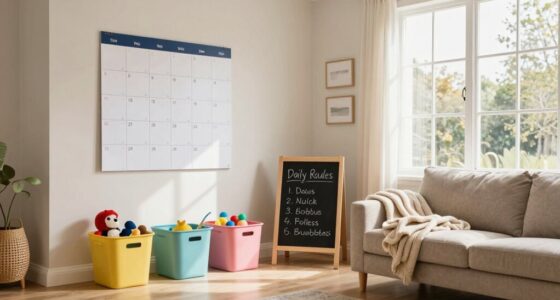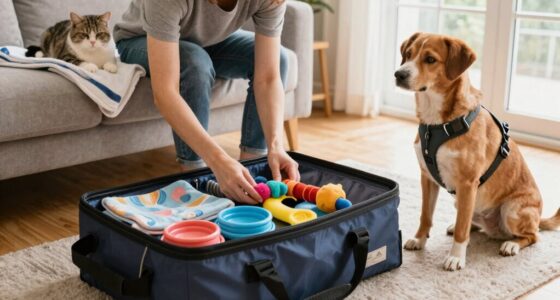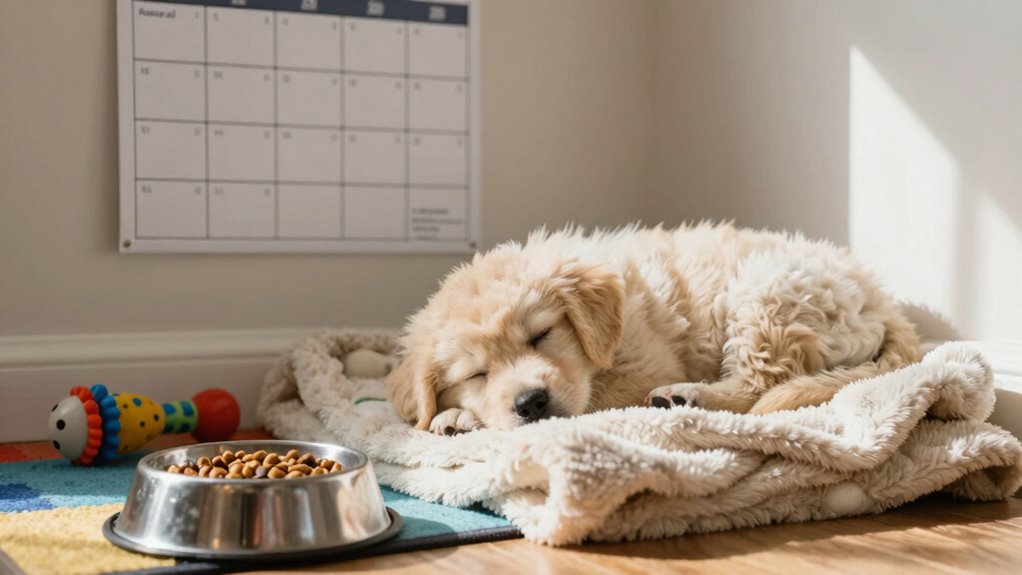

To keep your puppy happy and your sanity intact, create a consistent routine for sleep, meals, and play. Set specific times for feeding three to four times daily with high-quality food, and include short play sessions afterward to help digestion and energy burn. Establish a regular bedtime in a quiet space and use a crate as a cozy retreat. Incorporate calm bonding moments alongside active play for a balanced day. Keep optimizing your routine for long-term harmony.
Listen free for 30 days with Audible
Thousands of audiobooks and originals — cancel anytime.
As an affiliate, we earn on qualifying purchases.
Key Takeaways
- Establish a consistent daily schedule for sleep, meals, and play to create security and reduce stress for your puppy.
- Use crate training to promote safe, restful sleep and independence, making nighttime routines smoother.
- Feed your puppy multiple small, high-quality meals at regular intervals to support digestion and energy levels.
- Incorporate structured play and quiet bonding moments to balance stimulation and calmness, preventing overstimulation.
- Maintain a predictable routine, combining sleep, feeding, and play, to foster discipline and overall well-being without overwhelming yourself.

Starting your puppy’s routine early sets the foundation for a well-behaved and happy dog. When you establish consistent schedules for sleep, meals, and play, you help your pup understand what to expect and reduce their anxiety. One of the most effective ways to promote good behavior is through puppy training, with crate training playing a central role. Crate training isn’t about punishment; it’s about creating a safe space where your puppy can rest and learn boundaries. When you introduce the crate early on, you teach your pup to settle down and develop independence, which makes housetraining and managing their behavior much easier down the line.
Starting your puppy’s routine early builds a foundation for a happy, well-behaved dog.
Begin crate training gradually, making the crate inviting with soft bedding and some treats. Encourage your puppy to explore it voluntarily, and never force them inside. Use positive reinforcement, praising and rewarding them when they enter and remain calm. Consistency is key: set specific times for crate time, like after meals or play sessions, so your puppy associates the crate with positive experiences. Over time, your pup will see the crate as a safe haven, which can prevent anxiety and destructive behaviors when they’re alone.
Alongside crate training, establishing a sleep schedule is essential. Puppies need plenty of rest—often up to 18-20 hours a day—and a consistent bedtime helps regulate their energy levels. Keep their sleeping area in a quiet, comfortable spot and try to stick to the same bedtime each night. This consistency not only promotes better sleep but also helps your puppy learn self-control. When you combine a regular sleep schedule with crate training, your puppy gradually learns to settle down independently, making nighttime routines smoother for everyone.
Meals should be scheduled at regular intervals—typically three to four times a day—so your puppy’s digestion stays on track and their energy levels stay steady. Feed high-quality puppy food, and avoid free feeding, which can lead to overeating and behavior issues. After meals, incorporate short play sessions to help your pup burn off excess energy and promote healthy digestion. Remember, training isn’t just about commands; it’s also about creating a structured environment that fosters security and discipline.
Finally, balance playtime with calm, quality interactions. Use toys and engaging activities to stimulate your puppy’s mind, but also include moments of quiet bonding. Incorporating high-quality projectors into your puppy’s environment can provide soothing visuals that help them relax and feel secure. By sticking to a consistent routine for sleep, meals, and play, and integrating crate training into your daily schedule, you’ll build a strong foundation that keeps your puppy happy, well-behaved, and less likely to develop problem behaviors. In the end, a predictable routine not only benefits your pup but also makes your life more manageable.
As an affiliate, we earn on qualifying purchases.
Frequently Asked Questions
How Do I Adjust the Routine for a Puppy With Special Needs?
To adjust your puppy’s routine for special needs, focus on adaptive care and training modifications. You might need to lengthen rest periods or create a calming environment, ensuring they get enough sleep. Incorporate gentle, tailored play, and adjust meal times if necessary. Stay consistent but flexible, observing their reactions. Consult your vet for personalized advice; your attentive approach helps your puppy thrive while managing their unique requirements effectively.
What Are Signs My Puppy Is Getting Enough Sleep?
You’ll notice your puppy is getting enough sleep when they display clear puppy sleep cues like relaxed resting behavior, gentle yawning, and slow, steady breathing. If they seem calm and settle easily after naps, it’s a good sign. Watch for signs of overtiredness, such as whining or hyperactivity, which indicate they need more rest. Ensuring consistent naps helps your pup stay balanced and healthy.
How Can I Prevent My Puppy From Overfeeding?
Think of your puppy’s health as a delicate dance—balance is key. To prevent overfeeding, stick to a strict feeding schedule and practice portion control. Measure each meal carefully and avoid free feeding, which can lead to overeating. Consistency helps establish good habits and keeps your pup’s weight in check. Remember, a well-regulated routine not only prevents overfeeding but also builds trust and security for your puppy.
What Are Quick Play Activities for Busy Days?
On busy days, you can keep your puppy entertained with quick play activities like using interactive toys that stimulate their mind and energy. Take short walks around the block to give them some fresh air and exercise without taking up too much time. These activities help prevent boredom, burn off energy, and strengthen your bond, making busy days manageable while ensuring your puppy stays happy and healthy.
How Do I Handle a Puppy’s Teething Discomfort?
Handling your puppy’s teething discomfort is like soothing a stormy sea. Offer teething relief with cold, damp washcloths or frozen toys to numb their gums. Select chew toys designed for teething puppies—look for soft, flexible, and safe options. Rotate toys to keep them interested, and praise your pup for chewing appropriately. This approach helps ease pain, redirect chewing, and keeps your puppy comfortable and content during teething.
As an affiliate, we earn on qualifying purchases.
Conclusion
Sticking to a solid puppy routine keeps you both sane and happy—plus, it helps your pup feel secure. Did you know puppies sleep up to 18 hours a day? That’s a lot of snoozing! By balancing sleep, meals, and play, you set a foundation for a well-behaved adult dog. Keep consistent, stay patient, and enjoy every adorable moment. Your effort will pay off, and soon, you’ll wonder how you ever managed without this routine!
As an affiliate, we earn on qualifying purchases.
As an affiliate, we earn on qualifying purchases.
NFL season / tailgating Picks
team gear
As an affiliate, we earn on qualifying purchases.