
Mastering five core movements—squat, deadlift, press, row, and lunge—is essential for effective strength training. These movements target nearly every major muscle group, improve functional mobility, and reduce injury risks. Proper technique is key: keep your core engaged, use correct posture, and progress gradually. Focusing on these fundamentals creates a balanced routine that supports long-term strength and stability. Keep exploring to learn how to perform each movement safely and maximize benefits.
Key Takeaways
- The five core movements—squat, deadlift, press, row, and overhead movement—target major muscle groups for comprehensive strength training.
- Mastering these movements improves coordination, stability, and reduces injury risk across various exercises.
- Proper technique in each movement ensures safety, optimal muscle activation, and effective progression.
- These fundamental exercises promote balanced muscle development and functional movement for daily activities.
- Incorporating all five movements creates a sustainable, effective training routine supporting long-term joint and muscle health.
Why Mastering Core Movements Is Essential for Building Strength
Mastering core movements is essential because they form the foundation for all strength training exercises. When you focus on proper movement patterns, you enhance muscle activation across multiple muscle groups simultaneously. This not only improves overall strength but also promotes better coordination and stability. Understanding how your body moves allows you to perform exercises more efficiently, reducing the risk of injury. By mastering these fundamental patterns, you guarantee that your training is effective and sustainable. Properly activated muscles work together, creating a solid base for more advanced movements. Building this solid foundation helps you progress faster and achieve your strength goals more safely. In short, mastering core movements is the key to opening your full strength potential. Additionally, developing an awareness of auditory processing can improve your focus and listening skills during training sessions, leading to better technique and results. Recognizing movement efficiency can further enhance your training by reducing unnecessary energy expenditure and fatigue.
How to Perform Squats Correctly to Maximize Benefits
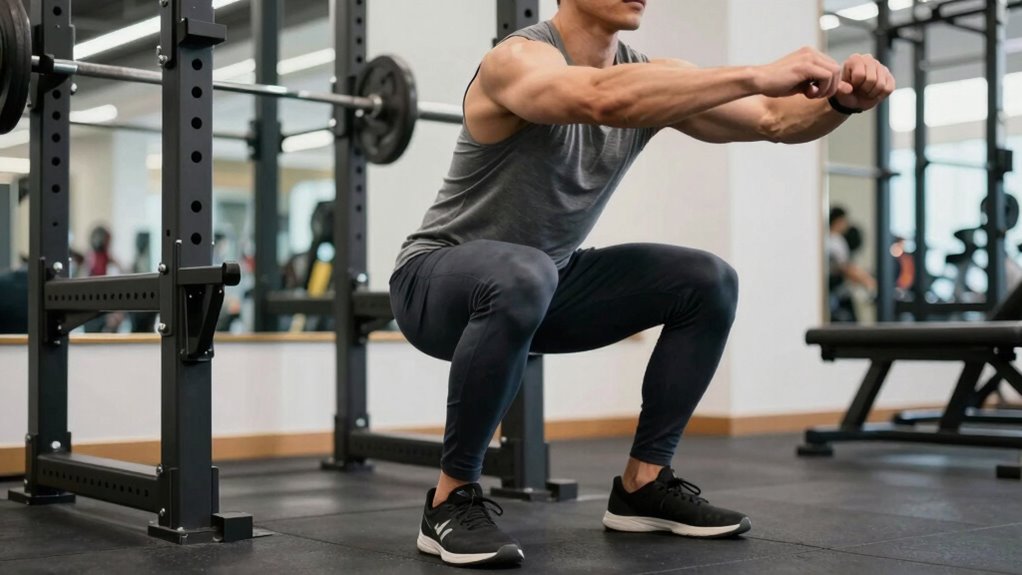
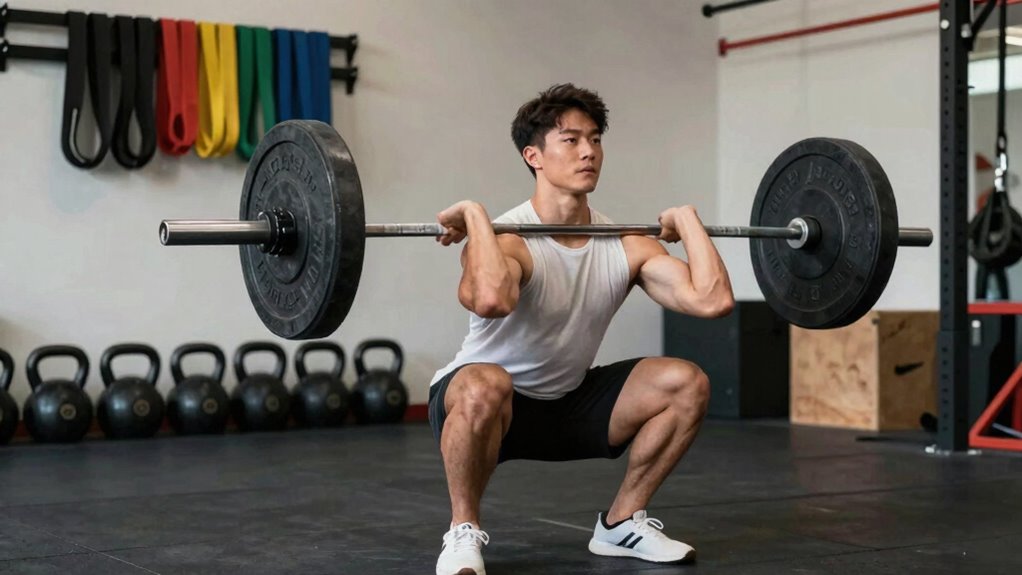
Performing squats correctly is essential to maximize their benefits and prevent injury. Start by standing with feet shoulder-width apart and toes slightly outward. Keep your chest up and core engaged. As you lower into the squat, focus on maintaining proper knee alignment—your knees should track directly over your toes without caving inward. Use a controlled breathing technique: inhale on the way down, filling your lungs, and exhale as you push back up. Keep your weight on your heels and avoid shifting forward onto your toes. Maintain a neutral spine throughout, avoiding rounding your back. These key points ensure the movement is effective and safe, allowing you to target muscles properly while reducing strain on your joints. Proper technique is vital for injury prevention and optimal muscle engagement. Additionally, paying attention to joint alignment helps ensure the exercise is both safe and effective. To further support your safety, consider incorporating warm-up and cool-down routines to prepare your muscles and joints for exercise. Being aware of muscle engagement can further enhance your workout efficiency and reduce the risk of imbalances. Moreover, understanding early warning signs of injury can help you identify potential issues before they become serious.
The Proper Technique for Deadlifts and Common Mistakes to Avoid

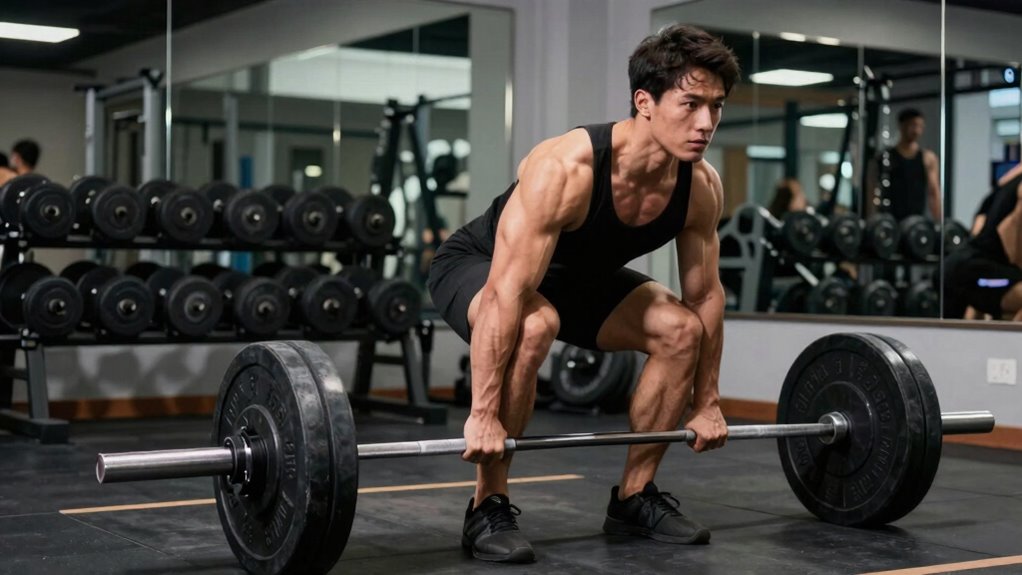
To execute deadlifts safely and effectively, you need to focus on proper technique from start to finish. Good deadlift form begins with your feet shoulder-width apart, gripping the bar firmly, and keeping your back flat. Engage your core and keep your chest up as you lift by driving through your heels. Avoid common mistakes like rounding your back, jerking the bar, or overextending your hips. These errors can cause injury and reduce effectiveness. Keep the movement controlled, and don’t rush the lift. Maintaining proper deadlift form ensures you target the right muscles and minimize risk. Be mindful of your posture throughout the movement, and always prioritize quality over weight to build strength safely and efficiently. Incorporating proper equipment, such as quality lifting belts or mats, can also enhance safety and performance. Additionally, understanding measurement accuracy and selecting reliable gear can help monitor your progress and prevent overtraining. Paying attention to your contrast ratio can also help you visualize improvements in technique and form over time. Regularly consulting with a coach or trainer can provide valuable feedback and help correct any technique flaws early on for safer lifting. Incorporating training logs can further assist in tracking your improvements and setbacks over time.
Effective Presses and Pulls to Develop Upper-Body Power
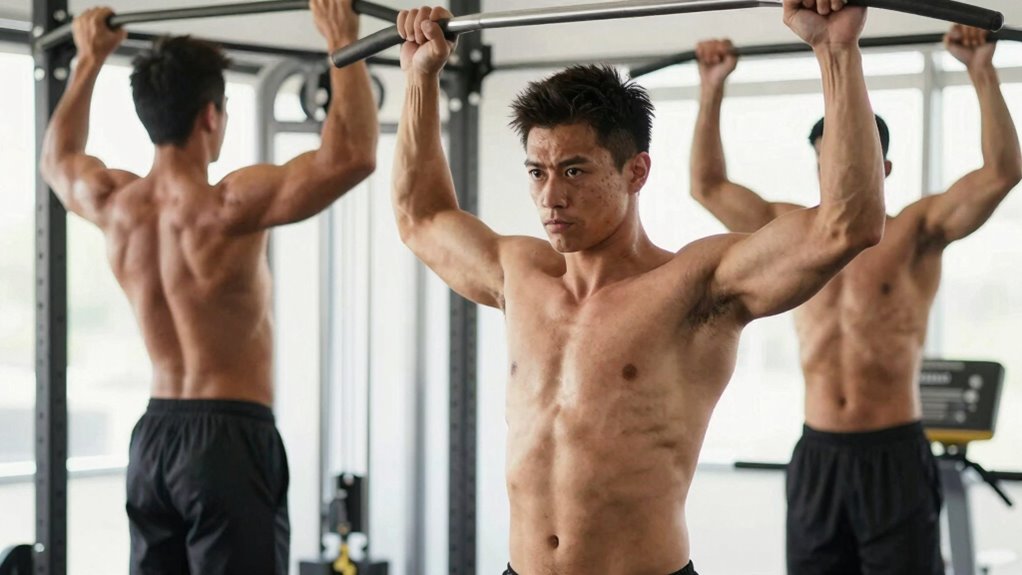
Building upper-body strength relies on effective pressing and pulling movements that target key muscle groups. Incorporate exercises like kettlebell swings, which build power through dynamic hip drives that engage your core and shoulders. Resistance band exercises are excellent for developing controlled pressing and pulling motions, improving muscle activation and stability. For presses, try resistance band chest presses or overhead presses to strengthen your shoulders and chest. For pulls, perform band rows or face pulls to target your back and rear shoulders. These movements develop raw power and reinforce proper movement patterns. Additionally, core engagement during these exercises enhances overall stability and strength. Incorporating proper training gear, such as resistance bands and kettlebells, can optimize your workout effectiveness. Using appropriate coffee gear like kettlebell-inspired exercises can also help keep your workouts engaging and varied. To maximize results, focusing on functional strength ensures that your training benefits everyday activities and other lifts. Consistently integrating kettlebell swings and resistance band exercises into your routine guarantees you’re building functional strength that translates to everyday activities and other lifts. Moreover, paying attention to proper technique minimizes injury risk and ensures that you target the intended muscle groups effectively.
Incorporating Lunges and Variations to Improve Balance and Mobility
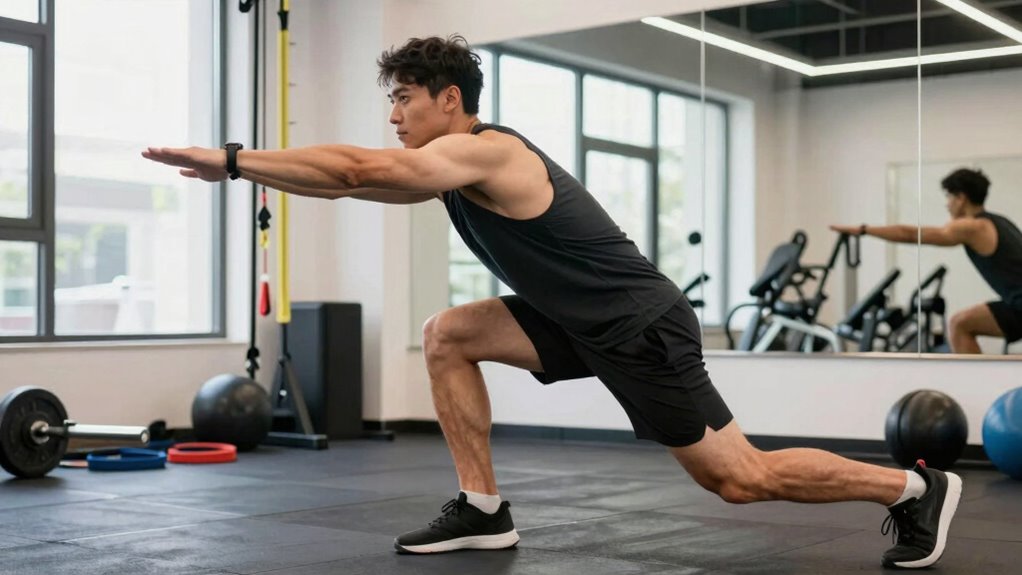
Incorporating lunges and their variations into your training routine is an effective way to enhance both balance and mobility. Lunges challenge your single leg stability, forcing you to engage stabilizer muscles and improve coordination. Variations like reverse lunges, walking lunges, or lateral lunges target different muscle groups and promote hip mobility, essential for daily movements and athletic performance. As you perform lunges, focus on maintaining proper form, keeping your core engaged, and controlling your movements. This not only boosts your ability to stabilize on one leg but also increases flexibility in your hips. Incorporating these exercises regularly can also counteract muscle imbalances, leading to more balanced strength development. Additionally, understanding proper exercise technique ensures you maximize benefits while minimizing injury risk. Incorporating functional movement patterns like lunges helps develop strength that translates effectively to real-world activities. Over time, adding these movements to your routine helps you develop better balance, reduces injury risk, and enhances overall functional mobility. Additionally, paying attention to proper battery charger settings can ensure your training equipment operates safely and efficiently. Engaging in diverse movement patterns can also help prevent muscular imbalances, contributing to healthier and more resilient joints and muscles.
Frequently Asked Questions
What Are the Best Warm-Up Routines Before Strength Training?
You should start your warm-up with dynamic stretching to increase blood flow and loosen muscles, preparing your body for the workout. Incorporate foam rolling to release muscle tension and improve mobility. Spend about 5-10 minutes alternating between these techniques, focusing on the muscles you’ll target during strength training. This routine helps prevent injuries, boosts performance, and guarantees you’re ready to lift effectively and safely.
How Often Should I Vary My Strength Training Exercises?
Think of your muscles as a recipe that needs variety to stay flavorful. You should vary your strength training exercises every 4 to 6 weeks to prevent plateaus and keep progress steady. Incorporating exercise variation and adjusting training frequency helps challenge different muscle groups and avoid adaptation. If you stick to the same routine too long, your gains might slow down, so switching things up regularly keeps you moving forward.
What Equipment Is Essential for a Home Strength Training Setup?
For a home gym setup, focus on minimal equipment that offers versatility. Essential home gym essentials include a pair of dumbbells, resistance bands, a stability ball, and a pull-up bar. These items let you perform a wide range of strength training exercises without clutter. You can easily adjust the intensity and target different muscle groups, making your workouts effective and convenient with minimal equipment.
How Can I Prevent Injuries During Heavy Lifts?
To prevent injuries during heavy lifts, focus on injury prevention and safety techniques. Always warm up properly and use correct form to avoid strain. Start with lighter weights to master the movement, then gradually increase resistance. Use a spotter or safety equipment like a squat rack for added security. Listen to your body, and don’t push through pain. Consistent practice of safety techniques keeps you safe and improves your strength gains.
What Are Signs of Overtraining in Strength Workouts?
You’ll notice signs of fatigue, like persistent soreness or decreased performance, which signify overtraining. Symptoms of overtraining also include irritability, trouble sleeping, and a lack of motivation. If you feel constantly exhausted or your workouts no longer feel challenging, it’s a sign you need to rest and recover. Pay attention to these warning signs to prevent injury, burnout, and ensure continued progress in your strength training journey.
Conclusion
By embracing these five fundamental movements, you’re opening the door to a landscape of strength and mobility. Think of each exercise as a sturdy bridge connecting your current abilities to new heights of fitness. With consistent effort, you’ll gradually build a solid foundation, like a well-crafted bridge supporting countless journeys ahead. Keep moving steadily, and you’ll find yourself crossing into a stronger, more confident version of yourself—one step at a time.