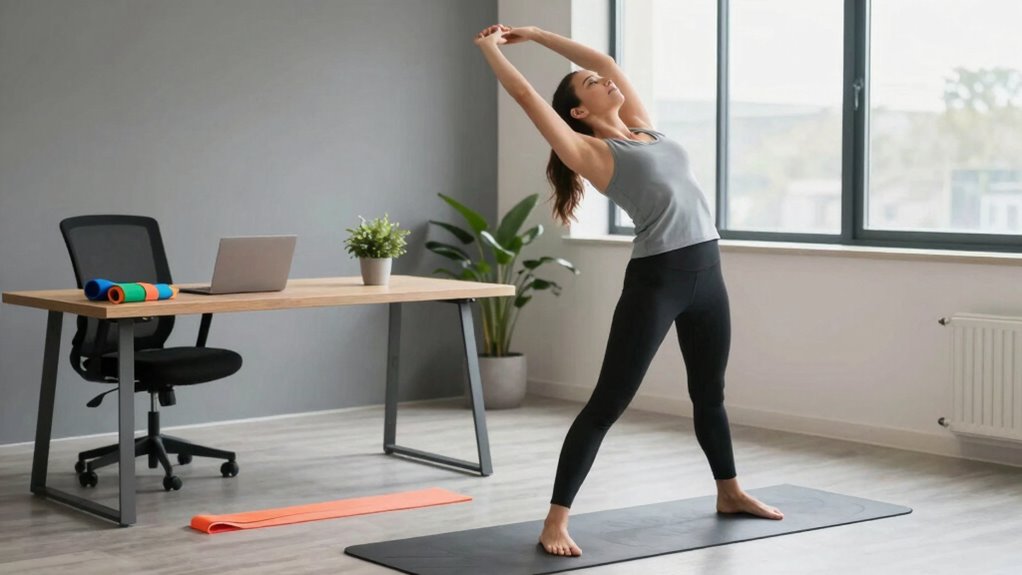

To improve mobility during your workday, try an 8-minute daily reset with simple movements like shoulder rolls, stretches, and leg extensions. Use ergonomic accessories and alternate between sitting and standing to support proper posture. Focus on targeted stretches to reduce stiffness and boost circulation. Making these quick routines a habit helps prevent discomfort and keeps your body flexible. Keep going, and you’ll discover even more easy ways to stay comfortable and mobile throughout the day.

Get health and wellness essentials delivered free with Prime
- Fast, free delivery on millions of items
- Prime Video, Amazon Music and more included
- Member-only deals all year
Key Takeaways
- Incorporate an 8-minute routine of simple stretches and movements to improve flexibility and reduce stiffness during work.
- Focus on key exercises like shoulder rolls, arm stretches, neck tilts, and leg extensions to target major muscle groups.
- Use ergonomic accessories and adjustable furniture to support proper posture and enhance movement effectiveness.
- Set a daily timer to establish a consistent habit of brief, targeted mobility resets during work hours.
- Regularly alternate between sitting and standing, and adjust your workspace to maintain alignment and prevent discomfort.

Have you ever wondered how to stay active while working at a desk all day? It’s a common challenge, especially when long hours sitting can lead to stiffness, reduced circulation, and discomfort. Luckily, incorporating simple movements into your daily routine can make a significant difference. One effective way is to dedicate just eight minutes each day to a quick mobility reset. This reset doesn’t require extensive equipment—just some ergonomic accessories, if you have them, and a commitment to movement. These accessories, like adjustable chairs, sit-stand desks, or footrests, can help you maintain proper posture and make stretching routines more effective. They serve as tools to support your body as you engage in these brief exercises.
Start by setting a timer for eight minutes and commit to this small daily ritual. Begin with some light stretching routines that target the major muscle groups affected by sitting. For example, shoulder rolls relax tension accumulated from hunching over your keyboard. Roll your shoulders forward and backward slowly, feeling the release in your upper back. Next, extend your arms overhead, interlace your fingers, and gently stretch upward to elongate your spine and shoulders. This simple movement helps counteract the forward hunch many develop during desk work. Then, move into neck stretches by gently tilting your head side to side and forward to backward, easing tension that often builds from staring at screens.
Legs and hips deserve attention too. While seated, extend one leg out straight, flex your foot, and hold for a few seconds before switching legs. This activates your quadriceps and improves circulation. If you can stand briefly, do gentle hip circles or lunges, which engage larger muscle groups and improve mobility. Incorporate quick wrist and hand stretches, especially if you spend hours typing. Flex and extend your wrists, and spread your fingers wide to prevent stiffness. Additionally, regularly adjusting your car seat position can help maintain proper alignment and prevent strain.
Throughout these routines, use ergonomic accessories to support your movements. For instance, a sit-stand desk allows you to alternate between sitting and standing, reducing pressure on your lower back. An ergonomic keyboard or mouse can reduce strain during typing. The key is consistency—making these movements a daily habit helps you stay limber and reduce discomfort over time. Remember, the goal is not to exhaust yourself but to give your body a brief, effective reset to keep your mobility intact. Just eight minutes a day can make a noticeable difference, helping you remain active, comfortable, and focused during your work hours.
As an affiliate, we earn on qualifying purchases.
Frequently Asked Questions
Can These Exercises Prevent Long-Term Posture Issues?
Yes, these exercises can help prevent long-term posture issues by promoting posture correction and enhancing ergonomic benefits. When you regularly perform these quick movements, you strengthen your muscles and improve flexibility, reducing strain from prolonged sitting. This proactive approach supports spinal alignment and alleviates discomfort, making it easier to maintain good posture throughout the day. Consistency is key to achieving lasting benefits and avoiding chronic posture problems.
Are There Modifications for Limited Mobility or Injuries?
Like tailoring a suit to fit perfectly, adaptive modifications meet your needs. If you have limited mobility or injuries, you can customize the exercises into injury-friendly options. Focus on gentle stretches and seated movements, avoiding strain. Consult a healthcare professional for personalized advice. With these adaptive modifications, you can safely enjoy the benefits of the 8-minute daily reset without risking further injury.
How Often Should I Perform the Reset Throughout the Day?
You should perform the reset every hour during your workday to maintain ideal timing and prevent stiffness. Incorporate frequency planning by setting reminders or alarms to guarantee consistency. This regular practice helps keep your joints mobile and muscles relaxed, reducing discomfort. Adjust the timing based on your workload or comfort level, but aim for at least 4-6 resets daily for best results.
Do These Movements Require Any Special Equipment?
You don’t need special equipment for these movements, so you can do them anywhere—no gym required. If you have limited space or mobility issues, you can easily modify exercises by adjusting your range of motion or using household items like a chair or towel. This makes the reset accessible for everyone, whether you’re at work or home, ensuring you stay comfortable and safe during your daily mobility routine.
Can These Exercises Improve Mental Focus and Productivity?
Yes, these exercises can boost your mental clarity and help reduce stress. When you take just eight minutes to stretch and move, you increase blood flow to your brain, sharpening focus. Plus, the quick reset helps clear mental clutter and eases tension, making you more productive throughout the day. Incorporating this routine into your daily schedule can substantially enhance your concentration and overall well-being.
adjustable ergonomic office chair
As an affiliate, we earn on qualifying purchases.
As an affiliate, we earn on qualifying purchases.
Conclusion
So, next time your keyboard feels like a prison, remember your daily 8-minute escape plan. Picture yourself as a graceful cat stretching after a nap, or a rubber band gently bouncing back. Skip the reset, and you’ll be stuck in a human version of a rusty robot—shuffling and creaking. But with those quick moves, you’ll turn your desk prison into a freedom fiesta. Who knew mobility could be your ticket to feeling human again?
As an affiliate, we earn on qualifying purchases.
As an affiliate, we earn on qualifying purchases.
Halloween Picks
halloween
As an affiliate, we earn on qualifying purchases.