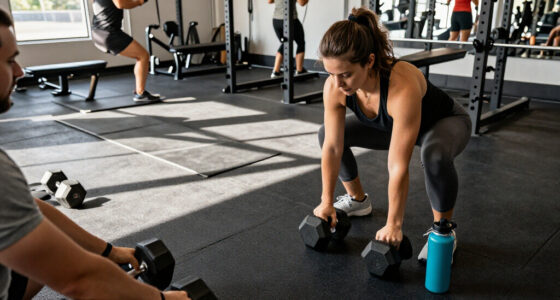

To optimize your workout, hydrate strategically by drinking fluids with electrolytes throughout the day and about 30 minutes before exercising. During workouts, sip water or electrolyte drinks regularly, especially during intense or long sessions, to replace lost minerals and prevent dehydration. After exercise, replenish fluids and electrolytes promptly to speed recovery and maintain balance. Understanding the right timing makes all the difference—just keep going to find out more.

Get health and wellness essentials delivered free with Prime
- Fast, free delivery on millions of items
- Prime Video, Amazon Music and more included
- Member-only deals all year
Key Takeaways
- Hydrate throughout the day with water and electrolytes to start exercise in a well-hydrated state.
- Consume electrolyte-enhanced drinks about 30 minutes before workouts for optimal preparation.
- Sip fluids regularly during exercise, especially during prolonged or intense sessions, to replace lost minerals.
- Use electrolyte-rich beverages or foods post-exercise to effectively rehydrate and support recovery.
- Monitor urine color to ensure proper hydration levels before, during, and after workouts.
Staying hydrated is crucial for maximizing your workout performance and recovery. When your body is properly hydrated, your muscles function at their best, your energy levels stay steady, and you reduce the risk of cramps and fatigue. But hydration isn’t just about drinking water; it’s about maintaining electrolyte balance and timing your fluid intake strategically. Electrolytes—sodium, potassium, magnesium, and calcium—are essential for nerve signaling, muscle contractions, and fluid regulation. If these minerals are out of sync, even if you’re drinking enough water, you might still feel sluggish or experience cramps. That’s why incorporating effective hydration strategies, which include electrolyte replenishment, can make a significant difference in how you perform and recover.
Your hydration strategies should begin well before you start exercising. Drinking water throughout the day is important, but focusing on electrolyte-rich fluids in the hours leading up to your workout ensures your body starts in a balanced state. If you’re engaging in intense or prolonged exercise, consider consuming a sports drink or electrolyte supplement about 30 minutes prior. This helps prevent hyponatremia—a condition caused by too little sodium—and prepares your body to handle sweat loss without disrupting electrolyte balance. During your workout, continue to sip fluids regularly, especially if you’re sweating heavily. Plain water is fine for shorter workouts, but for extended sessions, electrolyte-enhanced drinks help replace lost minerals and maintain hydration balance.
Post-exercise, rehydration becomes critical. You need to replenish both fluids and electrolytes to support muscle recovery and prevent dehydration. Drinking water alone might not suffice if you’ve sweated heavily; instead, opt for drinks containing electrolytes or consume foods rich in minerals, such as bananas, nuts, or dairy. Paying attention to your body’s signals, like thirst and the color of your urine, can help you gauge your hydration status. Pale, clear urine typically indicates good hydration, while dark urine suggests you need to drink more and restore electrolyte levels.
electrolyte sports drinks for hydration
As an affiliate, we earn on qualifying purchases.
As an affiliate, we earn on qualifying purchases.
Frequently Asked Questions
How Does Hydration Affect Workout Performance?
Hydration directly impacts your workout performance by maintaining electrolyte balance and preventing fatigue. When you’re properly hydrated, your muscles function efficiently, and you’re less likely to experience cramps or dizziness. Effective hydration strategies involve drinking water and electrolyte-rich fluids before, during, and after exercise. This guarantees your body stays in prime condition, boosting endurance, strength, and recovery, so you get the most out of every workout session.
What Are Signs of Dehydration During Exercise?
You might notice signs of dehydration during exercise like feeling extremely thirsty, dry mouth, or dark urine, indicating your electrolyte balance is off. Your body will give thirst cues to signal you need fluids. Headaches, dizziness, or muscle cramps also suggest dehydration. Pay attention to these signs, hydrate early, and include electrolyte-rich drinks to maintain your electrolyte balance, preventing dehydration from impairing your workout.
Can Overhydration Be Harmful?
Overhydration can be harmful, especially if it leads to water intoxication, which dilutes your electrolyte balance dangerously. Studies show that up to 75% of marathon runners risk hyponatremia from drinking excessive water. Drinking too much water without replenishing electrolytes can cause nausea, confusion, or even seizures. To stay safe, hydrate wisely, balancing water intake with electrolytes, and listen to your body’s signals during exercise.
How Much Water Should I Drink Daily?
You should aim for about 8-10 cups of fluid intake daily, but it varies based on your activity level, climate, and health. Follow hydration guidelines by listening to your body’s signals—drink when you’re thirsty and monitor your urine color; light yellow indicates proper hydration. Adjust your intake if you’re sweating heavily or in hot weather, ensuring you stay well-hydrated without overdoing it.
Are Sports Drinks Better Than Water for Hydration?
Back in the day, a sports drink was your trusty sidekick, and yes, it can be better than water for hydration during intense activities. They help restore electrolyte balance and provide quick energy. However, watch out for sugar content, as too much can lead to a crash later. If your workout is light or short, water’s usually enough, but for longer sessions, a sports drink can give you an extra edge.
pre-workout electrolyte supplements
As an affiliate, we earn on qualifying purchases.
As an affiliate, we earn on qualifying purchases.
Conclusion
Staying hydrated isn’t just about drinking water; it’s about fueling your body when it matters most. Imagine pushing through your workout, feeling unstoppable, only to be held back by dehydration. Now picture the difference hydration makes—each sip empowering you to go farther, lift heavier, and recover faster. Don’t wait until you’re thirsty to hydrate. The right timing transforms your effort into real progress, turning your workout from a struggle into a triumph.
electrolyte-rich foods for recovery
As an affiliate, we earn on qualifying purchases.
As an affiliate, we earn on qualifying purchases.
hydration monitoring urine test strips
As an affiliate, we earn on qualifying purchases.
As an affiliate, we earn on qualifying purchases.
Cold & flu season Picks
humidifiers
As an affiliate, we earn on qualifying purchases.