

Focusing solely on stretching might feel helpful, but strengthening your core is essential for fixing posture because it directly supports spinal alignment and helps prevent slouching. Weak muscles around your spine and pelvis can cause muscle imbalances and discomfort, while building core stability stabilizes your skeletal structure and reduces strain. By emphasizing strength, you create a solid foundation for better posture that lasts longer. Keep exploring to discover how combining these strategies can bring even better results.

Get health and wellness essentials delivered free with Prime
- Fast, free delivery on millions of items
- Prime Video, Amazon Music and more included
- Member-only deals all year
Key Takeaways
- Strengthening core muscles provides long-term support for proper posture, unlike stretching which offers temporary relief.
- Strong muscles stabilize the spine and pelvis, preventing slumping and maintaining alignment more effectively than stretching alone.
- Combining strength training with ergonomic adjustments addresses underlying muscle weaknesses, leading to sustainable posture improvements.
- Stretching alone may improve flexibility but doesn’t correct muscular imbalances or reinforce proper postural habits.
- Building muscle strength reduces strain on joints and ligaments, offering a more durable solution than stretching alone.
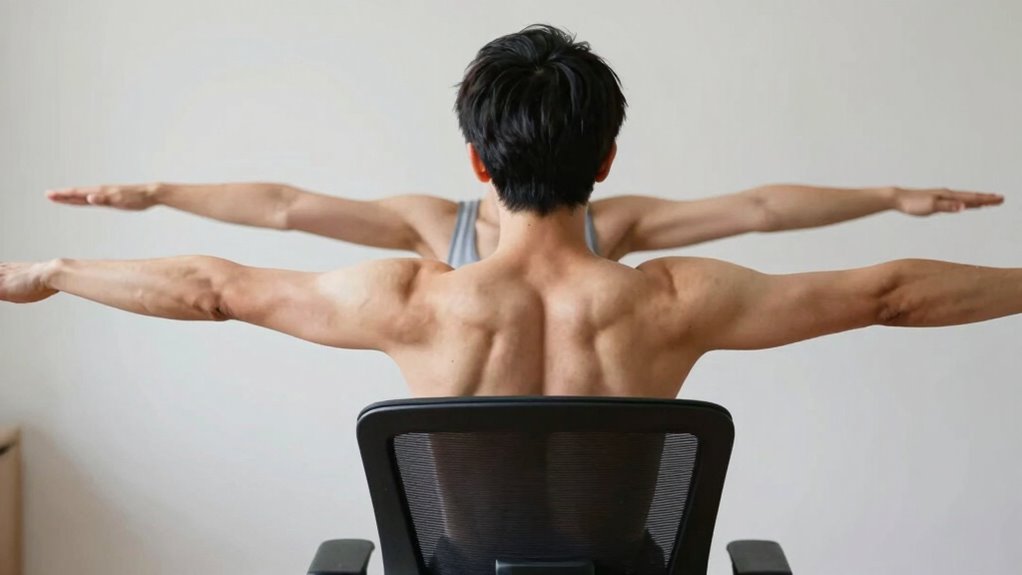
Have you ever wondered how much better you’d feel if your posture improved? It’s a common question, especially if you spend hours sitting at a desk or hunched over your phone. Good posture isn’t just about looking confident; it plays a pivotal role in your overall health and comfort. One simple yet effective way to start is by investing in ergonomic chairs. These chairs are designed to support your natural spinal curve, promoting proper alignment and reducing strain on your back and neck. When you sit in an ergonomic chair, you automatically adopt a better posture because it encourages you to sit upright with your feet flat on the floor and your hips positioned correctly. But relying solely on ergonomic furniture isn’t enough. To truly fix your posture, you need to strengthen your core muscles. Core exercises are essential because they build the foundation for proper alignment by stabilizing your spine and pelvis. When your core is strong, you’re less likely to slump or slouch, which are common habits that lead to poor posture over time.
Focusing on core exercises doesn’t mean you need an intense workout routine. Simple movements like planks, bridges, and seated marches can make a significant difference. These exercises engage your abdominal muscles, lower back, and obliques, creating a balanced support system around your spine. Incorporating core exercises into your daily routine helps to correct imbalances, improve posture, and reduce discomfort caused by prolonged sitting or repetitive movements. The combination of ergonomic chairs and core strengthening is powerful because it addresses both the habit and the underlying weakness that causes poor posture. When your muscles are strong enough to support your skeletal structure, you naturally adopt a more upright and aligned stance. This reduces the strain on your joints and ligaments and prevents issues like back pain, neck tension, and headaches.
ergonomic office chair with lumbar support
As an affiliate, we earn on qualifying purchases.
As an affiliate, we earn on qualifying purchases.
Frequently Asked Questions
Can Posture Improvement Be Achieved Solely Through Exercises?
Yes, you can improve your posture through exercises, but combining them with ergonomic adjustments and better daily habits is more effective. Strengthening your core and back muscles supports proper alignment, while ergonomic tweaks reduce strain. Regularly practicing mindful habits, like sitting correctly and taking breaks, helps reinforce these improvements. So, a combination of targeted exercises, ergonomic changes, and habit adjustments accelerates and sustains posture better than exercises alone.
How Long Does It Typically Take to See Posture Changes?
You might notice posture changes in as little as a few weeks if you commit to consistent strength exercises and ergonomic adjustments. Think of it like planting a garden; with daily care and awareness, growth comes steadily. Maintaining posture awareness and making small adjustments daily accelerates progress. Usually, visible improvements take about 4 to 8 weeks, but sustained effort and mindful habits guarantee lasting results.
Are There Specific Exercises Best for Certain Postural Issues?
Yes, certain exercises target specific postural issues. For rounded shoulders, try shoulder blade squeezes and chest stretches; for forward head posture, focus on neck strengthening and chin tucks. Incorporate ergonomic adjustments and improve your daily habits by taking regular breaks and maintaining proper desk setup. These tailored exercises, combined with mindful habits, can effectively correct your posture over time, especially when paired with consistent effort and awareness.
Is Stretching Necessary if Strength Training Already Improves Posture?
If strength training already improves your posture, you might think stretching is unnecessary, but that’s a stretching myth. For example, Sarah’s back pain persisted despite strength exercises until she incorporated targeted stretching. Flexibility misconceptions suggest stretching isn’t always needed, but in reality, combining both enhances muscle balance. Stretching helps prevent tightness and supports long-term posture health, so don’t dismiss it — it’s a crucial part of an all-encompassing approach.
Can Poor Posture Cause Long-Term Health Problems?
Poor posture can cause long-term health problems like chronic pain, misalignment, and decreased mobility. If you don’t make ergonomic adjustments and improve your daily habits, these issues could worsen over time. Strengthening your muscles supports proper posture, but addressing habits and workspace setup is essential. You need a combination of strength exercises and mindful daily routines to prevent long-term health complications from poor posture.
core strengthening exercise equipment
As an affiliate, we earn on qualifying purchases.
As an affiliate, we earn on qualifying purchases.
Conclusion
Remember, focusing on strength is more effective for improving your posture than stretching alone. Building muscle support helps maintain proper alignment and prevents future issues. Did you know that studies show 80% of people with poor posture experience relief after combining strength training with stretching? So, don’t just stretch—incorporate strength exercises into your routine. Your posture will thank you, and you’ll feel better and more confident every day.
As an affiliate, we earn on qualifying purchases.
stability ball for core exercises
As an affiliate, we earn on qualifying purchases.
As an affiliate, we earn on qualifying purchases.
Halloween Picks
halloween
As an affiliate, we earn on qualifying purchases.