
To avoid damaging your knees when starting to run, invest in proper shoes designed for running and visit a specialty store to find the right fit. Begin with a walk-run routine, gradually increasing your running intervals while listening to your body for signs of discomfort. Focus on good form and don’t push through pain. Staying consistent and patient will protect your knees and build a healthy routine—continue this approach to learn more about safe running habits.
Key Takeaways
- Start with a walk-run routine, gradually increasing running intervals to reduce knee strain.
- Choose well-fitting, supportive running shoes designed for your gait at a specialty store.
- Maintain proper running form: upright posture, relaxed shoulders, and slight forward lean.
- Listen to your body; rest and recover if you experience knee discomfort or pain.
- Progress slowly and consistently, avoiding sudden increases in distance or intensity.
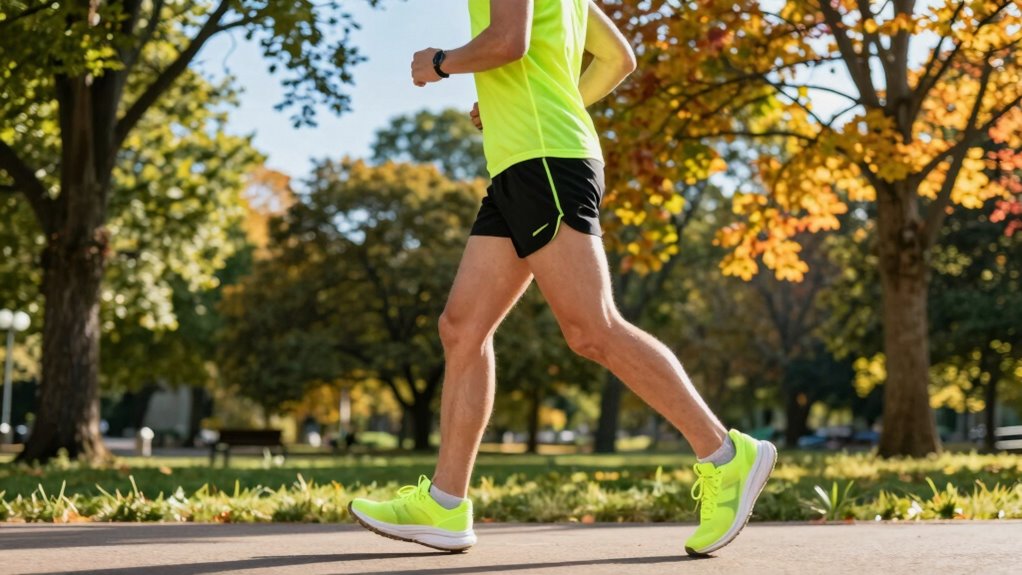
Ever wondered how to start running without feeling overwhelmed? The key is to set yourself up for success from the beginning. First, focus on choosing the proper footwear. Investing in good running shoes isn’t just about comfort; it’s about protecting your knees and joints from unnecessary strain. Look for shoes that fit well, provide ample support, and are designed for running. Visiting a specialty running store can help you find the right pair, as staff can analyze your gait and recommend shoes suited to your foot type. Don’t be tempted to wear worn-out sneakers or cross-trainers, as worn shoes lose their shock absorption, increasing injury risk. Proper footwear acts as a foundation, helping you maintain proper form and reducing the likelihood of pain or injury.
Once you’ve got the right shoes, it’s *vital* to embrace a gradual progression. You might feel excited and *enthusiastic* to cover long distances right away, but rushing into intensive running can do more harm than good. Instead, start slow. Begin with a mix of walking and running, such as running for 30 seconds, then walking for a minute. Repeat this cycle several times, gradually increasing your running intervals as your body adapts. This slow build-up allows your muscles, tendons, and joints to strengthen without overwhelming them, which *considerably* lowers the chance of knee pain or other injuries. Remember, consistency is more important than speed or distance. Small, steady gains will get you to your goals without risking setbacks.
Pay attention to how your body responds. If you notice discomfort or pain, particularly around your knees, don’t push through it. Rest, ice, and gentle stretching can help, but if pain persists, consider consulting a healthcare professional. Incorporating rest days into your plan is essential to allow your body to recover and adapt. As you progress, focus on maintaining good running form—upright posture, relaxed shoulders, and a slight forward lean. This not only improves efficiency but also minimizes stress on your knees.
Frequently Asked Questions
What Is the Best Running Shoe for Knee Protection?
The best running shoe for knee protection features advanced running shoe technology like cushioning and stability support. Look for shoes that offer proper arch support and shock absorption to reduce impact. Shoe fit tips include ensuring a snug fit without tightness and trying on shoes later in the day when your feet are swollen. Prioritizing these factors helps protect your knees and makes running more comfortable.
How Often Should Beginners Replace Their Running Shoes?
You should replace your running shoes every 300 to 500 miles, or roughly every 4 to 6 months, to maintain maximum shoe cushioning and sole durability. As soles soften and cushioning compress, your shoes lose their protective power, risking knee strain. Keep a mileage tracker, and listen to your body’s signals—if your shoes feel less supportive or show visible wear, it’s time for a fresh pair.
Can Running on Uneven Surfaces Prevent Knee Injuries?
Running on uneven surfaces can help prevent knee injuries because terrain variety encourages your muscles to adapt and strengthen, reducing strain. Soft surfaces like grass or dirt absorb impact better than concrete, offering surface softness that protects your knees. However, always be cautious with uneven terrain, as it can increase the risk of falls. Incorporate a mix of surfaces carefully, paying attention to your body’s signals to stay injury-free.
Is Cross-Training Beneficial for Knee Health?
Cross-training is incredibly beneficial for your knee health. It boosts knee joint stability by engaging different muscles and reduces repetitive stress, preventing injury. Plus, it enhances soft tissue resilience, making your knees more adaptable and less prone to damage. By mixing activities like cycling or swimming, you give your knees a break from running’s impact, helping you stay injury-free and strong for the long haul.
How Do I Recognize Early Signs of Knee Pain?
You’ll notice early signs of knee pain if you feel persistent knee stiffness or swelling after running or activity. Pay attention to discomfort that worsens with movement or doesn’t improve with rest. Swelling awareness is key—if your knee looks puffier than usual, it’s a sign to rest and consult a healthcare professional. Catching these signs early helps prevent more serious injuries and keeps your knees healthy for the long run.
Conclusion
Remember, starting your running journey is like finding that perfect playlist—exciting and a little unpredictable. By following this plan, you’ll build strength without risking your knees, just like how a good pair of shoes keeps you comfortable. So, keep your eyes on the finish line and enjoy every step. Before you know it, you’ll be surprised how far you’ve come—sometimes, the smallest steps lead to the biggest adventures. Happy running!