

To understand Zone 2 without a heart rate chart, focus on your breathing and how you feel. Keep your breathing steady and controlled—easy enough to hold a conversation without gasping. Notice gentle warmth or light fatigue in your legs, but avoid heavy breathing or exhaustion. Stay mindful of these sensations and effort cues, and you’ll be able to maintain proper Zone 2 training. If you’re curious about more tips, there’s plenty more to explore.
Key Takeaways
- Focus on controlled, steady breathing and the ability to hold a conversation during exercise.
- Perceived effort should feel moderate, around 4-5 out of 10, without heavy or rapid breathing.
- Physical sensations like light warmth or gentle fatigue indicate staying within Zone 2.
- Maintain a consistent pace that feels sustainable without pushing into exhaustion.
- Use body cues such as ease of breathing and comfort level to monitor effort without relying on heart rate charts.
What Does Zone 2 Really Mean: No Heart Rate Charts Needed

Many people think achieving Zone 2 requires constantly checking heart rate charts, but that’s not always necessary. Instead, focus on your breathing patterns and perceived exertion. In Zone 2, your breathing feels controlled and steady, not rapid or labored. You should be able to carry on a conversation without gasping for air. Perceived exertion is moderate—you feel like you’re working, but not overly exhausted. This level of effort typically feels like a 4 or 5 on a 10-point scale. By tuning into how you breathe and how hard you feel you’re working, you can accurately gauge your Zone 2 intensity without constantly monitoring numbers. Recognizing signs of twin flame connection can also help you tune into your emotional and energetic state, making training more intuitive, helping you stay in the zone naturally. Paying attention to your breathing rhythm can further enhance your ability to stay in Zone 2 without relying on devices. Additionally, developing an awareness of your physical cues can help you maintain the correct intensity effortlessly. Cultivating body awareness can deepen your understanding of these subtle signals and improve your overall training effectiveness. Incorporating awareness of nutritional considerations can also support your endurance and recovery during training sessions.
How Can I Recognize Zone 2 Effort by Breathing and Feelings?

You can recognize Zone 2 effort by paying close attention to how you breathe and the sensations in your body during exercise. Your breathing patterns should be steady and manageable, not deep or rapid. You might notice:
- Breathing feels effortless, with only slight increases in breath rate
- You can carry on a conversation without gasping for air
- Physical sensations include a gentle warmth or light fatigue in your legs
- You feel a sense of sustained energy, not exhaustion or heavy breathing
- Perceived exertion remains moderate, allowing you to maintain the effort comfortably over time
- Monitoring your authenticity in effort helps ensure you’re staying in the appropriate zone for optimal training benefits
- Being aware of your breathing patterns can help you stay within the correct intensity without relying solely on devices
- Recognizing the physical cues that indicate moderate effort can further help you stay in Zone 2 during your workouts
- Paying attention to your body awareness enhances your ability to gauge effort and stay consistent.
Signs You’re Training in the Right Zone 2 Effort

When training in Zone 2, clear signs indicate you’re maintaining the right effort level. You’ll notice you can sustain conversation easily and feel a steady, manageable pace. Your breathing stays controlled, not labored, and you avoid fatigue or heavy breathing. If you’re practicing interval training, you’ll find your pace awareness helps you stay consistent during each session. Additionally, sound vibrations may subtly influence your focus and relaxation during your workout. Recognizing your training zone through these sensations can help optimize your endurance and recovery. Monitoring your perceived exertion and understanding the heart rate zones can further enhance your training effectiveness.
Why Zone 2 Is Essential for Endurance and How to Stay in It During Workouts
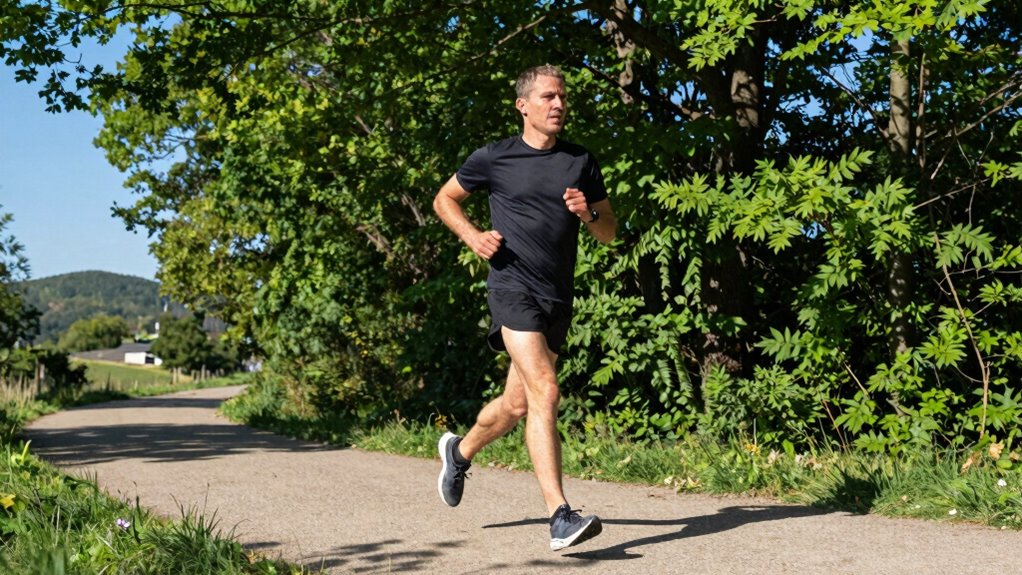
Maintaining the right effort level in Zone 2 not only keeps your workout sustainable but also builds the foundation for improved endurance. Training in this zone promotes recovery benefits by allowing your body to repair and adapt without excessive fatigue. It encourages essential training adaptations like increased mitochondrial density and fat utilization, which boost stamina over time. Staying in Zone 2 ensures you’re pushing enough to stimulate progress without risking burnout. To do this, focus on steady, controlled breathing and consistent pace. You can also monitor your perceived effort or use simple cues like holding a light conversation. Remember, the goal is to maintain this moderate intensity to maximize endurance gains while minimizing stress on your body. Proper Zone 2 training is key to long-term performance improvement. Multi-mower setups can help optimize yard maintenance while you focus on your training. Additionally, understanding your cardiovascular response helps tailor your efforts to stay within this crucial zone effectively.
Practical Tips to Maintain Zone 2 Without Relying on Heart Rate Devices

Since relying solely on heart rate devices isn’t always practical, there are effective ways to stay in Zone 2 using your senses and simple cues. Pay attention to perceived exertion; aim for a level where talking is easy but you’re breathing heavier. You should feel muscle fatigue gradually building without discomfort or soreness. Use these cues to guide your workout: | Cue | Feel | |————————-|—————————————————| | Perceived exertion | Light, sustainable effort, easy to talk through | | Muscle fatigue | Slight tiredness, not painful or overwhelming | | Breathing | Steady, manageable, not gasping | Additionally, recognizing your body’s natural signals can help you maintain consistent effort and optimize your training. Developing an awareness of your perceived exertion levels can help you stay in Zone 2 without the need for devices. Regularly monitoring your heart rate indirectly through these cues can enhance your training accuracy over time. Being mindful of your training intensity can also help prevent overexertion and promote steady progress.
Frequently Asked Questions
Can Zone 2 Training Improve My Overall Athletic Performance?
Yes, zone 2 training can boost your athletic performance by enhancing your aerobic capacity and fat oxidation. When you train in this zone, you improve your body’s efficiency at using fat for fuel, which conserves glycogen for higher-intensity efforts. This leads to better endurance, quicker recovery, and increased stamina overall. Consistently including zone 2 workouts helps you perform longer and more effectively across various sports and physical activities.
How Long Should a Typical Zone 2 Workout Last?
A typical Zone 2 workout lasts about 45 to 90 minutes, like a steady river flowing calmly. To see benefits, follow duration guidelines, aiming for at least three sessions per week. Consistent workout frequency helps your body adapt and improve endurance. If you’re new, start with shorter sessions and gradually increase duration. Remember, listening to your body is key to avoiding overtraining while maximizing your Zone 2 gains.
Does Nutrition Affect My Ability to Stay in Zone 2?
Yes, nutrition affects your ability to stay in Zone 2. Proper nutritional timing and macronutrient balance provide the energy needed for sustained effort. Eating carbohydrate-rich foods before your workout can boost glycogen stores, helping you maintain a steady pace. Conversely, consuming too much fat or protein may hinder your performance. Focus on balanced meals, hydrate well, and time your intake to optimize your ability to stay in Zone 2 comfortably.
Are There Any Common Mistakes When Training in Zone 2?
You might think you’re a pro, but common mistakes in zone 2 training include ignoring proper breathing techniques and gear choices. Forgetting to breathe deeply can make your workout harder, and using the wrong gear can cause unnecessary fatigue. Don’t assume you’re doing it right just because you feel comfortable; focus on these details to truly optimize your zone 2 efforts and avoid sabotaging your progress.
How Does Zone 2 Training Differ From Other Cardio Zones?
Zone 2 training differs from other cardio zones by focusing on moderate exercise intensity, keeping your heart rate just above resting but below higher thresholds. This means you’re working at a sustainable level, improving endurance and fat burn. Unlike higher zones that push your limits, Zone 2 emphasizes steady effort, making it ideal for building aerobic capacity without overexertion, helping you train efficiently and recover faster.
Conclusion
By tuning into your breathing and feelings, you can softly navigate the gentle currents of Zone 2 without relying solely on numbers. Trust in your body’s subtle signals, and you’ll find yourself effortlessly drifting through endurance training’s quiet domain. Embrace the art of listening, and let your intuition guide you, turning every workout into a harmonious dance where effort and ease coexist. In this subtle balance, true progress quietly unfolds.