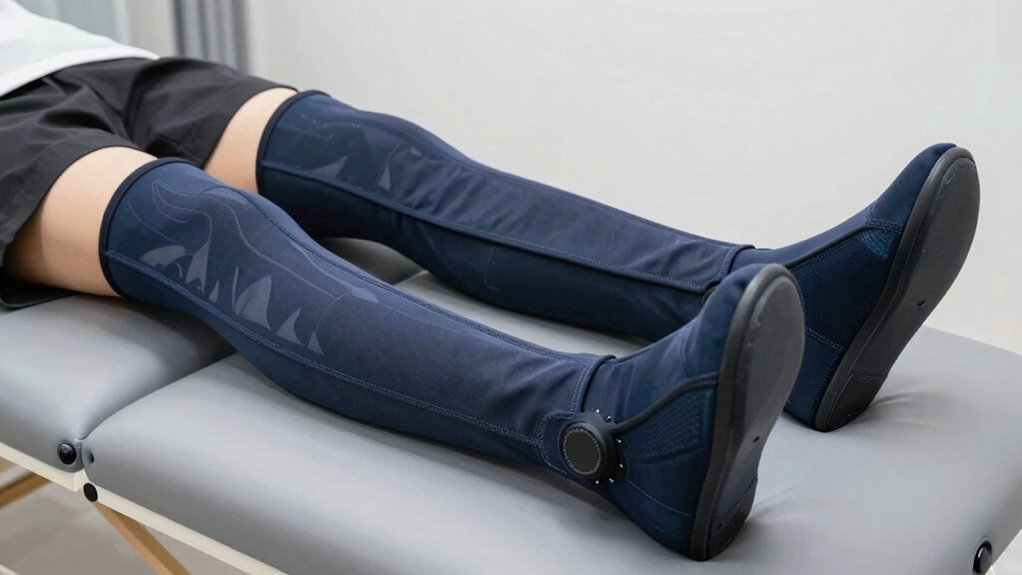

Compression boots can boost circulation and aid recovery when you use them correctly and choose the right size. They help reduce soreness, swelling, and fatigue, especially after workouts or long periods of standing. However, they may not be suitable if you have circulation issues or certain health conditions. Proper sizing involves measuring your calves and thighs accurately to make certain of comfort and effectiveness. If you want to maximize benefits and avoid common mistakes, there’s more to explore.
Key Takeaways
- Compression boots are effective for improving circulation, reducing swelling, and aiding recovery when used with proper fit and pressure settings.
- They may not be suitable for individuals with circulation issues or certain health conditions; consult a healthcare professional first.
- Accurate sizing involves measuring calves and thighs with a flexible tape, ensuring snug but not tight fit for optimal compression.
- Follow manufacturer guidelines on duration and pressure to prevent skin irritation, circulation problems, or reduced therapy benefits.
- Regular maintenance, correct sizing, and gradual pressure adjustments enhance comfort and maximize the effectiveness of compression therapy.
What Are Compression Boots and How Do They Work?
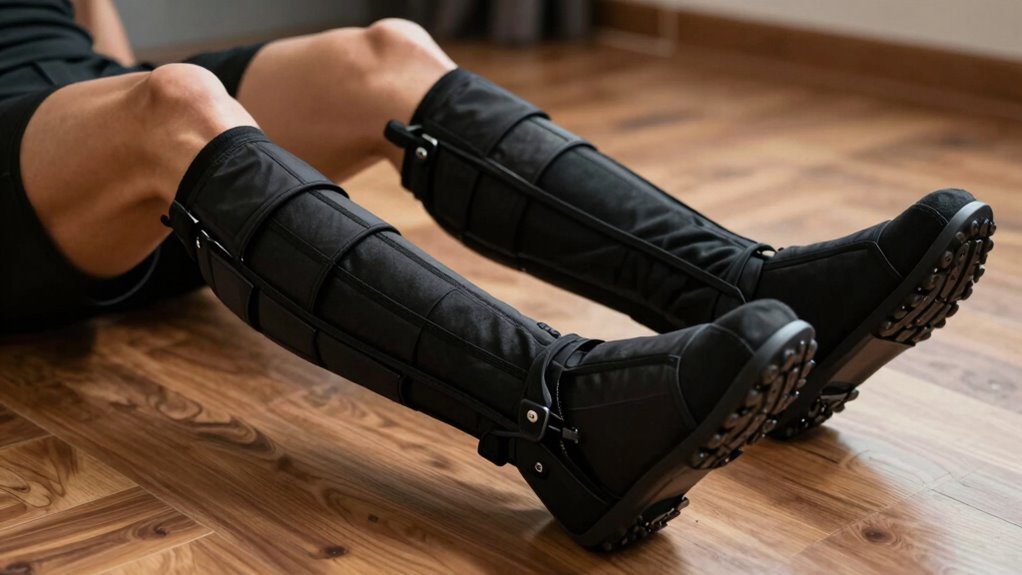
Have you ever wondered how compression boots help improve recovery? They use compression therapy to apply gentle pressure to your legs or arms, promoting better circulation improvement. When you wear these boots, they inflate and deflate in a rhythmic cycle, mimicking manual massage. This process helps push blood and lymph fluid through your vessels, reducing swelling and muscle soreness. Understanding hive health can also be beneficial for beekeepers looking to optimize their colonies. Additionally, the quality of the fit and compression level significantly impacts their effectiveness, ensuring targeted support where your body needs it most. Overall, they support your body’s natural healing processes, making them a popular tool for athletes and anyone looking to recover faster after intense activity.
Are Compression Boots Right for Your Recovery Needs?
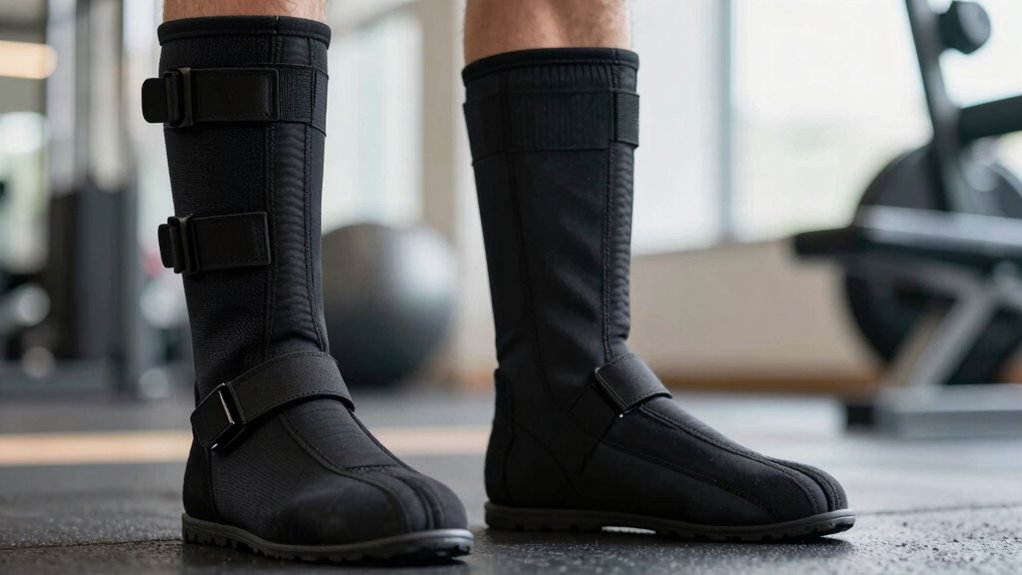
Deciding whether compression boots are right for your recovery needs depends on your activity level, injury history, and recovery goals. If you’re an athlete or someone recovering from injury, these devices can boost circulation and reduce soreness. However, they may not suit everyone, especially if you have circulation issues or certain health conditions. Understanding their historical development shows how they’ve evolved from medical devices to modern fitness trends, influencing fashion trends in sportswear. Additionally, their affiliate marketing origins have contributed to their popularity among various user groups, fueling consumer awareness, and adoption. Recognizing the natural pool movement highlights a shift toward more sustainable and eco-friendly backyard options. The technological advancements in compression devices continue to improve their effectiveness and user comfort, making them a valuable tool in many recovery routines.
How to Find the Perfect Fit: Measuring and Choosing the Right Compression Boots
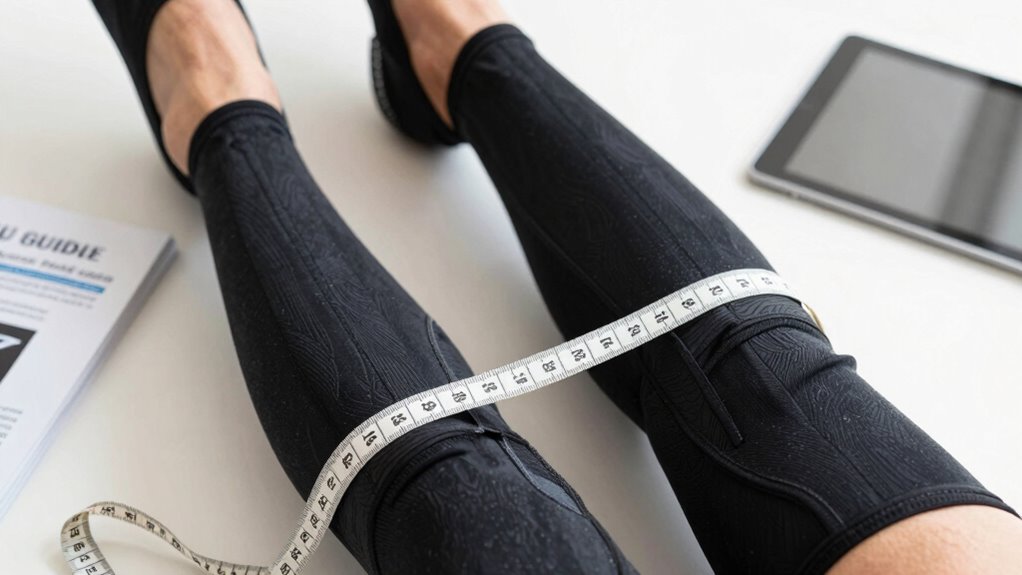
To guarantee your compression boots provide the best support, start by measuring your calves and thighs accurately. Follow the proper measurement techniques and stick to the correct sizing guidelines for your specific brand. This careful approach helps ensure a proper fit, which is essential for effective compression and recovery. Additionally, understanding proper sizing can help you avoid discomfort or ineffective compression. Remember that selecting the right size can also prevent circulation issues and enhance your overall comfort during use. Regularly consulting manufacturer-specific size charts can further improve the accuracy of your fit and effectiveness. Incorporating sustainable textile practices when selecting your compression gear can also contribute to environmentally responsible choices.
Proper Measurement Techniques
Finding the right fit for compression boots starts with accurate measurements of your legs and calves. Use measuring techniques like a flexible tape measure and make sure it’s snug but not tight. Measure the widest part of your calves and the length from just below your knee to your ankle. Keep the tape level and avoid pulling it too tight, which can skew sizing accuracy. Record these measurements carefully, noting the units used. For best results, measure both legs, as they can differ slightly. When selecting compression boots, compare your measurements with the manufacturer’s sizing chart. Proper measurement techniques guarantee you choose the right size, providing effective compression without discomfort. Accurate sizing is essential for comfort, performance, and maximum benefits. Additionally, understanding compression therapy and how it works can help you select the most suitable compression boots for your needs. To optimize fit, consider the material elasticity of the boots, which influences how well they conform to your leg contours. Recognizing the cultural significance of Indonesian masks can also inspire thoughtful decor choices when incorporating these art pieces into your space.
Correct Sizing Guidelines
Once you’ve measured your legs and calves accurately, the next step is to interpret those measurements to select the proper size. Sizing accuracy is vital to ensure the compression boots provide the right level of support without discomfort. Use reliable measurement tools like a flexible tape measure to obtain precise circumferences at key points—typically the widest part of your calves and legs. Always refer to the manufacturer’s sizing chart, as sizes can vary between brands. Keep your measurements consistent and avoid overly tight or loose readings. Choosing the correct size means your compression boots will fit snugly but comfortably, maximizing their effectiveness. Proper fit and comfort are essential for achieving the therapeutic benefits of compression therapy and preventing circulation issues. Remember, accurate measurement and careful comparison to sizing guides are essential for a perfect fit that promotes recovery and comfort. Additionally, understanding the proper piercing care and hygiene can be crucial if you use compression boots during recovery from piercings or skin irritations. To ensure optimal results, consider proper sizing techniques and consult with healthcare professionals if uncertain about your measurements.
Common Mistakes to Avoid When Using Compression Therapy
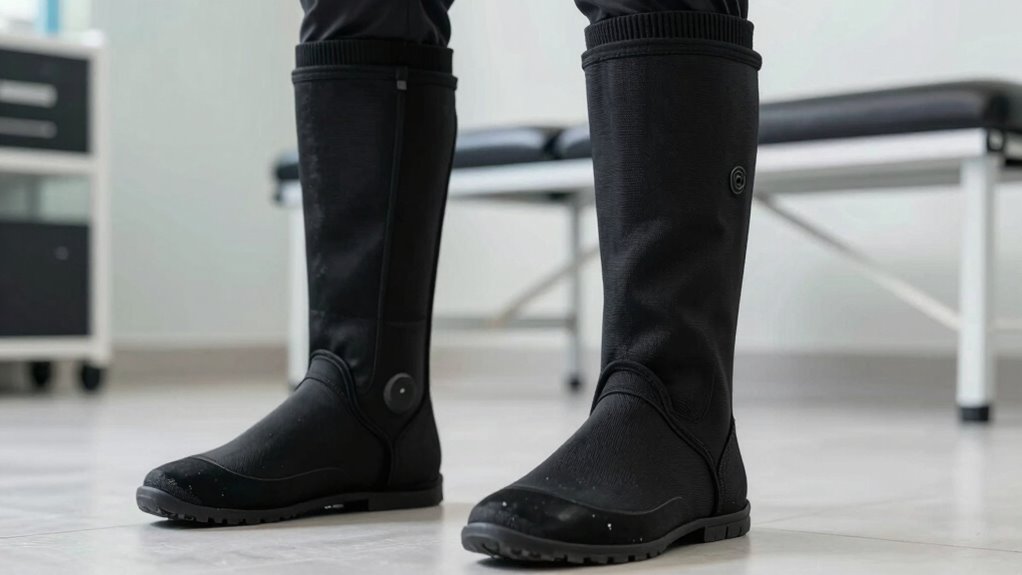
Using the wrong size can reduce the benefits and cause discomfort, so make sure your compression boots fit properly. Ignoring recommended usage guidelines can lead to ineffective results or even harm. Overusing compression devices might cause issues, so follow the suggested duration and frequency. Additionally, understanding proper balance and motivation techniques can enhance your recovery and performance outcomes. Being aware of proper fit ensures optimal compression and comfort during use. Ensuring the correct compression level is essential for safety and effectiveness. Regularly checking and monitoring battery health can prevent unexpected failures and maintain device performance. Maintaining awareness of battery health and proper care can also help extend the lifespan of your compression devices.
Incorrect Sizing Choices
Choosing the wrong size for your compression boots can undermine their effectiveness and even cause discomfort or injury. Sizing errors and fit mistakes can lead to poor circulation, skin irritation, or inadequate compression. To avoid these issues, verify you measure your calves and ankles accurately and follow manufacturer guidelines. Using a trusted directory can help you find reputable providers or retailers who can assist with proper sizing. Additionally, understanding proper fit ensures you select a size that offers optimal compression without restricting movement. Common mistakes include: – Selecting a size based solely on weight or clothing size – Ignoring differences between manufacturer sizing charts – Using a size that’s too tight, causing restricted blood flow – Choosing a size too loose, reducing compression benefits Proper sizing is essential for comfort and effectiveness. If you’re unsure, consult a professional or use a sizing guide. Avoid fit mistakes to maximize the benefits of your compression therapy.
Ignoring Usage Guidelines
Ignoring usage guidelines can considerably reduce the effectiveness of your compression therapy and even lead to discomfort or health issues. Failing to follow proper usage guidelines often results in sizing mistakes that compromise the benefits of compression boots. If you don’t adhere to recommended durations and pressure settings, you risk unnecessary pressure or insufficient compression, which diminishes recovery or circulation improvement. Overusing or underusing your device can also cause skin irritation or circulation problems. Always read and follow the manufacturer’s instructions carefully. Avoid shortcuts or assumptions about your needs. Properly understanding and implementing usage guidelines ensures you get the maximum benefit from your compression boots while minimizing potential risks. Remember, correct usage isn’t just about fit—it’s about safe, effective therapy. Temperature regulation during treatment can also influence comfort and outcomes, so be mindful of how your device interacts with your body’s response to cold or heat.
Overusing Compression Devices
While overusing compression devices might seem like a way to maximize benefits, doing so can actually hinder your recovery and cause harm. Excessive use can lead to compression dependency, where your body relies too heavily on the device rather than natural circulation. This dependency may weaken your muscles and impair blood flow once you stop using the compression boots. To avoid this, don’t wear them longer than recommended or use them more frequently than advised. Be cautious of signs like skin irritation or numbness, which indicate overuse. Remember, these devices are meant to supplement, not replace, your body’s natural recovery process. Use them as directed, and always consult a healthcare professional if you’re unsure about your usage habits.
Signs That Compression Boots Can Help You
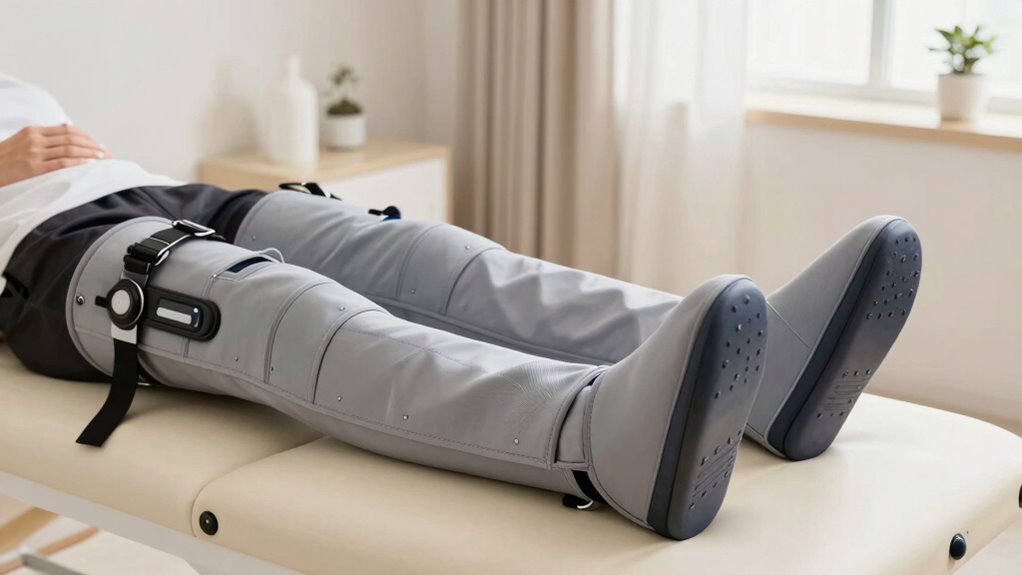
If you’re experiencing persistent soreness, swelling, or fatigue in your legs after workouts or long periods of standing, these could be signs that compression boots might help you. You may notice muscle fatigue that doesn’t quickly improve with rest, or your legs feel heavy and tired more often than not. Compression boots are designed to promote circulation improvement, helping blood flow back to your heart and reducing fluid buildup. If you find relief when using them, it’s a good indication they’re addressing your symptoms. These devices are especially helpful if your legs feel sluggish or if recovery times are longer than usual. Recognizing these signs can guide you to try compression therapy for better comfort and faster recovery.
Tips to Maximize Comfort and Effectiveness With Compression Boots
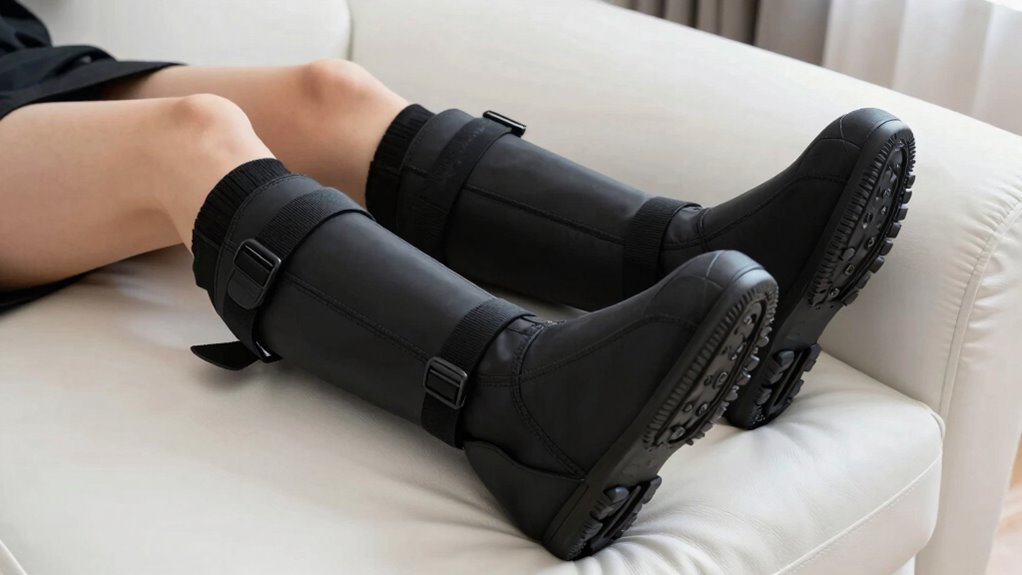
To get the most out of your compression boots, proper usage and adjusting the settings to suit your comfort level are essential. Take advantage of the customization options to tailor the compression cycle, pressure, and duration to your needs. Make sure you’re comfortable by starting with lower settings and gradually increasing them as you adapt. Regular maintenance tips include cleaning the boots after each use and inspecting hoses and seals for wear. Properly stored, they’ll last longer and perform better.
Adjust compression settings gradually, keep boots clean, and store properly for optimal performance.
- Experiment with different pressure levels for maximum comfort
- Use the preset programs or customize settings based on activity
- Keep the units clean and dry after each session
- Store in a cool, dry place to preserve components
Frequently Asked Questions
Are Compression Boots Suitable for Preventing Sports Injuries?
Yes, compression boots can aid in sports injury prevention by improving blood flow and reducing muscle soreness, which helps you recover faster and maintain athletic performance. While they aren’t a guaranteed method to prevent injuries, incorporating them into your routine can support your muscles and reduce fatigue. Use them correctly and consistently, especially after intense workouts, to optimize recovery and keep you performing at your best.
How Long Should I Wear Compression Boots During Each Session?
Most users find that wearing compression boots for about 20 to 30 minutes per session offers ideal timing for recovery. Studies show that this duration helps improve circulation and reduce muscle soreness effectively. Avoid exceeding 45 minutes, as longer sessions may cause discomfort or hinder recovery. Stick to the recommended session duration to maximize benefits without risking overuse, ensuring you get the best results from your compression therapy.
Can Compression Boots Replace Traditional Physical Therapy?
Compression boots can’t fully replace traditional physical therapy, but they can enhance your muscle recovery and improve circulation. They work well as a complementary tool, helping reduce soreness and swelling after workouts. However, physical therapy involves targeted exercises and professional guidance that boots alone can’t provide. Use compression boots alongside therapy for maximum results, ensuring you’re addressing both recovery and underlying issues effectively.
Are There Any Health Conditions That Contraindicate Their Use?
Using compression boots is like walking a tightrope—you need to be careful. If you have certain medical contraindications like deep vein thrombosis, heart failure, or infections, they could pose serious health risks. Always consult your healthcare provider before use. Ignoring these risks can worsen your condition or cause complications. So, if you have any underlying health issues, avoid using compression boots without professional guidance.
How Often Should I Replace or Upgrade My Compression Boots?
You should replace or upgrade your compression boots every 1 to 2 years, depending on usage and wear. Regular boot maintenance, like cleaning and inspecting for damage, extends their lifespan. Follow sizing guidelines carefully to guarantee proper fit and effectiveness. If you notice reduced compression or discomfort, it’s time for an upgrade. Staying attentive to these signs helps you get the most benefits and maintains your health and comfort.
Conclusion
Think of compression boots as your personal tune-up crew, working to keep your muscles flowing smoothly. When used right, they’re like a gentle wave that restores your energy without overwhelming you. But if you ignore sizing or misuse them, it’s like trying to catch a wave on a surfboard that’s too small—you’re likely to wipe out. Stay informed, choose wisely, and let your recovery flow seamlessly like a well-choreographed dance.