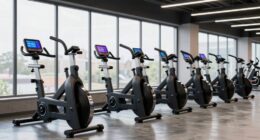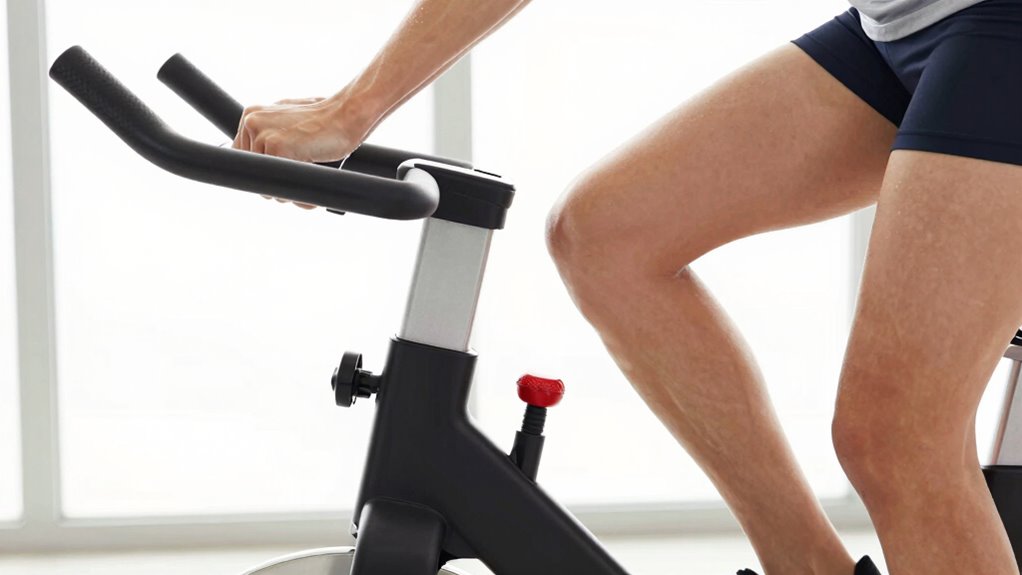

To prevent knee pain, make sure your spin bike seat is at the right height: when sitting on the saddle, your leg should have a slight bend at the bottom of each pedal stroke. Adjust the handlebar so it’s comfortable and supports proper posture without causing hunching or strain. Small tweaks hit the sweet spot, and if you keep these tips in mind, you’ll find your fit improves—more insights await to optimize your ride.
Key Takeaways
- Adjust the saddle height so your knee is slightly bent at the pedal’s lowest point to prevent overextension or hyperextension.
- Position the saddle forward or backward to keep your hips stable and ensure smooth knee tracking over the pedal stroke.
- Set the handlebar height to align with or slightly above the saddle to promote proper posture and reduce upper body strain.
- Check that your knees track straight over the pedals during pedaling to avoid lateral knee stress.
- Regularly fine-tune your setup, especially if experiencing knee discomfort, to maintain optimal biomechanics and prevent pain.
Why Proper Spin Bike Seat Height Prevents Knee Pain
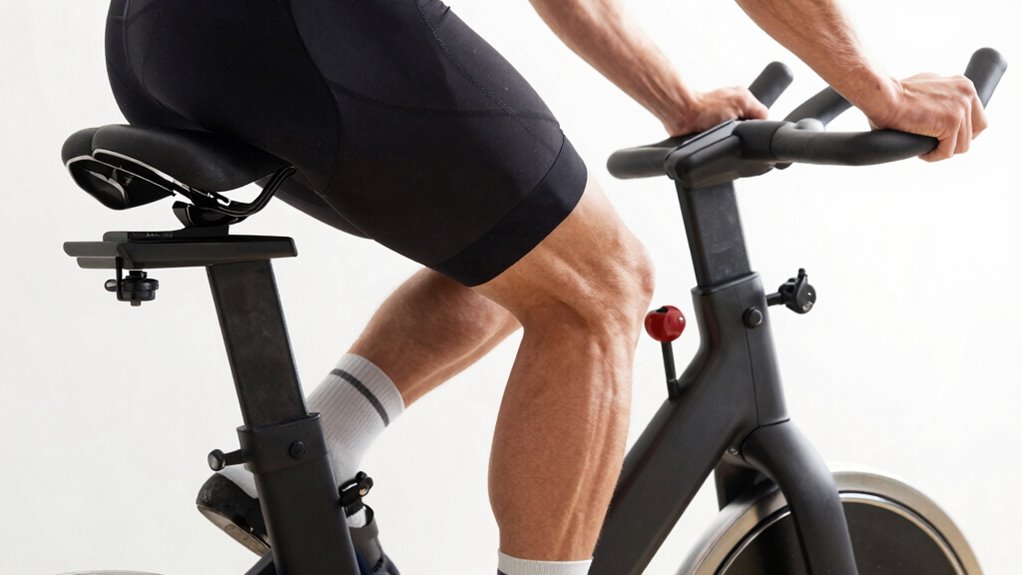
If your spin bike seat isn’t set at the right height, you’re more likely to experience knee pain during your workout. Proper seat height guarantees correct knee alignment, reducing strain on your joints. When the seat is too low, your knee stays over-extended, increasing stress and risking injury. If it’s too high, you may hyperextend your knee, causing discomfort. Additionally, adjusting the seat angle helps maintain proper knee alignment by preventing your knees from collapsing inward or outward. A level or slightly downward tilt encourages a natural pedal stroke and reduces unnecessary pressure. When you set your seat height and angle correctly, you promote smooth movement, minimize knee stress, and optimize your workout efficiency. Proper setup is key to avoiding pain and enhancing performance. Understanding biomechanics can further improve your bike fit and reduce the risk of discomfort, especially as it relates to joint health, which is closely linked to musculoskeletal balance.
How to Adjust Your Spin Bike Seat for Comfort and Performance
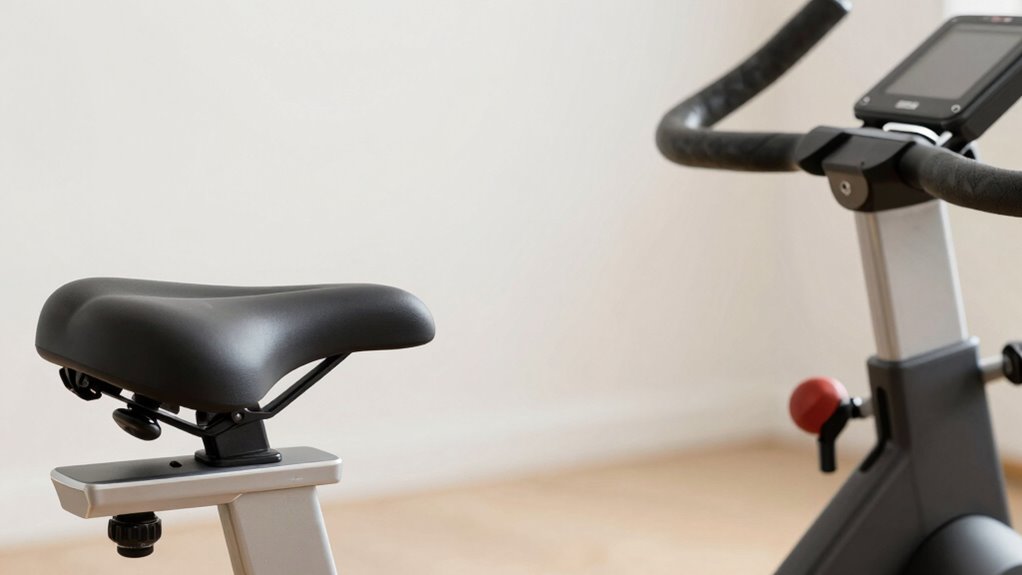
Adjusting your spin bike seat properly can substantially improve your comfort and performance during workouts. To do this, start by setting the seat height so that your knee slightly bends at the bottom of your pedal stroke, ensuring efficient power transfer. Proper seat position helps you maintain an ideal cycling cadence, reducing fatigue and preventing strain. When adjusting the saddle forward or backward, ensure your hips stay stable and avoid rocking side to side. Focus on pedal stroke techniques that promote smooth, controlled movements. A well-positioned seat allows you to engage muscles correctly, improving endurance and reducing knee discomfort. Remember, small adjustments can make a big difference in comfort and efficiency during your ride. Additionally, understanding bike ergonomics can help you optimize your setup for long-term comfort and injury prevention. Ensuring your body alignment is correct can further prevent strain and enhance overall riding performance, especially when considering muscle engagement during your pedaling. Paying attention to posture can also help maintain proper form and reduce the risk of overuse injuries.
Positioning Your Handlebar for Comfort and Knee Safety
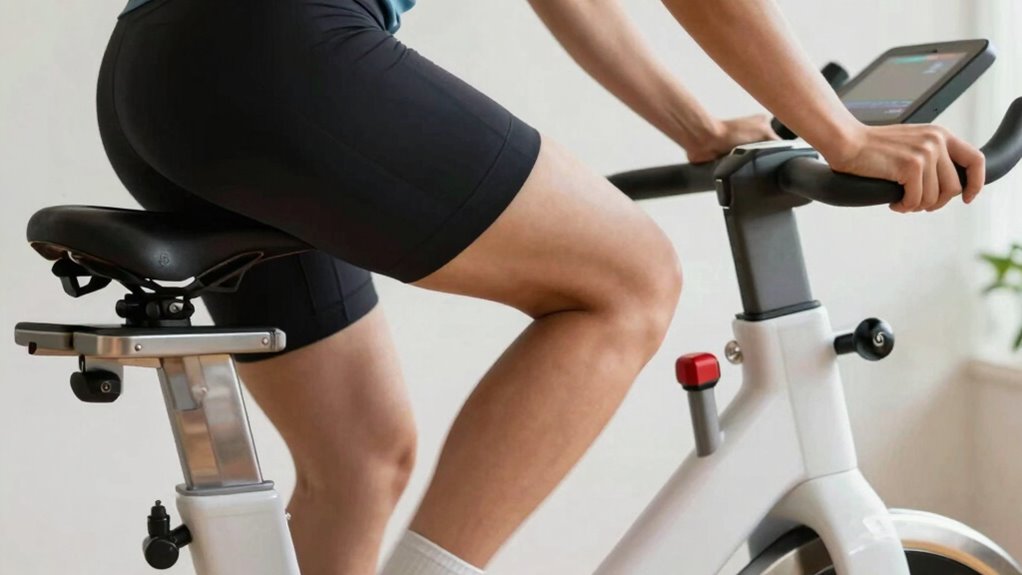
To guarantee comfort and knee safety, start by adjusting your handlebar height so it aligns with your seat or slightly higher. Keep your reach distance ideal—neither too far nor too close—to maintain good posture. Also, make sure your wrists and shoulders feel relaxed to prevent strain during your ride. Additionally, ensuring your handlebar position supports proper ergonomic alignment can further reduce the risk of discomfort and injury. Proper bike fitting is essential for achieving optimal cycling biomechanics, which helps in preventing overuse injuries. Paying attention to adjustments can ensure your bike fit remains comfortable as your riding conditions or flexibility change.
Handlebar Height Alignment
Ensuring your handlebar height is properly aligned is essential for both comfort and knee safety during your ride. If the handlebar is too high or too low, you may develop alignment issues that cause strain on your knees and upper body. A handlebar that’s too high can lead to overextension of your wrists and unnecessary shoulder tension, while a handlebar that’s too low forces you to lean forward excessively, increasing knee stress. To avoid these alignment issues, adjust the handlebar height so it’s roughly level with your saddle or slightly higher, depending on your flexibility. Regularly check your handlebar position before each ride to guarantee it remains comfortable and safe. Correct handlebar height helps maintain proper posture, reducing the risk of knee pain and discomfort during your workout. Additionally, proper bike fit can further enhance your riding comfort and prevent injury. Being aware of how handlebar positioning affects your overall ergonomics allows for a more enjoyable and pain-free cycling experience. Ensuring optimal ergonomic setup can also make a significant difference in preventing long-term discomfort, especially when considering factors like microplastics in dust that can affect overall health during indoor training. Paying attention to adjustment techniques can help you fine-tune your bike setup for maximum comfort and safety.
Optimal Reach Distance
Have you found the right reach distance on your handlebars? If not, your comfort and knee safety could suffer. Your handlebar position should allow you to maintain a relaxed, natural arm extension without overreaching or feeling cramped. Adjusting the reach impacts your pedal cadence and resistance levels—too far, and you may strain your shoulders and knees; too close, and you might compromise your posture. A proper reach enables smooth pedal strokes, reducing unnecessary stress and preventing knee pain. Focus on keeping your elbows slightly bent and shoulders relaxed, regardless of resistance levels. When you’re comfortable, you’ll maintain better control and efficiency during your ride, ensuring your knees stay safe and your workout remains enjoyable. Proper handlebar reach is essential for both comfort and injury prevention. Leash etiquette can also help in maintaining posture and control during outdoor rides, especially in shared spaces. Additionally, ensuring your bike fit is correct can further enhance comfort and prevent issues like knee pain. Remember that a well-adjusted handlebar position aligns with ergonomic principles, which are vital for preventing injury and promoting long-term comfort. Proper adjustment also involves considering spinal alignment to prevent long-term discomfort.
Wrist and Shoulder Comfort
Proper handlebar positioning directly affects your wrist and shoulder comfort, which in turn influences your overall riding experience and knee safety. If your handlebars are too high, you may experience shoulder tension; too low, and wrist strain can occur. Find a neutral position where your wrists remain straight, and your shoulders stay relaxed. Adjust the handlebar height and reach so your elbows are slightly bent and your hands comfortably grip the bars without overextending. Ensuring your setup promotes ergonomic alignment can also help prevent strain injuries and improve your overall comfort during rides. Maintaining an ergonomic posture is essential for long-term comfort and injury prevention. Using anti-fatigue mats or ergonomic accessories can further reduce fatigue and improve your riding posture over long periods.
How to Spot Signs Your Bike Fit Isn’t Right During Your Ride
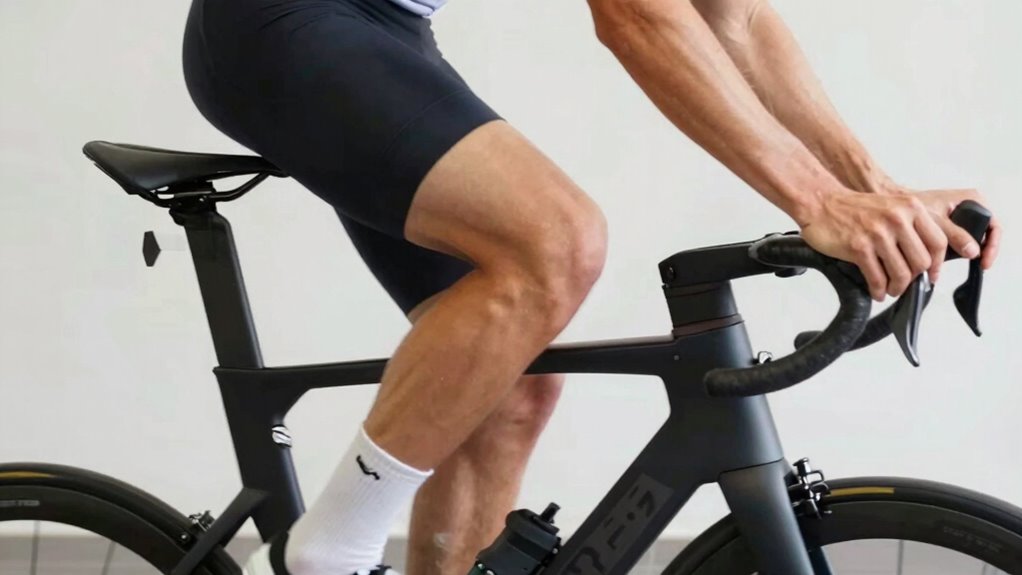
During your ride, your body will often send subtle signals if your bike fit isn’t quite right. Pay attention to discomfort or pain that arises unexpectedly. For example:
Your body signals misfit: knee pain, sway, numbness—listen to stay comfortable and injury-free.
- You feel persistent knee pain, which may indicate incorrect pedal alignment or improper saddle height.
- Your hips sway side to side, suggesting the bike saddle is too high or too low.
- You experience numbness or tingling in your hands or groin, often caused by poor handlebar or saddle positioning affecting your posture.
These signs can point to misaligned pedal positioning or an ill-fitting saddle. Recognizing them early helps prevent injury and ensures a smoother, more comfortable ride. Adjusting your bike setup accordingly keeps your ride efficient and pain-free.
Adjusting Your Bike Setup for Different Body Types
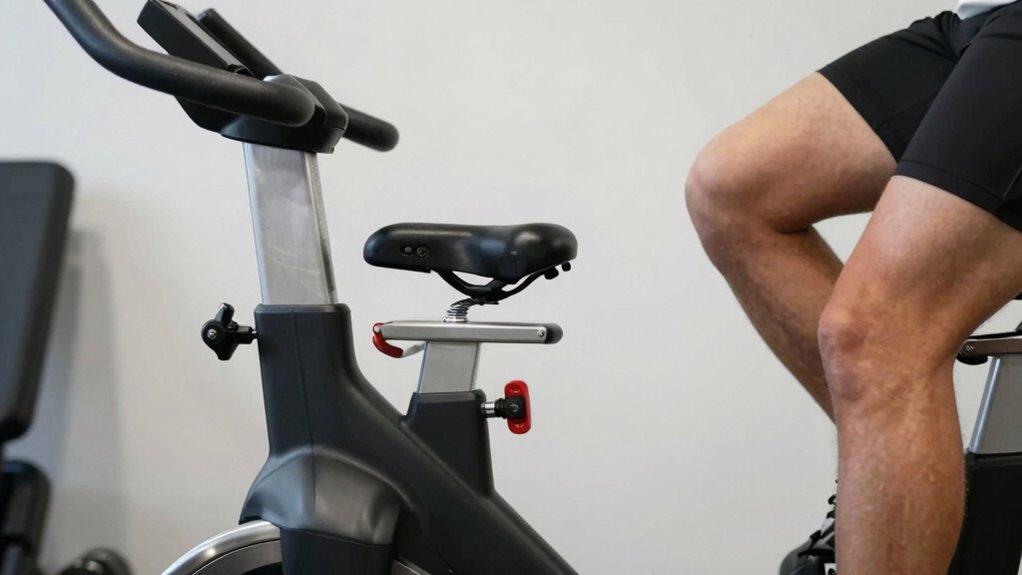
Since everyone’s body is different, adjusting your bike setup to suit your specific physique is vital to maximizing comfort and performance. Your frame size plays an essential role—choose a bike with a frame that matches your height and limb length for ideal reach and stability. Once you have the right frame, focus on pedal alignment; proper alignment ensures your knees track straight and reduces strain. Adjust the saddle height and position to fit your leg length, and fine-tune the handlebar height to avoid overextending or hunching. Remember, a well-fitted bike minimizes discomfort and enhances efficiency. By customizing your setup based on your body type, you’ll ride more comfortably and prevent common issues like knee pain or fatigue.
Common Mistakes to Avoid When Setting Up Your Spin Bike
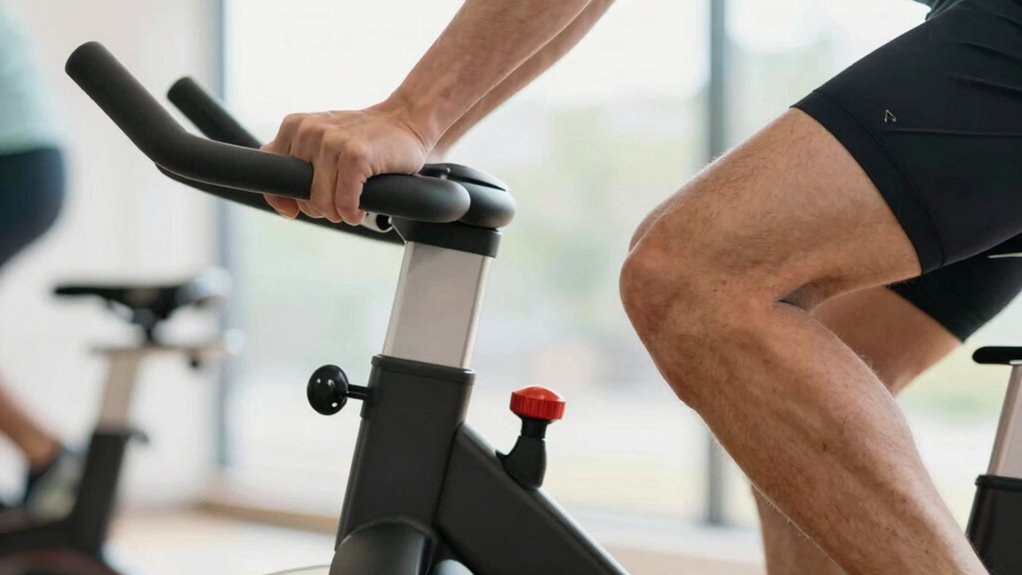
One common mistake when setting up your spin bike is neglecting to adjust the saddle height correctly. Incorrect saddle height can lead to knee pain and inefficient pedaling. Additionally, failing to take into account your optimal pedal cadence may cause overexertion or injury. Another mistake is ignoring heart rate monitoring, which helps you stay within safe exertion zones. To avoid these issues:
- Make sure your saddle height allows a slight bend in your knee at the bottom of each pedal stroke.
- Maintain a smooth, consistent pedal cadence suited to your fitness level.
- Use heart rate monitoring to track exertion, avoiding pushing too hard or not enough.
When to Seek Professional Bike Fitting Help
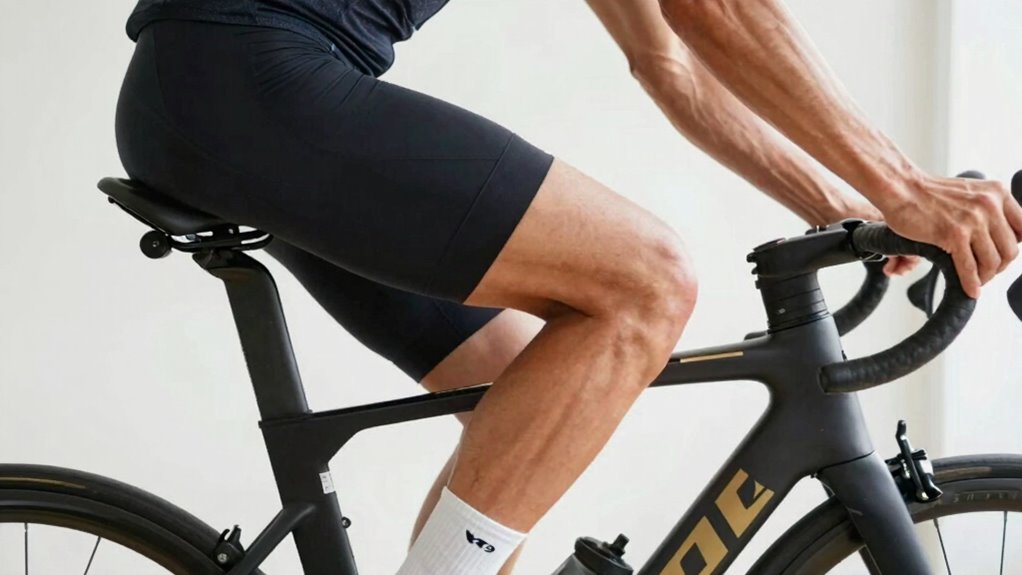
Knowing when to seek professional bike fitting help can considerably improve your comfort, performance, and safety. If you notice persistent knee pain, discomfort during rides, or difficulty maintaining proper pedal alignment, it’s time to consult an expert. Additionally, if your bike requires frequent maintenance or you struggle with bike maintenance tasks, a professional fitting can identify issues early. Proper pedal alignment ensures efficient power transfer and reduces injury risk.
| Signs You Need Help | Benefits of Professional Fitting |
|---|---|
| Ongoing knee pain or discomfort | Improved comfort and efficiency |
| Difficulty with bike maintenance or adjustments | Better bike setup tailored to your body |
| Uneven wear on pedals or saddle | Enhanced performance and injury prevention |
| Persistent discomfort despite adjustments | Long-term safety and optimal pedaling position |
Frequently Asked Questions
How Often Should I Reassess My Spin Bike Fit?
You should reevaluate your spin bike fit every few months or whenever you notice discomfort, pain, or changes in your bike posture. Regular checks help maintain proper pedal alignment and make certain you’re not putting unnecessary strain on your knees. Adjustments might be needed if you experience knee pain, fatigue, or feel unstable on the bike. Staying attentive to these signs keeps your ride comfortable and safe, preventing long-term injuries.
Can Improper Setup Cause Long-Term Knee Damage?
Improper setup can indeed cause long-term knee damage. When your knee alignment is off, it puts unnecessary strain on your joints, leading to potential injuries over time. Incorrect seat height or handlebar position can also reduce pedal stroke efficiency, increasing the risk of overuse injuries. To prevent this, regularly check and adjust your bike fit, ensuring proper alignment and smooth pedal motion.
What Tools Are Best for Precise Bike Adjustments?
You should use a torque wrench for precise bike adjustments, ensuring your components are set correctly without over-tightening. For example, a fitness enthusiast used a torque wrench during bike maintenance and noticed improved comfort and performance. This tool helps you fine-tune seat height and handlebar position accurately. Combining it with a fitness tracking app allows you to monitor progress and prevent injury, making each ride safer and more effective.
How Does Seat Angle Affect Knee Pain?
Your seat tilt can substantially impact knee strain. If your seat is tilted too far forward or backward, it may cause uneven pressure and increase knee pain. Aim for a level or slightly nose-down tilt to reduce knee strain and promote comfortable pedaling. Adjust gradually, and test your position during a ride to make certain you’re not putting unnecessary stress on your knees. Proper seat angle helps prevent pain and enhances your cycling experience.
Is There an Ideal Handlebar Height for All Riders?
Handlebar height hinges on handlebar ergonomics and rider preferences. Generally, a higher handlebar offers a more relaxed ride, reducing strain, while a lower one boosts intensity. You should find a handlebar position that feels comfortable, supports your posture, and minimizes discomfort. Experiment with different heights, listening to your body, to discover the perfect handlebar height that balances comfort and performance for your unique ride.
Conclusion
Getting your spin bike setup just right is like tuning a fine instrument—you’ll perform better and avoid pain. I once saw a rider fix her seat height, and suddenly her knee discomfort vanished, like a fog lifting. Remember, small adjustments make a big difference. Trust your body’s signals, and don’t hesitate to seek professional help if needed. With the right setup, every ride becomes a smooth, pain-free symphony.