
Your environment plays a big role in shaping your habits by providing visual cues and signals that trigger behaviors automatically. By organizing each room with intentional placement, sensory cues, and consistent setups, you can make good habits easier and more natural. Small tweaks like keeping healthy snacks visible or setting designated spaces encourage routines without relying on willpower. If you want to discover how to optimize each room for lasting change, there’s more you can explore.
Key Takeaways
- Environment cues and visual signals automatically trigger behaviors, reinforcing habits without conscious effort.
- Strategically placing items and designating zones support and automate positive routines.
- Small environmental changes, like visible healthy snacks or decluttered spaces, boost habit formation.
- Regularly updating and organizing spaces maintains effective cues and prevents habit stagnation.
- Consistent environmental signals across rooms create a supportive backdrop for sustainable behavior change.
How Your Environment Shapes Your Habits and How to Use It

Your environment has a powerful influence on your habits because it constantly signals what behaviors are available and acceptable. Decorative elements, like artwork or plants, can encourage relaxation or productivity depending on their design and placement. Lighting choices also play a vital role; bright, natural light boosts alertness and energy, while softer, warmer lighting promotes calmness and comfort. By intentionally selecting these elements, you shape your surroundings to support desired habits. For example, a well-lit workspace with inspiring decor can enhance focus, while cozy lighting in your living room encourages unwinding. Small adjustments to your environment send clear signals about what behaviors are expected, making it easier to develop positive routines and reinforce good habits effortlessly. Additionally, understanding the contrast ratio of your space can influence how well you perceive visual elements, further supporting your desired behaviors. Recognizing how environmental cues impact your daily routines allows you to design spaces that naturally foster beneficial habits. Moreover, being aware of space planning principles can help you optimize your environment for better habit formation and overall well-being. Incorporating visual perception considerations can further enhance the effectiveness of your environment in shaping habits. Being mindful of environmental factors ensures your space actively supports your habits and lifestyle goals.
How to Identify Habit Triggers in Every Room

Have you ever noticed how certain rooms seem to prompt specific behaviors without you thinking about it? Recognizing these habit triggers helps you redesign spaces for better habits. Start by observing what prompts your actions—are you reaching for snacks in the kitchen or scrolling on your phone in the living room? Decorating tips can help highlight these cues. Scent cues also play a major role; a fresh lemon scent might encourage cleaning, while lavender signals relaxation. Using household guides to understand common triggers can further enhance your environment. These guides often include insights into behavioral cues that influence daily actions. Being aware of these environmental triggers allows you to create intentional spaces that support your habits. Use this table to identify triggers:
| Room | Common Habit Trigger | Possible Decorating Tips or Scent Cues |
|---|---|---|
| Kitchen | Snacking, cooking | Bright lighting, citrus scents |
| Living Room | Relaxing, watching TV | Cozy throws, calming lavender scent |
| Bedroom | Sleeping, scrolling on phone | Dim lighting, lavender or chamomile scent |
| Bathroom | Grooming, stress relief | Fresh towels, mint or eucalyptus scent |
Easy Ways to Make Your Rooms Support Good Habits
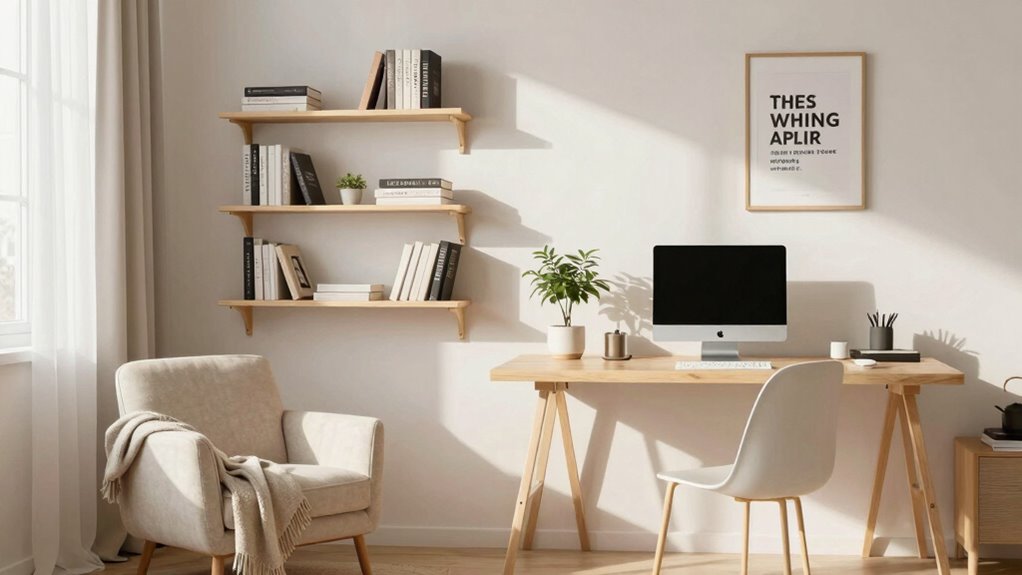
Creating spaces that naturally support your good habits involves strategic design choices. Start with simple decorating tips, like using visual cues such as placement of items to remind you of your goals. Keep frequently used tools within easy reach, reducing friction and making positive actions effortless. Organizational hacks, like designated bins or shelves, help declutter and create clear zones for specific activities. For example, set up a dedicated reading corner with a comfortable chair and good lighting to encourage daily reading. Use consistent color schemes to reinforce routines visually. Small adjustments—like placing workout gear near your bed or healthy snacks in visible spots—can make healthy habits automatic. Additionally, intentional design can significantly influence behavior by subtly guiding your choices and actions. Incorporating natural light into your space not only enhances mood but also encourages regular activity and mindfulness. Optimizing your environment with behavioral cues helps reinforce positive habits effortlessly. Recognizing the power of environmental psychology can help you craft spaces that naturally promote your desired behaviors. For instance, understanding how environmental cues influence decision-making allows you to tailor your surroundings more effectively. These easy changes gradually shape your environment into a supportive backdrop for your desired behaviors.
Small Changes You Can Make in Each Room to Build Better Habits
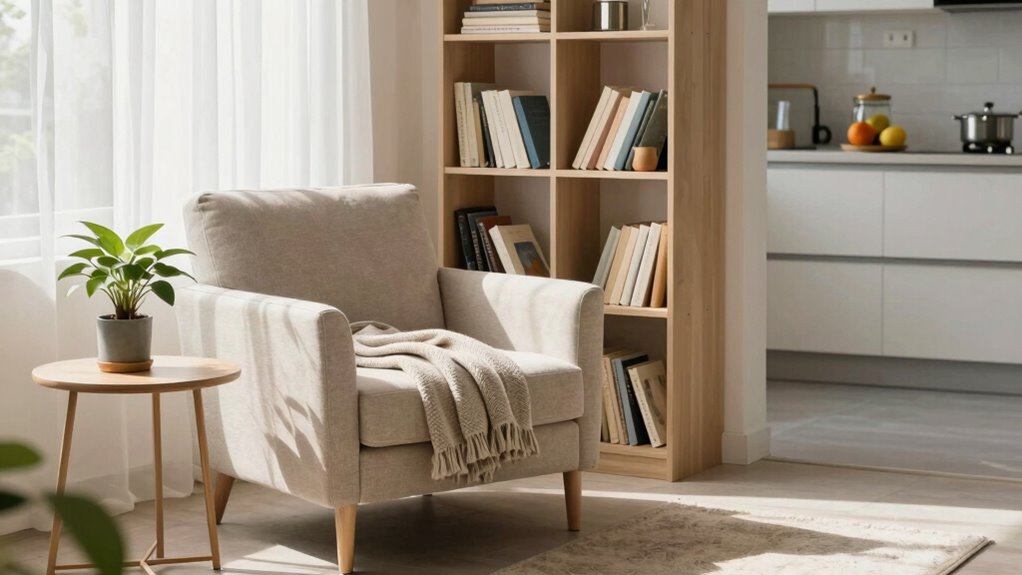
Making small adjustments in each room can considerably boost your ability to build better habits. Simple decor tips and clutter control can create an environment that encourages positive routines. For example, in your kitchen, keep healthy snacks visible; in your workspace, declutter to improve focus. Use the table below for quick ideas:
| Room | Small Change |
|---|---|
| Living Room | Add a cozy chair to promote relaxation and reading |
| Bedroom | Keep workout clothes nearby to motivate morning exercise |
| Kitchen | Place water bottles on the counter for hydration |
| Bathroom | Use a timer to limit screen time during routines |
These small, intentional changes make your environment work for your habits, not against them. Recognizing that environment influences behavior can help you design spaces that support your goals. Additionally, understanding how habit formation interacts with your environment can lead to more sustainable behavioral changes. Being aware of behavioral cues can further reinforce positive habits by linking environmental triggers to your routines. For example, environmental cues, like placing your shoes by the door, can prompt consistent exercise routines. Incorporating visual reminders can also serve as effective behavioral cues, reinforcing habits through environmental design.
How to Keep Your Habit-Friendly Environment Over Time
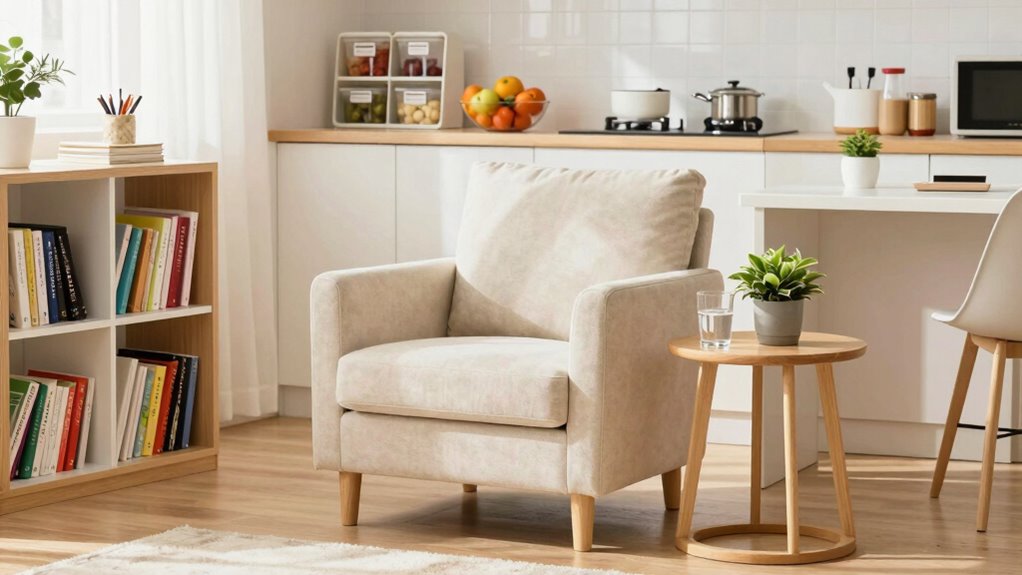
Once you’ve set up your environment to support positive habits, the key is maintaining those changes over time. Regularly update decorative accessories to keep the space inviting and aligned with your goals. Rearranging items can refresh your motivation and prevent habits from becoming stale. Lighting improvements also play a vital role; soft, natural light can boost your mood and reinforce positive behaviors. Consider adding adjustable lighting or new lamps to create different atmospheres that support different routines. Keep your environment flexible, and don’t hesitate to tweak it as your habits evolve. Incorporating elements inspired by sound healing science can add a unique motivational touch to your space. Paying attention to habit-supportive design principles ensures your environment continues to foster good habits. Additionally, staying attuned to ethical considerations in your environment choices can help you maintain habits that align with your values. Regularly assessing and environmental cues can serve as subtle reminders to reinforce your routines. Consistent upkeep ensures your space remains habit-friendly, making it easier to stay on track and sustain your progress over the long term.
Frequently Asked Questions
How Long Does It Take to Establish New Habits Through Environmental Changes?
It typically takes about 21 to 66 days for habit formation, but environmental cues can speed this process. When you change your surroundings to support your new habits, you reinforce behavior patterns more quickly. You might notice progress in just a few weeks if you consistently respond to those cues. Stay committed, and with intentional environmental tweaks, you’ll solidify new habits faster and more effectively.
Can Changing My Environment Disrupt Existing Habits Temporarily?
Yes, changing your environment can cause habit disruption temporarily. When you reset your surroundings, your usual cues and routines are thrown off, making it harder to stick to existing habits. This environment reset forces you to adapt, which might lead to a short-term pause or slip in your habits. However, with consistency, your new environment can help reinforce better habits and eventually replace old ones.
What Are Common Mistakes to Avoid When Redesigning My Spaces for Habits?
Think of your space as a garden—avoid clutter that chokes growth and neglecting lighting that nurtures habits. When redesigning, don’t forget to declutter, as excess can sabotage focus. Keep lighting aligned with your preferences to energize or calm, depending on your goal. Failing to take these aspects into account can create distractions or discourage good habits. So, plan thoughtfully, balancing clutter and light to cultivate your desired behaviors.
How Do I Balance Aesthetics and Functionality in Habit-Friendly Rooms?
To balance aesthetics and functionality, focus on decor integration and space optimization. Choose stylish pieces that serve a purpose, like attractive storage or multi-functional furniture. Keep clutter minimal to enhance visual appeal and make the space inviting. Use colors and textures that motivate you, blending beauty with practicality. Regularly assess your room, adjusting decor and layout to guarantee your habits stay effortless and your space remains both inspiring and efficient.
Are There Tools or Apps to Help Monitor Environmental Habit Changes?
Yes, you can find fantastic tools and apps to help track your habits and optimize your environment. Habit tracking apps like Habitica or Streaks keep you accountable, while environment optimization tools like Todoist or Notion help organize and plan your space changes. These apps make monitoring minute-by-minute modifications manageable, motivating you to maintain your habits and craft a space that supports your goals seamlessly.
Conclusion
Did you know that 40% of our daily actions are driven by habits, not decisions? By shaping your environment room-by-room, you can effortlessly reinforce positive behaviors and break bad ones. Small changes, like placing healthy snacks in sight or keeping your workout gear visible, make a big difference over time. Stay mindful of your surroundings, and you’ll find it easier to build lasting habits that improve your life every day. Your environment truly is your habit.