
TL;DR

Get health and wellness essentials delivered free with Prime
- Fast, free delivery on millions of items
- Prime Video, Amazon Music and more included
- Member-only deals all year
Researchers have developed experimental eye drops that restored vision in blind mice. The treatment shows promise for future human therapies, though further testing is needed.
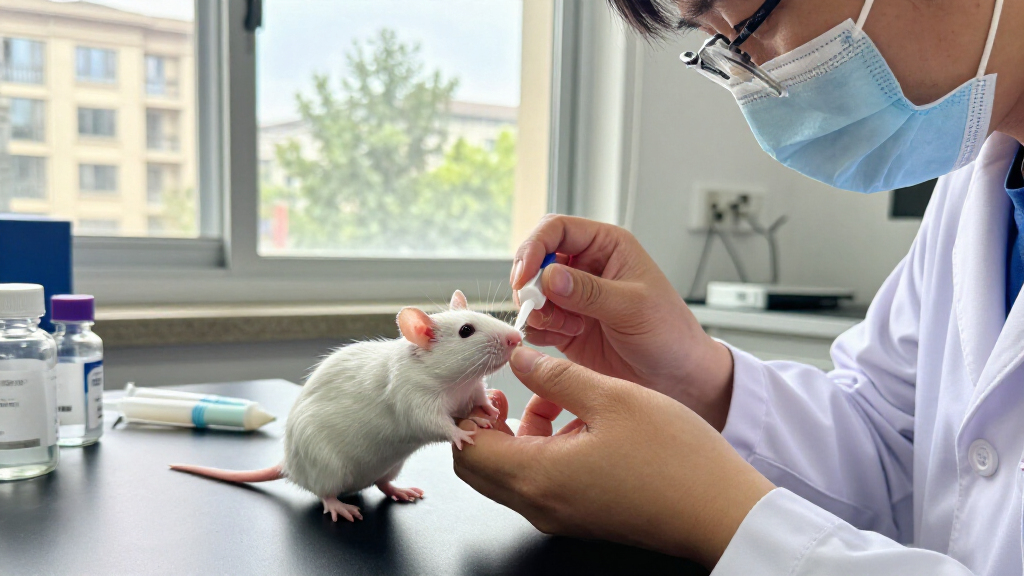
Scientists have successfully used experimental eye drops to restore sight in mice that were previously blind, marking a significant step forward in ophthalmology research. The treatment, developed by a team of researchers, demonstrated the ability to regenerate retinal cells and improve vision in animal models. This breakthrough could eventually lead to new therapies for humans suffering from blindness caused by retinal degenerative diseases.
The research involved administering a novel formulation of eye drops containing regenerative compounds directly into the eyes of mice with induced blindness. According to the study published in a peer-reviewed journal, treated mice showed measurable improvements in visual responses, including tracking moving objects and navigating mazes, within weeks of treatment. The scientists confirmed that the eye drops promoted the growth of damaged retinal cells and restored neural pathways necessary for vision.
While the findings are promising, the research was conducted exclusively on animal models. The team emphasized that further studies are necessary to determine safety, dosage, and efficacy in humans. The treatment’s mechanism involves stimulating the regeneration of photoreceptor cells, which are typically lost in degenerative conditions such as retinitis pigmentosa and age-related macular degeneration.
Potential Breakthrough for Human Blindness Treatments
This development is significant because it offers a potential new approach to treating blindness caused by retinal cell degeneration. If proven safe and effective in humans, the eye drops could provide a non-invasive alternative to current treatments like gene therapy or surgical interventions. Experts suggest that such a treatment could benefit millions worldwide suffering from degenerative eye diseases, reducing reliance on prosthetic devices or lifelong vision aids.
However, it is important to note that the research is still at an early stage. The success in mice does not guarantee similar results in humans, and extensive clinical trials will be required before any potential therapy becomes available. The breakthrough underscores the importance of regenerative medicine in ophthalmology, but caution remains warranted as further validation is needed.
eye drops for retinal regeneration
As an affiliate, we earn on qualifying purchases.
As an affiliate, we earn on qualifying purchases.
Background on Retinal Degenerative Diseases and Research Progress
Retinal degenerative diseases like retinitis pigmentosa and age-related macular degeneration are leading causes of blindness worldwide. Current treatments are limited; gene therapy and surgical options exist but are invasive and not universally effective. Researchers have been exploring regenerative approaches, including stem cell therapy and gene editing, but these methods face challenges such as delivery, safety, and long-term effectiveness.
The recent focus has been on stimulating the eye’s own regenerative capacity. Previous studies have explored various compounds and techniques to repair or replace damaged retinal cells. The new research builds on this foundation by testing a topical application—eye drops—that could be more accessible and less invasive than existing options.
experimental eye drops for vision restoration
As an affiliate, we earn on qualifying purchases.
As an affiliate, we earn on qualifying purchases.
Unconfirmed Aspects of Human Application and Safety
It is not yet clear whether the eye drops will be safe or effective in humans, or how long the restored vision might last. The research has only been conducted on mice, and human trials are still in the planning stages. The specific compounds and mechanisms involved require further investigation to assess potential side effects or risks.
Additionally, questions remain about the optimal dosage, delivery method, and whether the treatment can reverse different types of retinal degeneration. Researchers emphasize that these uncertainties need to be addressed through rigorous clinical trials.
topical eye treatment for degenerative eye diseases
As an affiliate, we earn on qualifying purchases.
As an affiliate, we earn on qualifying purchases.
Next Steps in Clinical Development and Testing
The research team plans to conduct further preclinical studies to evaluate safety and dosing parameters. Following this, they aim to initiate early-phase clinical trials in humans within the next few years, pending regulatory approval. These trials will test the treatment’s safety, tolerability, and preliminary efficacy in patients with retinal degenerative diseases.
Meanwhile, scientists will continue refining the formulation and delivery methods, possibly exploring combination therapies to enhance outcomes. The development of this treatment could take several years before it becomes a widely available option, assuming successful trial results.
non-invasive eye drops for blindness
As an affiliate, we earn on qualifying purchases.
As an affiliate, we earn on qualifying purchases.
Key Questions
How do the experimental eye drops work to restore vision?
The eye drops contain compounds that stimulate the regeneration of damaged retinal cells, particularly photoreceptors, and promote the repair of neural pathways involved in vision. This process is still being studied, but initial results suggest it can lead to functional improvements in vision in animal models.
Are there any risks or side effects associated with the treatment?
At this stage, it is unknown whether the eye drops will cause side effects in humans. The safety profile needs to be established through clinical trials. In animal studies, no significant adverse effects were reported, but human safety testing is essential before any medical use.
When could this treatment be available for human patients?
If clinical trials proceed successfully, it could still be several years before the treatment becomes available. The process involves multiple phases of testing, regulatory review, and manufacturing scale-up.
Could this treatment help all types of blindness?
Currently, the research is focused on retinal degenerative diseases like retinitis pigmentosa. Its effectiveness for other causes of blindness remains untested and uncertain at this stage.
Source: rss
Halloween Picks
halloween
As an affiliate, we earn on qualifying purchases.