
TL;DR

Get health and wellness essentials delivered free with Prime
- Fast, free delivery on millions of items
- Prime Video, Amazon Music and more included
- Member-only deals all year
A Sixty and Me report describes intimacy and sexuality as possible parts of well-being after 60, while stressing that they are personal choices, not requirements for healthy aging. It cites research linking sexual activity and emotional closeness with greater enjoyment of life, but says the association does not prove sex improves health or extends life.
A Sixty and Me report says intimacy and sexual expression can remain meaningful parts of life after 60, while emphasizing that neither is an obligation or a proven route to longer life. The report discusses changing definitions of closeness, menopause-related discomfort and a study associating sexual activity and emotional closeness with greater enjoyment of life among older adults in England.
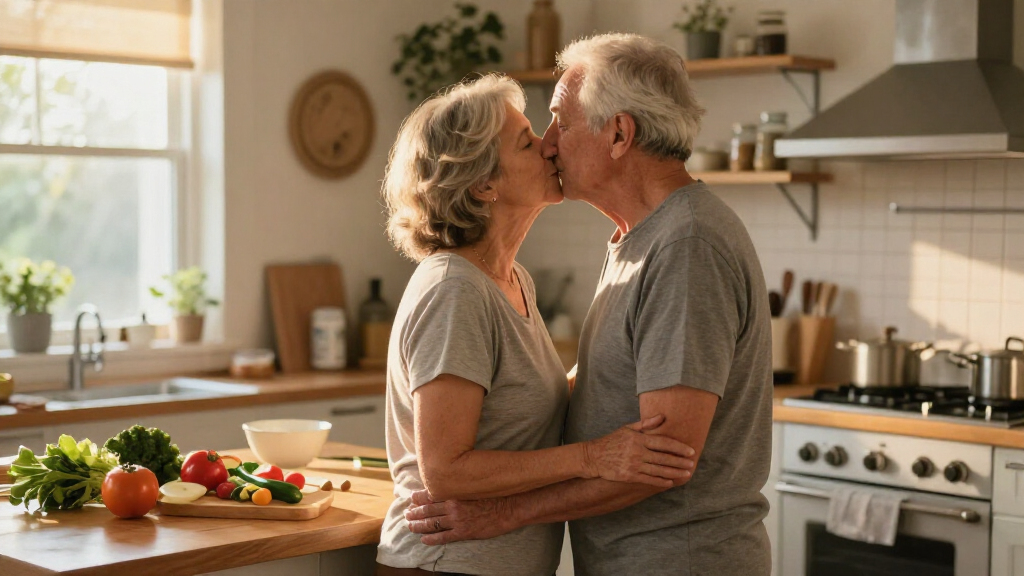
The report, drawing on guidance from the National Institute on Aging, describes intimacy as broader than intercourse. It can include holding hands, kissing, affectionate touch or a private conversation. Sexual expression may include intercourse, masturbation or other experiences that a person finds comfortable. The report says there is no single pattern older adults need to follow, and people may choose not to pursue sexual activity at all.
For people experiencing vaginal dryness or discomfort after menopause, the report says lubricants can reduce friction during sexual activity, while vaginal moisturizers are used regularly to address ongoing dryness. It advises discussing persistent pain, bleeding or troublesome dryness with a healthcare professional. Depending on a person’s medical history, treatment such as low-dose vaginal estrogen may be appropriate; the report does not present this as suitable for everyone.
The report also recommends allowing time for arousal, adapting positions to protect sore joints and stopping if an activity hurts. For people with new partners, it says condoms and testing for sexually transmitted infections should be discussed, since menopause does not remove infection risk. For people who are single, it notes masturbation as one possible way to explore pleasure, but stresses that penetration is optional and that personal preferences deserve respect.
Comfort and Choice After 60
The report’s practical significance is its focus on comfort, communication and individual choice, rather than treating sexual activity as a measure of health or successful aging. Changes in the body, bereavement, caregiving responsibilities, illness or relationship circumstances can affect intimacy. The source encourages readers who want more closeness to start with manageable steps, such as talking with a partner or asking a clinician about discomfort.
Its caution about research also matters. A satisfying intimate life may have value through pleasure and connection, but the study described does not establish that sex causes better health, prevents cognitive decline, strengthens immunity or extends life. Presenting those outcomes as proven would go beyond the evidence summarized in the report.
Products Worth Considering

OMRON VIVA 360+ Body Composition Monitor and Smart Scale

Philips Sonicare 5950 Rechargeable Electric Toothbrush with 2 Brush Heads, Navy

Garmin Forerunner 55 GPS Running Smartwatch, Black
As an affiliate, we earn on qualifying purchases.
What the Evidence Can Say
The report refers to a 2019 study of older adults in England that found sexual activity and emotional closeness during sexual activity were associated with greater enjoyment of life. The source provides no study sample size or detailed methods, so those details cannot be assessed from the material provided here. Its central qualification is clear: an association does not establish cause and effect.
Other factors could help explain the relationship. The report notes that people in better health may be more able to remain sexually active, and that relationship quality matters. It also cites the National Institute on Aging on the range of forms intimacy can take and the American College of Obstetricians and Gynecologists on masturbation as one option for exploring sexual pleasure. These references support a varied, personal approach; they do not establish that a particular sexual practice is necessary for healthy aging.
“There is no single pattern you must follow.”
— Sixty and Me report
Limits of the Reported Findings
The source summarizes one 2019 observational study but does not provide its sample size, measures or full findings. It is therefore not possible from this material to judge how strong the reported association was or how broadly it applies. The study, as described, does not show that sexual activity caused greater enjoyment of life.
The report also offers general information, not individualized clinical guidance. Whether a symptom needs evaluation or a treatment is appropriate depends on the person’s health history. The source does not specify which products or treatments will suit every reader. It advises consulting a healthcare professional about persistent pain, bleeding or troublesome dryness.
Practical Steps and Clinical Guidance
The report recommends starting with a step that feels comfortable: arranging uninterrupted time with a partner, explaining what kind of closeness is welcome, or speaking with a healthcare professional about discomfort. People who choose self-exploration can proceed at their own pace and stop if something hurts. Those considering sex with a new partner can discuss condoms and STI testing.
For readers troubled by a change in desire, the report suggests asking whether medication, illness, stress or relationship concerns could be contributing. It does not prescribe a single solution. The next step depends on a person’s needs and circumstances; the source provides no announced follow-up study or policy development.
Key Questions
Does sex after 60 improve health or extend life?
The report cites a study that found an association between sexual activity, emotional closeness and greater enjoyment of life among older adults in England. It does not establish that sex causes better health or longer life.
What can help with vaginal dryness after menopause?
The report says lubricants may reduce friction during sexual activity and vaginal moisturizers can be used regularly for ongoing dryness. Persistent discomfort, pain or bleeding should be discussed with a healthcare professional, who can consider options based on medical history.
Is intimacy limited to sex with a partner?
No. The report describes intimacy as potentially including conversation, holding hands, kissing and affectionate touch. Sexual expression can also be private, and a person may decide not to pursue it.
Is STI protection still relevant after menopause?
Yes. The report says menopause does not remove the risk of sexually transmitted infections. It recommends discussing condoms and testing with a new partner.
Source: sixtyandme.com