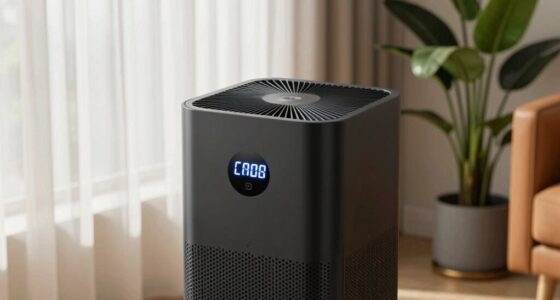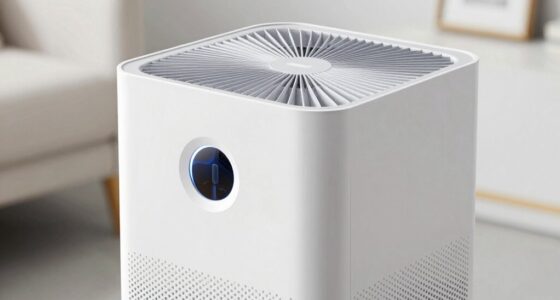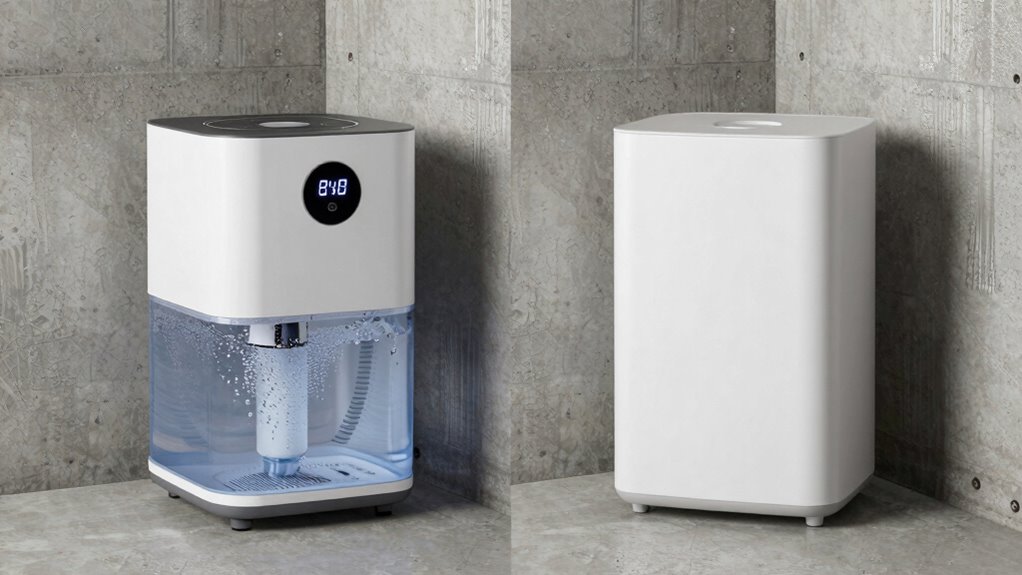

Choosing between a dehumidifier with a pump and one without depends on your basement’s drainage options and how much effort you want to put in. Pumped dehumidifiers automatically move water to a drain, making continuous moisture control easy, especially if drains are far or limited. No-pump models require manual emptying or gravity drainage but are simpler to set up. Keep exploring to find out which type suits your space and needs best.
Key Takeaways
- Pumped dehumidifiers enable continuous operation by automatically draining water, ideal for hard-to-access or distant drainage locations.
- No-pump models require manual emptying or gravity drainage, suitable for spaces with easy drain access and simpler setup.
- Pumped units often have higher initial costs but offer better energy efficiency and reduced ongoing maintenance.
- No-pump dehumidifiers are usually less expensive upfront but may increase labor costs due to manual water removal.
- Choose a pumped system for long-term convenience and continuous moisture control, especially in larger or less accessible basements.
What Are Dehumidifiers, and How Do They Work?
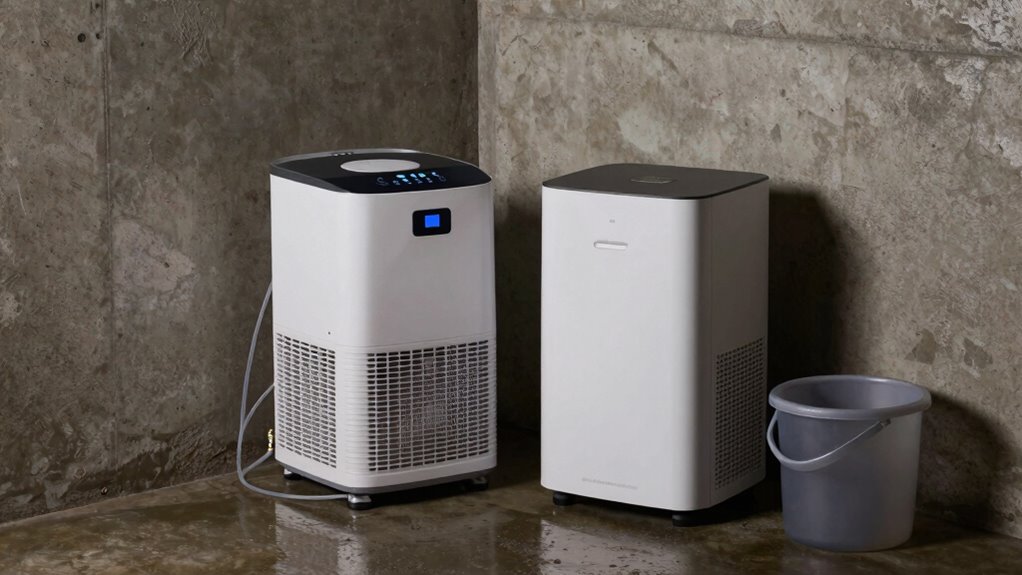
Dehumidifiers are devices designed to remove excess moisture from the air, helping to improve indoor air quality and prevent problems like mold and mildew. They work by pulling in humid air, cooling it to condense the moisture, and then releasing drier air back into your space. This process helps you control humidity levels, making your environment less hospitable to mold and dust mites. By reducing moisture, dehumidifiers directly boost air quality, creating a healthier living or working space. Additionally, understanding the contrast ratio of the device can help you choose one that provides clearer and more vibrant images in your space. Proper humidity control is essential for maintaining a comfortable and healthy environment, especially in areas prone to dampness. Knowing how air circulation affects moisture removal can also enhance the effectiveness of your dehumidifier. A well-designed airflow system can improve efficiency and ensure even moisture extraction throughout your space. To maximize performance, selecting a dehumidifier with an appropriate capacity for your room size is also crucial.
Pumped vs. No-Pump Dehumidifiers: Which Types Exist?
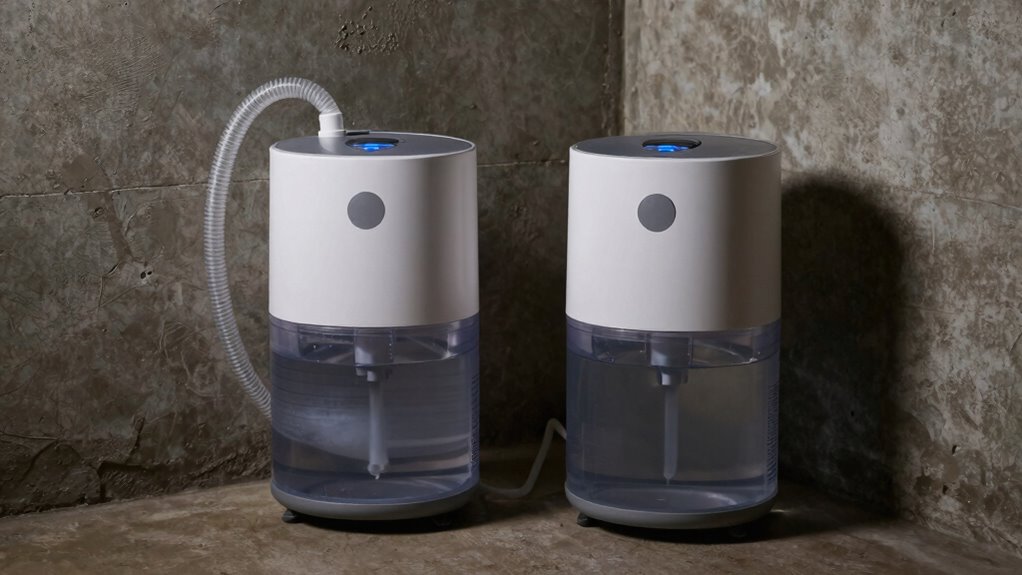
Pumped dehumidifiers have an internal pump system that automatically moves water to a designated drain, making them more convenient for continuous use. No-pump models rely on external drainage options, which can be simpler but may require manual emptying. Understanding these options helps you choose the right unit based on maintenance needs and setup flexibility. Incorporating herbal baths and spices into your wellness routine can also support overall health and environment quality, especially in spaces like basements. Additionally, some models, like certain electric dehumidifiers, include features that enhance ease of use and efficiency in managing moisture levels. When selecting between pumped and no-pump options, considering the water removal capacity can ensure you select a unit suitable for your space’s humidity levels.
Internal Pump System
Have you ever wondered how dehumidifiers handle the collected water? An internal pump system automatically moves water from the unit’s tank to a drain or outside, eliminating the need for manual emptying. This setup is especially helpful if you want continuous operation without frequent maintenance. Additionally, some models feature advanced water management systems that help prevent overflows and leaks, ensuring safer operation. Unlike models without pumps, these systems often feature integrated air filtration to improve indoor air quality. Plus, they’re designed for energy efficiency, running only when necessary and conserving power. With an internal pump, you don’t need to worry about positioning the unit near a drain or lifting heavy tanks. Instead, it manages water quietly and effectively, making it ideal for basements or areas where drainage options are limited. This system offers convenience, better air quality, and optimized energy use. Internal pump systems are also known for reducing maintenance efforts and offering greater flexibility in placement.
External Drainage Options
When choosing a dehumidifier, you’ll want to think about how it handles water drainage—specifically, whether it relies on external drainage options. External drainage allows continuous operation without manual emptying, improving air quality by maintaining consistent humidity levels. Pumped systems use a built-in or external pump to move water to a drain, ideal for hard-to-reach spots. No-pump units typically need manual drainage or gravity drainage, which might be less convenient but often more energy-efficient. Here’s a quick comparison:
| Feature | Pumped Dehumidifier | No-Pump Dehumidifier |
|---|---|---|
| External Drainage Option | Uses a pump for continuous drainage | Requires manual emptying or gravity drain |
| Air Quality & Efficiency | Maintains steady humidity, boosts air quality | May need more frequent attention, less energy-efficient |
Maintenance and Convenience
Choosing between pumped and no-pump dehumidifiers largely depends on how convenient and low-maintenance you want your device to be. Pumped models offer the advantage of automatic drainage, reducing your effort and preventing overflows, which makes them more convenient for continuous operation. They tend to be more energy-efficient since they can run longer without interruption, but they may generate higher noise levels due to the pump mechanism. No-pump dehumidifiers rely on manual drainage or gravity, making them simpler but requiring more frequent attention, especially if you don’t have a drainage outlet nearby. When considering maintenance, no-pump units are generally lower in mechanical complexity, often resulting in quieter operation. Additionally, some models incorporate smart drainage features that help monitor water levels and alert you when manual intervention is needed. These features can enhance the user experience by providing peace of mind and reducing the need for constant monitoring. Proper installation location can also influence how effective each type is, especially in spaces with limited drainage options. Using self-draining models can further simplify maintenance by automating water removal, which is especially helpful in busy households. In some cases, choosing the right dehumidifier involves considering the long-term operational costs, which can vary based on energy use and maintenance requirements. Your choice depends on balancing your need for convenience with acceptable noise levels and energy efficiency.
Why Choose a Pumped Dehumidifier for Your Basement?

A pumped dehumidifier is an excellent choice for your basement because it simplifies the process of managing excess moisture. With a built-in pump, you don’t need to manually empty a water bucket, saving you time and effort. This feature guarantees continuous humidity control, keeping your basement dry and mold-free. Pumped units are especially useful if your basement has a drain nearby, allowing for easy drainage without lifting heavy containers. Additionally, these dehumidifiers promote energy efficiency by maintaining ideal humidity levels without running excessively. Performance Cookies can also help optimize the dehumidifier’s operation by analyzing its efficiency over time. Choosing a pumped dehumidifier means you get reliable moisture control with minimal hassle, making it a smart investment for your basement’s long-term health and comfort. energy efficiency is a key benefit, as these units help reduce your overall energy consumption while maintaining optimal conditions. Moreover, automatic drainage capabilities ensure continuous operation without user intervention, further enhancing convenience. Incorporating automatic water removal features can also prevent overflow issues and reduce maintenance needs. Utilizing smart controls can further improve the device’s effectiveness by adjusting operation based on humidity levels.
What Are the Benefits of a No-Pump Dehumidifier?
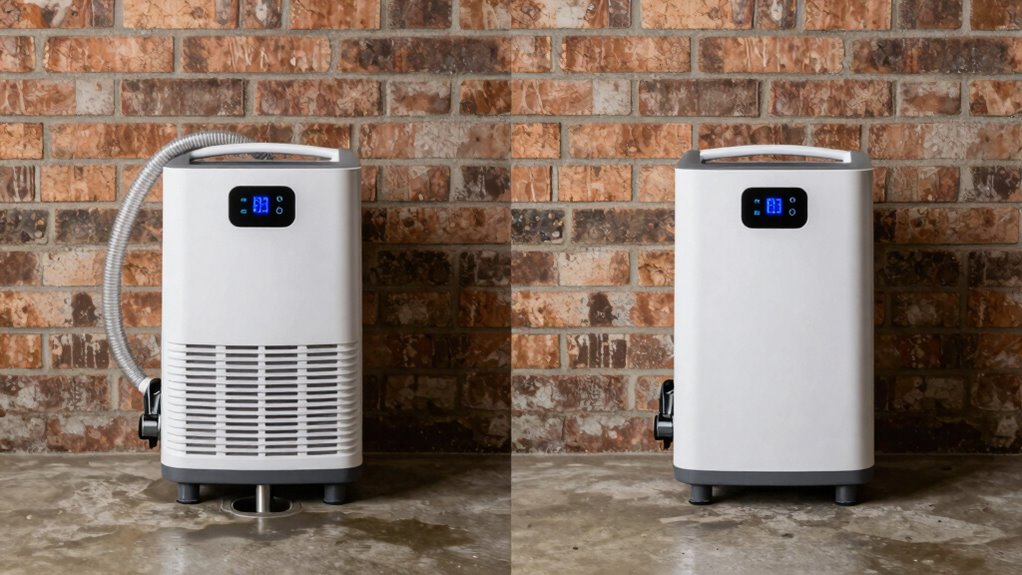
No-pump dehumidifiers offer a straightforward solution for managing moisture without the complexity of built-in pumps. They’re ideal if you prefer a simple, maintenance-free approach to moisture control strategies. Unlike humidifier comparison with pump models, no-pump units rely on gravity drainage, making installation easier and less expensive. These dehumidifiers are often more reliable because they have fewer moving parts that can break down. They’re also quieter, since there’s no pump motor running constantly. Without the need for power to operate a pump, you save on energy costs. Plus, they’re versatile for different setups, especially in areas where running drainage lines isn’t feasible. Additionally, indoor air quality can benefit from reduced dust and microplastics settling in the moisture, contributing to a healthier environment. Many models also incorporate auto defrost features that help maintain efficiency in cooler temperatures. Moreover, these units can be more cost-effective over time due to lower maintenance and operational costs. Selecting a dehumidifier with a reliable drainage system can further enhance efficiency and reduce potential issues. Incorporating simple drainage options can make maintenance even easier and ensure continuous operation. Overall, no-pump dehumidifiers deliver effective moisture control with less hassle and lower maintenance needs.
How Do Installation and Drainage Differ Between Types?
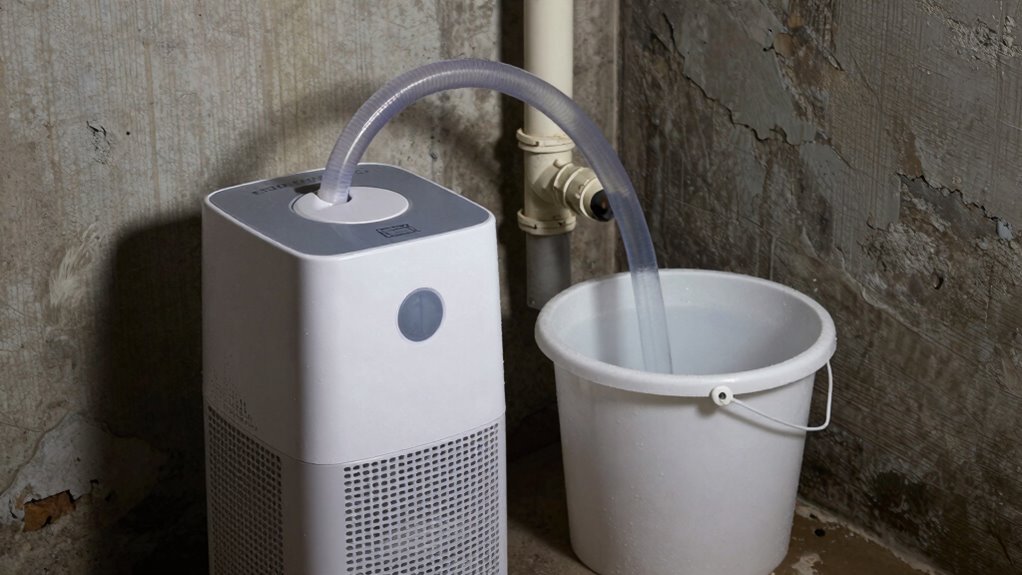
Installation and drainage methods differ markedly between dehumidifier types. With a no-pump model, you typically position the unit near a drain or use a gravity-based drainage setup, which often involves a simple hose connection. In contrast, a pumped dehumidifier requires less attention to position, as it uses a pump to move water to a higher drain point, simplifying the installation process.
| Feature | No-Pump Model | Pumped Model |
|---|---|---|
| Drainage setup | Gravity drain, hose connection | Pump-assisted, flexible placement |
| Installation process | Easy, needs proximity to drain | Slightly more complex, pump hookup |
| Maintenance | Minimal | Regular pump checks |
Understanding these differences helps you choose based on your space and drainage needs.
Maintaining Your Dehumidifier: What to Know About Pumped and Non-Pumped Models

Maintaining your dehumidifier properly guarantees it operates efficiently and lasts longer, whether it has a pump or not. To guarantee ideal humidity levels and energy efficiency, regular upkeep is essential. For pumped models, check the pump’s operation and clear any blockages to prevent flooding. Non-pumped units require frequent emptying of the water collection tank. Keep filters clean to maximize airflow and performance. Also, monitor humidity levels regularly to avoid overworking the unit and wasting energy.
- Clean filters every few weeks
- Inspect drainage systems for blockages
- Empty water tanks promptly in non-pumped models
- Ensure pumps in pumped models are functioning correctly
How Much Do Dehumidifiers With and Without Pumps Cost?
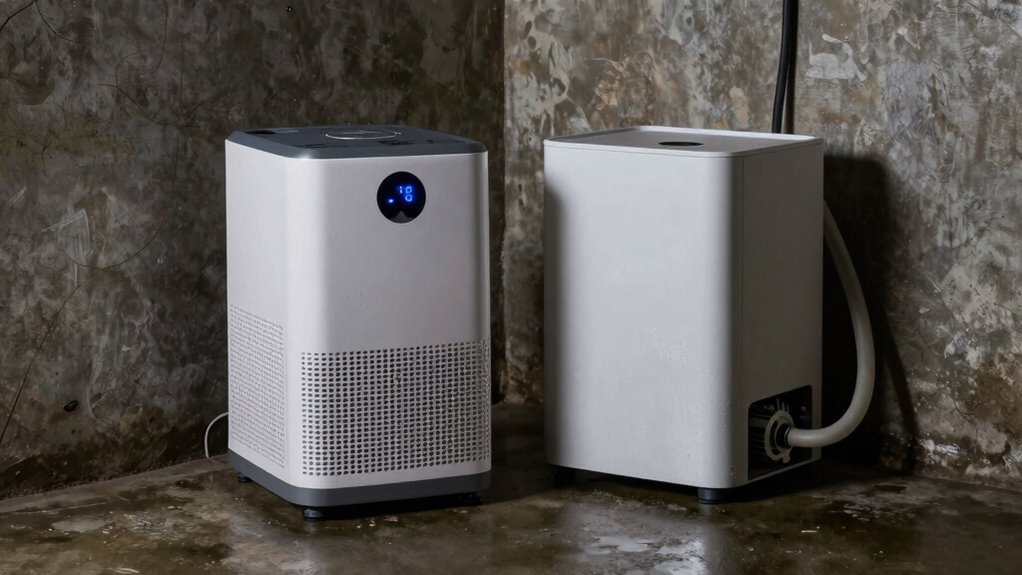
Dehumidifiers with pumps tend to cost more upfront than those without, but prices can vary widely depending on features and capacity. You should also consider installation expenses, especially for units with built-in pumps that may require professional setup. Additionally, keep in mind long-term costs like maintenance and energy use to find the best value for your needs.
Price Range Comparison
When comparing prices, you’ll find that dehumidifiers with built-in pumps generally cost more upfront than those without. The cost comparison reflects not only the initial purchase but also how the features fit into your budget considerations. Typically, pump-equipped units range from $250 to $600, depending on capacity and brand. Without pumps, prices are usually lower, around $150 to $400. Keep in mind that higher-end models with pumps often offer better durability and convenience, which might justify the extra cost.
- Pump models tend to be on the higher end of the price spectrum
- Non-pump units are more budget-friendly
- Additional features can influence overall cost
- Long-term savings may come from fewer maintenance needs
Installation Expenses
Installing dehumidifiers with pumps typically costs more upfront due to additional plumbing and setup requirements, whereas units without pumps usually involve simpler, less expensive installation. The extra work for pump-equipped models can include piping and electrical connections, increasing initial costs. When considering energy efficiency, both types can be comparable, but some pump models are designed to operate more efficiently, potentially saving you money over time. Noise levels also vary: units with pumps may generate more sound during operation because of the pump mechanism, while non-pump models tend to run quieter. Overall, the initial installation expense for pump models is higher, but factors like energy efficiency and noise levels are worth weighing when making your decision.
Long-term Cost Factors
While the initial installation costs differ, it’s important to contemplate how each type affects your long-term expenses. Dehumidifiers with pumps often have higher upfront prices but can save you money over time through better energy efficiency. They typically operate more quietly, reducing noise levels in your basement, which can be beneficial if you spend a lot of time nearby. Conversely, dehumidifiers without pumps are usually less expensive initially but may consume more energy, leading to higher utility bills. Maintenance costs can also vary, with pump models requiring occasional repairs or replacements. Consider these factors to determine which option offers the best value for your long-term budget and comfort.
- Energy efficiency impacts ongoing utility costs
- Noise levels affect daily comfort
- Pump models might have higher maintenance costs
- Lower upfront cost doesn’t always mean savings
When Is a Pumped Dehumidifier the Best Choice?

A pumped dehumidifier is your best choice if you need to continuously remove moisture from a space with limited drainage options or where the dehumidifier is placed far from a drain. This setup guarantees consistent moisture removal without frequent manual emptying, helping maintain better air quality. Additionally, pumped models can be more energy-efficient because they operate continuously without interruption to empty a collection bucket. If your basement or other area has no nearby drain or has a challenging layout, a pumped dehumidifier simplifies maintenance and keeps humidity levels stable. This makes it an ideal option for spaces where reliable, long-term moisture control is essential, ensuring healthier air and optimized energy use while reducing upkeep.
How to Decide Between a Pumped and No-Pump Model for Your Basement?
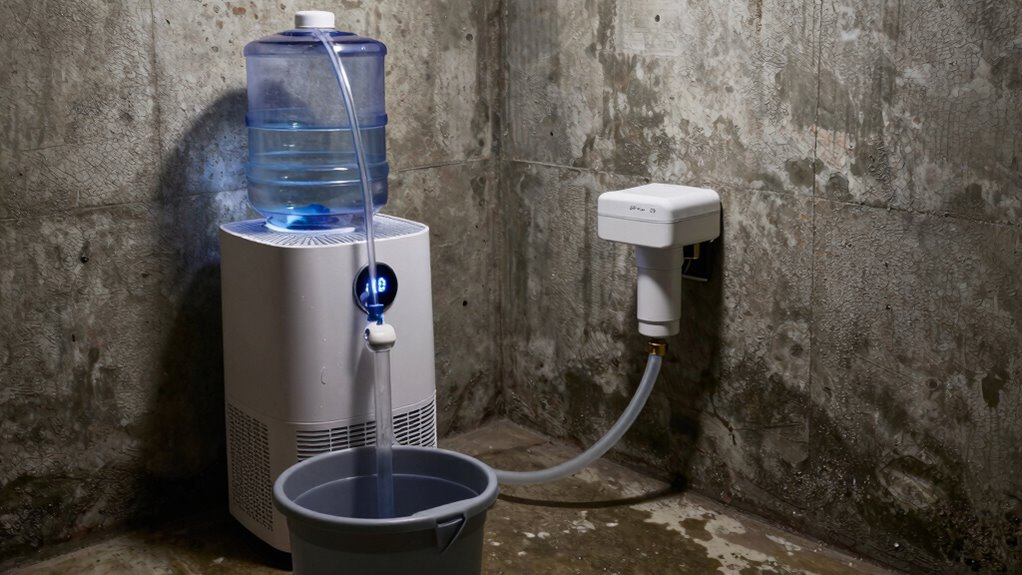
When choosing between a pumped and no-pump dehumidifier for your basement, consider how easy it is to install and maintain each option. Think about the drainage requirements and whether you’ll need to perform regular upkeep. Also, compare the initial costs versus long-term savings to find the best fit for your budget and needs.
Installation Complexity Differences
Choosing between a dehumidifier with a pump and one without mainly depends on how complex the installation process will be. Pumped models typically require more setup, including proper ventilation requirements and additional electrical wiring. You’ll need to ensure there’s enough space for the pump and access to a drain or outside vent. No-pump units are simpler; they drain via gravity into a nearby drain or bucket.
Consider these factors:
- Ventilation requirements for pump placement
- Additional electrical wiring for power and pump operation
- Ease of access for drainage setup
- Space needed for installation and maintenance
If your basement has limited access or complex venting options, a no-pump model might be easier to install. Conversely, if you’re willing to handle extra wiring, a pumped model offers more drainage flexibility.
Maintenance and Drainage Needs
Deciding between a pumped and no-pump dehumidifier depends heavily on your maintenance routines and drainage options. A no-pump model requires minimal upkeep—simply empty the water tank when full. This can be convenient if you prefer infrequent maintenance or have limited drainage access. In contrast, a pumped dehumidifier automates drainage, constantly removing water through a hose connected to a drain. This setup reduces manual effort but demands initial installation and occasional checks to ensure the pump functions correctly. Consider how often you’ll need to empty a tank versus whether you want a set-it-and-forget-it system. Your choice should align with your willingness to perform maintenance routines and the practicality of drainage options in your basement space.
Cost and Long-Term Savings
Cost considerations play a significant role in selecting between a pumped and no-pump dehumidifier for your basement. Pumped models often have higher upfront costs, but they can save you money long-term through reduced maintenance and lower energy use. No-pump units might be cheaper initially, but they may require more frequent manual drainage, increasing your labor costs. When evaluating both options, consider how energy efficiency impacts your electricity bills and the environmental impact of each model. Pumped dehumidifiers tend to be more energy-efficient, making them a better long-term investment. Conversely, no-pump versions may be more affordable upfront but could lead to higher ongoing expenses. Balancing initial costs with long-term savings helps you choose the most economical and eco-friendly option for your basement.
Tips for Long-Term Dryness: Getting the Most From Your Dehumidifier

To maintain long-term dryness, it’s essential to use your dehumidifier efficiently and consistently. Start by comparing different models through a humidifier comparison to find one optimized for your space. Focus on energy efficiency to keep running costs low; look for units with high Energy Star ratings. Regularly clean your dehumidifier’s filters and check for signs of wear to keep it operating effectively. Set the humidity level between 45-50% to prevent excess moisture without overworking the unit. Use a timer or humidity sensor to automate operation, ensuring consistent performance. If you have a basement with drainage options, consider a model with a pump to reduce maintenance. Proper placement and routine maintenance help maximize your dehumidifier’s lifespan and effectiveness.
Frequently Asked Questions
How Energy-Efficient Are Pumped Versus Non-Pumped Dehumidifiers?
Pumped dehumidifiers tend to have slightly higher energy consumption due to the extra motor for the pump, but they often offer better power efficiency over time by reducing the need for manual emptying. Non-pumped units use less energy initially but may require more frequent maintenance, which can impact overall efficiency. Your choice depends on balancing initial energy use with long-term convenience and operational costs.
Can a No-Pump Dehumidifier Handle Large Basement Spaces Effectively?
Sure, a no-pump dehumidifier can handle large basement spaces, but don’t expect it to be a hero without limitations. With its water capacity and portability, it might seem like a good fit, but you’ll need to empty it often and move it around. For consistently damp, expansive basements, a pump model offers a hassle-free solution, saving you from endless water bucket duty.
Are There Specific Maintenance Issues Unique to Pumped Models?
You should be aware that pumped dehumidifiers require regular pump maintenance to prevent clogs and mechanical failures. Drainage concerns are common, so you need to ensure the pump operates smoothly and is clear of debris. If you neglect pump maintenance, it could lead to water backup or leaks. Regularly inspecting and cleaning the pump will help keep your dehumidifier functioning efficiently and avoid costly repairs.
How Do Noise Levels Compare Between Pumped and No-Pump Dehumidifiers?
You’ll notice that pumped dehumidifiers generally have higher noise levels compared to no-pump models. The sound comparison shows that pumps operate continuously, which can produce a humming or buzzing noise. If you’re sensitive to sound, a no-pump dehumidifier may be quieter and more suitable for living spaces. Keep in mind, though, that noise levels vary by model, so check the specifications before making your choice.
What Are the Warranty and Repair Considerations for Each Type?
Did you know most dehumidifiers come with a one-year warranty? With a pumped dehumidifier, warranty coverage often includes repairs for the pump mechanism, which can be complex, but repair services are usually readily available. Without a pump, repairs tend to be simpler and cheaper, but warranty coverage might be more limited. Always check the warranty details and repair services offered before making your choice to guarantee long-term support.
Conclusion
Choosing between a pumped and no-pump dehumidifier helps you navigate your basement’s comfort smoothly. Think of it as finding the right rhythm for your space—sometimes a steady flow is best, other times a discreet, self-sufficient approach works wonders. By considering your drainage needs and budget, you’ll create a cozy, dry haven without much fuss. Trust your instincts, and your basement will thank you for the gentle, consistent care.