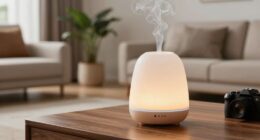
To wake up less stuffed, optimize your bedroom air by maintaining humidity around 40-50%, using a humidifier or dehumidifier as needed. Keep the air clean with a HEPA-filter air purifier and add natural plants like snake plants or peace lilies. Guarantee good ventilation by opening windows and regularly cleaning surfaces to reduce dust and allergens. By controlling moisture, air quality, and airflow, you’ll breathe easier each morning; discover simple tips that make a difference.
Key Takeaways
- Maintain indoor humidity around 40-50% using humidifiers or dehumidifiers to prevent dryness and mold growth.
- Use a HEPA air purifier with proper room sizing and regular filter changes to reduce allergens like dust and pet dander.
- Maximize natural ventilation with cross-ventilation and clean window screens to improve airflow and air quality.
- Incorporate air-purifying plants such as snake plants or peace lilies to naturally filter toxins and allergens.
- Regularly monitor humidity and air quality with sensors, adjusting humidifiers or dehumidifiers for optimal breathing conditions.
How Humidity and Air Quality Affect Congestion
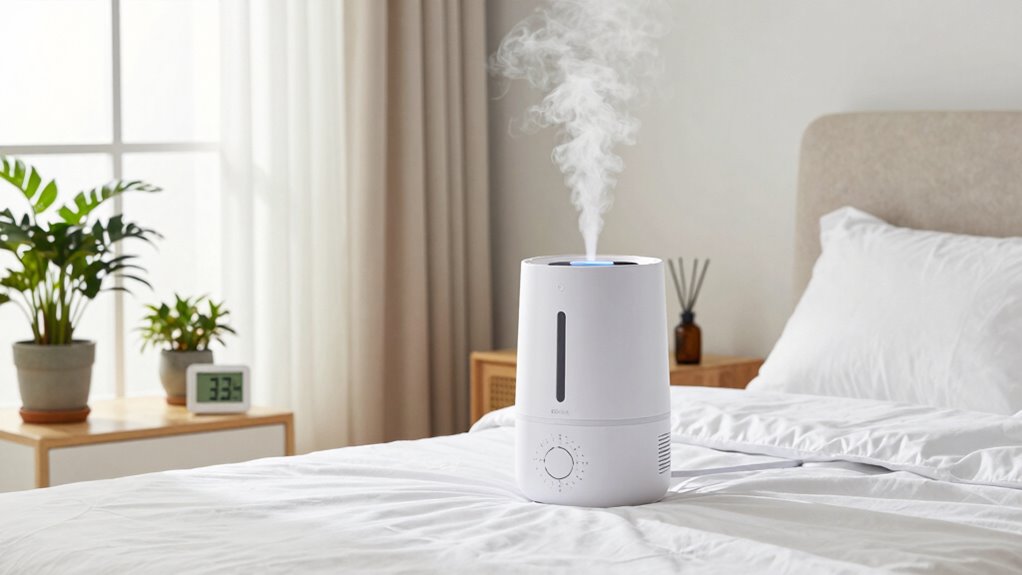
Humidity levels and air quality in your bedroom directly impact congestion. When the air is too dry, airborne allergens like dust mites and pet dander become more irritating, worsening congestion. Conversely, high humidity encourages mold growth and dust buildup, which can also block your nasal passages. Good air circulation helps maintain balanced humidity and disperses airborne allergens, reducing their concentration. You should aim for a humidity level around 40-50%, which keeps the air comfortable and minimizes allergen buildup. Using a dehumidifier or humidifier can help control moisture levels. Regularly opening windows or employing an air purifier with a HEPA filter improves air quality by removing airborne allergens, ensuring your room promotes easier breathing and less congestion. Maintaining proper indoor air quality is essential for reducing congestion and improving sleep quality. Additionally, controlling microplastics in dust through regular cleaning can further enhance your indoor environment and support better respiratory health. Incorporating indoor plants can also improve air purification, as many houseplants naturally filter toxins and allergens from the air, and choosing plants known for their air-cleaning properties can maximize these benefits. Ensuring proper ventilation helps prevent the buildup of indoor pollutants and maintains healthier air circulation.
Why Good Bedroom Air Quality Leads to Better Sleep
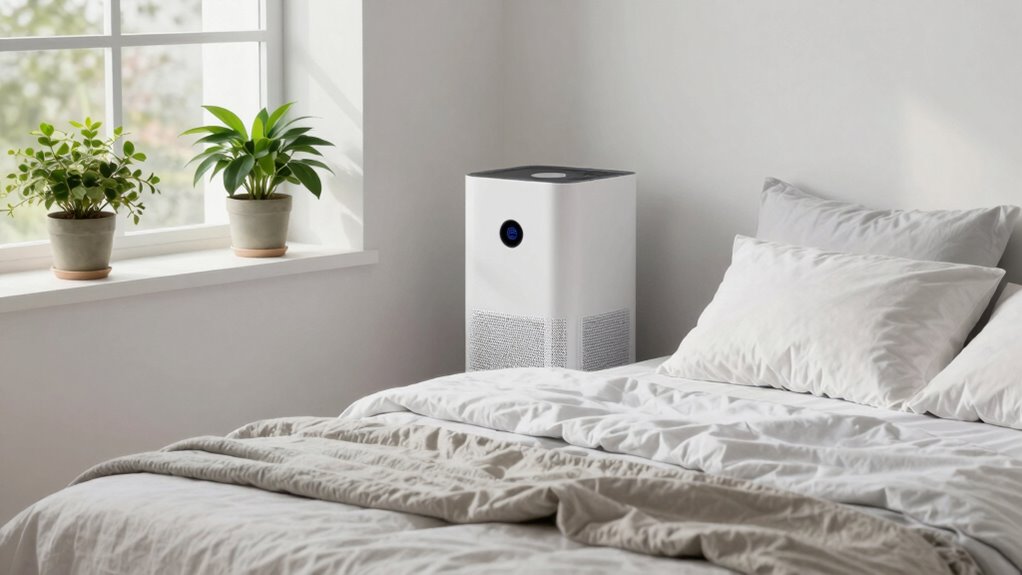
Good bedroom air quality is essential for restful sleep because clean, fresh air helps your body breathe more easily and reduces disruptions during the night. When your air is clear of pollutants, allergens, and excess moisture, you’ll experience fewer congestion issues and wake up feeling refreshed. Proper Air Purifier Maintenance ensures it runs efficiently, capturing dust, pet dander, and mold spores that can interfere with sleep. Additionally, following Humidity Control Tips keeps your room at an ideal level, preventing dryness or excess dampness that can cause congestion or discomfort. Maintaining optimal air filtration systems contributes significantly to sleep quality by continuously removing airborne irritants. To improve sleep quality, consider using an air purifier regularly and monitoring humidity levels. These simple steps create a healthier environment, making it easier to fall asleep and stay asleep, so you wake up less stuffed and more energized. Embracing a curious mindset about your environment can also motivate you to explore air quality improvements that enhance overall well-being. Regularly checking and cleaning filters as part of air purifier maintenance helps sustain its effectiveness, ensuring ongoing benefits for your sleep environment. Additionally, understanding how air quality factors influence sleep can empower you to make targeted adjustments for better rest.
How to Pick the Best Air Purifier and Filtration System
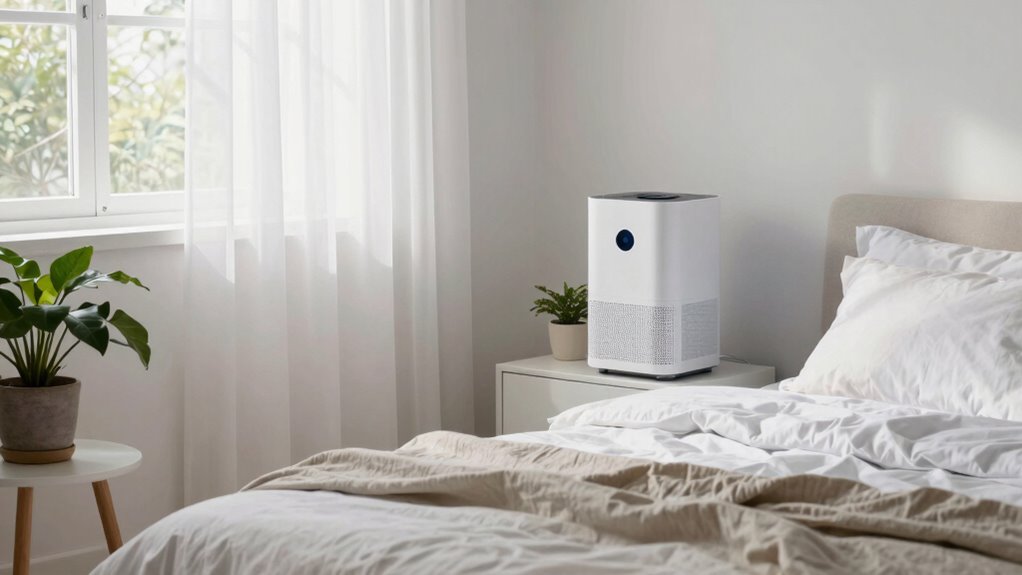
Choosing the right air purifier depends on understanding filter types and options, as well as ensuring it fits your room size. You’ll also want to take into account maintenance needs and ongoing costs to keep it running efficiently. Regularly checking filter replacement schedules can help maintain optimal air quality over time. Additionally, considering features such as air exchange rates can ensure your space remains comfortably breathable while maximizing device longevity. When selecting a system, it’s beneficial to evaluate whether it incorporates Free Floating technology to improve overall air circulation and reduce airborne particles more effectively. Let’s explore how to find a system that balances performance with your budget and space.
Filter Types and Options
When selecting an air purifier or filtration system for your bedroom, understanding the different filter types is vital. Different air purifier filters target specific pollutants, so knowing your needs helps you choose wisely. HEPA filters are excellent for capturing allergens, dust, and pet dander. Activated carbon filters remove odors and volatile organic compounds (VOCs). Some systems combine both for all-encompassing air cleaning. Keep in mind that filter replacement frequency varies; HEPA filters usually last 6-12 months, while carbon filters may need replacing every 3-6 months. Understanding filter technology is essential for making informed decisions about your air quality. Additionally, filter lifespan can vary based on usage and environment, so monitoring filter condition helps maintain optimal performance. Regularly inspecting filters helps ensure your system remains effective in reducing indoor pollutants and improving overall air quality. To maximize their effectiveness, choosing a system with features like air quality sensors can help you monitor air purity levels in real-time. Proper maintenance and timely replacements extend the filter efficiency, ensuring your bedroom air stays fresh and healthy.
Room Size Compatibility
Selecting an air purifier that matches your room size is essential for effective air cleaning. Measure your bedroom to determine its square footage, then choose a purifier rated for that area. This precise matching ensures ideal filtration without wasting energy. When considering your bedroom decor, pick a sleek, unobtrusive model that blends seamlessly into your space. Your mattress choice also impacts air quality; a hypoallergenic mattress can reduce dust mites and allergens, complementing your purifier’s efforts. Larger rooms require more powerful units, while smaller spaces benefit from compact models. Proper sizing not only improves air quality but also helps you wake up less stuffed. Additionally, choosing a high-quality filtration system can significantly enhance air purification efficiency. Remember, an ill-sized purifier won’t perform well, so prioritize accurate room measurements and a compatible system for the best results. Moreover, understanding the importance of air purification in health can motivate you to select the most suitable device for your needs. Incorporating proper ventilation practices further supports cleaner indoor air and overall respiratory health. Ensuring your device has the right filter replacement schedule can also prolong its effectiveness and maintain optimal air quality.
Maintenance and Costs
To guarantee your air purifier remains effective and affordable over time, it’s important to take into account maintenance requirements and ongoing costs. Understanding these factors helps you choose a system that fits your budget and stays efficient. Consider the cost considerations of replacement filters and energy use. Regular maintenance routines, like changing filters, assure peak performance and air quality. Look for models with affordable filter replacements and energy-efficient features. Also, check if the device has washable filters to reduce ongoing expenses. Additionally, understanding the filter replacement frequency and costs can help you plan your budget effectively. Being aware of long-term operational expenses can prevent unexpected financial burdens and ensure consistent air quality. A little research upfront can save you money and frustration later. By balancing initial costs with maintenance needs, you’ll find a system that keeps your bedroom fresh without breaking the bank.
Simple Ways to Optimize Humidity for Easier Breathing
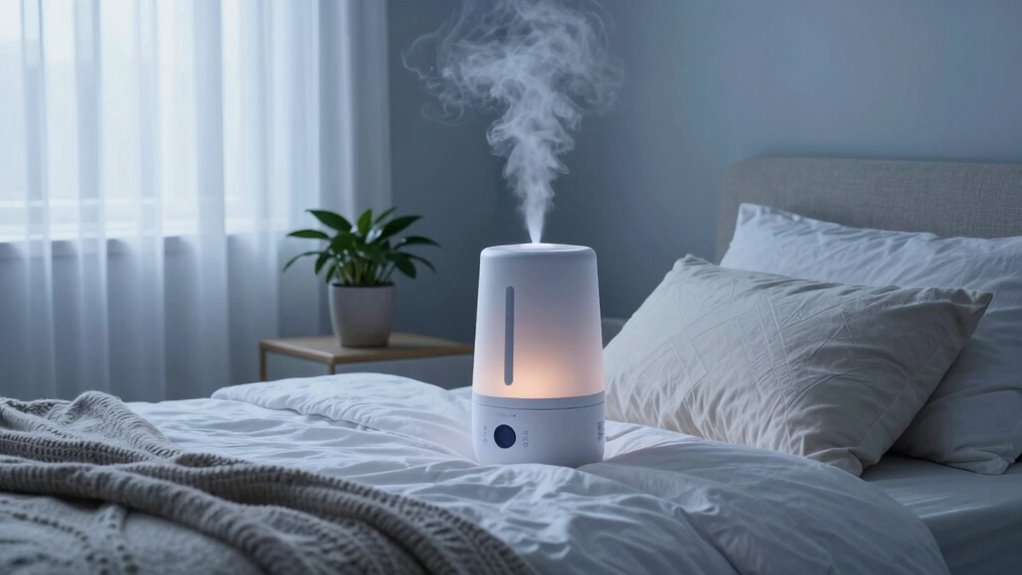
Maintaining the right humidity level in your bedroom can substantially improve your breathing comfort. Using a humidifier benefits your air quality by adding moisture, which helps prevent nasal congestion and irritated airways. Keep humidity levels between 40-60% for ideal results. Additionally, incorporating allergy-friendly plants like snake plants or peace lilies can naturally boost humidity without overdoing it. These plants release moisture into the air, creating a more breathable environment. Regularly monitor your room’s humidity with a hygrometer to avoid excess moisture that can promote mold growth. Combining a humidifier with the right plants ensures consistent, natural humidity levels that ease breathing and reduce stuffiness. This simple setup supports healthier, more restful sleep and a fresher bedroom atmosphere.
Natural Tips for Improving Bedroom Air With Plants and Ventilation
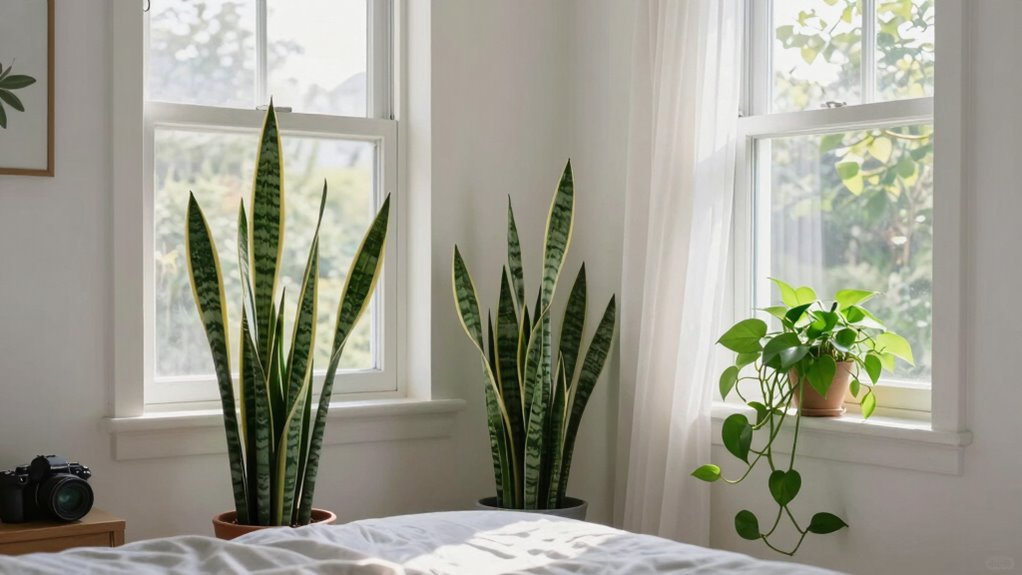
Using air-purifying plants can naturally improve your bedroom’s air quality, making it fresher and healthier. Incorporating art-inspired decor can also promote a calming environment that supports better sleep. Maximizing natural ventilation helps circulate fresh air and reduce indoor pollutants. Keeping humidity levels balanced complements these efforts, creating a comfortable and clean environment for sleep. Incorporating air quality improvement tips can further enhance your efforts for a healthier sleeping space. Additionally, selecting digital frames and interactive murals that promote relaxation can contribute to a more restful atmosphere.
Incorporate Air-Purifying Plants
Adding air-purifying plants to your bedroom is an effective way to naturally improve airflow and reduce indoor pollutants. These plants help filter out toxins and boost humidity control, making the air easier to breathe. Plus, they add a calming aesthetic that promotes relaxation before sleep. Choose plants like snake plants, pothos, or peace lilies, which are easy to care for and highly effective at purifying the air. Incorporate them into your bedroom decor to enhance air quality without clutter. Regularly watering and caring for these plants maintains their air-purifying benefits. Not only do they help remove airborne irritants, but they also create a healthier, more inviting environment that can reduce stuffiness and congestion. Your bedroom will feel fresher and more comfortable overnight.
Maximize Natural Ventilation
To enhance the air quality in your bedroom further, maximizing natural ventilation plays an essential role. You can improve airflow patterns by strategically placing your windows to encourage cross-ventilation, which helps refresh the air regularly. Open windows on opposite sides of the room to create a steady flow, reducing indoor pollutants and stale air. Consider window placement carefully: higher windows near the ceiling can facilitate hot air escape, while lower windows allow cooler, fresh air in. Additionally, keep window screens clean to prevent dust and allergens from entering. Using fans in conjunction with open windows can boost airflow, but avoid creating drafts that might disrupt your sleep. By optimizing window placement and airflow patterns, you’ll naturally improve your bedroom’s air quality.
Maintain Proper Humidity Levels
Maintaining proper humidity levels is essential for a healthy and comfortable bedroom environment. When humidity is too low, your nasal passages dry out, making congestion worse. If it’s too high, mold and dust mites thrive, aggravating allergies. To keep humidity balanced, regularly perform humidifier maintenance to prevent mold and bacteria buildup. Using allergy-friendly fabrics on bedding and curtains helps reduce dust mites and allergens. Incorporate plants that naturally add moisture to the air, such as peace lilies or Boston ferns. Additionally, guarantee proper ventilation to prevent excess humidity from stagnating. These simple steps can improve air quality, reduce stuffiness, and promote better sleep. Staying mindful of humidity levels supports your respiratory health and creates a more comfortable bedroom environment overall.
How to Keep Your Bedroom Clean and Dust-Free for Better Air
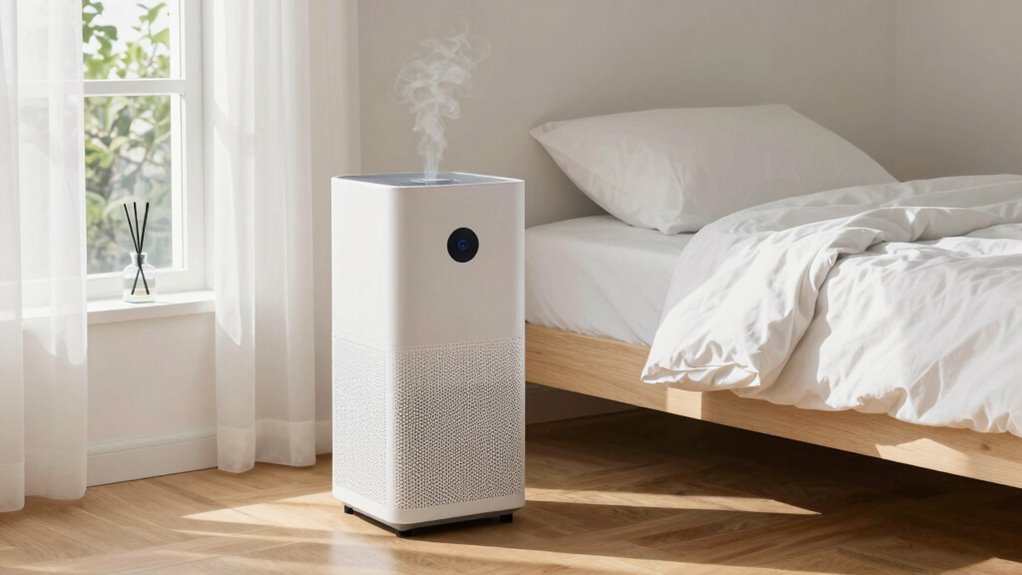
Keeping your bedroom clean and dust-free is essential for improving air quality and creating a healthier environment. Regular cleaning reduces dust mites and other allergens that can worsen congestion and allergies. To minimize dust buildup, dust surfaces weekly with a damp cloth, vacuum carpets and upholstery often, and wash bedding weekly in hot water. Using allergen-proof covers on pillows and mattresses also helps with allergen reduction. Here’s a simple guide:
| Task | Frequency | Tips |
|---|---|---|
| Dusting | Weekly | Use microfiber cloths |
| Vacuuming | Twice a week | Include under furniture |
| Bedding Washing | Weekly | Use hot water (130°F) |
Staying consistent keeps dust mites at bay and improves air quality.
Monitoring and Adjusting Your Bedroom Air Setup for Lasting Relief
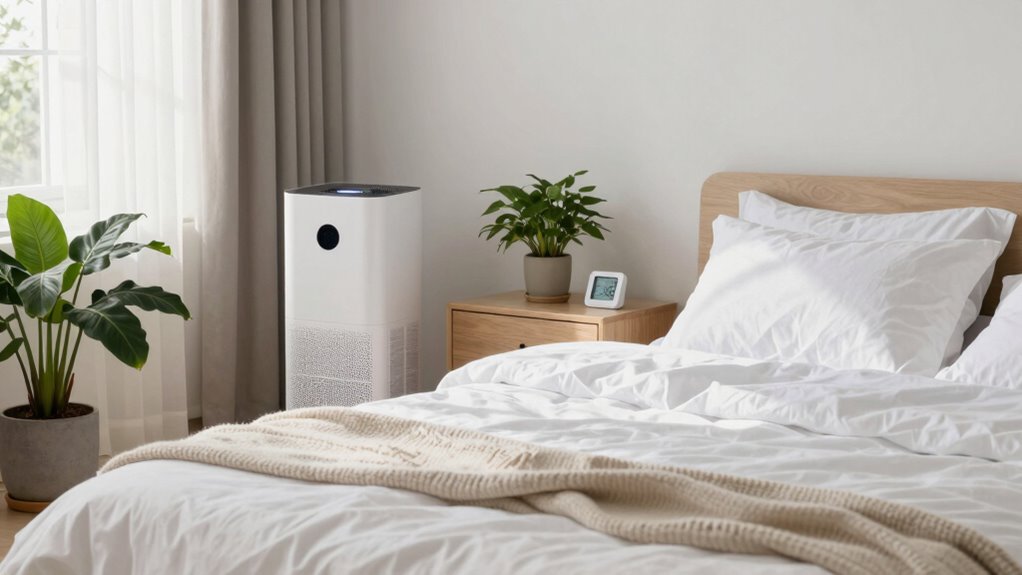
Regularly monitoring your bedroom’s air quality allows you to identify issues early and make necessary adjustments. Use air quality sensors to track pollutants, allergens, and humidity levels. These devices help you spot problems before they worsen, ensuring better sleep and less congestion. Keep an eye on humidity monitors to maintain ideal levels, typically between 40-60%, which prevents mold and dust mites.
- Check sensors daily to catch spikes in allergens or pollutants
- Adjust your humidifier or dehumidifier based on monitor readings
- Ventilate your room regularly to refresh the air and reduce buildup
Frequently Asked Questions
How Often Should I Change or Clean My Air Purifier Filters?
You should change or clean your air purifier filters every 3 to 6 months for ideal air purifier maintenance. Check the manufacturer’s recommendations, as filter lifespan varies depending on usage and air quality. Regularly inspecting your filters helps guarantee they work efficiently, reducing allergens and airborne irritants. Keep track of the date you last replaced or cleaned them to maintain fresh, clean air in your bedroom and improve your sleep quality.
What Are the Best Indoor Plants for Improving Air Quality?
You should consider plants like snake plants, pothos, and spider plants to improve your air quality. Place them strategically near air purifiers or in areas with good light, ensuring proper plant placement for maximum benefit. These plants naturally filter toxins and boost oxygen levels, complementing your air purifier’s work. Regularly water and clean your plants to keep them healthy, enhancing your indoor air quality and helping you breathe easier.
Can Specific Bedroom Layouts Reduce Congestion Symptoms?
You can reduce congestion symptoms by optimizing your bedroom layout. Studies show proper airflow can decrease airborne irritants markedly. Focus on airflow optimization by arranging furniture to promote air circulation and avoid clutter that blocks vents or windows. Keep the bed away from walls and ensure a clear path for air movement. These small changes improve ventilation, helping you breathe easier and wake up less stuffed every morning.
Are There Any Natural Scents That Help Clear Nasal Passages?
Yes, natural remedies like eucalyptus and peppermint scents can assist in clearing nasal passages. Using scent therapy with essential oils, add a few drops to a diffuser or inhale directly from a tissue. These natural remedies work by opening up your airways and reducing congestion. Incorporate this into your bedtime routine to breathe easier and wake up feeling less stuffed. Always guarantee proper dilution and consult a doctor if symptoms persist.
How Does Sleep Position Influence Breathing and Congestion?
Imagine sleeping on your back with your head elevated—this sleep posture can considerably improve nasal airflow and reduce congestion. Your position influences breathing by preventing the airway from collapsing or becoming blocked. Proper sleep posture keeps your airways open, facilitating easier breathing and less stuffed sensation upon waking. Prioritizing a comfortable, supportive sleep position helps you breathe better overnight, leading to less congestion and a more refreshed morning.
Conclusion
Creating the right bedroom air setup can considerably reduce congestion and improve your sleep quality. Did you know that poor indoor air quality contributes to over 50% of respiratory issues? By optimizing humidity, using effective air purifiers, and maintaining a clean space, you can breathe easier every night. Small changes make a big difference—so take control of your environment and enjoy fresher, more restful sleep starting today.