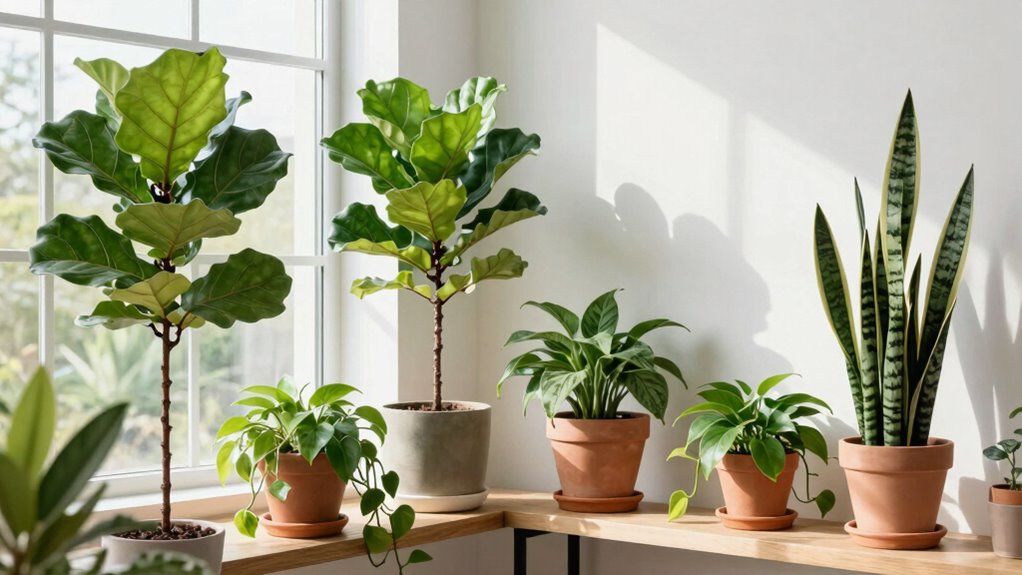

Indoor plants can help improve air quality and boost your mood, but their impact is often overhyped. They can absorb some pollutants and add humidity, but their real benefits depend on having healthy plants, proper care, and good ventilation. They shouldn’t be relied on as a primary air-cleaning solution, but they do make your space more inviting. Want to discover how to maximize their benefits and set realistic expectations? Keep exploring for the details.
Key Takeaways
- Indoor plants can improve air quality but their impact is limited compared to proper ventilation and pollution control.
- Healthy, well-maintained plants are essential for effective air purification; stressed plants perform poorly.
- The primary benefits of indoor plants are aesthetic appeal and mental well-being, not significant air cleaning.
- Selecting proven air-purifying plants like snake plants and peace lilies enhances their potential benefits.
- Overall, indoor plants support air quality as part of a holistic approach, not a standalone solution.

Have you ever wondered how indoor plants can improve the air you breathe every day? It’s a common question, especially when you see greenery thriving in homes and offices. The idea that plants can clean or purify indoor air has gained popularity, but how much truth is there behind this claim? To understand, you need to consider plant health and air quality. Healthy plants are crucial for any potential air-purifying benefits. When plants are stressed or unhealthy, they don’t perform at their best, which could limit their ability to filter toxins or improve overall air quality. Proper watering, adequate light, and pest control are essential to keep your indoor plants thriving and functioning effectively.
Healthy plants absorb carbon dioxide and release oxygen, creating a more pleasant environment. Some research suggests that certain houseplants can remove small amounts of airborne pollutants like benzene, formaldehyde, and trichloroethylene. However, the extent of their impact depends on factors such as the number of plants, the size of the space, and the specific toxins present. In a typical home or office, the air exchange rate and ventilation often play a more significant role in determining air quality than plants alone. Still, plants can contribute to a healthier environment by increasing humidity, reducing dust, and providing aesthetic and psychological benefits, which indirectly support well-being.
It’s important to keep realistic expectations about what indoor plants can achieve. While they do have some capacity to improve air quality, they’re not a magic solution for pollution or poor ventilation. Their primary benefits lie in their ability to boost mood, reduce stress, and add a touch of nature indoors. To maximize their potential for air improvement, choose plants known for their air-purifying qualities, such as snake plants, pothos, or peace lilies, and ensure they are well-maintained. Additionally, plant health is directly linked to their ability to perform these functions effectively.
Maintaining plant health is also about understanding their needs and avoiding overwatering, underwatering, or exposing them to drafts. When plants are healthy, they can better perform their role in creating a more balanced indoor environment. Remember, plants are just one part of a broader strategy to improve air quality—adequate ventilation, reducing sources of pollution, and regular cleaning are equally important. In essence, while indoor plants can contribute positively to air quality, their real value extends beyond just purifying air. They support your mental health, add natural beauty, and can help make your indoor space more inviting and comfortable.
Frequently Asked Questions
Do All Indoor Plants Purify the Air Equally?
Not all indoor plants purify the air equally. Different plant species have varying abilities for air purification, with some, like the snake plant or pothos, being more effective at removing toxins. You should choose plants known for their air-cleaning properties to maximize benefits. Keep in mind that while plants contribute to air quality, their overall impact depends on factors like plant size and room ventilation.
How Long Does It Take for Plants to Improve Indoor Air Quality?
It typically takes a few weeks to months for indoor plants to noticeably improve air quality. The plant’s growth rate influences this, as faster-growing plants usually purify air more quickly. During this time, air exchange occurs as plants absorb pollutants through their leaves and roots, gradually filtering out toxins. Keep in mind that consistent care boosts their effectiveness, so patience and proper maintenance are key to seeing results.
Can Plants Remove All Indoor Air Pollutants?
Plants can’t remove all indoor air pollutants, and toxicity concerns exist if you choose toxic or poorly maintained plants. While they can help reduce some toxins, relying solely on plants isn’t enough for thorough air purification. Regular plant maintenance, like cleaning leaves and monitoring soil health, enhances their effectiveness. To improve indoor air quality, combine plants with good ventilation and air purifiers, ensuring a safer, healthier environment.
Are There Specific Plants Best Suited for Small Spaces?
Think of small spaces as cozy nests, perfect for compact plants. Succulent varieties like echeveria or haworthia are your best bets, thriving in limited areas with minimal care. They’re shade-tolerant and compact, fitting neatly into shelves or corners. These plants bring life without overwhelming your space, proving that even tiny rooms can breathe with greenery. Choose wisely, and your space will feel brighter and more inviting.
Do Air Purifiers Work Better Than Indoor Plants?
Air purifiers generally work better than indoor plants when it comes to removing pollutants, thanks to their higher air purifier efficiency. They actively filter out dust, allergens, and chemicals more quickly. While indoor plants add aesthetic value, they require regular plant maintenance and don’t match the cleaning power of a good air purifier. For cleaner air, combining both can be effective, but if you want quick results, go for an air purifier.
Conclusion
So, are indoor plants truly worth the hype? While they do improve aesthetics and boost your mood, their air-purifying benefits might be overstated. Did you know NASA’s study found that certain plants can remove up to 87% of airborne toxins in 24 hours? That’s impressive, but real-world effects vary. Ultimately, indoor plants add a lovely touch to your space, but don’t rely solely on them for clean air—keep your home well-ventilated too.