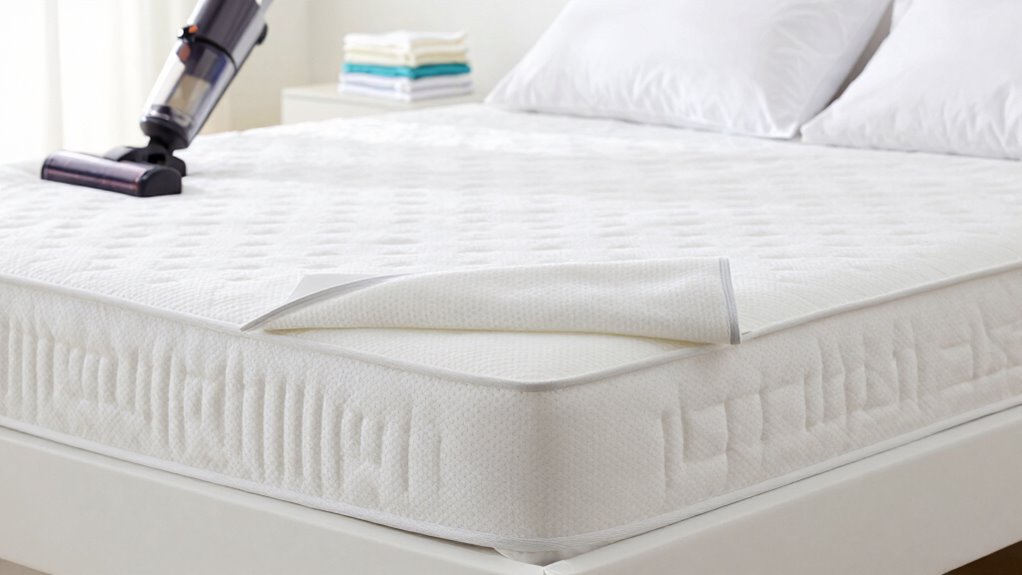

To keep your mattress hygienic, vacuum it regularly with a HEPA filter and use a dust-mite-proof cover. Wash bedding weekly and air out your mattress to reduce moisture. Simple routines like these are more effective than expensive sprays or treatments. Avoid harsh chemicals that can damage your mattress or cause allergies. If you want to discover more proven tips for a cleaner, healthier sleep environment, continue exploring these essential practices.
Key Takeaways
- Regular vacuuming with a HEPA filter removes dust mites, skin flakes, and allergens effectively.
- Enclosing the mattress in a dust-mite-proof cover prevents allergen buildup and is highly beneficial.
- Washing bedding weekly and airing out the mattress reduce moisture and mold risk.
- Using mattress toppers or protectors adds a barrier against spills and allergens, extending mattress life.
- Overusing chemical cleaners or sprays offers little benefit; simple routines like cleaning and airing are more effective.
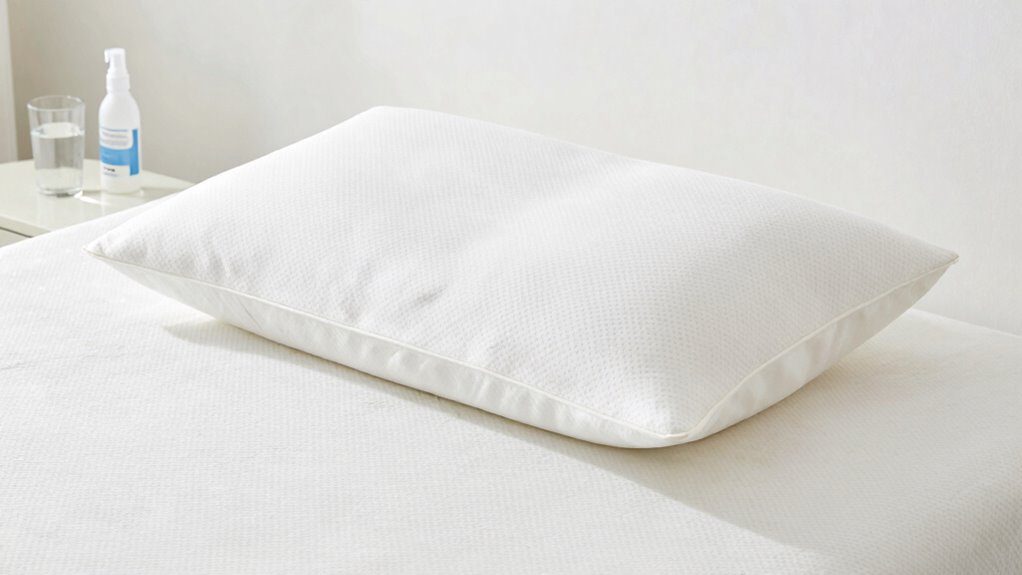
Have you ever considered how clean your mattress really is? Many people overlook this essential aspect of sleep hygiene, assuming that their mattress stays fresh with minimal effort. In reality, mattresses can harbor dust mites, sweat, skin flakes, and bacteria, all of which can affect your health and sleep quality. Regular mattress cleaning isn’t just about comfort; it can considerably improve allergy relief and extend your mattress’s lifespan. By maintaining a hygienic sleep environment, you prevent the buildup of allergens that trigger sneezing, congestion, or asthma symptoms. This proactive approach helps you wake up feeling more rested and less congested. Additionally, a clean mattress resists the accumulation of dirt and moisture that can degrade its materials over time, ultimately increasing its longevity. When you neglect proper hygiene, you risk the mattress breaking down faster, leading to costly replacements sooner than necessary.
One of the most effective ways to promote mattress longevity is to implement routine cleaning practices. Using a vacuum with a HEPA filter to regularly remove dust and allergens from the surface can markedly cut down on irritants that cause allergies or respiratory issues. Encasing your mattress in a dust-mite-proof cover creates a barrier that prevents allergens from settling deep into the fabric. Washing your sheets, pillowcases, and mattress protectors weekly helps keep the environment fresh and reduces the transfer of dirt and skin flakes into the mattress. These simple actions not only help with allergy relief but also preserve the integrity of your mattress, allowing it to stay supportive and comfortable for years.
Many individuals wonder if investing in expensive mattress cleaning products makes a difference. While some specialized sprays claim to eliminate bacteria or dust mites, it’s often more effective to stick with basic hygiene practices. Regularly airing out your mattress by stripping the bed and letting it breathe helps reduce trapped moisture, which can lead to mold growth. Using a mattress topper can also act as an extra barrier against spills, stains, and allergens, further extending its lifespan. Avoiding unnecessary chemical treatments is wise unless recommended by a professional, as some harsh chemicals can damage the material or cause allergic reactions.
Frequently Asked Questions
How Often Should I Replace My Mattress for Optimal Hygiene?
You should replace your mattress roughly every 7 to 10 years for peak hygiene. The mattress lifespan varies based on usage, materials, and maintenance, but frequent replacement helps prevent dust mites, allergens, and bacteria buildup. Keep an eye on sagging, stains, or discomfort, as these signs indicate it’s time for a new one. Regularly rotating and cleaning your mattress can extend its lifespan, but don’t delay the inevitable replacement to stay healthy and comfortable.
Are Mattress Protectors Truly Effective Against Allergens?
Yes, mattress protectors can be effective against allergens. They act as allergen barriers, preventing dust mites, pet dander, and pollen from settling into your mattress. By using a good quality protector, you reduce dust mite prevention issues and keep allergens at bay, especially if you suffer from allergies or asthma. Just make sure to wash the protector regularly to maintain its effectiveness and keep your sleeping environment healthier.
Can Natural Cleaning Agents Damage My Mattress?
Think of natural cleaning agents as gentle rain on your mattress’s surface—if used correctly, they won’t cause damage. However, some ingredients can trigger unwanted chemical reactions or accelerate material degradation over time. Always test a small area first and follow manufacturer instructions. When used properly, natural cleaners can refresh your mattress without harming it, keeping it safe and comfortable for restful nights ahead.
What’s the Best Way to Remove Persistent Stains?
To remove persistent stains from your mattress, start with gentle stain removal techniques like blotting with a mix of mild detergent and water. For tougher stains, you might consider chemical cleaning methods, but use them sparingly to avoid damage. Always test a small area first. Remember, quick action and consistent cleaning are key. Avoid harsh chemicals, and let your mattress dry thoroughly to prevent mold and odors.
Do Certain Mattress Materials Resist Bacterial Buildup Better?
Some mattress materials resist bacterial buildup better than others, helping you maintain a cleaner sleep environment. Memory foam, latex, and antimicrobial-treated fabrics are known for their bacterial resistance, reducing mold, bacteria, and odors. You should choose a mattress material with inherent or treated bacterial resistance to protect your health. Regular cleaning and proper ventilation complement these features, ensuring your mattress stays fresh and hygienic for longer.
Conclusion
Remember, maintaining mattress hygiene is like tending a garden—you nurture it daily, and it rewards you with restful sleep. I once ignored regular washing, and dust mites took hold—turning my bed into a battleground. But once I started simple habits like washing sheets weekly, the difference was clear. Just like watering plants keeps them thriving, consistent care keeps your mattress fresh and your sleep peaceful. Small daily acts make a world of difference.