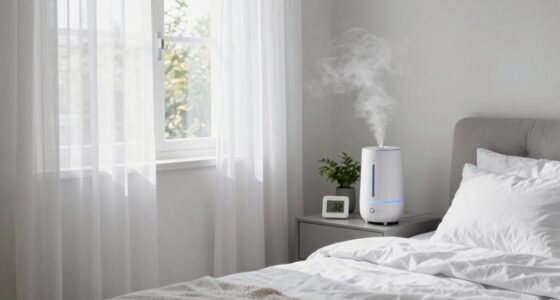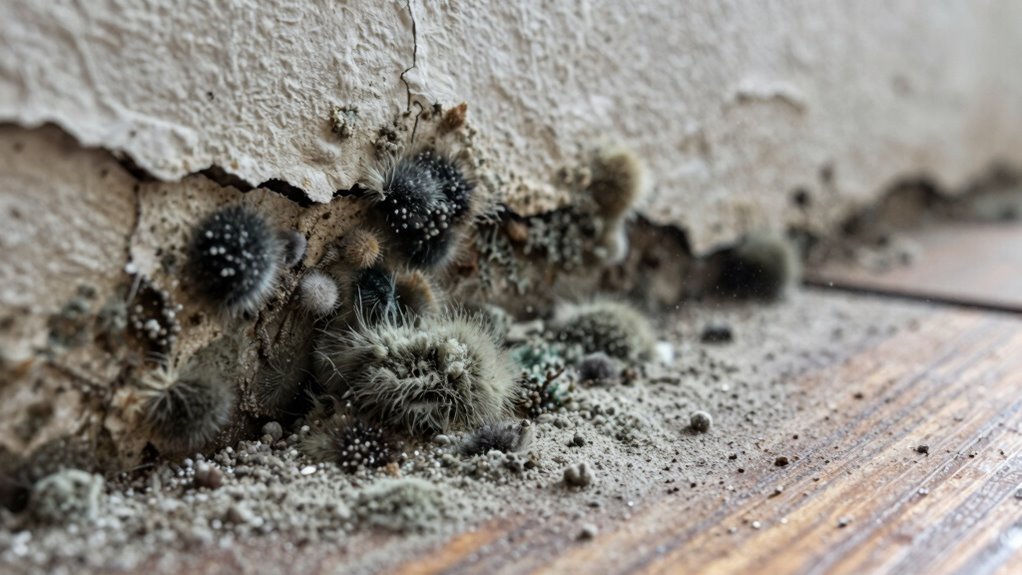
To figure out if mold, dust, or allergies cause your symptoms, observe when symptoms worsen — after cleaning, in certain seasons, or near pets. Mold thrives in damp areas, dust traps in cluttered spots, and allergies react to pollen or dander. Identifying these clues helps target treatment, but for accurate results, consider professional testing and environmental checks. If you want to learn more about pinpointing your triggers, keep exploring these insights.
Key Takeaways
- Track symptom patterns and triggers, noting if they worsen after cleaning, exposure, or during specific seasons.
- Differentiate by environmental clues: damp spots suggest mold; dusty areas indicate dust; seasonal changes hint at allergies.
- Conduct air quality tests or seek professional assessments to identify specific allergens or mold presence.
- Use HEPA filters and maintain low humidity to reduce mold spores and dust, helping distinguish triggers.
- Consult a healthcare provider for allergy testing and symptom management to accurately determine the cause.
What Are the Differences Between Mold, Dust, and Allergies?
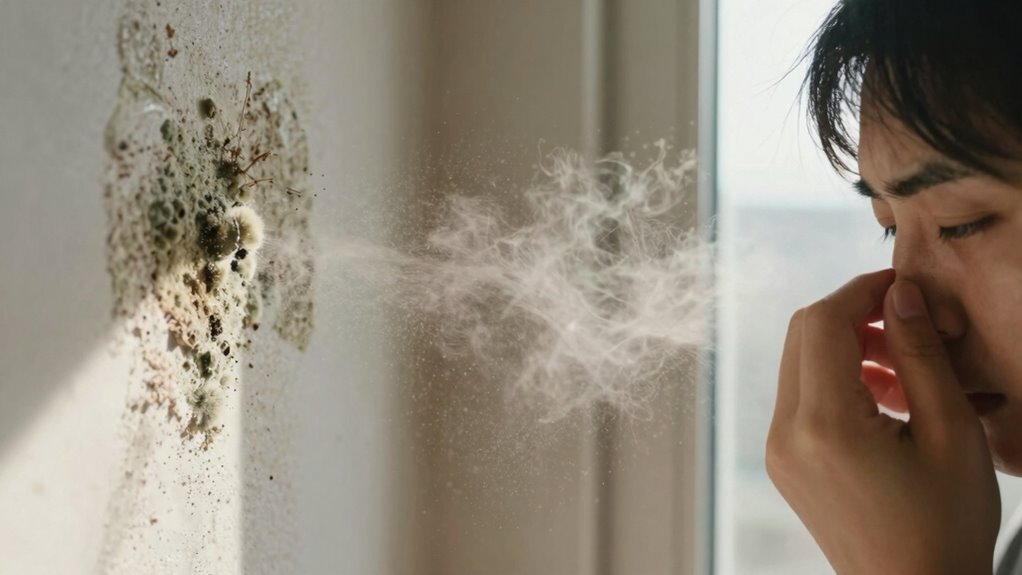
Understanding the differences between mold, dust, and allergies can help you identify what’s causing your symptoms. These issues often impact air quality and can create similar discomforts, leading to symptom overlap. Mold spores thrive in damp environments and can cause respiratory issues, while dust contains tiny particles like skin cells and pet dander that irritate your airways. Allergies are immune responses to substances like pollen or pet dander, often resulting in sneezing or itchy eyes. Despite these differences, their effects can feel alike, making it tricky to pinpoint the cause. Recognizing how each one influences air quality and causes specific symptoms helps you better understand what’s triggering your discomfort. Proper ventilation and cleaning techniques can significantly reduce indoor mold and dust levels, improving air quality. Additionally, understanding air filtration methods can further enhance your indoor environment. Using humidity control can also prevent mold growth and reduce dust accumulation, creating a healthier living space. Being aware of airborne particles and how they behave helps you tailor your cleaning and prevention strategies more effectively. This knowledge is the first step toward effective treatment and improving your indoor environment.
How Can You Tell If Your Symptoms Are Caused by Mold, Dust, or Allergies?
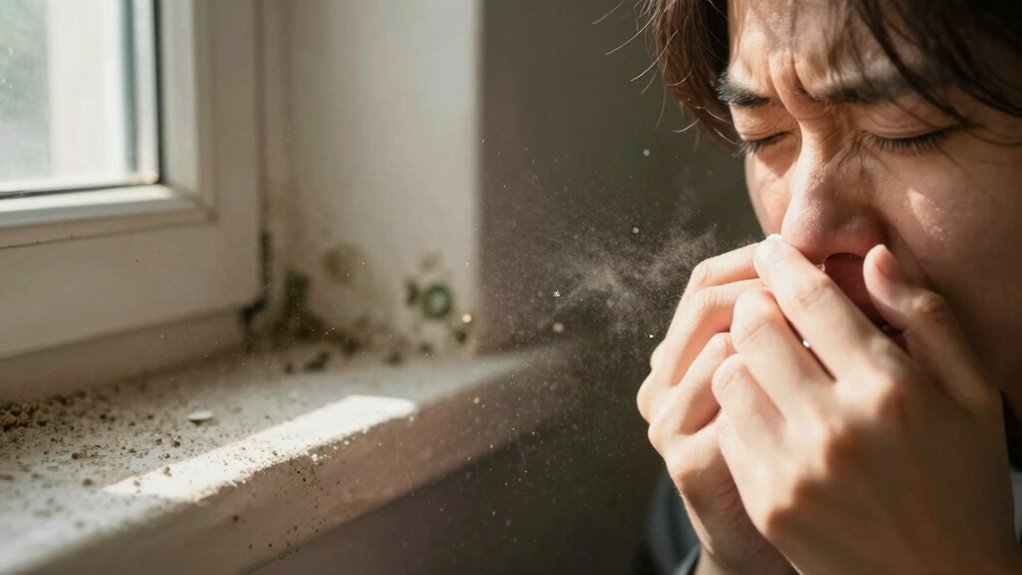
To determine whether your symptoms stem from mold, dust, or allergies, pay close attention to when they occur and how they behave. Symptom overlap can make it tricky to identify the trigger, but noting patterns helps. For example, if symptoms worsen after cleaning or exposure to certain areas, it might point to dust or mold. If symptoms flare up during specific seasons or in response to certain foods, allergies could be the cause. Keep track of when symptoms start, their severity, and any related environmental factors. This detailed observation is key to trigger identification. Recognizing these patterns helps you narrow down the cause, even if symptoms seem similar, and guides you toward effective treatment or environmental adjustments.
Where Do Mold, Dust, and Allergens Usually Come From?

You’ll find mold, dust, and allergens in everyday indoor spaces like carpets, upholstery, and bathrooms. Outdoor factors such as pollen and pollution can also contribute to your exposure. Additionally, hidden spots like wall cavities and behind appliances can harbor these irritants unnoticed. Microplastics in dust can also be a concern, as they may carry additional toxins into your indoor environment. The presence of indoor allergen sources can be difficult to detect without proper inspection techniques, making it important to understand potential hiding spots. Exploring content formats can help identify various sources of indoor allergens more effectively.
Common Indoor Sources
Indoor mold, dust, and allergens often originate from everyday environments and activities. Common sources include areas where moisture, dust, and debris accumulate. Regular use of air purifiers can help reduce airborne particles, but consistent cleaning routines are key to control indoor allergens. You should pay attention to these sources:
- Damp bathrooms and basements
- Carpets and upholstery
- Pet dander and hair
- Dusty vents and air ducts
- Cluttered surfaces that trap dust
- Indoor air quality can significantly influence allergen levels and overall health.
Outdoor Environmental Factors
Outdoor environmental factors play a significant role in introducing mold, dust, and allergens into your living space. Pollen from outdoor plants easily enters through open windows and doors, especially during high outdoor pollen seasons, contributing to allergy symptoms. Poor air quality caused by pollution or seasonal changes can carry dust, mold spores, and other allergens into your home, worsening indoor air conditions. Wind can also blow debris, leaves, and outdoor dust inside, increasing allergen levels. Additionally, outdoor mold spores thrive in humid or damp environments and can be transported indoors via clothing, pets, or ventilation systems. Being aware of these factors helps you understand why your symptoms might flare up unexpectedly and highlights the importance of managing outdoor exposure to reduce indoor allergen levels. Monitoring outdoor air quality is crucial for minimizing allergen intrusion and protecting your indoor environment. Recognizing outdoor allergen sources can help you take proactive steps to limit their impact. For example, seasonal pollen forecasts can help you plan outdoor activities to minimize exposure during peak times. Staying informed about outdoor environmental conditions allows you to better anticipate when allergen levels might be elevated and take appropriate precautions.
Hidden Growth Spots
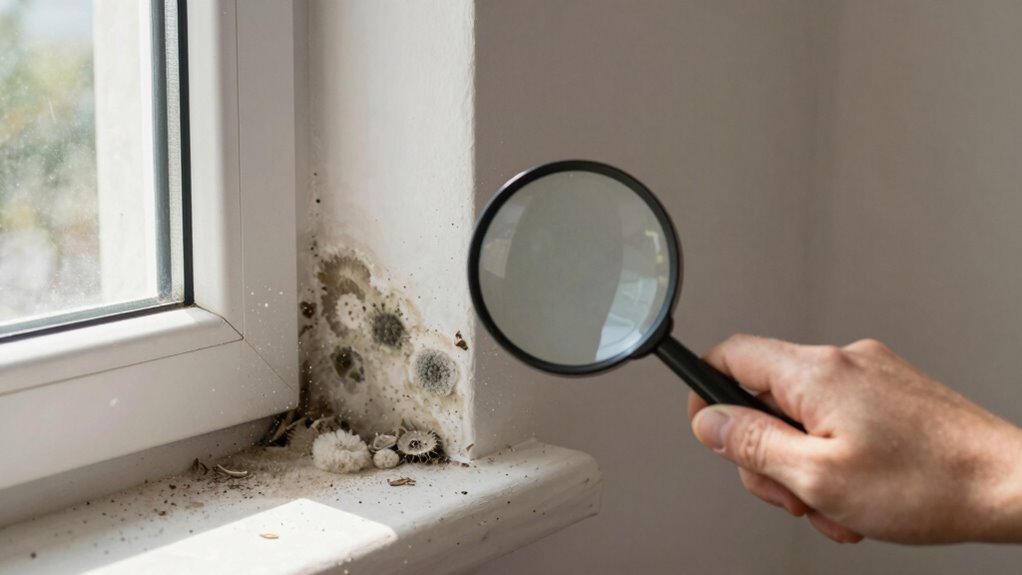
Many mold, dust, and allergen sources hide in places that are easy to overlook. These hidden growth spots often serve as unseen reservoirs, quietly releasing allergens into your environment. You might not notice mold behind wallpaper, under carpets, or inside HVAC systems. Dust can accumulate in hidden corners, inside vents, or beneath furniture. Allergens like pet dander or pollen may settle in seldom-cleaned spots, such as behind appliances or inside cluttered storage. Recognizing these unseen reservoirs helps you identify the true sources of your symptoms. Regular inspection and cleaning of these hidden growth areas are vital to reducing allergen exposure and improving indoor air quality. Staying aware of indoor air quality and taking steps to address these concealed spots can significantly lessen allergy symptoms and promote a healthier living space. Additionally, understanding common allergen habitats can guide targeted cleaning efforts for better health outcomes. Being proactive in detecting hidden mold and dust can further enhance your efforts to maintain a safe and comfortable environment. Conducting routine checks for hidden growth spots is essential for effective allergen management and long-term health benefits. Implementing preventive measures such as using air purifiers and humidity control can also help minimize mold and dust buildup over time.
How Do You Test for Mold, Dust, and Allergens: And When Should You Call a Professional?
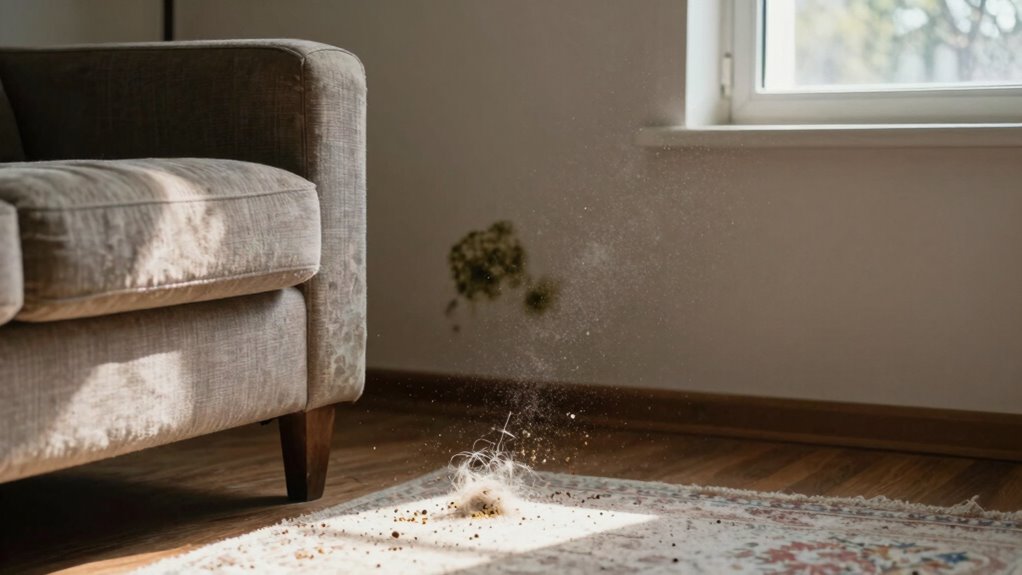
If you suspect mold, dust, or allergens are affecting your health, testing is the next step to identify the source. Air quality testing can reveal pollutant levels and help pinpoint triggers. DIY test kits are available, but they often lack accuracy. For comprehensive results, it’s best to schedule professional inspections. Professionals use specialized equipment to assess indoor air quality and identify hidden mold or allergen sources that may not be visible. If you notice persistent symptoms despite cleaning, or if there’s visible mold or excessive dust, calling a professional is essential. They can perform thorough testing and provide recommendations tailored to your home’s needs. Conducting comprehensive air quality assessments can help you understand the specific pollutants present in your environment. Early detection through proper testing can prevent health issues and help you make informed decisions about your environment, especially when considering the use of tools like a paint sprayer zone for renovations that might disturb dust and mold. Additionally, understanding indoor air quality can guide you in implementing effective mitigation strategies to improve your living space. Recognizing common allergen sources in your home can further assist in targeted cleaning and reduction efforts. Moreover, utilizing professional-grade testing equipment ensures accurate identification of pollutants that DIY kits may miss.
What Are Effective Ways to Reduce Mold, Dust, and Allergens in Your Home?
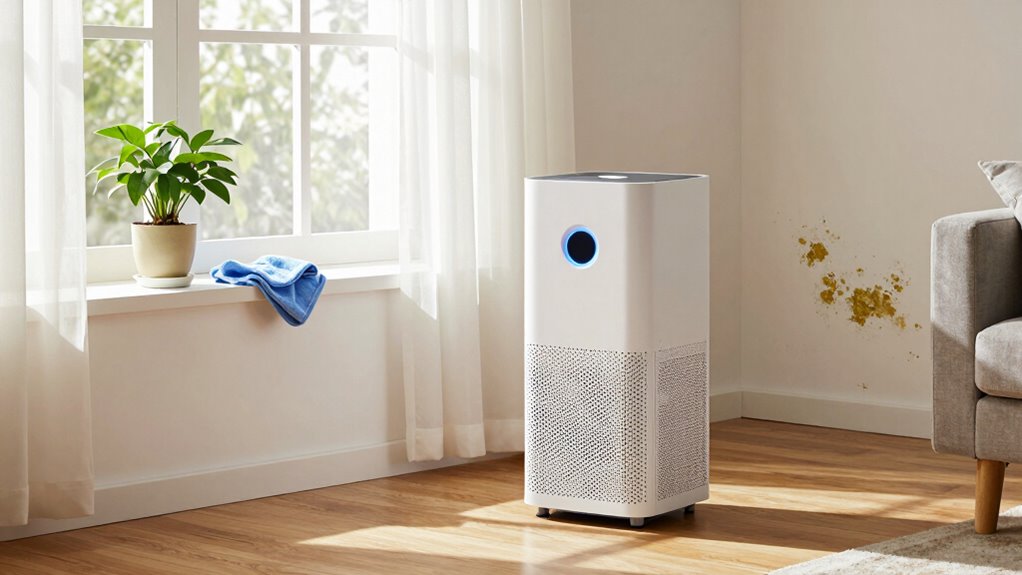
To effectively reduce mold, dust, and allergens in your home, regular cleaning and proper ventilation are essential. Maintaining a consistent cleaning routine helps remove accumulated dust and mold spores before they become problematic. Using air purifier benefits can markedly improve indoor air quality by trapping airborne particles. Ensure good airflow by opening windows when possible and using exhaust fans in bathrooms and kitchens. Keep humidity levels below 50% to inhibit mold growth. Consider dust-proof covers for bedding and furniture to minimize allergen buildup. Regularly washing linens and vacuuming with a HEPA filter vacuum cleaner also helps reduce allergens. Incorporating these strategies into your cleaning routines creates a healthier environment and alleviates allergy symptoms. Paying attention to indoor air quality can further support allergy relief and overall health.
Which Treatments Work Best for Mold, Dust, or Allergy Symptoms?
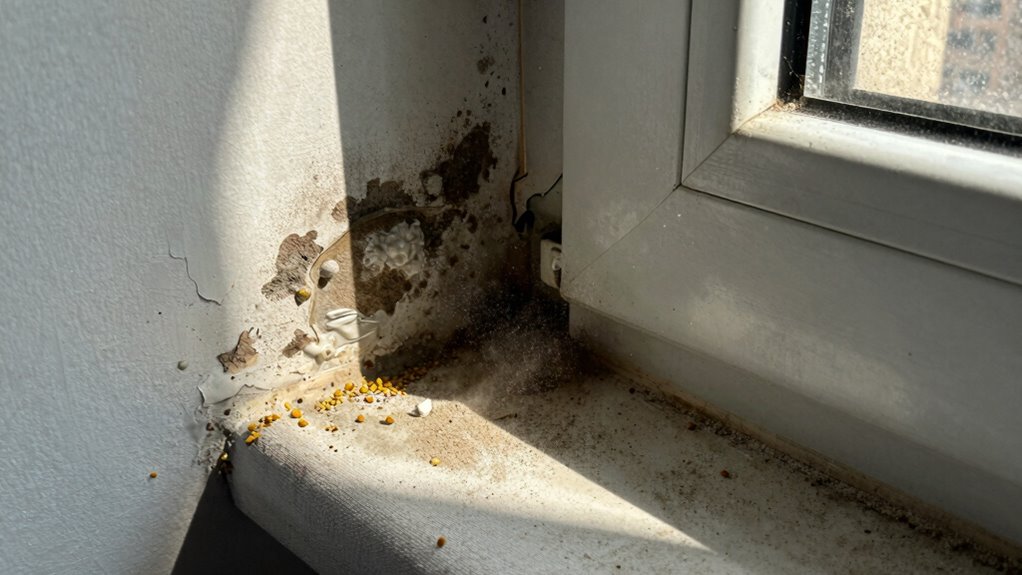
When dealing with mold, dust, or allergy symptoms, the most effective treatments target the specific cause of your discomfort. Air purifiers can help remove airborne particles like mold spores and dust, providing immediate relief. For persistent allergies, allergy shots may be recommended, as they can desensitize your immune system over time. Medications such as antihistamines or nasal sprays can also alleviate symptoms, but they don’t address the root cause. It is crucial to identify your trigger to choose the best treatment. Consistent cleaning and controlling humidity levels can reduce mold and dust buildup, while medical interventions like allergy shots offer long-term benefits. Utilizing the appropriate air purifier maintenance dos and don’ts can significantly enhance the lifespan and performance of your device. Combining environmental controls with medical strategies often yields the best results for managing allergy symptoms effectively. Incorporating personal finance planning strategies can help manage the costs associated with allergy treatments and home improvements.
When Should You See a Doctor and How Can You Prevent Future Triggers?
Seek medical attention promptly if your allergy or respiratory symptoms worsen, persist despite treatment, or interfere with daily activities. Regular doctor visits are essential for proper diagnosis and management. Preventative measures can greatly reduce your triggers and improve quality of life. To prevent future triggers, consider the following:
- Keep your living space clean and dry to minimize mold and dust buildup
- Use HEPA filters to trap airborne allergens
- Regularly wash bedding and curtains
- Avoid known triggers, such as mold-prone areas or dusty environments
- Follow your doctor’s advice on medications and allergy testing
Taking these steps, along with scheduled doctor visits, helps control symptoms and prevents severe reactions. Being proactive ensures you stay ahead of triggers and maintain better respiratory health.
Frequently Asked Questions
Can Mold, Dust, and Allergens Cause Long-Term Health Issues?
Chronic exposure to mold, dust, and allergens can cause long-term health issues, as your immune response stays activated. You might experience persistent respiratory problems, allergies, or even more serious conditions over time. It is crucial to identify and address these triggers early to prevent lasting damage. Regular cleaning, proper ventilation, and seeking medical advice can help you reduce exposure and protect your health in the long run.
Are Children More Susceptible to Mold, Dust, or Allergy Triggers?
Children are more vulnerable to mold, dust, and allergy triggers because their immune development is still in progress. You should pay extra attention to these allergens, as their developing immune systems react more strongly. Keep indoor environments clean and well-ventilated, and consult a healthcare professional if you notice persistent symptoms. Early detection and management help protect your child’s health and support their immune development.
How Do Seasonal Changes Affect Mold, Dust, and Allergy Levels?
Seasonal fluctuations bring environmental impacts that can heighten mold, dust, and allergy triggers. As temperatures rise or fall, mold spores thrive in damp conditions, while dry seasons stir up dust. Cold weather often keeps you indoors, increasing exposure to indoor allergens. You might notice symptoms worsen during certain seasons when outdoor humidity and temperature shifts create the perfect environment for these triggers to flourish.
Can Pets Contribute to Indoor Mold, Dust, or Allergy Problems?
Yes, pets can contribute to indoor mold, dust, or allergy problems. Pet dander and fur allergies often trigger reactions, especially if your pet sheds heavily or isn’t regularly groomed. Their fur can trap dust and mold spores, spreading allergens throughout your home. To reduce issues, clean thoroughly, vacuum frequently, and consider air purifiers. Keeping pets healthy and well-groomed helps minimize their impact on indoor allergens.
Are There Natural or Home Remedies to Reduce These Triggers Effectively?
You can try DIY cleaning with natural remedies like vinegar or baking soda to reduce mold, dust, and allergens. Regularly vacuum with a HEPA filter, wash bedding frequently, and keep humidity levels low to inhibit mold growth. Using natural remedies, such as essential oils like tea tree or eucalyptus, can also help purify the air. These simple, effective tips support a healthier indoor environment without harsh chemicals.
Conclusion
Understanding whether mold, dust, or allergies cause your symptoms can feel overwhelming, but with careful observation and testing, you can identify the culprit. By taking proactive steps and seeking professional advice when needed, you can breathe easier and reduce your triggers. Isn’t your health worth the effort? Taking control now not only relieves discomfort but also prevents future issues—so start today and create a healthier home environment.