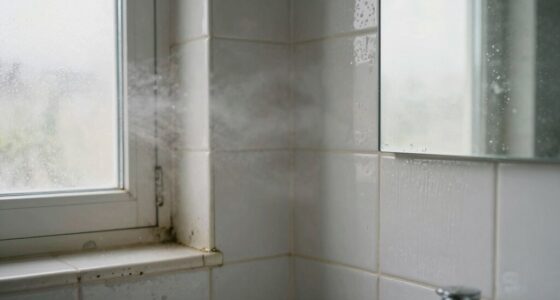
If you notice persistent condensation or fogging on your windows, it’s a warning sign you shouldn’t ignore. This indicates excess indoor humidity, which can lead to mold, mildew, and structural damage if left unchecked. Ignoring these signs allows moisture to promote health issues and reduce your home’s energy efficiency. Addressing this early can protect your home and health. Keep going to discover effective ways to manage and prevent window condensation.
Key Takeaways
- Persistent condensation on windows indicates high indoor humidity needing immediate attention.
- Foggy or hazy windows that linger suggest compromised insulation or seal failure.
- Water droplets forming during cold weather signal excess moisture and potential mold growth risks.
- Regular fogging or condensation buildup can lead to window damage, mold, and structural issues.
- Ignoring condensation signs can increase energy costs and harm indoor air quality.

If you notice water droplets forming on your windows, it’s a clear sign of condensation that could indicate underlying issues. This often happens when humidity buildup occurs inside your home, causing moist air to come into contact with cooler window surfaces. As the warm, humid air hits the cold glass, it releases moisture, resulting in visible water droplets. You might also observe interior fogging—an opaque film or hazy appearance on your windows—especially during colder months. This fogging isn’t just a minor nuisance; it signals excess moisture trapped within your home, which can lead to more significant problems if left unaddressed. Recognizing window seal deterioration as a common cause can help you address the issue early. Humidity buildup inside your living space can stem from various sources—cooking, showering, laundry, or even indoor plants. When these activities generate moisture faster than it can escape, the excess humidity rises and creates a breeding ground for condensation. Interior fogging is often the first visible indicator that your home’s humidity levels are too high. You may notice the fog clears slowly or remains persistent, especially on single-pane windows or poorly insulated glass. This persistent fogging can be a warning sign that your indoor air quality is compromised, and without proper ventilation, the moisture may cause mold growth, wood rot, or damage to your window frames and sills. Ignoring condensation and fogging can lead to more serious issues. Excess moisture encourages mold and mildew, which not only damages surfaces but also poses health risks, especially for allergy sufferers or those with respiratory issues. Over time, the persistent humidity buildup can weaken your window seals, leading to drafts, decreased insulation efficiency, and higher energy bills. If you notice your windows fogging up regularly or water droplets lingering despite ventilating the room, it’s a sign you need to reduce indoor humidity and improve airflow. Addressing these signs early can save you money and prevent structural damage. Use exhaust fans in the kitchen and bathroom, open windows regularly, and consider investing in a dehumidifier if your home has consistently high humidity levels. Improving insulation and sealing leaks around windows can also help keep cold air out and moist air from settling on your glass. Recognizing the signs of humidity buildup and interior fogging isn’t just about maintaining clear views—it’s about protecting your home’s integrity and your health. If these issues persist, consulting a professional for proper ventilation assessments and moisture control solutions is a wise step to ensure your living environment stays safe and comfortable.
Frequently Asked Questions
Can Window Condensation Cause Mold Growth Inside My Home?
Yes, window condensation can cause mold growth inside your home. When humidity buildup occurs, moisture collects on your windows and, if not addressed, can seep into walls and other surfaces. Poor air circulation worsens this issue by trapping moisture indoors. To prevent mold, improve ventilation, reduce indoor humidity, and wipe away condensation regularly. Addressing these factors helps keep mold at bay and maintains a healthier living environment.
How Often Should I Check for Window Condensation?
You should check for window condensation at least once a day, especially during cold weather or high humidity levels. Keep an eye on your windows to spot excess moisture early. Improve air circulation by opening windows or using fans, which helps reduce humidity levels and prevents condensation buildup. Regular checks allow you to address moisture issues promptly, avoiding mold growth and potential damage inside your home.
Does Window Condensation Mean My Home’s Insulation Is Failing?
Window condensation doesn’t necessarily mean your home’s insulation is failing, but it can indicate issues with vapor barriers or excess indoor humidity. If you notice frequent condensation, check your window insulation and make certain vapor barriers are intact to prevent moisture buildup. Improving insulation and ventilation helps reduce condensation, protecting your windows and maintaining energy efficiency. Addressing these factors now can prevent more significant problems later.
Are There Quick Fixes to Reduce Window Condensation Temporarily?
Did you know that 60% of homeowners experience window condensation? To quickly reduce it, try temporary fixes like opening windows or using a fan to improve airflow solutions. You can also wipe away excess moisture with a cloth or apply dehumidifiers nearby. These steps won’t solve the root issue but can help manage the problem temporarily while you explore long-term fixes.
When Should I Call a Professional About Window Condensation Issues?
You should call a professional for window condensation issues if moisture persists despite your efforts to improve ventilation or use dehumidifiers. Persistent condensation can indicate problems with window seals or insulation, requiring expert window repair. Addressing moisture control early prevents damage and mold growth. Don’t ignore ongoing issues—consult a specialist to assess and resolve the problem, ensuring your windows stay dry and energy-efficient.
Conclusion
Ignoring window condensation can hide serious issues, compromise your comfort, and damage your home. Pay attention to the signs, address the problems promptly, and protect your space. Don’t wait until it’s too late—prevent mold, reduce energy costs, and maintain a healthy environment. Act now, stay informed, and keep your home safe. Because noticing the signs, understanding the causes, and taking action are all parts of caring for your home and yourself. Don’t ignore the warning; respond before it’s too late.