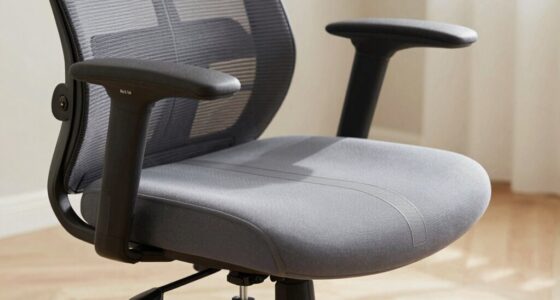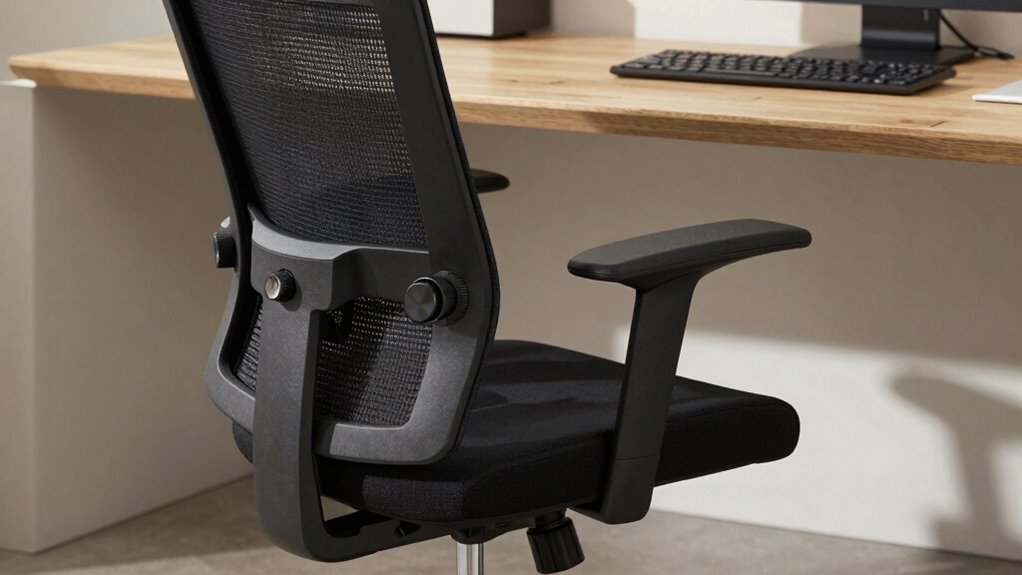

To alleviate back pain, focus on five key adjustments: set your seat height so your feet are flat and knees are at 90°, ensuring proper leg and back support. Customize your lumbar support to fit your lower back naturally, and tweak the backrest angle to promote good posture. Additionally, position your armrests so your shoulders stay relaxed and elbows bend at about 90°, while aligning your seat and feet for total back health. If you continue exploring, you’ll discover the complete setup tips.
Key Takeaways
- Proper lumbar support placement and adjustment to maintain natural spinal curvature.
- Seat height and depth tailored to keep feet flat and knees at 90°, reducing strain.
- Backrest tilt and firmness customized for optimal back support and comfort.
- Armrest height and position set to keep shoulders relaxed and elbows at approximately 90°.
- Use ergonomic accessories like footrests to enhance overall posture and stability.
How to Set Your Seat Height and Depth for Back Comfort
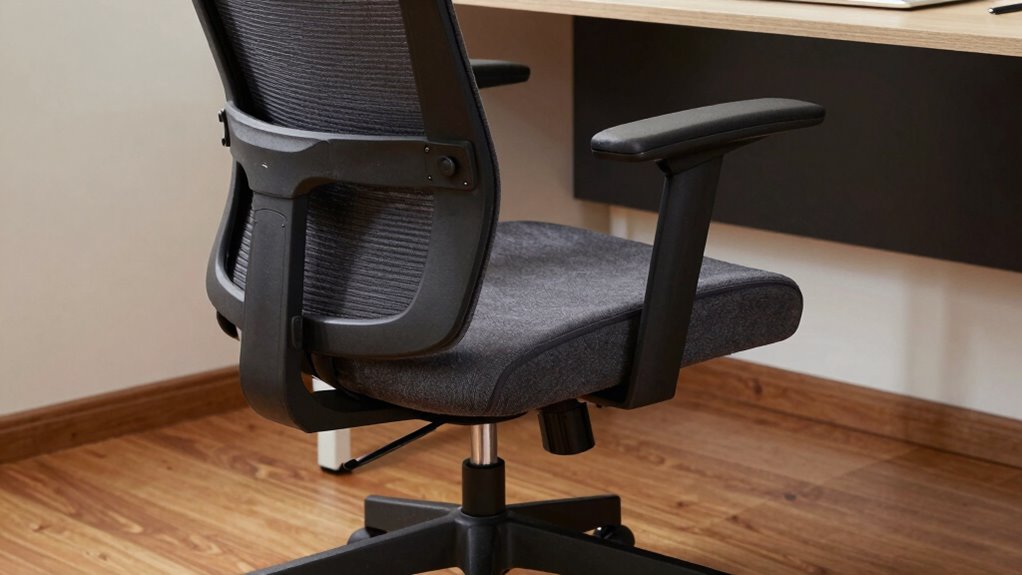
Ever wonder how to adjust your office chair to best support your back? Proper seat height and depth are essential for comfort and spinal health. Start by setting your seat height so your feet are flat on the floor, with knees at a 90-degree angle. Use ergonomic accessories like a footrest if needed. Your hips should be slightly higher than your knees to promote good posture. When adjusting seat depth, move the seat forward or back so you can sit with your back against the lumbar support while maintaining a small gap (about 2-4 inches) between the edge of the seat and the back of your knees. An efficient office layout, with your monitor and keyboard within easy reach, complements these adjustments for maximum back support. Additionally, paying attention to regional flavors and incorporating ergonomic accessories inspired by diverse cultures can enhance your overall comfort. Remember that ergonomic principles are vital for creating a healthy workspace that prevents long-term back issues. Incorporating personalized adjustments can further optimize comfort and support tailored to your specific needs. For example, understanding the importance of proper posture alignment can help prevent strain during extended periods of sitting. Moreover, being aware of proper ergonomic setup can help prevent discomfort and improve productivity during long work sessions.
How to Customize Lumbar Support to Relieve Lower Back Pain
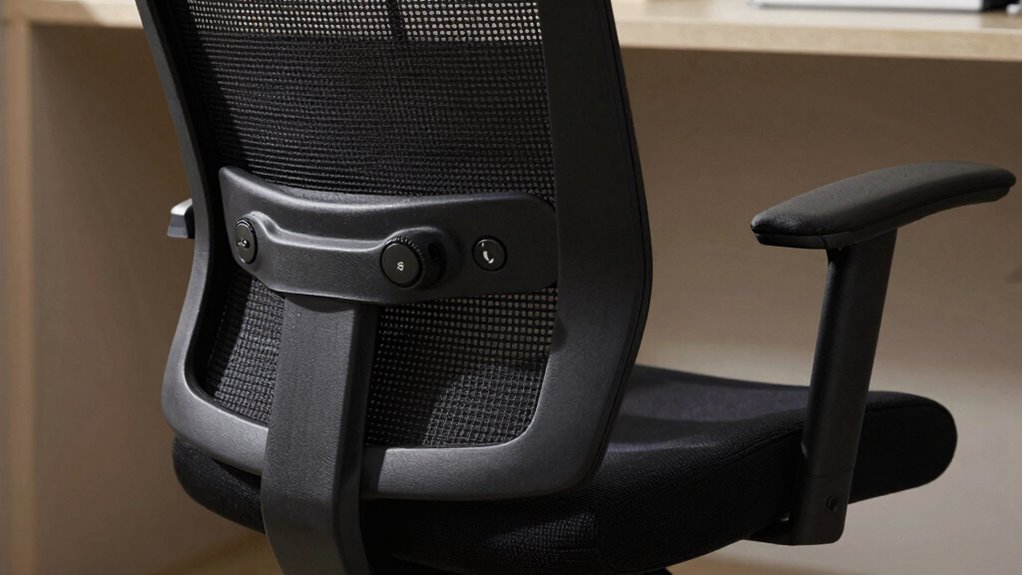
Adjusting your lumbar support can make a significant difference in alleviating lower back pain. Start by adding or repositioning the lumbar padding so it fits snugly against the curve of your lower back. Proper lower back support encourages natural spinal alignment and reduces strain. If your chair has adjustable lumbar support, move it up or down to align with your lumbar region. If it’s removable, consider adding a small cushion or lumbar roll for extra support. Avoid letting the padding press into your back too hard, which can cause discomfort. Instead, aim for gentle, consistent pressure that supports your lower spine without restricting movement. Regularly check and refine your lumbar support to maintain comfort and prevent pain during long hours at your desk. Additionally, understanding ceiling fan efficiency can help you create a more comfortable environment that supports your well-being. Proper ergonomic adjustments can further enhance your comfort and reduce strain during extended periods of sitting. To optimize your setup, consider adjusting your chair height so your feet rest flat on the floor and your knees are at a right angle, which can further reduce back tension. Incorporating movement breaks into your routine can also help prevent stiffness and promote circulation. Paying attention to posture awareness can also contribute greatly to ongoing back health and comfort.
How to Adjust Your Backrest Angle for Better Posture
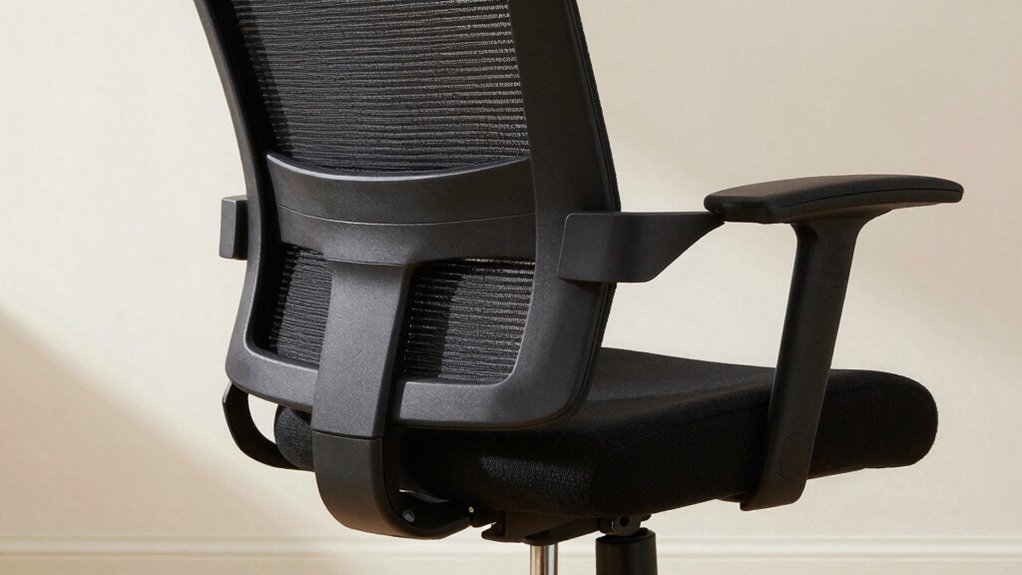
Want to improve your posture and reduce back strain? Adjusting your backrest tilt is key. Start by setting the backrest so it supports your lumbar positioning, keeping your lower back naturally curved. A slight backward tilt encourages an ergonomic position, easing pressure on your spine. To find the right angle, experiment with small adjustments until your back feels supported without feeling compressed. Use this table as a guide:
| Backrest Tilt Angle | Effect on Posture | Recommended for |
|---|---|---|
| 0° (upright) | Minimal lumbar support | Short periods of focus |
| 10-15° | Good lumbar positioning | Most office work |
| 20° | More recline, comfort | Extended periods |
| 25°+ | Relaxed posture | Breaks and relaxation |
| Custom | Personalized comfort | Individual needs |
Adjust until your back feels supported and comfortable. Incorporating proper ergonomic adjustments can further enhance comfort and prevent discomfort during long sitting sessions. Additionally, paying attention to seat height and depth helps ensure your entire back remains properly supported, which is essential for maintaining good posture over time. Remember that adjusting your chair regularly can help maintain optimal support as your comfort needs change throughout the day. Regularly reviewing and fine-tuning these settings can contribute significantly to long-term spinal health.
How to Position Your Armrests to Prevent Shoulder and Back Tension
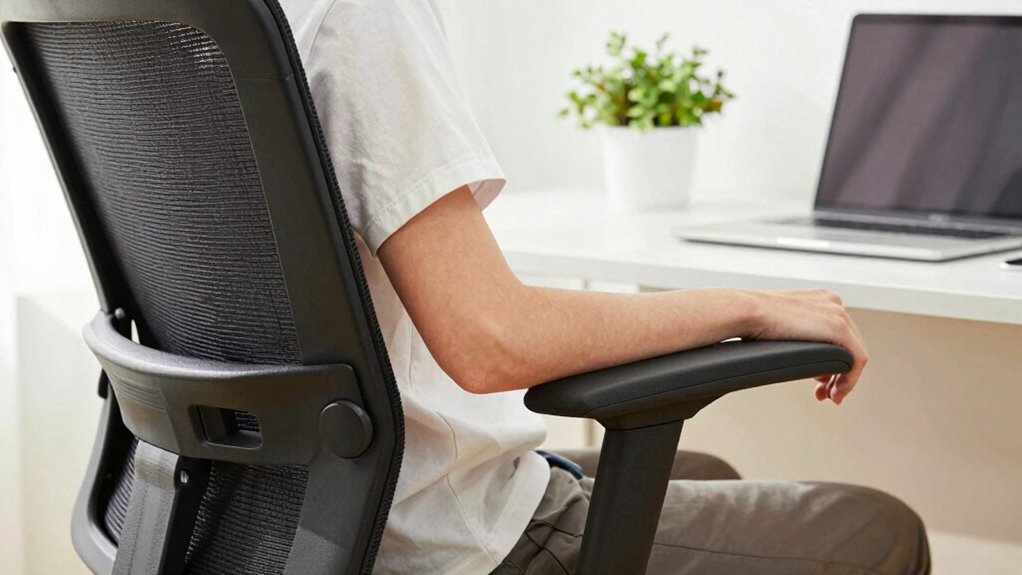
Properly positioning your armrests is essential for preventing shoulder and back tension, especially during long periods of sitting. Good armrest ergonomics support your arms comfortably and reduce strain. To achieve this, adjust the armrests so your shoulders stay relaxed and your elbows form roughly a 90-degree angle. Imagine:
Proper armrest positioning keeps shoulders relaxed and prevents strain during long sitting sessions.
- Resting your forearms softly on the armrests, avoiding shrugging your shoulders
- Keeping armrests at a height where your wrists are straight and not bent
- Ensuring armrests don’t push your shoulders upward or cause leaning
- Adjusting your workspace to promote overall ergonomic comfort and reduce muscle strain
- Additionally, proper armrest positioning can help maintain spinal alignment and prevent long-term discomfort. Incorporating ergonomic principles into your chair setup can further enhance your comfort and support, especially by paying attention to back support to ensure proper posture throughout the day. Properly aligning your chair height can also make a significant difference in reducing tension.
How to Properly Align Your Seat and Feet for Overall Back Health
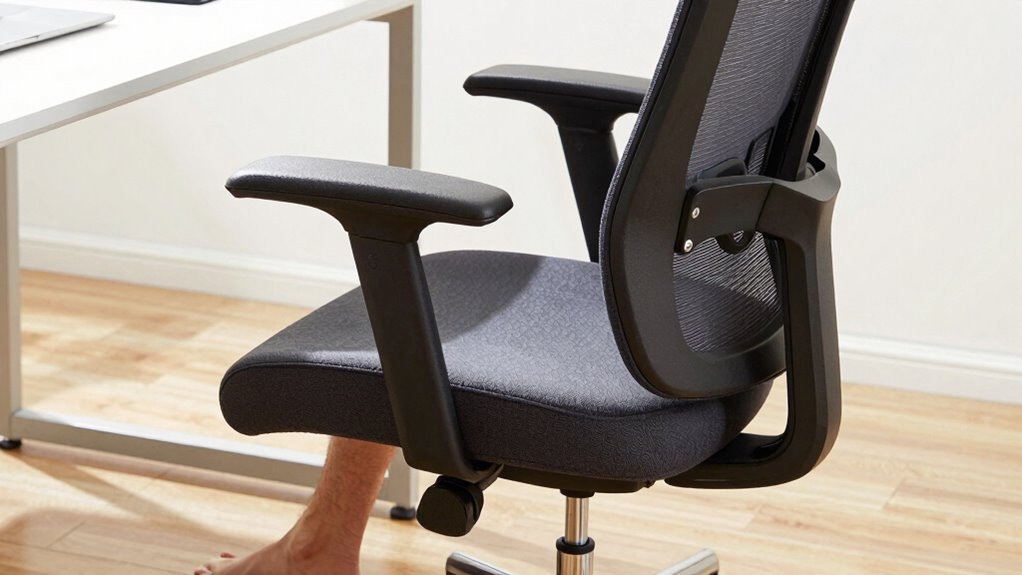
Ensuring your seat and feet are correctly aligned supports the overall health of your back during long hours at your desk. Adjust your chair height so your feet are flat on the floor, with knees at a 90-degree angle. Use ergonomic accessories like footrests if needed. Pay attention to your sitting habits—avoid crossing legs or slouching, which can strain your back. Proper alignment reduces pressure on your lumbar spine and promotes circulation. You can also consider ergonomic chair features that promote comfort and support, like selecting an ergonomic chair designed for back health. Additionally, taking regular breaks to stretch can further alleviate muscle tension. Being mindful of your posture habits helps prevent long-term issues and promotes better spinal health. For optimal results, ensure your work environment encourages correct sitting posture and periodic movement. Incorporating proper ergonomic setup principles can make a significant difference in your comfort and back well-being. Here’s a quick emotional reminder:
| Feel Supported | Stay Comfortable | Prevent Pain |
|---|---|---|
| Secure foot placement | Maintain natural posture | Minimize discomfort |
| Confidence in your setup | Focus on work | Protect your back |
| Comfort that lasts | Stay energized | Feel in control |
| Reduce fatigue | Improve productivity | Avoid future issues |
| Comfort and health combined | Feel empowered | Support your back |
Frequently Asked Questions
How Often Should I Readjust My Office Chair Settings During the Day?
You should readjust your office chair settings, like chair height and lumbar support, at least once or twice a day. Pay attention to how you feel—if you notice discomfort or poor posture, make quick tweaks. Throughout the day, small adjustments help maintain proper alignment, especially as your movement or posture shifts. Regularly tuning your chair guarantees continuous comfort and supports your back health.
Can Ergonomic Accessories Enhance Back Support Beyond Chair Adjustments?
Yes, ergonomic accessories like lumbar pillows and footrests can substantially enhance back support beyond your chair adjustments. A lumbar pillow helps maintain proper lower back curve, reducing strain, while a footrest promotes better posture by keeping your feet flat and hips aligned. Incorporate these accessories into your workspace, and you’ll feel more comfortable and supported throughout your workday, reducing back pain and improving overall posture.
What Signs Indicate My Chair Isn’t Properly Supporting My Back?
You notice your shoulders tense, your lower back aches, or you slump forward—these are signs your chair isn’t supporting you. Pay attention to posture cues like constant slouching or uneven weight distribution. If your cushion feels uncomfortable or presses painfully against your back, it’s time to adjust. Proper support feels like a gentle hug around your spine, not a nagging pressure. Address these signs to prevent discomfort from worsening.
How Does Seat Firmness Impact Back Pain Relief?
Seat firmness plays a key role in back pain relief because a firm seat provides better lumbar support, helping maintain proper posture. If your chair is too soft, you may slouch and strain your back, but a firmer seat encourages an upright position. Adjusting your chair height ensures your feet are flat on the ground, which further reduces pressure on your lumbar region and promotes comfort throughout the day.
Are There Specific Ergonomic Guidelines for Pregnant Individuals?
Yes, there are pregnancy-specific ergonomics you should follow. Focus on maternity chair adjustments like lumbar support and seat height to reduce discomfort. Make sure your chair encourages good posture, with adjustable armrests and backrests that accommodate your changing body. Prioritize ergonomic features designed for pregnancy, and regularly change positions to relieve pressure. Proper maternity chair adjustments help support your back and hips, making sitting more comfortable during this special time.
Conclusion
If you master these five adjustments, you’ll open the secret to a back pain-free life—your chair will become your throne of comfort, and days of suffering will vanish into thin air. Say goodbye to nagging aches, slouching, and discomfort—your workspace will transform into a sanctuary of perfect posture. Trust me, once you get these settings right, you’ll wonder how you ever survived without this game-changing knowledge. Your back will thank you forever!