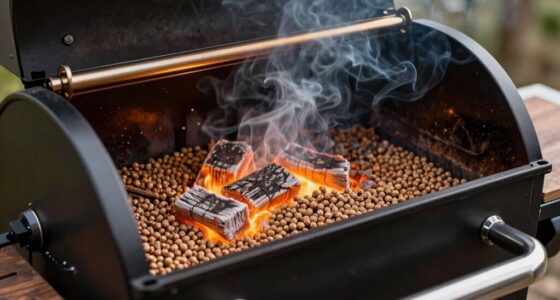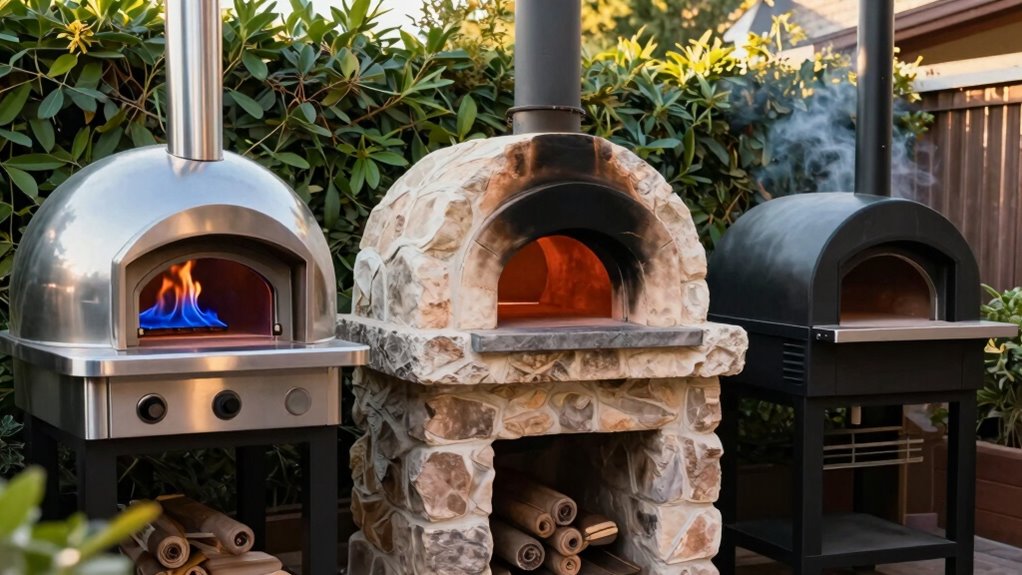

Choosing between gas, wood, or pellet outdoor pizza ovens depends on your patience and cooking style. If you want quick, consistent results, a gas oven is your best choice. For authentic smoky flavor and a traditional experience, wood-fired ovens require more time and skill. Pellet ovens offer a balance, providing ease and decent flavor. Your patience level helps determine which fits best — explore further to find the perfect match for your outdoor cooking adventures.
Key Takeaways
- Gas ovens heat quickly and are ideal for those seeking fast, convenient pizza prep with minimal patience needed.
- Wood-fired ovens require more preheating and attention, suited for enthusiasts with high patience and a desire for authentic flavor.
- Pellet ovens offer a middle ground, providing moderate heating times and flavor complexity for moderate patience levels.
- Low patience users should prioritize gas ovens for rapid results, while high patience individuals may prefer wood or pellet ovens.
- Selecting an oven aligned with your patience ensures a better cooking experience and satisfaction with your outdoor pizza setup.
What Factors Should You Consider When Choosing an Outdoor Pizza Oven?
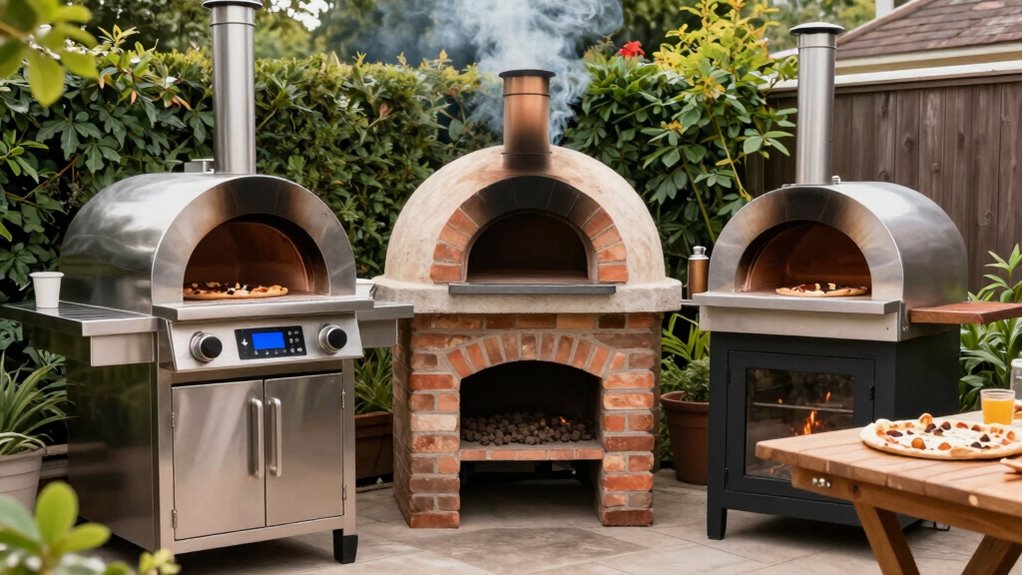
When choosing an outdoor pizza oven, there are several key factors to guarantee it meets your needs. First, consider how the oven’s design affects your pizza dough. A well-insulated oven ensures even heat, which is vital for perfect crusts. The oven materials also matter—materials like brick, stone, or stainless steel influence heat retention and durability. You want a surface that can withstand outdoor elements and provide consistent heat distribution. Think about how much space you have and whether the oven size fits comfortably in your setup. Ease of use is another factor; some ovens require more maintenance or complex ignition. Additionally, understanding the content formats and research topics related to different oven types can help you make a more informed decision. For example, evaluating the heat retention capabilities of various materials can significantly impact cooking performance. Considering the fuel type is also important, as each option—gas, wood, or pellet—offers different benefits and challenges. By focusing on these factors—pizza dough, oven materials, size, usability, and content knowledge—you’ll make an informed choice that elevates your outdoor cooking experience.
Differences Between Gas, Wood, and Pellet Outdoor Pizza Ovens
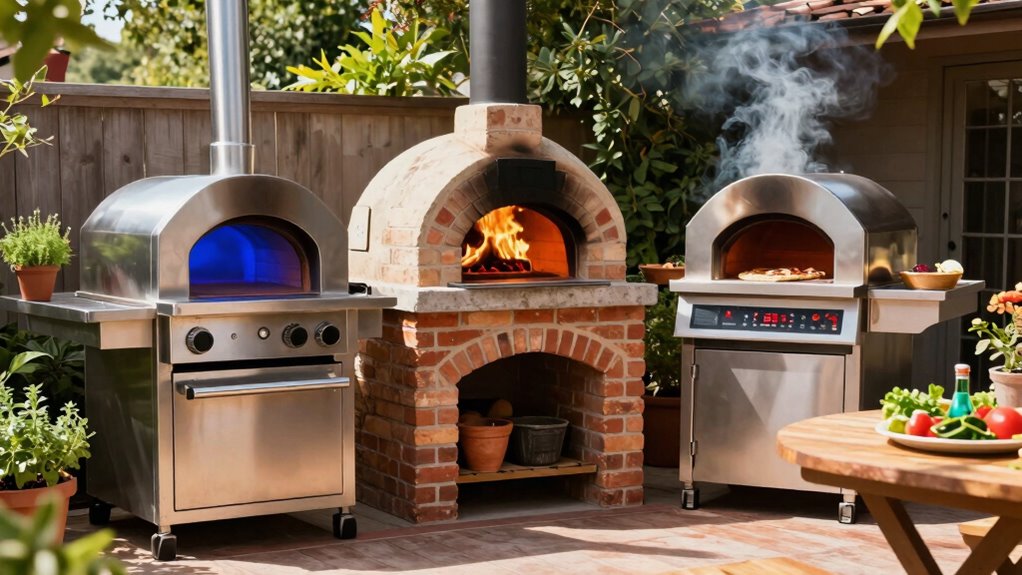
The type of fuel you choose—gas, wood, or pellets—significantly impacts your pizza-making experience. Each option offers different levels of convenience, flavor, and heat control. Understanding these differences helps you select the oven that best fits your cooking style and preferences. Additionally, considering device maintenance requirements for each fuel type can ensure your oven remains functional and safe over time.
Fuel Type Differences
Choosing the right fuel type for your outdoor pizza oven markedly impacts its performance, flavor, and convenience. Gas ovens excel in fuel efficiency and offer quick heat adjustments, making them highly convenient and consistent. Wood ovens provide a traditional flavor and reliable fuel availability, especially if you have access to seasoned logs. Pellet ovens combine the best of both worlds: they burn efficiently and are easy to operate, thanks to automated feed systems. Your choice depends on how much effort you’re willing to invest and the flavor profile you desire. Gas is low-maintenance with steady heat, wood offers authentic taste but requires more prep, and pellets strike a balance with good fuel efficiency and convenience. Your decision should align with your patience level and cooking preferences.
Cooking Experience Variations
Different types of outdoor pizza ovens offer distinct cooking experiences that can substantially influence your satisfaction. With gas ovens, you enjoy quick heat-up times and precise temperature control, making it easier to cook your pizza dough evenly. Wood-fired ovens provide a traditional, smoky flavor and a more hands-on experience, but they require patience to maintain consistent heat and frequent oven cleaning due to soot buildup. Pellet ovens strike a balance, offering convenience with consistent heat but still delivering a wood-like flavor. Your choice affects how you handle pizza dough and the effort needed to clean the oven afterward. Overall, the cooking experience varies from quick, clean, and precise to rustic, smoky, and more involved. Understanding the different fuel types can help you select the oven that best matches your desired cooking style and patience level.
How Your Patience Level Affects Your Oven Choice
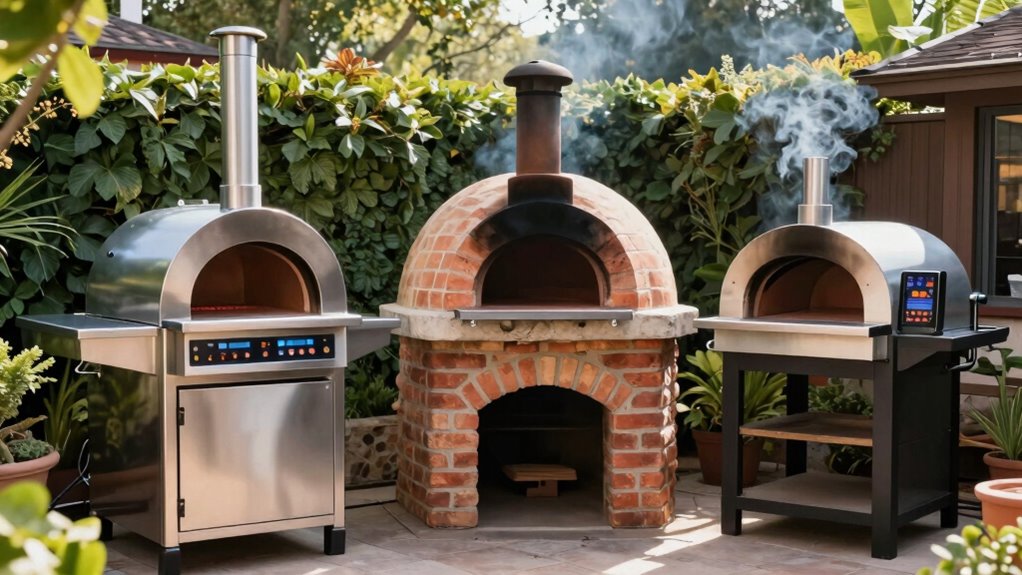
If you tend to get impatient waiting for your pizza to cook, your choice of outdoor oven should reflect that. Different oven types require varying amounts of patience during preheating and cooking. For quick results, gas-powered ovens heat rapidly and maintain consistent temperatures, suiting those with lower patience levels. Wood-fired ovens, while offering excellent flavor, demand more time to reach the right heat and require ongoing attention. Pellet ovens fall somewhere in between, providing faster startup than wood but slower than gas. Your patience levels directly influence which oven type fits your lifestyle. If quick cooking is essential, opt for gas. If you’re willing to wait a bit longer for that authentic flavor, a wood or pellet oven might be your best choice. Additionally, incorporating recovery techniques like foam rolling can help improve your overall patience and recovery, making the waiting process more manageable. Developing effective time management skills can also make the waiting periods feel shorter and less frustrating.
Pros and Cons of Gas-Powered Outdoor Pizza Ovens
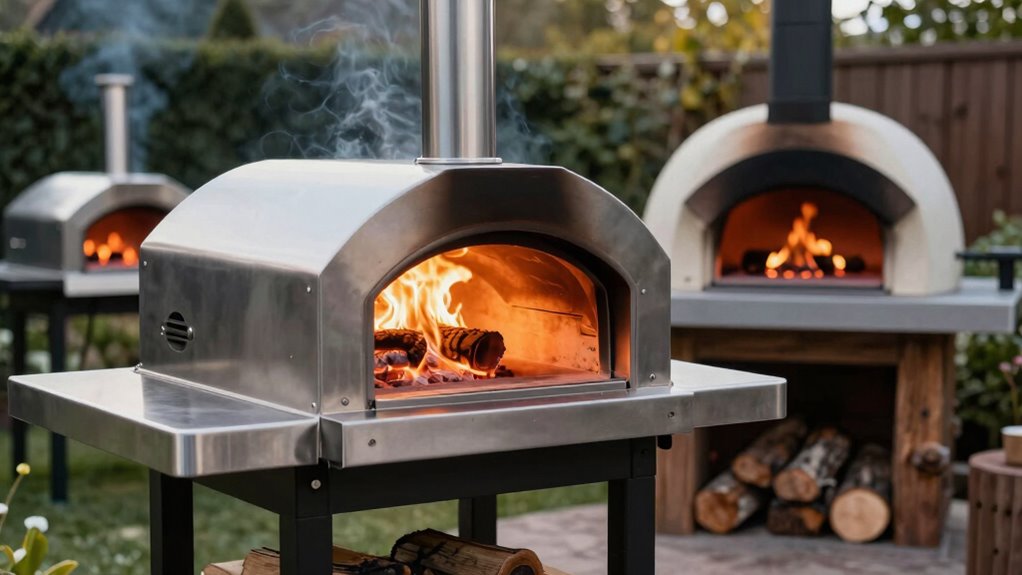
Gas-powered outdoor pizza ovens are popular for their ease of use and precise control, making cooking straightforward. They also tend to be more efficient and cost-effective in fuel consumption compared to other options. Additionally, the availability of various essential accessories can enhance your cooking experience and oven performance. For instance, selecting the appropriate fuel type can significantly influence your oven’s efficiency and flavor outcomes. Furthermore, understanding the balance between support and boundaries in your cooking style can help optimize your pizza results. Incorporating proper heat management techniques can also improve the overall quality and consistency of your baked pizzas. However, you might notice differences in flavor and cooking quality that could impact your overall pizza experience.
Ease of Use and Control
Gas-powered outdoor pizza ovens offer impressive ease of use and precise control, making them popular among home chefs. You can quickly adjust the temperature with a simple dial, ensuring your pizza cooks perfectly every time. When it comes to oven placement, these ovens are flexible—you can position them almost anywhere with a proper gas connection, providing convenience and safety. Cleaning routines are straightforward; since gas ovens produce less soot and ash, you spend less time tidying up after each use. However, you’ll want to keep the gas lines and burners in good condition to maintain control and safety. Overall, their user-friendly operation and consistent results make gas ovens a convenient choice for those seeking quick, reliable pizza nights.
Efficiency and Fuel Costs
While gas-powered outdoor pizza ovens are generally efficient, their fuel costs can vary depending on usage and local prices. You’ll find that these ovens typically offer good fuel efficiency, heating up quickly and maintaining consistent temperatures. This quick heating capability reduces waiting time and means you can cook more pizzas with less fuel, reducing overall operating costs. Additionally, gas ovens are known for ease of control, allowing precise temperature adjustments for perfect pizzas every time. Gas ovens also tend to have longer lifespan with proper maintenance, making them a durable investment. From an environmental impact perspective, natural gas combustion produces fewer emissions compared to wood, which may influence eco-conscious consumers. However, if you host frequent gatherings or cook at high temperatures often, your fuel expenses can add up. It’s important to contemplate how often you’ll use the oven and the local cost of gas. While the initial investment might be higher, the ongoing operating costs tend to be lower compared to wood or pellet options. Additionally, fuel efficiency is a key factor in determining overall cost-effectiveness and convenience. Overall, gas ovens balance convenience with moderate fuel expenses, making them an efficient choice for regular outdoor pizza making.
Flavor and Cooking Quality
Although gas-powered outdoor pizza ovens provide convenience and quick heating, their impact on flavor and cooking quality can be mixed. You might notice that the pizza crust isn’t as crisp or smoky as with wood-fired options, affecting that authentic taste. The cheese melt tends to be more uniform, but it can lack the nuanced char and depth that wood or pellet ovens produce. Gas ovens offer consistent heat, which helps with even cooking, but they often fall short in delivering the complex flavors that come from wood smoke. If you prioritize speed and convenience over traditional flavor, a gas oven works well. However, if you crave a more authentic, smoky pizza with a perfect crust and rich cheese melt, other options might serve you better. Additionally, proper safety placement and ventilation are essential when using gas-powered ovens to prevent hazards. Moreover, understanding the flavor development process can help you choose the oven that best matches your culinary preferences. For those seeking a more authentic smoky flavor, experimenting with different fuel types can enhance the overall experience. Incorporating wood smoke infusion techniques can further elevate the flavor profile of your pizza, bringing it closer to traditional wood-fired results.
Benefits and Drawbacks of Wood-Fired Ovens
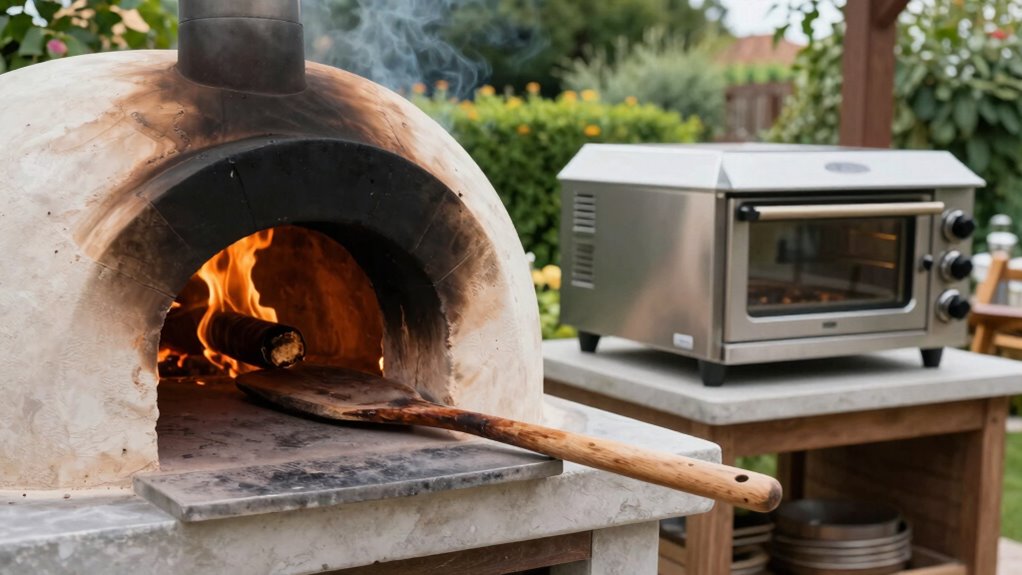
Wood-fired ovens are renowned for producing exceptional pizza with a distinctive smoky flavor and crispy crust that many enthusiasts crave. You’ll enjoy the firewood aroma filling your outdoor space, creating an authentic cooking experience. However, you should also consider some drawbacks:
- Temperature Control: It takes skill to maintain consistent heat, requiring attention to fire size and airflow. Developing an understanding of fire management techniques can help improve your control over cooking conditions.
- Ash Cleanup: After cooking, you’ll need to clear out ash, which can be messy and time-consuming.
- Longer Prep Time: Building and heating the fire takes patience, meaning longer wait times before you’re ready to cook.
- Authentic cooking style: This method is valued for its authentic style that enhances the flavor profile of your pizza.
While the flavor and aroma are unmatched, managing ash and precise temperature control can challenge your convenience.
Is a Pellet Oven a Good Fit for Your Cooking Style?
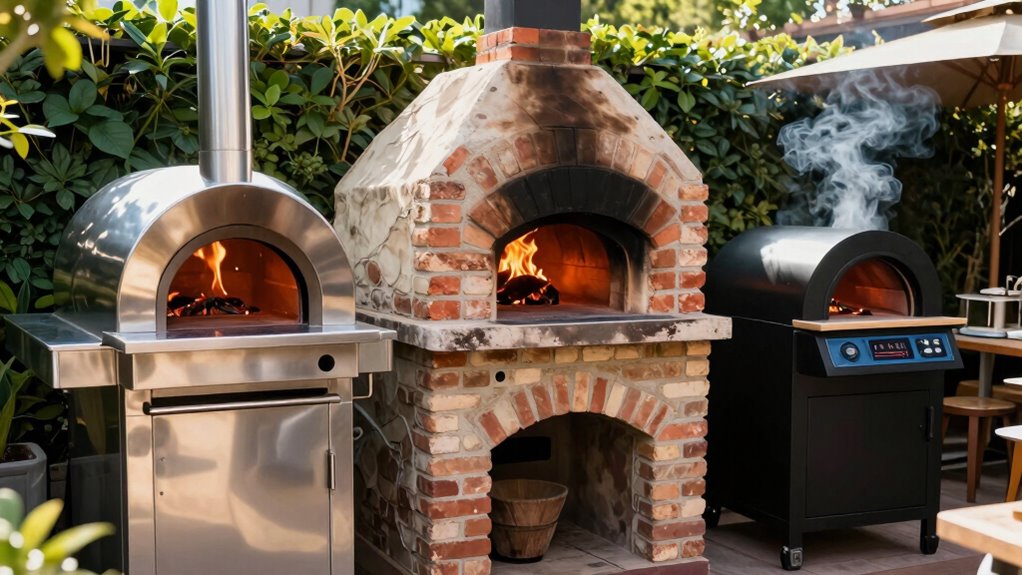
A pellet oven can change how quickly you get your pizza ready, often cooking faster than traditional methods. It also adds a smoky flavor you might love or find overpowering, depending on your preferences. Plus, it’s generally easy to operate and maintain, making it a convenient choice for many cooks. For those interested in Victorian Steampunk fashion, the design and aesthetic choices can also influence your decision on kitchen appliances.
Cooking Speed and Timing
Pellet ovens heat up quickly and maintain consistent temperatures, making them ideal if you value fast cooking times. You can prepare pizza dough and get it into the oven in no time, thanks to their rapid heat-up. This means you’ll spend less time waiting and more time enjoying your pizza. Consider these points:
- You can cook a pizza in about 5-7 minutes, perfect for quick gatherings.
- The steady temperature helps you keep your oven accessories like pizza stones or screens at prime heat.
- Precise temperature control ensures consistent results, so your pizza dough develops the perfect crust every time.
If quick turnaround is your priority, a pellet oven supports your style, giving you the flexibility to cook multiple pizzas in a short span.
Flavor and Smoke Levels
While pellet ovens produce consistent heat, they typically offer a milder smoky flavor compared to traditional wood-fired options. The flavor intensity in pellet ovens is generally more subdued, giving your pizza a cleaner, less smoky profile. This can be beneficial if you’re concerned about indoor air quality, since pellet ovens tend to produce fewer particulates and microplastics compared to wood-burning methods. The smoke production from pellet ovens is usually less intense, making them a more suitable choice for those sensitive to smoke or with ventilation concerns. This means you won’t get the deep, complex smoke aroma that comes from burning hardwoods, which some cooks prefer for a richer taste. If you enjoy a subtle hint of smokiness without overpowering the ingredients’ natural flavors, a pellet oven might suit your style. However, if you crave a more pronounced smoke aroma and robust flavor, wood-fired options will better meet your expectations. Ultimately, your choice depends on how much flavor depth you desire and how much you value a balanced smoky influence.
Ease of Use and Maintenance
Compared to traditional wood-fired ovens, pellet models are designed for straightforward operation and easier maintenance. You’ll find that cleaning is simpler because ash removal is minimal, and the pellet feed system reduces leftover debris. To keep your oven in top shape, follow these tips:
- Regularly clean out ash and residue to prevent blockages.
- Check safety precautions like ensuring the power source is off before cleaning.
- Periodically inspect the pellet hopper and delivery system for jams or wear.
These steps help maintain consistent performance and extend your oven’s lifespan. Pellet ovens also offer the convenience of digital controls, reducing the need for hands-on adjustments. Overall, if you value ease of use and low-maintenance cooking, a pellet oven fits your style well.
Setup, Maintenance, and Cooking Time for Each Oven Type

Setting up an outdoor pizza oven varies depending on the type you choose, but the process generally involves assembling the main components and ensuring proper insulation. Gas ovens are quick to set up, often ready within an hour, and require minimal maintenance. Wood-fired ovens take longer to assemble and need regular cleaning of ashes and soot. Pellet ovens usually fall somewhere in between, with moderate setup and maintenance needs. Cooking times differ: gas ovens heat quickly, allowing you to start cooking in 15-20 minutes, while wood and pellet ovens need extra time to reach ideal temperatures—usually 30-45 minutes. For all types, ensuring good oven insulation is essential to maintain consistent heat, especially when working with pizza dough that benefits from stable temperatures.
How to Choose an Oven Based on Budget and Space
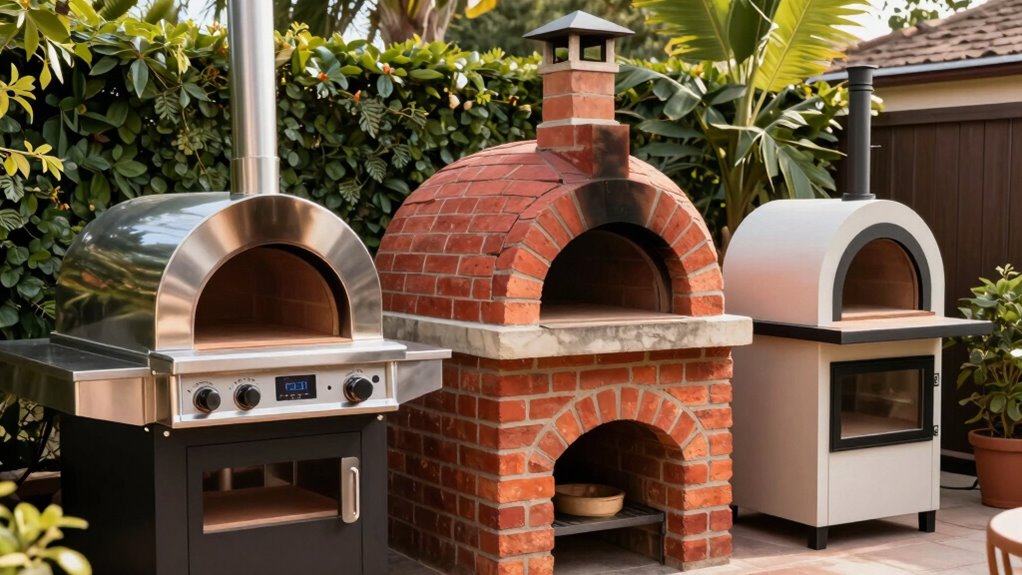
Choosing the right outdoor pizza oven depends heavily on your budget and available space. To make an informed decision, consider these factors:
- Cost comparison: Budget-friendly options like portable or small models are more affordable, while larger, built-in ovens cost markedly more.
- Size considerations: Measure your outdoor space carefully. Compact ovens fit small patios, but larger models require more room for safe operation and movement.
- Usage frequency: If you plan to cook often, investing in a higher-quality oven might be worth it, even if it’s pricier and larger.
Balancing your budget with the size of your outdoor area ensures you choose an oven that’s both practical and enjoyable without overspending or overcrowding your space.
Tips for Achieving Perfect Pizza Results With Your Oven
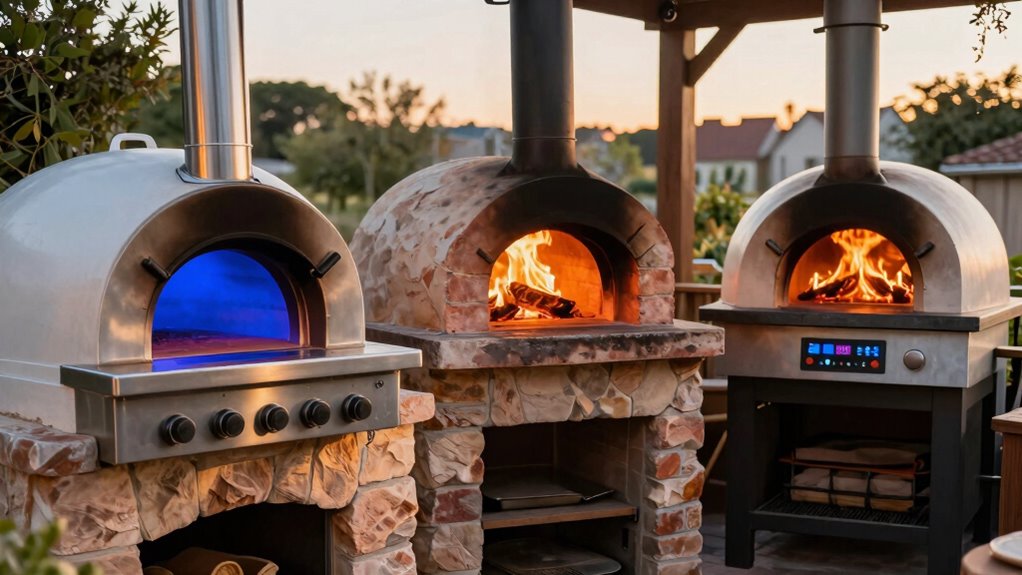
To achieve perfect pizza results with your outdoor oven, start by preheating it thoroughly to guarantee the interior reaches the ideal temperature for baking. Proper preheating assures your pizza dough cooks evenly and develops that crispy crust. Focus on maintaining good oven insulation, which helps retain heat and reduces cooking time. Use a pizza stone or baking surface for even heat distribution. Keep these tips in mind:
| Tip | Why it helps |
|---|---|
| Preheat the oven fully | Ensures even cooking and crust crispiness |
| Use quality pizza dough | Achieves better texture and flavor |
| Check oven insulation | Maintains consistent temperature |
Final Tips to Find the Best Outdoor Pizza Oven for You
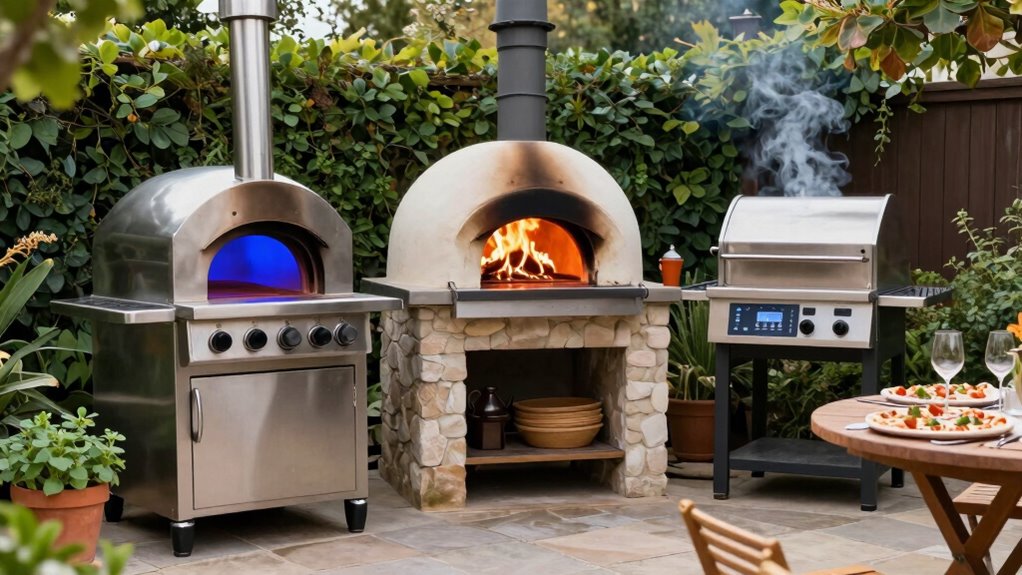
Finding the perfect outdoor pizza oven begins with understanding your specific needs and preferences. To help you choose, consider these key points:
Choosing the right outdoor pizza oven depends on your needs, skills, and desired convenience.
- Think about your pizza dough skills—if you prefer quick, simple setups, a gas oven might suit you best.
- Evaluate how often you’ll cook—frequent use means investing in easy oven cleaning features to save time.
- Decide on your patience level—wood-fired ovens demand more attention but offer authentic flavor, while pellet or gas options are more convenient.
Frequently Asked Questions
Which Outdoor Pizza Oven Is Safest for Children and Pets?
You’ll find that pellet pizza ovens are the safest for children and pets because they operate at lower temperatures and have automated shut-off features, reducing burn risks. Wood and gas ovens can become very hot and pose greater safety hazards. Always supervise kids and pets around any outdoor oven, but choosing a pellet oven helps minimize potential accidents, making it the better choice for child safety and pet safety.
Can Outdoor Pizza Ovens Be Used Year-Round in Cold Climates?
You can use outdoor pizza ovens year-round in cold climates, but you’ll need to take into account winter use and insulation needs. To keep it functioning well, insulate the oven properly and protect it from snow and ice. Using a cover or shelter helps maintain warmth and prevents damage. With proper setup, you can enjoy baking delicious pizzas even during the coldest months, making your outdoor cooking experience more versatile.
Are There Environmentally Friendly Options for Outdoor Pizza Ovens?
Think of your outdoor pizza oven as a green garden, symbolizing harmony with nature. Yes, eco-friendly options exist! You can choose ovens made from sustainable, eco-friendly materials or explore solar-powered ovens that harness the sun’s energy. These choices reduce your carbon footprint and support environmental health. By selecting eco-conscious models, you turn your pizza passion into a sustainable celebration, making every slice a small act of eco-heroism.
How Does Insulation Affect Oven Performance and Energy Efficiency?
Insulation considerably boosts your outdoor pizza oven’s performance and energy efficiency. It improves insulation efficiency by trapping heat, which enhances heat retention inside the oven. When your oven retains heat better, it heats up faster and maintains consistent temperatures, reducing fuel consumption. This means you spend less time and energy keeping your pizza just right. Proper insulation is essential for an efficient, high-performing oven that delivers delicious results every time.
What Accessories Enhance Outdoor Pizza Oven Cooking Experience?
You can enhance your outdoor pizza oven experience with essential accessories like a sturdy pizza peel, which makes placing and removing pizzas easier, and an oven thermometer to monitor temperatures accurately. These tools help you achieve the perfect crust and optimize cooking times. Investing in quality accessories guarantees you enjoy consistent results, making every pizza night more fun and satisfying. Plus, they’re simple upgrades that greatly boost your cooking confidence.
Conclusion
Choosing the right outdoor pizza oven depends on your patience, budget, and space. If you value quick results, gas ovens heat up fast and are low maintenance, but wood-fired ones offer authentic flavor. Remarkably, a recent survey found that 65% of pizza enthusiasts prefer wood ovens for their traditional taste, despite longer setup times. Consider your priorities carefully, and you’ll find the perfect oven to elevate your outdoor cooking experience.