
If you want your coffee to stay flavorful and aromatic for hours, a thermal carafe is your best bet because its insulated design helps keep heat and volatile oils intact longer than glass carafes, which lose heat quickly. Glass options are great for immediate enjoyment but don’t preserve flavor over time. To discover which type suits your needs best and how to maintain your coffee’s freshness, keep exploring this topic.
Key Takeaways
- Thermal carafes better preserve coffee flavor and aroma due to superior heat retention and steady temperature maintenance.
- Glass carafes lose heat quickly, causing faster flavor and aroma deterioration over time.
- Insulation technology in thermal carafes helps retain volatile compounds essential for rich flavor.
- Proper cleaning and descaling are critical for both types to prevent flavor degradation from mineral buildup.
- Thermal carafes generally keep coffee flavorful longer, making them ideal for extended hot coffee enjoyment.
Which Coffee Carafe Preserves Flavor Best? An Overview
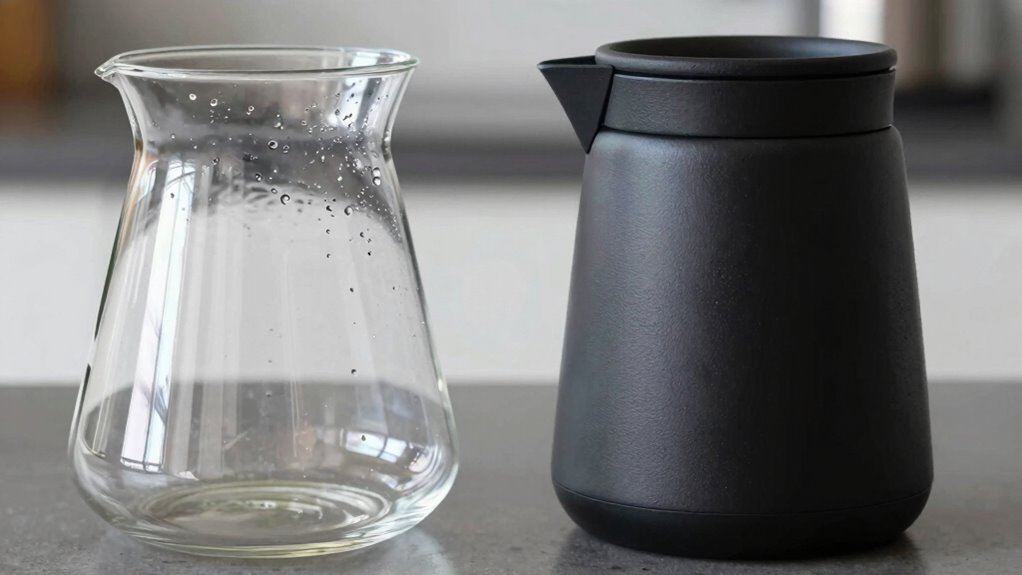
When it comes to preserving the fresh flavor of your coffee, the type of carafe you choose makes a significant difference. Flavor retention is essential for enjoying your brew at its best, and material influence plays a key role. Glass carafes typically offer excellent flavor preservation because they don’t absorb odors or chemicals, keeping your coffee tasting fresh. Chemical absorption can sometimes affect the flavor profile if the material interacts with the coffee over time. Thermal carafes, on the other hand, often use stainless steel or vacuum-insulated walls, which help maintain temperature and aroma longer. The material impacts how well your coffee stays flavorful over time. If you prioritize pure taste and minimal flavor transfer, a glass carafe might be your best choice. However, for extended freshness and heat retention, a thermal carafe offers substantial advantages. Additionally, microplastics in dust can sometimes contaminate stored coffee if the carafe’s materials degrade or are not properly sealed. Material durability also influences long-term flavor preservation by affecting how well the carafe resists degradation over time. Furthermore, the design and sealing quality of the carafe can significantly affect how well it preserves flavor and prevents external contaminants. To ensure optimal flavor, consider also the cleaning and maintenance practices for your coffee maker and carafe.
What Are Thermal and Glass Carafes?
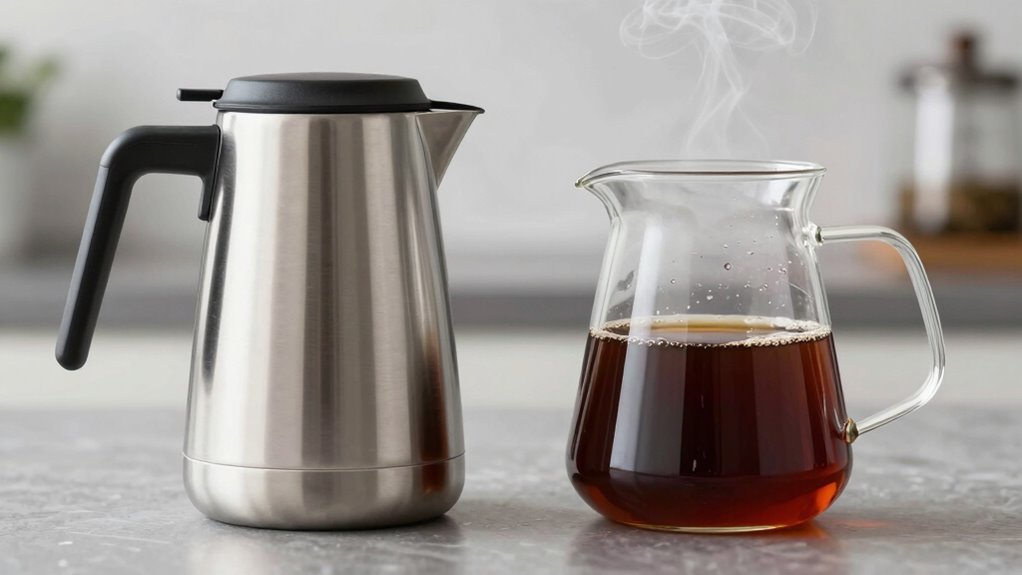
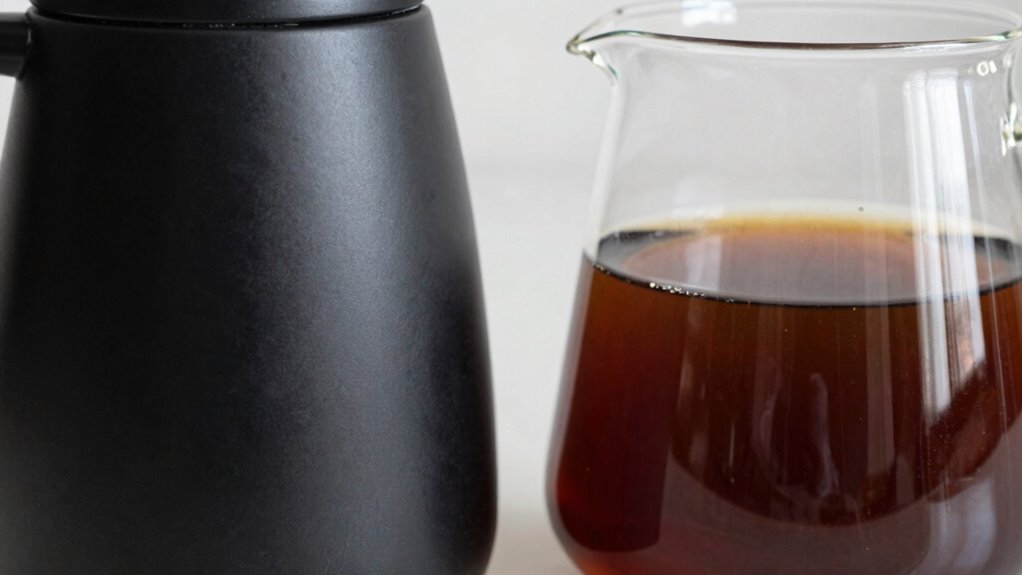
Thermal and glass carafes are two popular options for serving and storing coffee, each designed to meet different needs. A glass carafe is a clear vessel, usually made of heat-resistant glass, that allows you to see the coffee inside. It’s lightweight and simple but doesn’t retain heat as long, which can impact the brewing temperature and, consequently, the coffee flavor. A thermal carafe, on the other hand, features a double-walled, insulated design that helps keep coffee hot for hours without a heating plate. This insulation maintains a stable brewing temperature, which is vital for preserving coffee flavor over time. Proper heat retention preserves coffee aroma and ensures each cup remains fresh longer. Additionally, thermal carafes are often more energy-efficient since they don’t require continuous heating to maintain temperature. The insulation technology used in thermal carafes is key to their superior heat retention capabilities. Understanding these differences helps you choose the right carafe for your coffee routine, ensuring peak taste and temperature retention. Proper heat retention is essential for maintaining optimal flavor throughout your coffee’s lifespan.
How Do Thermal and Glass Carafes Keep Coffee Hot?
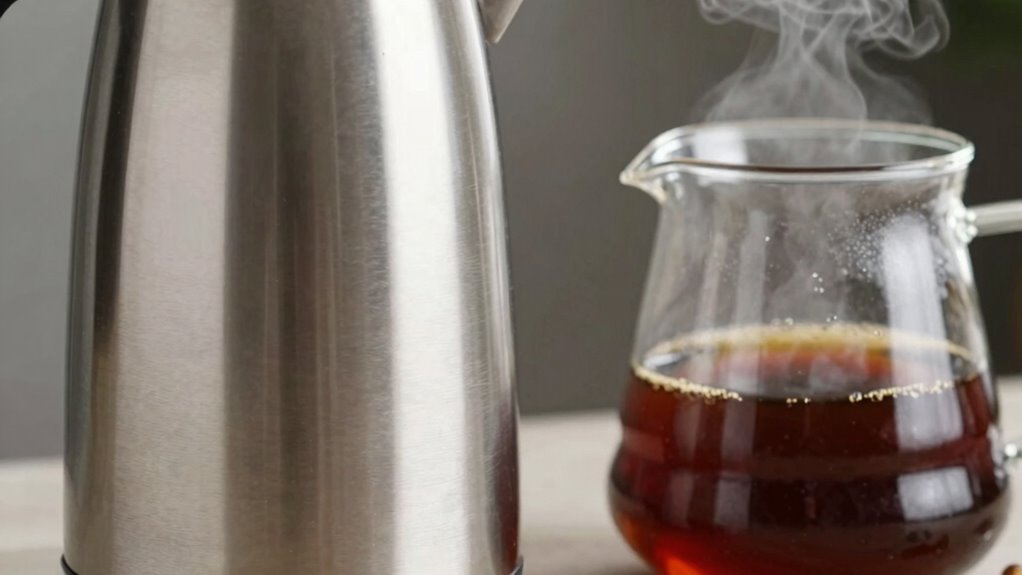
Both thermal and glass carafes use different methods to keep coffee hot, reflecting their unique designs. Thermal carafes are insulated, often with double-wall stainless steel, which traps heat through vacuum insulation, preventing heat transfer. This method keeps coffee warm for hours without additional energy. In contrast, glass carafes rely on their material’s heat retention, but they lack insulation, so they lose heat faster as the coffee cools. The carafe material comparison shows that thermal options are better suited for longer-lasting warmth. Your choice also depends on your coffee brewing methods; thermal carafes work well with drip or pour-over brewers, maintaining temperature without reheating. Glass carafes are simpler but require quicker consumption to enjoy hot coffee. Additionally, insulation technology plays a crucial role in how effectively each type maintains temperature over time, and understanding heat retention methods can help you choose the best option for your needs. For example, proper maintenance of your carafe can also significantly impact its heat preservation capabilities. Moreover, material durability influences how well the carafe withstands daily use and temperature changes, affecting overall performance. To maximize heat retention, some users also opt for pre-warming their carafe before brewing, which can enhance temperature stability.
Do Thermal Carafes Maintain Aroma Better Than Glass?
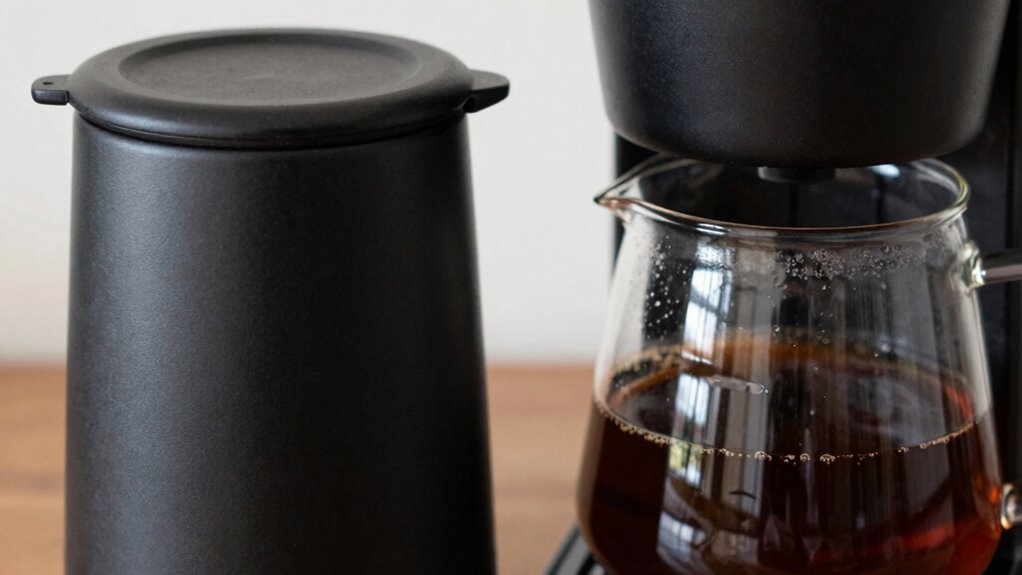
You might wonder if thermal carafes do a better job of preserving coffee aroma compared to glass. Their heat retention efficiency plays a big role in keeping flavors fresh over time. Proper home safety measures, such as ensuring your coffee maker’s components are well-maintained, can also help preserve flavor integrity. Additionally, the thermal insulation properties of a carafe determine how effectively it maintains temperature and aroma, impacting the overall flavor quality of your brew. The material composition of the carafe also influences how well it preserves aroma, with some materials offering superior insulation. Furthermore, insulation effectiveness directly affects how long the coffee maintains its fresh flavor after brewing. Since the capacity of the carafe can influence how quickly coffee cools or stays warm, selecting the right size is also important for aroma preservation. Let’s explore how each type impacts aroma preservation and overall flavor quality.
Heat Retention Efficiency
Because maintaining the coffee’s aroma depends heavily on how well heat is preserved, thermal carafes are often considered superior for this purpose. They excel at retaining heat over time, helping your brew stay warm without sacrificing flavor. This improved heat retention means your coffee remains at an ideal brewing temperature longer, which is essential for extracting rich flavors. Unlike glass carafes, thermal ones don’t cool quickly, making them suitable for pour over compatibility, where temperature stability is crucial. You won’t have to rush to enjoy your coffee or worry about it losing aroma. Additionally, thermal carafes typically feature insulation technology that further enhances their ability to maintain consistent temperatures. Their ability to prevent heat loss ensures your coffee stays fresh and flavorful for extended periods, which ultimately enhances your drinking experience.
Aroma Preservation Capabilities
While thermal carafes excel at keeping coffee hot longer, their design also helps preserve the drink’s aroma better than glass alternatives. The insulated walls maintain a consistent brewing temperature, preventing rapid cooling that can diminish aroma. This steady temperature helps lock in essential oils and volatile compounds that give coffee its rich scent. As a result, the aroma remains more vibrant and noticeable over time. Additionally, thermal carafes tend to preserve coffee strength by avoiding exposure to air and light, which can degrade flavor and aroma. In contrast, glass carafes may allow heat to escape and let oxygen interact with the coffee, causing aroma loss. Insulation effectiveness plays a key role in aroma preservation. Overall, thermal options are better at maintaining the fresh, full-bodied aroma you want from your brew.
How Material Affects Coffee Temperature and Flavor
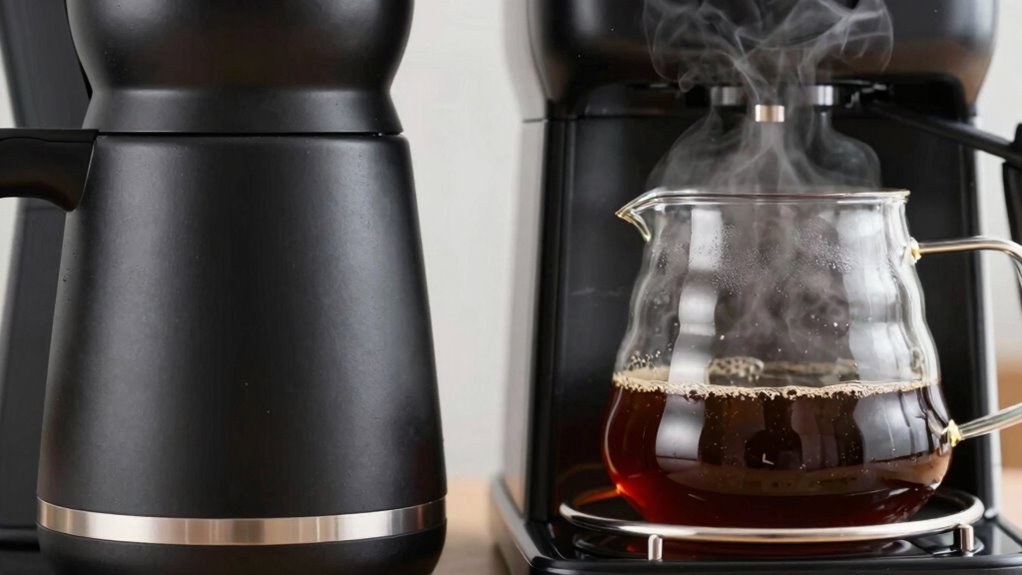
The material of your coffee carafe plays a vital role in maintaining the beverage’s temperature and influencing its flavor. A thermal carafe, with its insulated walls, keeps brewing temperature steady longer, ensuring consistent flavor extraction. This means your coffee stays hot without losing its best brewing temperature, preserving nuanced flavors. On the other hand, a glass carafe allows heat to escape more quickly, which can cause the temperature to drop faster and potentially weaken flavor extraction. As a result, the final taste may be less vibrant and nuanced over time. Your choice of material directly impacts how well the coffee maintains its ideal temperature during and after brewing, ultimately shaping the richness and freshness of each cup.
Benefits and Drawbacks of Glass Carafes

Glass carafes look sleek and let you see your coffee clearly, which many find appealing. However, they tend to lose heat faster and can break easily if not handled carefully. Consider whether their aesthetic benefits outweigh their fragility and heat retention issues.
Visual Appeal and Clarity
A glass carafe offers a sleek and elegant look that can enhance the presentation of your beverages. Its aesthetic appeal lies in its timeless design, adding a touch of sophistication to your coffee station. The material transparency allows you to easily see the amount of coffee remaining, making it simple to monitor and serve. This clarity also helps you appreciate the brew’s color and richness, elevating the overall experience. However, while glass showcases your coffee beautifully, it’s also fragile and susceptible to fingerprints and smudges, which can detract from its clean appearance. Still, if you value visual clarity and an attractive presentation, a glass carafe provides a stylish and functional option that highlights the visual appeal of your freshly brewed coffee.
Heat Loss Over Time
While the visual appeal of glass carafes makes them an attractive choice, their ability to retain heat over time can vary considerably. Glass has lower insulation quality, leading to increased heat transfer and faster cooling. Imagine your coffee:
- The moment you pour, it’s steaming hot, but
- After 20 minutes, it’s noticeably cooler,
- Due to heat escaping through the glass walls,
- Which allows ambient air to draw heat away rapidly.
This rapid heat loss means your coffee may lose flavor and aroma sooner. Unlike insulated options, glass carafes don’t trap heat effectively, making them less ideal if you want your brew to stay warm for an extended period. So, while they look sleek, their heat transfer properties can compromise the freshness over time.
Fragility and Durability
Although glass carafes offer an elegant look, their fragility can be a significant drawback. Glass generally has lower material strength compared to other materials, making it more prone to breakage if dropped or mishandled. This breakage risk means you need to handle the carafe with extra care, especially in busy kitchens or offices. While glass is durable against scratches and stains, its vulnerability to impacts limits its long-term durability. If you value aesthetic appeal but want a more resilient option, a glass carafe might require frequent replacement or cautious handling. Ultimately, the trade-off is between style and practicality, so consider how carefully you can treat the carafe before choosing glass for your coffee maker.
Durability and Maintenance Tips for Your Coffee Carafe
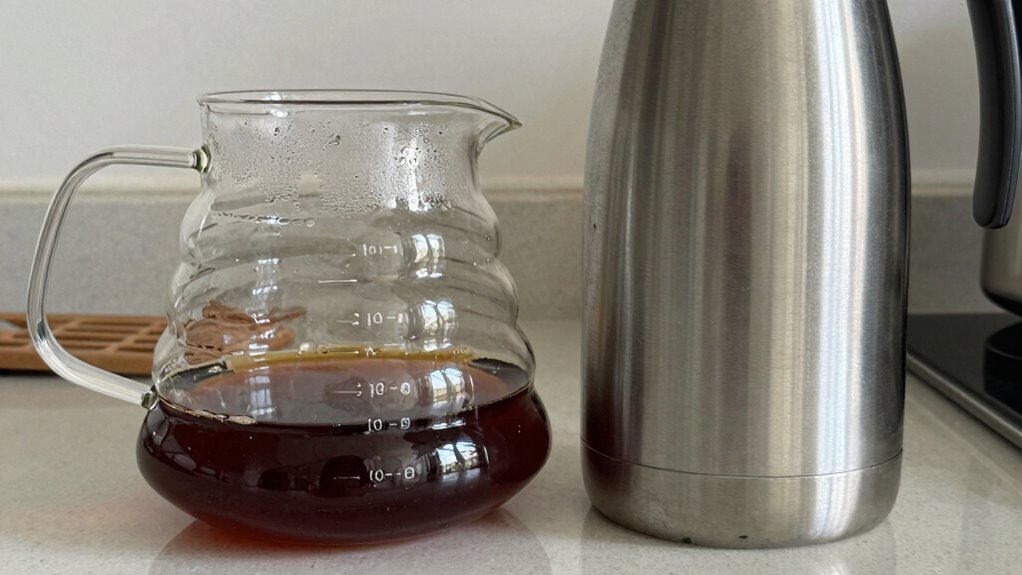
To keep your coffee carafe in top condition, regular maintenance and mindful handling are essential. Proper care extends its lifespan and preserves flavor. Here are some tips:
- Rinse the carafe immediately after use to prevent coffee stains and residue buildup.
- Use warm, soapy water to clean the inside thoroughly, avoiding abrasive scrubbers.
- Store your coffee beans in an airtight container away from light and heat to maintain freshness, which reduces the risk of flavor contamination.
- Maintain brewing temperature control by avoiding sudden temperature changes that can stress the carafe material and cause cracks.
Handling your carafe gently and cleaning it regularly guarantees durability, while paying attention to coffee bean storage and brewing temperature control keeps your coffee tasting fresh.
How Much Do Thermal and Glass Carafes Cost?

The cost of your coffee carafe can vary considerably depending on whether you choose a thermal or glass model. Typically, thermal carafes are more expensive upfront because they’re designed for better coffee storage, keeping your brew hot longer without heat plates. You might spend a bit more initially, but they can save you money by maintaining flavor and temperature over time. Glass carafes are usually cheaper, making them a budget-friendly option, but they may require quicker consumption due to less effective heat retention. When considering price, also think about brewing speed—some models with thermal carafes may take longer to heat, while glass ones often brew faster. Your choice will hinge on your preferences for cost, brewing speed, and how long you want to store your coffee hot.
Tips for Cleaning and Maintaining Fresh Coffee
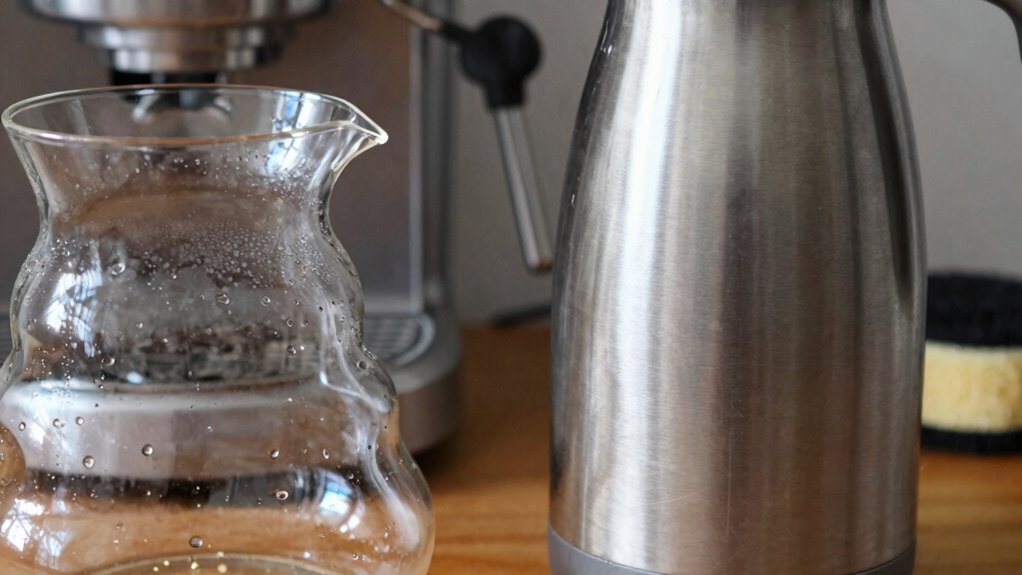
To keep your coffee fresh and tasting great, you should stick to a regular cleaning schedule for your carafe. Proper storage techniques also help prevent stale flavors, so make sure to cover and store your coffee correctly. Using descaling solutions periodically can remove mineral buildup and keep your brewing equipment in top shape.
Regular Cleaning Schedule
Regular cleaning is essential for keeping your coffee fresh and flavorful, regardless of whether you use a thermal or glass carafe. A consistent schedule prevents buildup that can affect your coffee brewing and taste. To keep your carafe in top shape, consider these steps:
- Rinse the carafe immediately after each use to remove coffee residue.
- Use a mild cleaning solution or vinegar weekly to eliminate mineral deposits.
- Scrub gently with a soft brush to avoid scratching carafe materials.
- Deep clean with a mixture of baking soda and water monthly for thorough freshness.
Proper Storage Techniques
Proper storage is essential for maintaining the freshness of your coffee and preventing it from going stale. To preserve coffee flavor, store your beans or grounds in an airtight container away from light, heat, and moisture. Keep them at a consistent storage temperature, ideally in a cool, dark place, to prevent flavor degradation. Avoid refrigerating or freezing unless you buy in bulk, and even then, only after airtight sealing to prevent moisture absorption. When storing brewed coffee, transfer leftovers to a clean, airtight container and consume within 24 hours for the best flavor. Regularly clean your storage containers to prevent residue buildup that can affect taste. Proper storage techniques help you enjoy fresh, flavorful coffee every time.
Using Descaling Solutions
Over time, mineral buildup and residue can impair your coffee maker’s performance and negatively impact the flavor of your brew. To keep it running smoothly, use descaling solutions regularly. Here’s how:
- Fill the water reservoir with a mixture of descaling solution and water.
- Turn on the machine and let it brew halfway through.
- Turn it off and let the solution sit for 15-20 minutes to dissolve mineral buildup.
- Complete the brew cycle with plain water to rinse out any residue.
This process prevents blockages, guarantees ideal extraction, and preserves the freshness of your coffee. Using the right descaling solutions is vital for removing mineral buildup and maintaining your machine’s longevity. Regular cleaning keeps your coffee flavorful and your machine functioning perfectly.
Which Carafe Should You Choose for Your Coffee Needs?
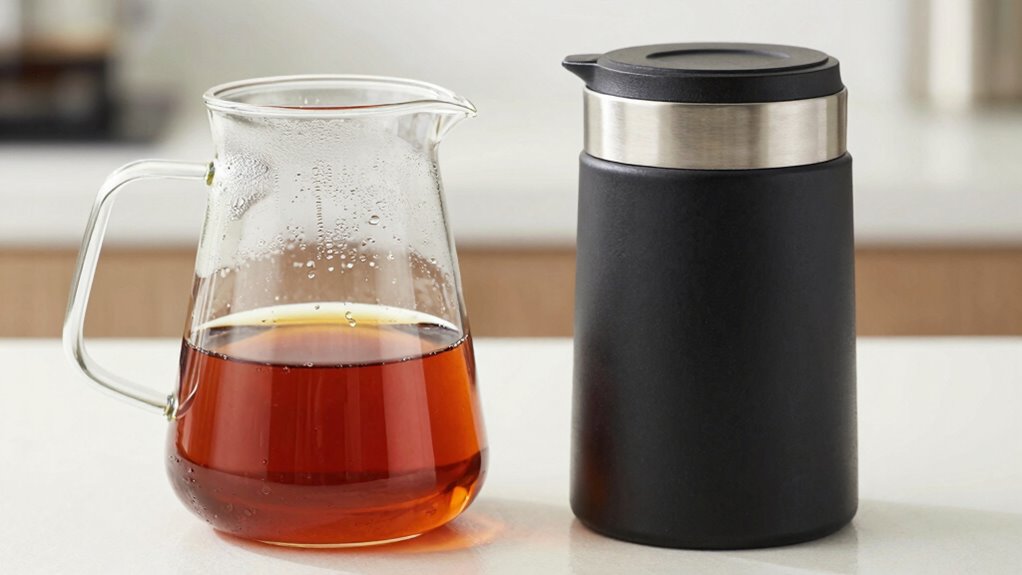
Choosing the right carafe depends on your specific coffee habits and preferences. If you prioritize maintaining the coffee’s flavor, a thermal carafe is a solid choice because it insulates well and keeps your brew fresh longer. Its material prevents heat from escaping, preserving the coffee’s aroma and taste. On the other hand, if you prefer to see your coffee and enjoy a sleek, classic look, a glass carafe might suit you better. Glass carafes are transparent, allowing you to monitor the brewing process and the amount of coffee remaining. Keep in mind that the carafe material impacts not only the aesthetic but also how well it preserves coffee flavor. Consider your routine and flavor preferences to select the best carafe for your needs.
Frequently Asked Questions
How Does the Material Affect Coffee’s Acidity and Overall Flavor Profile?
The material impacts your coffee’s acidity and flavor preservation. A thermal carafe helps keep the coffee hot without continuing the brewing process, which preserves the fresh, acidic flavor you enjoy. Glass carafes, on the other hand, allow heat to escape, which can lead to a flat taste and less flavor preservation over time. Choosing a thermal carafe generally results in a richer, more vibrant flavor experience.
Can Thermal Carafes Cause Coffee to Taste Burnt or Stale Over Time?
Yes, thermal carafes can cause coffee to taste burnt or stale if the carafe insulation isn’t effective, leading to fluctuations in coffee temperature. Over time, poor insulation allows heat loss, which can diminish flavor quality and create a stale taste. To avoid this, choose a thermal carafe with good insulation that maintains consistent coffee temperature, ensuring your brew stays fresh and flavorful longer.
Are There Environmental Benefits to Choosing Glass Over Thermal Carafes?
Choosing glass over thermal carafes is like planting a tree for future generations, offering clear environmental benefits. Glass is highly recyclable, reducing waste and conserving resources through recycling benefits. Plus, its material sustainability means it’s less likely to sit in landfills. By selecting a glass carafe, you contribute to eco-friendly practices, helping protect the planet while enjoying your coffee, making every sip a small act of environmental kindness.
How Do Different Cleaning Methods Impact the Longevity of Each Carafe Type?
Your cleaning frequency and stain removal methods directly impact each carafe’s longevity. Regularly clean your glass or thermal carafe to prevent buildup and stains, which can cause corrosion or damage over time. Use gentle, non-abrasive cleaners and avoid harsh chemicals. Promptly remove stains with vinegar or baking soda solutions. Proper maintenance guarantees your carafe remains in good condition longer, preserving flavor and functionality for years to come.
Do Thermal or Glass Carafes Influence the Brewing Process Itself?
You might think the carafe doesn’t affect brewing, but it actually influences brewing temperature due to insulation properties. Thermal carafes trap heat, maintaining ideal brewing temperature, which can enhance flavor extraction. Glass carafes, with less insulation, allow heat loss, possibly lowering temperature and affecting taste. So, your choice of carafe insulation impacts the brewing process itself, shaping the flavor profile right from the start.
Conclusion
Ultimately, choosing between a thermal and glass carafe depends on your coffee habits. If you want to keep your brew hot and flavorful for hours, a thermal carafe is like a fortress guarding your coffee’s essence. But if you prefer easy cleaning and a clear view of your brew, a glass carafe suits you. Whichever you pick, remember: your decision shapes every sip, so choose wisely and enjoy coffee that’s truly worth savoring!