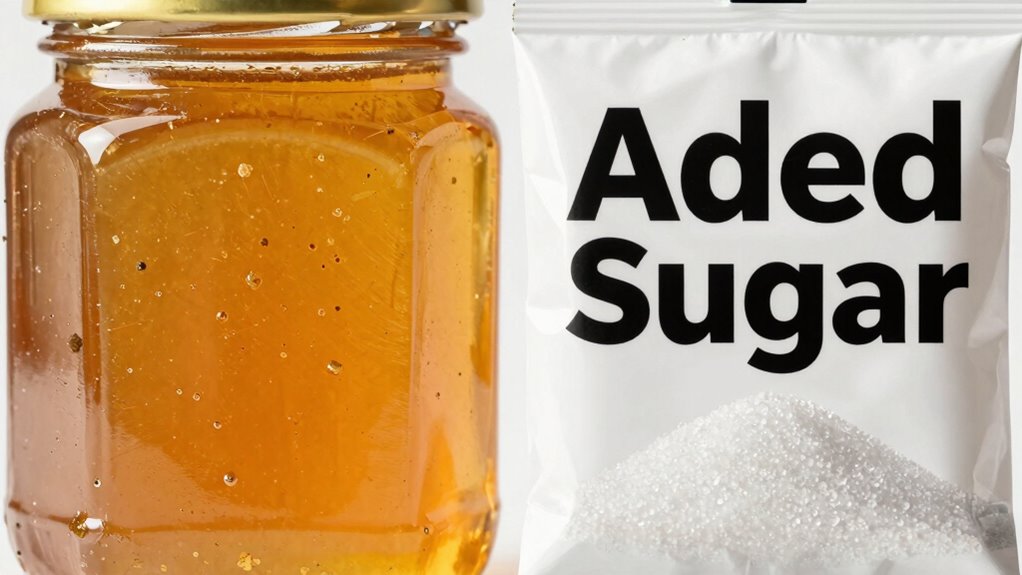

Understanding the difference between added and natural sugars is key to healthier eating. Natural sugars come from fruits, vegetables, and dairy, and they come with fiber, vitamins, and minerals. Added sugars are added during processing, found in sodas, candies, and baked goods, and can cause quick blood sugar spikes and health issues. Labels often hide added sugars, making it easy to underestimate intake. Keep going to learn how to spot the difference and protect your diet.
Key Takeaways
- Food labels often list “sugar” without distinguishing between natural and added sugars, causing confusion.
- Natural sugars occur in whole foods with beneficial nutrients, while added sugars are refined and lack nutrients.
- Excessive intake of added sugars can lead to health issues like obesity and insulin resistance, unlike natural sugars.
- Recognizing hidden added sugars in processed foods helps control daily intake and supports healthier choices.
- Clear labeling and awareness are essential to differentiate sugar types and prevent diet missteps.

When choosing foods, it’s important to understand the difference between added sugar and natural sugar. This distinction can significantly impact your health and how your body processes what you eat. Natural sugars are those found naturally in fruits, vegetables, dairy, and some grains. They come packaged with fiber, vitamins, and minerals that slow down sugar absorption, giving your body a steady supply of energy without causing spikes in blood sugar levels. On the other hand, added sugars are those added during processing or preparation, such as in sodas, candies, baked goods, and sweetened cereals. These sugars are often refined and lack the accompanying nutrients found in natural sources, which can lead to rapid sugar absorption.
Understanding sugar absorption is key to managing your health impacts. When you consume foods high in added sugar, your body quickly absorbs the sugar, causing a rapid increase in blood glucose levels. This spike prompts your pancreas to release insulin to help cells absorb the sugar for energy or storage. Frequent consumption of added sugars can lead to insulin resistance over time, increasing your risk of developing type 2 diabetes. It can also cause energy crashes, mood swings, and cravings for more sugary foods, creating a cycle that’s hard to break. Conversely, the natural sugars in whole foods are absorbed more slowly because of their fiber content. This slow absorption helps maintain stable blood sugar levels, supporting better energy levels, weight management, and overall health. Additionally, the presence of fiber and other nutrients in natural sources can mitigate some health risks associated with sugar consumption.
The health impacts of consuming too much added sugar are well documented. Excessive intake is linked to obesity, cardiovascular disease, fatty liver disease, and increased inflammation. It also contributes to dental problems like cavities and tooth decay. Because added sugars often lurk in foods you don’t expect—like salad dressings or flavored yogurts—it’s easy to underestimate how much sugar you’re consuming. This misjudgment can lead to consuming more than the recommended daily limits, which are around 25 grams for women and 38 grams for men according to health guidelines. In contrast, natural sugars in whole foods come with beneficial nutrients that support your overall health. They’re part of a balanced diet, helping to satisfy your sweet tooth without the negative consequences associated with added sugars.
Frequently Asked Questions
Can Natural Sugars Cause Weight Gain Like Added Sugars?
Natural sugars can cause weight gain, just like added sugars, if you consume them in excess. Many natural sugar myths suggest they’re healthier, but the key is sugar source differences. Both types provide calories that can add up, so moderation is essential. Overeating natural sugars from fruits or honey can lead to weight gain, especially if your overall diet is high in calories. Keep an eye on portion sizes regardless of sugar type.
Are Natural Sugars Safer for Diabetics Than Added Sugars?
Natural sugars are generally safer for diabetics because they come with fiber and nutrients that slow sugar absorption, aiding your diabetes management. While they still impact blood sugar, their slower absorption helps prevent spikes. Don’t worry—moderation is key. Enjoy naturally sweet fruits and dairy, but always monitor your blood sugar levels to see how your body responds. This approach supports your health without sacrificing tasty, wholesome foods.
How Do Natural Sugars Affect Dental Health Compared to Added Sugars?
Natural sugars can impact your dental health similarly to added sugars by promoting dental plaque formation if consumed excessively. Both types of sugar feed bacteria in your mouth, leading to acid production that erodes enamel. However, natural sugars found in whole fruits are less harmful because they come with fiber and nutrients that help clean teeth. Still, moderation is key to prevent enamel erosion and maintain healthy teeth.
Do Natural Sugars Have the Same Calorie Count as Added Sugars?
You might think natural sugars are lighter, but they actually pack the same calorie punch as added sugars. A calorie comparison reveals little difference in natural sugar content, meaning both contribute equally to your daily intake. While natural sugars come with beneficial nutrients, don’t forget—they still provide calories that can add up fast. So, whether natural or added, moderation remains key to maintaining your diet and health goals.
Can Natural Sugars Be Addictive Like Processed Added Sugars?
Natural sugars can trigger natural cravings, but they’re less likely to cause sugar dependence compared to processed added sugars. You might find yourself craving fruits or honey, but these cravings are usually easier to manage. Processed added sugars often lead to a cycle of sugar dependence, making it harder to cut back. Staying mindful of your intake helps prevent this cycle and keeps your diet balanced and healthy.
Conclusion
So, next time you’re scrutinizing that food label, remember—what’s labeled as “natural” might be just as sneaky as the added sugar you’re trying to avoid. The irony? You might think you’re making healthier choices, but the label can still deceive you. Ultimately, it’s up to you to look beyond the buzzwords and understand what’s really inside. After all, in the world of sugars, labels can be a clever illusion—so don’t let them fool you.