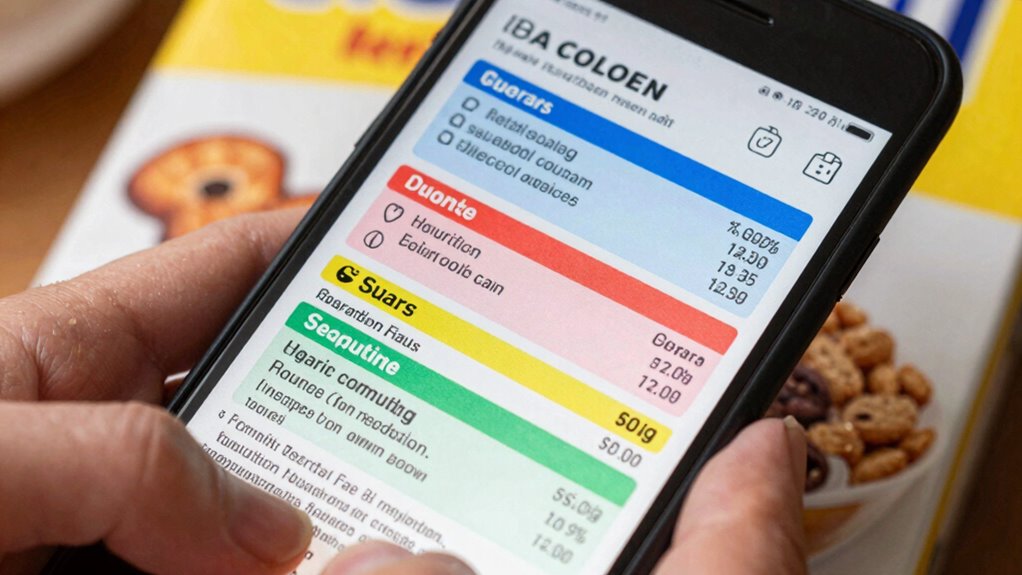

To quickly decode nutrition labels and save money, focus on the top to find calories per serving and check the serving size for comparison. Scan for added sugars, unhealthy fats, and high sodium ingredients hidden in labels like “seasonings.” Look for foods with high nutrient density—more vitamins, minerals, and fiber relative to calories. Avoid flashy marketing terms that can be misleading. Keep this simple tactic in mind, and you’ll discover more ways to make smarter, cost-effective choices.

Get health and wellness essentials delivered free with Prime
- Fast, free delivery on millions of items
- Prime Video, Amazon Music and more included
- Member-only deals all year
Key Takeaways
- Glance at the serving size and calories to assess portion control and avoid overeating.
- Scan the ingredient list for whole foods and minimal additives, avoiding hidden sugars, unhealthy fats, and fillers.
- Compare calorie counts per serving across similar products for cost-effective, nutritious choices.
- Look for high nutrient density foods rich in vitamins, minerals, and fiber relative to their calories.
- Be alert to marketing tricks and labels like “all-natural” or “gluten-free,” focusing on factual, straightforward nutrition info.
As an affiliate, we earn on qualifying purchases.
How to Read a Nutrition Label Quickly
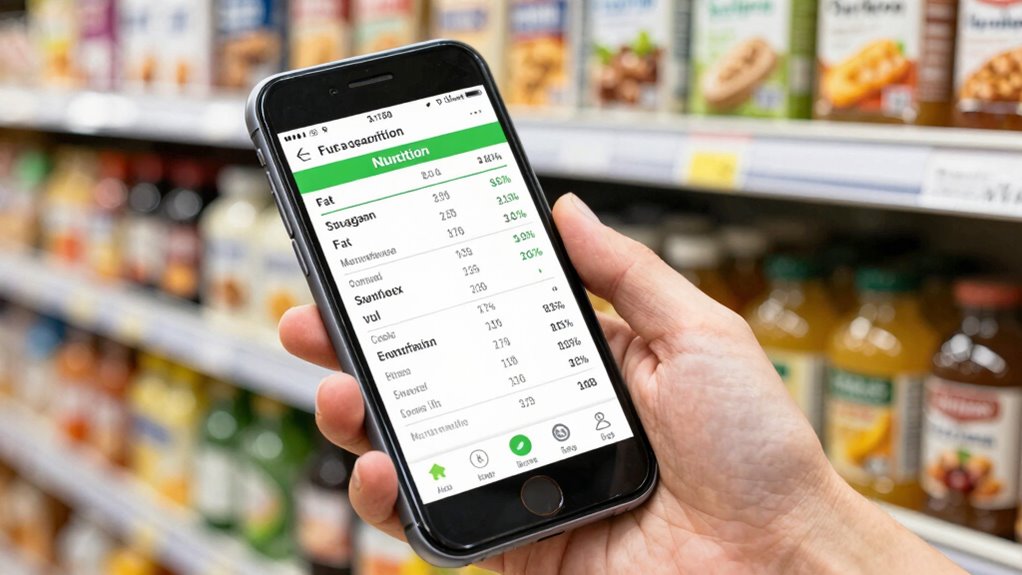
To quickly read a nutrition label, start by glancing at the serving size and the number of servings per container. Next, scan the ingredient list, which reveals what’s really inside. Look for familiar ingredients and watch for added sugars or unrecognizable additives. If you have allergies, check the allergy info section carefully—this is essential for avoiding potential health issues. The ingredient list provides insight into the food’s quality and helps you identify unnecessary fillers or preservatives. While you don’t need to memorize every ingredient, a quick scan can tell you a lot about the product’s overall healthfulness. Focus on these key areas to make faster, smarter choices without spending too much time deciphering complex labels. Additionally, understanding food labeling terminology can help you interpret nutrition facts more effectively. Being familiar with common nutrition facts abbreviations can streamline your decision-making process when comparing products. Recognizing regional food trends can also give you context about local ingredients and culinary influences that might impact your choices. Moreover, knowing the horsepower of electric dirt bikes can help you assess the energy output and suitability for your riding style, especially if you’re considering an electric bike for off-road adventures. Gaining knowledge about dog breeds and their specific needs can further refine your choices when selecting suitable food options for different breeds.
As an affiliate, we earn on qualifying purchases.
Identify Calories and Serving Sizes at a Glance
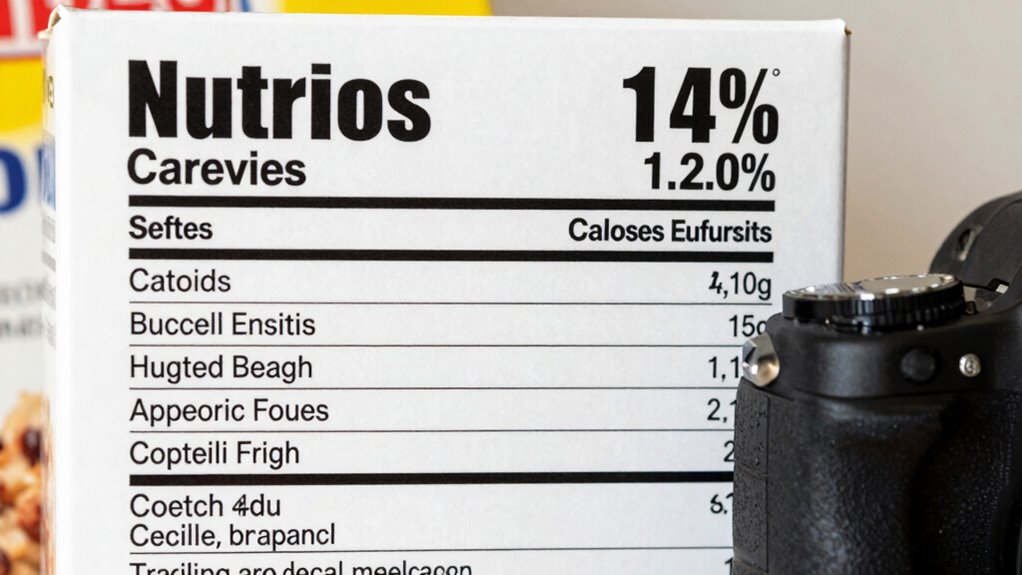
You can quickly understand a product’s impact on your diet by spotting the calorie count right at the top of the label. Recognizing the serving size helps you compare portions accurately, so you know exactly what you’re eating. This way, you can easily compare similar products and make healthier choices. Using a free online tool can help you instantly convert text into various capitalization styles, making information more accessible and easier to read. Being aware of piercing aftercare ensures you maintain good hygiene and prevent infections, which is also essential for overall health.
Spot Calorie Counts
Have you ever struggled to quickly understand a nutrition label? Calorie spotting is essential for making smart choices, and label scanning helps you do it fast. To spot calorie counts, look for the bold number near the top of the label—usually labeled as “Calories.” This figure tells you how much energy you’ll get per serving. Keep in mind, the serving size listed is vital; if you eat more or less, adjust the calorie count accordingly. Many labels display calories per serving, so always check the portion size before making comparisons. Efficient label scanning allows you to instantly identify high-calorie foods or healthier options, saving you time and money. Mastering this quick glance helps you stay on track with your nutrition goals effortlessly. Additionally, understanding nutrition labels can empower you to make more informed decisions, enhancing your overall well-being. Recognizing cultural significance of traditional decor like Indonesian masks can also inspire more meaningful choices in your home environment. Developing reading skills for labels enhances your ability to compare products quickly and accurately, which is an important life skill for maintaining a balanced diet. Improving your label literacy further strengthens your capacity to choose foods that support your health goals.
Recognize Serving Sizes
Ever wonder how to quickly compare foods on a nutrition label? The key is recognizing the serving size listed at the top. Serving size tells you how much food the nutrition facts are based on, which is essential for portion control. If you want an accurate calorie count, always check the serving size first. Keep in mind, the number of calories and nutrients listed are for that specific portion. Sometimes, a package contains multiple servings, so you need to multiply the nutrition info accordingly. By understanding the serving size, you can better manage your portions and make smarter choices. This simple step helps you avoid overeating and guarantees you’re comparing foods fairly, making your 30-second scan more effective and empowering. Understanding serving sizes is fundamental to making informed nutritional decisions. Additionally, being aware of serving size accuracy can help you better interpret labels and avoid common pitfalls, especially when dealing with hidden portion sizes. Recognizing how portion control impacts your overall diet can further enhance your ability to maintain healthy eating habits. Moreover, familiarizing yourself with label reading techniques allows for quicker and more confident food choices.
Compare Similar Products
When comparing similar products on nutrition labels, quickly identifying the calorie content and serving sizes helps you make smarter choices. Focus on these key points:
- Scan calories per serving to see which product aligns with your daily goals.
- Check serving sizes to ensure an accurate comparison—smaller servings can be misleading.
- Look for ingredient differences that may impact health or taste.
- Compare brands side-by-side to spot variations in calorie counts, ingredient quality, and added sugars.
This quick scan helps you spot healthier options or cost-effective choices. By doing so, you avoid being deceived by packaging or marketing tactics, making smarter decisions based on actual nutrition facts rather than brand comparisons or appealing labels.
As an affiliate, we earn on qualifying purchases.
Spot Hidden Sugars, Fats, and Sodium on Labels
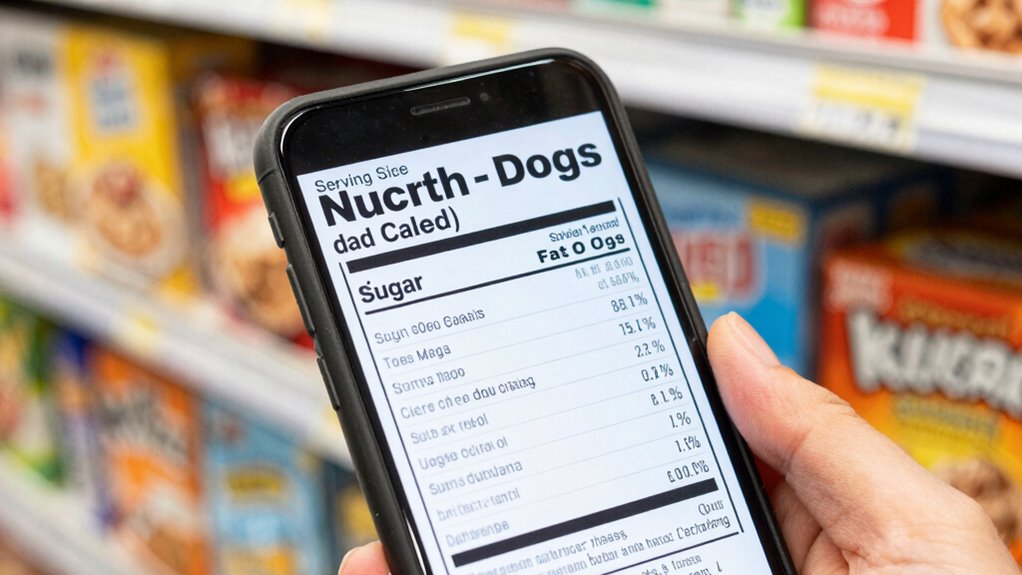
Would you know where to find hidden sugars, fats, and sodium on a nutrition label? These hidden ingredients can lurk beneath misleading fats or vague claims. To spot them, check the “Total Sugars” line for added sugars, which often mask hidden sugars. Sodium can be hidden in ingredients like “seasonings” or “flavor enhancers.” Fats may appear as “partially hydrogenated oils” or “vegetable oils,” which can be misleading fats. Use this table for quick reference:
| Nutrient | What to Look For |
|---|---|
| Sugars | Total Sugars + Ingredients like high-fructose corn syrup |
| Sodium | Sodium, Salt, Monosodium Glutamate (MSG) |
| Fats | Partially hydrogenated oils, palm oil, palm kernel oil |
| Hidden Sugars & Fats | Terms like “natural flavors” or “vegetable oil” |
Additionally, understanding free floating ingredients can help you identify unlisted additives that may impact your health. Being aware of hidden ingredients can further improve your ability to make healthier choices at a glance.
As an affiliate, we earn on qualifying purchases.
Compare Nutrient Density to Find Better Value
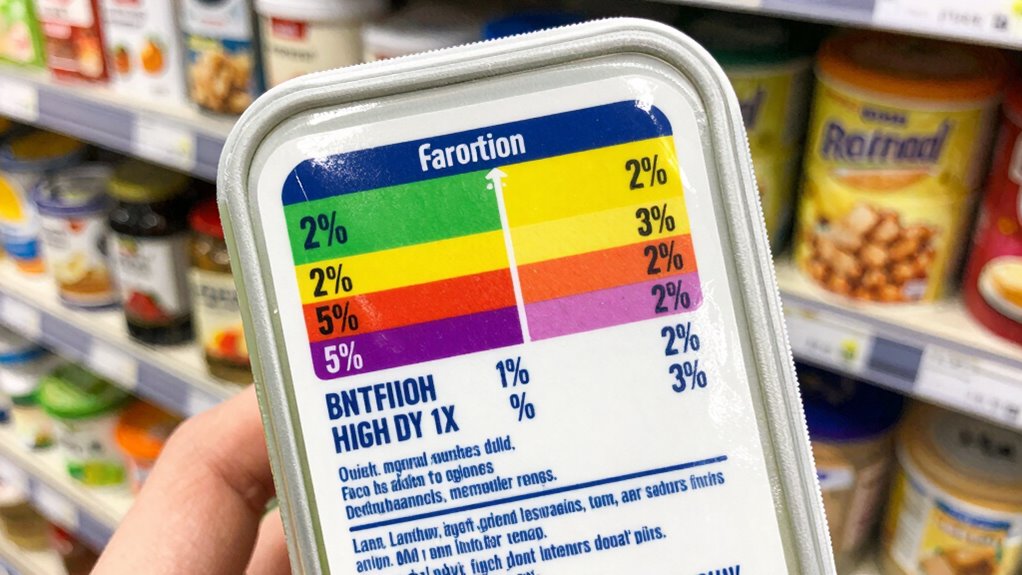
Understanding nutrient density helps you identify foods that pack more nutrients without extra calories. When comparing options, focus on which foods offer the best nutritional value for their cost. This way, you can make smarter choices that support your health and budget. Consulting expert evaluations can further assist in selecting the most nutrient-dense foods.
Nutrient Density Explained
Nutrient density is a key factor in choosing healthier foods because it measures the amount of essential nutrients you get relative to the calorie content. When nutrient density is explained, it highlights foods packed with micronutrient importance—vitamins, minerals, fiber, and antioxidants—that support your health. To visualize this, imagine:
- A vibrant spinach leaf rich in iron and calcium
- A juicy orange high in vitamin C
- A handful of nuts loaded with healthy fats and magnesium
- A serving of lean chicken providing protein and B vitamins
Focusing on nutrient density helps you pick foods that give you more micronutrients per calorie, making every bite more nourishing and cost-effective. This approach ensures you’re not just filling up but fueling your body efficiently.
Choosing Value Wisely
When you compare foods based on their nutrient density, you can identify options that offer more nutritional value for your money. To do this, focus on price comparison and ingredient transparency. A higher nutrient density means you’re getting more vitamins, minerals, and fiber per dollar spent. For example:
| Food Item | Nutrient Density | Price Comparison |
|---|---|---|
| Spinach | Very high | Affordable |
| Processed Snacks | Low | Expensive |
| Canned Beans | High | Cost-effective |
Choosing foods with better nutrient density ensures you’re maximizing nutrition without overspending. Look beyond packaging and focus on ingredient transparency—knowing what’s inside helps you make smarter, more economical choices. This approach guarantees you’re investing in foods that deliver the most health benefits for your dollar.
Recognize Marketing Tricks and Label Tricks
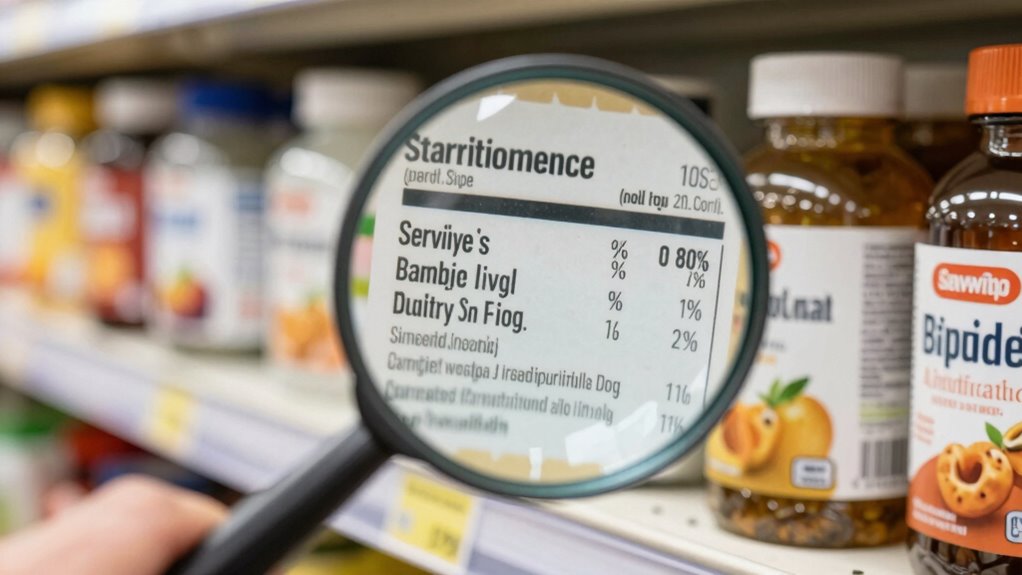
Have you ever noticed how some food labels seem designed to catch your eye or make a product seem healthier than it really is? That’s intentional marketing tactics at play, aimed at influencing your perception. Recognize these label tricks:
- Bright colors and bold fonts that draw attention immediately.
- Claiming “all-natural” or “low-fat” without supporting details.
- Using buzzwords like “superfood” or “antioxidants” to distract from high sugar or fat content.
- Highlighting “gluten-free” or “organic” to create a health halo, even if other ingredients aren’t ideal. These tactics contribute to label deception, making it easy to be misled. Staying aware helps you see past the tricks and make smarter choices. Developing a methodical approach to reading labels can help ensure you make informed decisions rather than falling for deceptive packaging. Being aware of aerosol and chemical ingredients used in food processing can further help you evaluate product safety and authenticity. Understanding product transparency can empower you to identify true quality versus marketing fluff. Being familiar with water content and additives used in processed foods can also shed light on their actual nutritional value. Additionally, recognizing ingredient sourcing and manufacturing practices can provide insight into a product’s authenticity and safety.
Use Your 30-Second Label Scan to Save Money and Eat Better
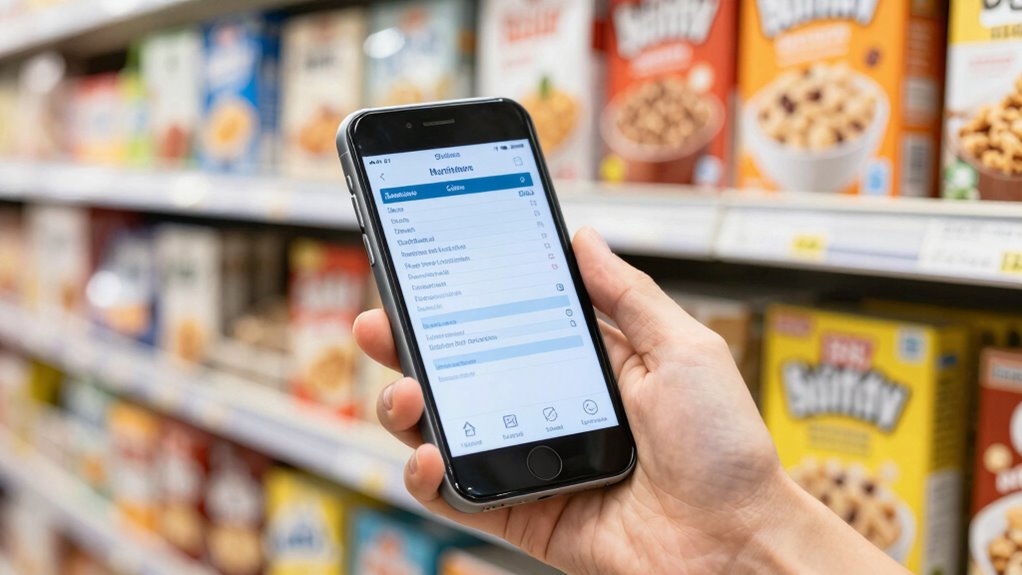
By dedicating just 30 seconds to scanning a food label, you can quickly identify whether a product is a smart choice both financially and nutritionally. This simple habit helps you make better decisions during meal planning and grocery shopping. When you compare labels, look for options with fewer added sugars, lower unhealthy fats, and more whole ingredients. Budget-friendly items often have straightforward labels, so avoid overly processed products that may seem cheap but lack nutritional value. Using your quick scan, you can select foods that offer better nutrition without overspending, helping you stick to your budget while improving your diet. Incorporating this habit into your routine can also help you develop a better understanding of food nutrition labels, enabling smarter choices every time you shop.
Tips for Making Nutrition Label Reading a Daily Habit
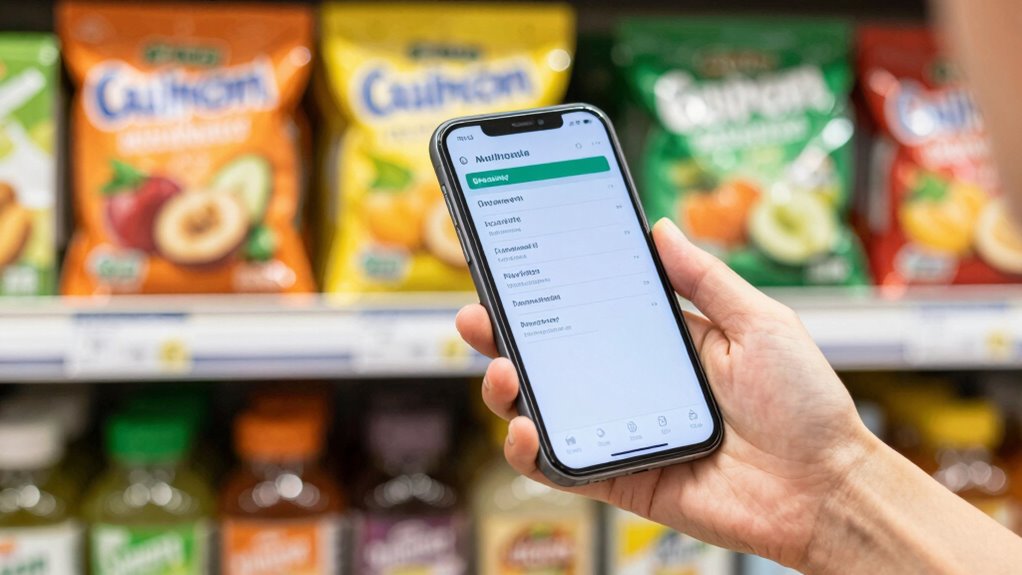
Turning nutrition label reading into a daily habit starts with setting small, manageable goals. Begin by incorporating label checks into your meal prep routine and updating your shopping list accordingly. To make it easier, try these steps:
- Before shopping, review labels to identify healthier options.
- During meal prep, compare nutrition facts to select balanced ingredients.
- Keep a checklist of key nutrients to focus on.
- Dedicate a few minutes daily to scan labels on new or packaged foods.
Frequently Asked Questions
How Often Should I Check Nutrition Labels When Shopping?
You should check nutrition labels every time you shop, especially if your shopping habits include trying new products or switching brands. Making label reading a regular part of your routine helps you make healthier choices and stay within your budget. Simply scanning labels quickly can reveal important info about ingredients, calories, and additives, ensuring you’re always informed. Consistent label reading keeps you aligned with your health goals and prevents unnecessary spending.
Are Organic or Natural Labels More Trustworthy Than Nutrition Labels?
Like trusting a friend’s word over a stranger, organic claims and natural labels can be tempting, but they aren’t always dependable. They often lack strict regulation, so they don’t guarantee better quality or safety. You should still check nutrition labels, even on organic or natural products, to ensure you’re making informed choices. Remember, labels can be persuasive, but your critical eye is what truly safeguards your health and wallet.
Can Nutrition Labels Help Me Identify Food Allergies?
Yes, nutrition labels can help you identify food allergies. Look for gluten-free markers and allergy warning symbols on packaging. These indicators alert you to potential allergens like nuts, dairy, or soy. By quickly scanning labels for these symbols, you can avoid foods that may trigger your allergies, saving you time and ensuring your safety during shopping. Always double-check ingredient lists if you’re unsure about specific allergens.
How Do I Interpret Ingredient Lists Alongside Nutrition Labels?
Think of it as hitting two birds with one stone—you can interpret ingredient lists alongside nutrition labels easily. Start by checking the ingredient order; ingredients are listed from most to least prevalent, so the first few matter most. Look for additives you want to avoid and identify any hidden allergens. This way, you make smarter choices and stay on top of what’s really in your food without breaking a sweat.
What Are Common Misleading Claims on Food Packaging?
You should watch out for misleading claims on food packaging, especially marketing buzzwords like “natural,” “healthy,” or “low-fat,” which often don’t mean what they seem. Also, beware of serving size tricks that make calories or nutrients look lower than they really are. Always read the fine print and compare labels carefully to avoid being fooled by these tactics and make smarter choices.
Conclusion
Mastering a quick 30-second scan of nutrition labels empowers you to make smarter choices and stretch your dollar further. By honing this skill, you’ll avoid falling for marketing tricks and spot hidden ingredients that don’t serve your health. Think of it as hitting two birds with one stone—saving money and eating better. Make it a daily habit, and soon you’ll be steering grocery aisles like a pro. Your wallet—and your waistline—will thank you!
Fall Picks
fall essentials
As an affiliate, we earn on qualifying purchases.