
To stop mystery bags forever, organize your freezer with clear zones for different items. Use labeled, stackable containers to keep ingredients separate and visible, making it easy to find what you need. Designate shelves for specific categories—like ready meals on top and raw ingredients below. Regularly check and reorganize to prevent clutter. Keep this system consistent and you’ll enjoy an efficient, stress-free freezer—more tips to perfect your approach are just ahead.
Key Takeaways
- Designate specific zones for ready-to-eat meals, raw ingredients, and bulk storage to streamline access.
- Use clear, labeled containers and bins to identify contents instantly and prevent mystery bags.
- Stack and group similar items in uniform containers to maintain order and maximize space.
- Implement a weekly review system to discard expired foods and reorganize for continuous efficiency.
- Place frequently used items at eye level or top shelf for quick access and easier maintenance.
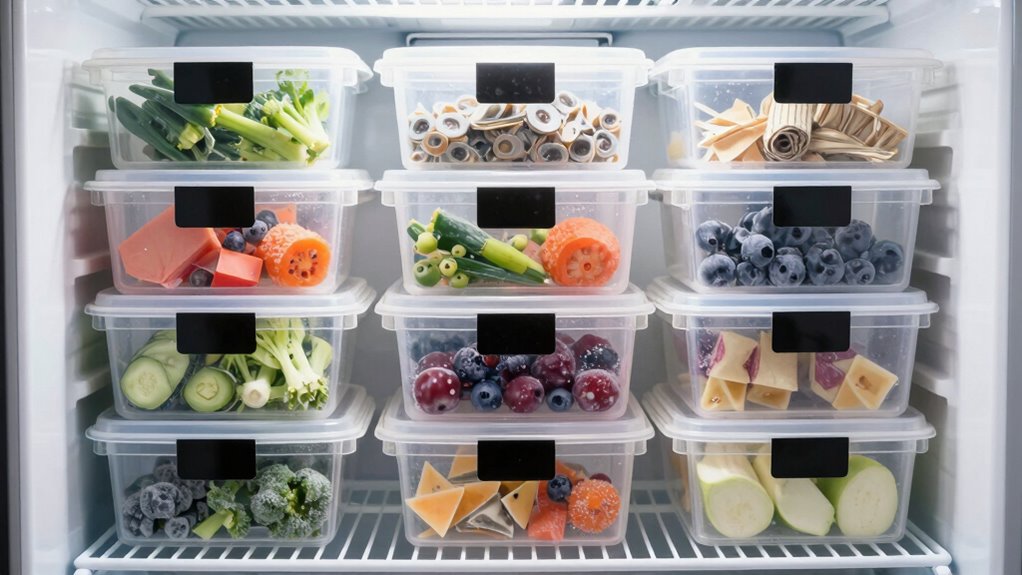
Have you ever struggled to find what you need in your freezer? It’s frustrating digging through a jumble of bags and containers, guessing which one holds that leftover chicken or frozen berries. A well-organized freezer can save you time, reduce waste, and make meal prep a breeze. To achieve this, start by implementing simple freezer organization strategies, especially focusing on meal prep tips and storage container types. When you plan ahead and choose the right containers, you’ll transform your freezer into a system that’s easy to navigate and maintain.
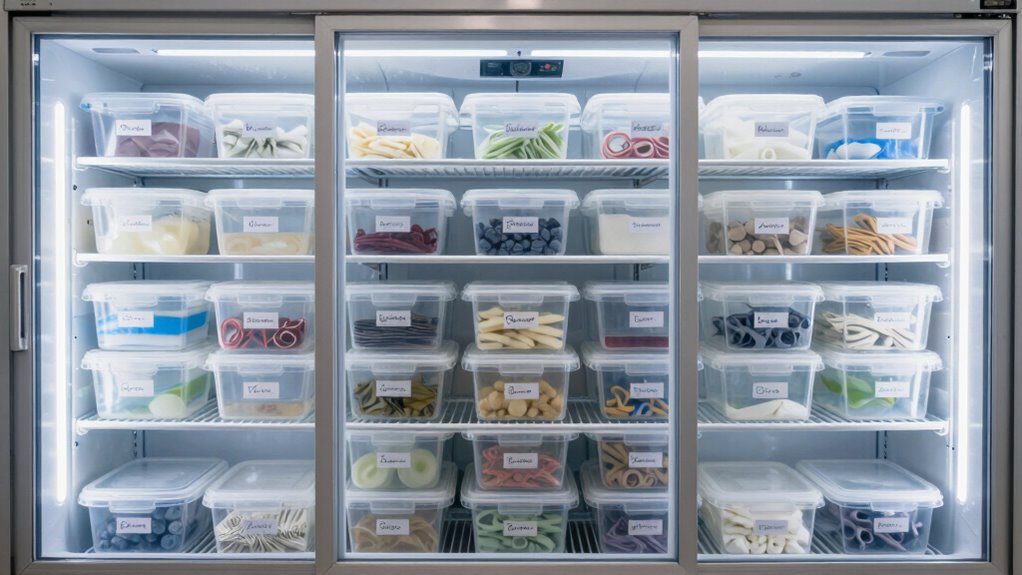
First, consider using clear, stackable storage container types. These containers allow you to see exactly what’s inside without opening each bag or box, saving you time and preventing unnecessary thawing or defrosting. Opt for BPA-free plastic or glass containers designed for freezer use, which are durable and won’t crack at low temperatures. Label each container with contents and date using waterproof markers or pre-printed labels so you can track freshness at a glance. This way, when you’re craving a specific meal, you won’t waste precious minutes rummaging through unmarked packages.
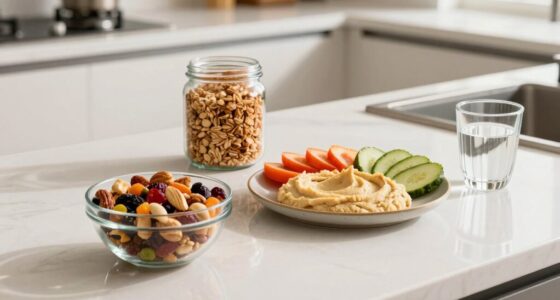
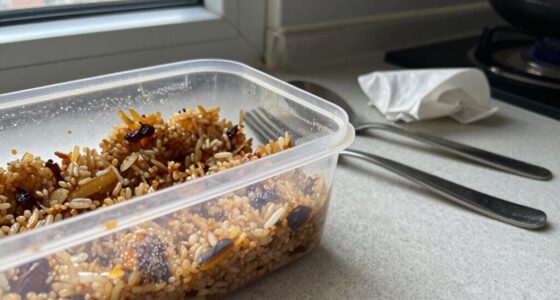
Meal prep tips play a significant role in maintaining an organized freezer. Dedicate a specific section for pre-portioned meals or ingredients, such as cooked grains, chopped vegetables, or marinated proteins. When you prepare ingredients in advance and store them in uniform containers, you create a system that promotes efficiency and consistency. Group similar items together—like all soups in one area or all breakfast items in another—so you can quickly locate what you need without disrupting the entire freezer layout. Additionally, freeze foods in flat, even layers inside containers or freezer-safe bags. This method not only speeds up freezing and thawing but also allows you to stack items neatly, maximizing space.
Creating designated zones within your freezer also helps keep everything in order. Reserve the top shelf for ready-to-eat meals, the middle for raw ingredients, and the bottom for bulk storage or larger items. Use bins or baskets to contain smaller items, preventing clutter from spreading. When you organize with a layout in mind, you can easily rotate older items to the front, ensuring nothing gets lost or forgotten. Incorporating proper storage techniques can further enhance your system by preventing freezer burn and maintaining food quality over time.
Finally, maintaining your system requires a quick weekly review. Take a few minutes to check expiration dates, discard spoiled foods, and reorganize as needed. With consistent effort and strategic use of meal prep tips and proper storage container types, you’ll prevent mystery bags and turn your freezer into a well-oiled, efficient space. The result will be less stress, more time saved, and the satisfaction of knowing exactly what’s in your freezer at all times.
Frequently Asked Questions
What Are the Best Labels for Freezer Organization?
You should use clear, durable labels for freezer organization. Consider labeling techniques like using waterproof, freezer-safe label material options such as laminated paper, plastic, or silicone. These materials resist moisture and cold, ensuring your labels stay legible and intact. Write with permanent markers or use printable labels for a neat look. Proper labels make it easy to identify contents quickly, preventing mystery bags and keeping your freezer organized.
How Often Should I Defrost My Freezer?
You should defrost your freezer every 6 to 12 months to prevent frost buildup, which can reduce efficiency by up to 20%. Regular defrosting helps with frost buildup prevention, keeping your freezer running smoothly. Create a defrosting schedule based on how quickly frost accumulates—if you notice buildup over 1/4 inch, it’s time to defrost. Staying consistent ensures maximum performance and energy savings.
Can I Store Non-Food Items in the Freezer?
You can store non-food items in the freezer, but you should prioritize freezer safety and guarantee they won’t damage the appliance. Use the freezer for non-food storage only if items are non-perishable or need to stay frozen, like ice packs or certain craft supplies. Keep in mind that storing non-food items might affect freezer efficiency and cleanliness. Always check manufacturer guidelines to avoid issues and maintain proper freezer functioning.
What’s the Ideal Freezer Temperature for Preservation?
You should set your freezer temperature to 0°F (-18°C) for ideal food preservation. Did you know that at this temperature, bacteria growth slows considerably, extending your food’s freshness? Maintaining this precise temperature ensures your frozen items stay safe and retain their quality longer. Regularly check your freezer’s temperature with a reliable thermometer to keep your food preserved perfectly, avoiding spoilage and waste.
How Do I Prevent Freezer Burn on Stored Items?
To prevent freezer burn, always use airtight packaging for your stored items. Wrap foods tightly in plastic wrap, aluminum foil, or vacuum-sealed bags to eliminate air exposure. Additionally, focus on moisture control by removing excess moisture before freezing, which helps reduce ice crystals. Properly sealing and moisture management keep your food fresh, flavors intact, and freezer burn at bay, ensuring your frozen goods stay delicious longer.
Conclusion
Imagine opening your freezer and seeing everything neatly arranged, like a well-stocked library of frozen treasures. No more mystery bags lurking behind the ice or lost in the back corner. With a smart layout, you’ll glide effortlessly through the frost, each item’s label shining like a badge of honor. Say goodbye to chaos and hello to clarity—your freezer becomes a frozen haven where everything’s at your fingertips, ready to serve at a moment’s notice.