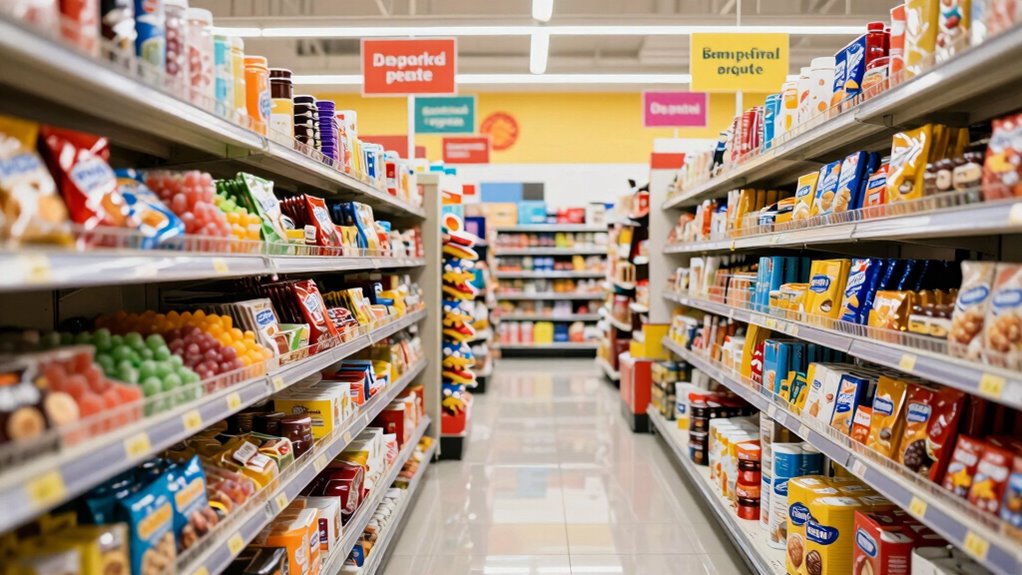

Grocery stores are designed to encourage you to spend more by strategically placing items like impulse buys near checkout counters, end caps, and along main aisles. Bright packaging, promotional displays, and limited-time offers create a sense of urgency and temptation. Store layouts guide you past tempting products, making unplanned purchases more likely. Understanding these tactics can help you resist the urge to overspend—keep going to discover more ways stores nudge you to shop impulsively.
Key Takeaways
- Stores intentionally place impulse items near checkout counters to tempt spontaneous purchases.
- End caps feature promotional and seasonal products designed to catch shoppers’ attention and encourage overspending.
- Store layouts are crafted to lead customers past multiple attractive items, increasing unplanned buying.
- Limited-time offers create urgency, prompting quick decisions and reducing thoughtful shopping.
- Bright packaging and eye-catching displays attract attention, making impulse buys more likely.
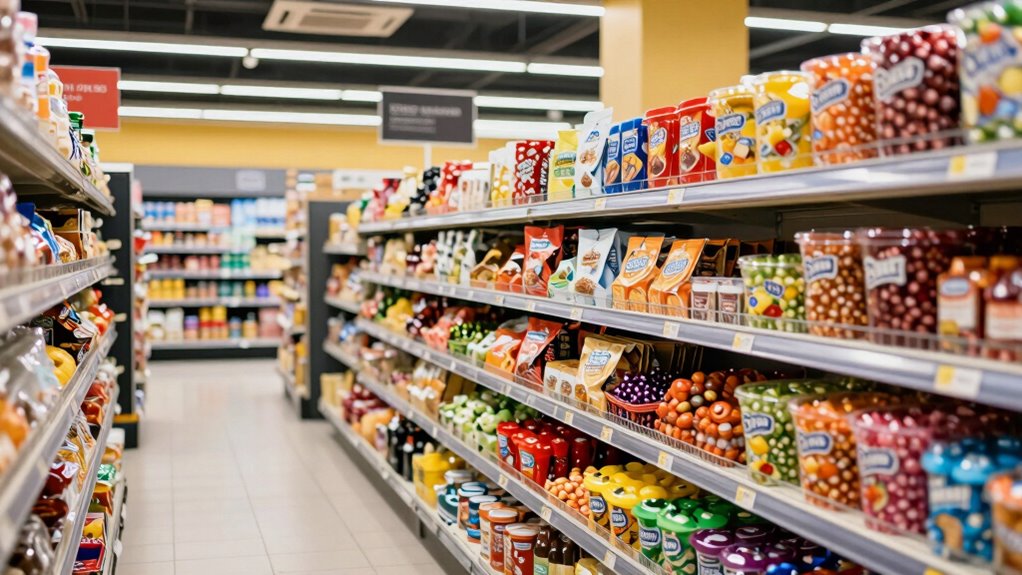
Grocery shopping can quickly become a trap if you’re not careful, as clever marketing tactics and store layouts are designed to influence your choices. One of the most common pitfalls is impulse buying, which is often triggered by how stores are arranged. Store layout isn’t accidental; it’s crafted to lead you through specific paths that increase the likelihood of unplanned purchases. As you walk into a grocery store, you might notice that essentials like milk and bread are placed at the back. This setup forces you to pass by countless tempting items, increasing your chances of grabbing things you hadn’t intended to buy. Shelves are strategically stocked with colorful packaging and eye-catching displays to grab your attention, making it hard to resist grabbing that snack or beverage that wasn’t on your shopping list. Additionally, store design elements are often influenced by principles of psychological marketing, which aim to influence subconscious decision-making and increase sales. The placement of impulse items near checkout counters is another deliberate tactic. Those candy bars, gum, or small gadgets are positioned precisely where your eyes are drawn while you wait in line. It’s a quick, easy purchase that adds up over time. Store layouts also include end caps—those prominent displays at the ends of aisles—featuring special deals or seasonal products. These are designed to catch your eye and encourage you to buy items you didn’t plan on, often at a higher markup. Your mind might tell you that these are good deals, but many of these products are priced to entice quick, impulsive decisions rather than necessity. The store’s design plays a significant role in fostering impulse buying by creating a sense of scarcity or urgency. Limited-time offers and special promotions are placed in high-traffic areas to push you into making spontaneous decisions. When everything seems to be on sale or available for a limited time, you might convince yourself that missing out isn’t an option, even if you don’t need the items. These tactics exploit your emotions and the human tendency to act quickly when presented with a perceived deal. Becoming aware of how store layout and strategic product placement influence your shopping habits is vital. Recognizing these tactics allows you to pause and evaluate whether a purchase is necessary or just a result of clever marketing. By sticking to your list and being mindful of where and what you’re shopping for, you can resist the lure of impulse buying and keep your spending in check. Ultimately, understanding these store strategies empowers you to shop smarter and avoid falling into the common traps designed to make you spend more.
Frequently Asked Questions
How Do Store Layouts Influence My Shopping Decisions?
Store layouts influence your shopping decisions through strategic product placement and sensory marketing. When essential items are placed at the back, you’re more likely to browse aisles longer and pick up unplanned products. Sensory marketing, like appealing scents and lighting, attracts your attention and creates a pleasant shopping environment. These tactics subtly steer you toward making more purchases, often beyond your initial list, increasing your overall spending.
What Psychological Tricks Do Stores Use to Encourage Impulse Buys?
Stores play you like a puppet by using clever psychological tricks. They use product placement to lure your eyes and sensory marketing to stimulate your senses—think bright lights and enticing aromas—making you want to buy impulsively. These tactics turn shopping into a game of temptation, where every display is a trap. You’re easily drawn in, often spending more than planned without realizing it, like moths to a flame.
Are Loyalty Programs Actually Saving Me Money?
Loyalty programs can save you money if you actively use reward points and take advantage of exclusive discounts. You might earn discounts on future purchases or get free items, but only if you stay consistent. Be sure to compare the savings with the rewards offered. Otherwise, you could spend more just to earn points. Keep track of offers and use your rewards strategically to truly benefit.
How Can I Resist Marketing Tactics Like In-Store Displays?
Think of in-store displays as sirens calling you to overspend. To resist, focus on your shopping list and stay committed. Ignore tempting visual cues and scent marketing that aim to trigger impulse buys. Practice mindfulness by being aware of these tactics, and remind yourself that your goal is to save money. Stay strong, and don’t let store tricks steer you off course.
What Are the Best Strategies to Avoid Overspending During Shopping?
To avoid overspending, stick to your budget planning and shopping list strategies. Before shopping, set a clear spending limit and plan meals to determine exact items needed. Make a detailed list and commit to only buying what’s on it, resisting in-store temptations. Avoid shopping when hungry, as it can lead to impulse purchases. These habits keep you focused, help manage expenses, and prevent falling for marketing tricks.
Conclusion
Now that you’re aware of the grocery store’s sneaky tricks, you’re better equipped to navigate the aisles like a savvy sailor steering clear of hidden rocks. Stores are like sirens, luring you in with tempting displays and clever placements. Stay focused, stick to your list, and don’t let these traps steer your budget off course. With a clear map in hand, you’ll sail smoothly past overspending, reaching your destination—your wallet—intact.