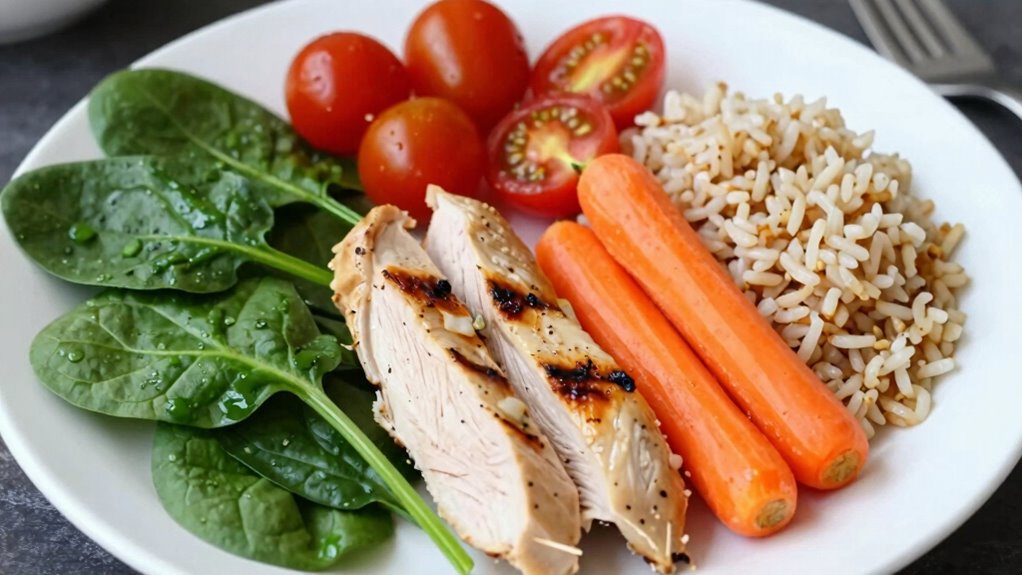

The “Healthy Plate” visual rule helps you easily balance your meals by showing you how to divide your plate without guessing portion sizes. Fill half with vegetables and fruits, and split the remaining space equally between lean proteins and whole grains. This simple method removes the need for calorie counting, making healthy eating straightforward and sustainable. Keep exploring to discover how this approach can transform your meal habits effortlessly.
Key Takeaways
- The Healthy Plate visual rule divides the plate into specific sections: half for vegetables and fruits, a quarter for lean proteins, and a quarter for whole grains.
- Using the plate as a visual guide eliminates the need for calorie counting and helps accurately estimate portion sizes.
- Filling half the plate with colorful vegetables and fruits maximizes nutrient intake and promotes satiety.
- Proper division of the plate encourages balanced meals and prevents overeating through intuitive portioning.
- Consistently applying this visual method simplifies healthy eating and supports sustainable, portion-controlled nutrition habits.
What Is the Healthy Plate and Why It Matters
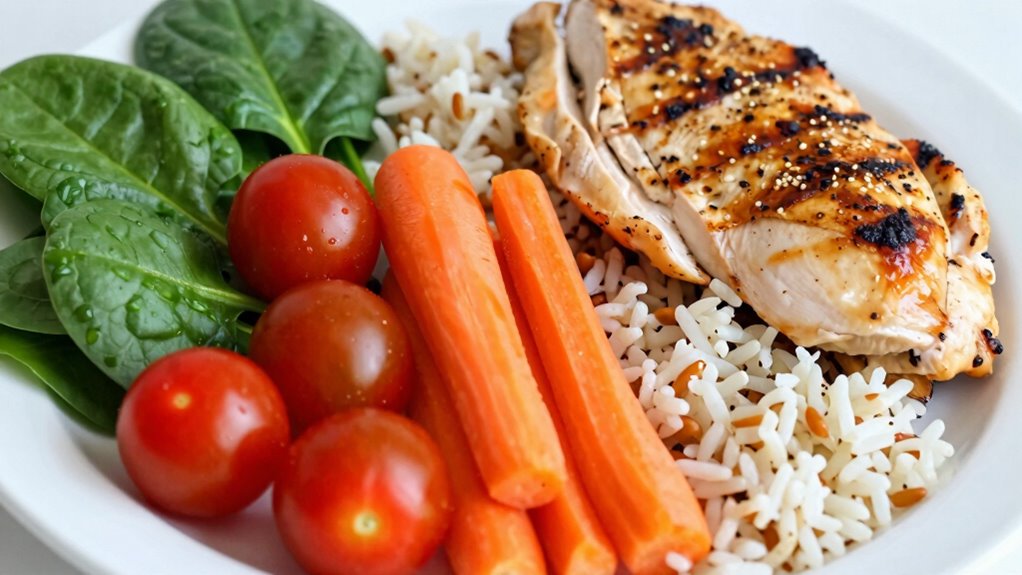
A healthy plate is a simple yet effective way to guarantee you’re eating a balanced diet. It helps you control portion sizes and ensures your meals have the right mix of nutrients. When your plate is well-balanced, you get the right amount of vegetables, fruits, proteins, and grains, which supports overall health. Knowing what a healthy plate looks like removes guesswork and makes meal planning easier. It encourages you to focus on portion sizes that match your body’s needs rather than overeating or skimping on essential nutrients. By practicing this visual rule, you can develop better eating habits, improve digestion, and maintain a healthy weight. Additionally, adopting inclusive dietary guidelines promotes diversity in food choices, accommodating different cultural preferences and nutritional needs. Understanding the balanced meal concept can help you make informed decisions about your diet and foster sustainable eating habits. Using such visual tools can further reinforce your understanding of proper portioning and dietary balance. Recognizing the importance of portion control can also help prevent overeating and promote long-term health benefits. Developing awareness of nutritional balance enhances your ability to enjoy varied foods while maintaining health. Ultimately, a healthy plate keeps your meal balanced and your diet on track.
How to Divide Your Plate for a Balanced Meal
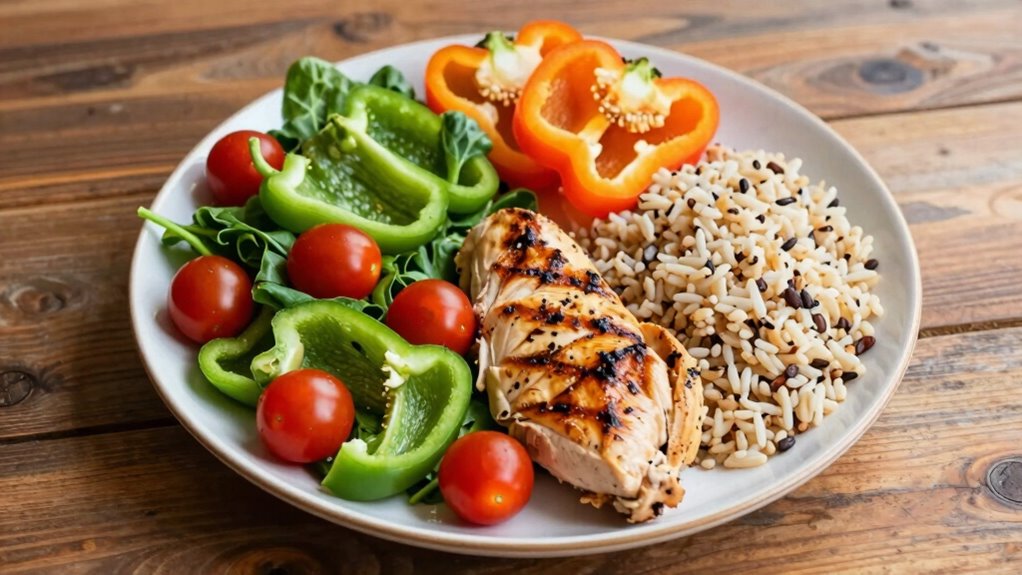
To create a balanced meal, start by filling half your plate with vegetables—they add fiber and nutrients. Then, allocate the remaining space equally between protein and carbohydrates to keep your meal satisfying. This simple division helps you maintain a healthy and nourishing diet effortlessly. Incorporating air fryer accessories can also make preparing these components easier and healthier. Using proper portion control tips ensures you stay on track with your dietary goals. Remember, practicing mindful eating supports healthy habits and long-term well-being. Additionally, understanding floating on water concepts can promote relaxation and stress relief during mealtime or after exercising, contributing to overall wellness and luxury living comfort.
Fill Half With Vegetables
Filling half of your plate with vegetables guarantees you’re getting essential nutrients while keeping your meal balanced. Focus on vegetable variety to assure you receive a broad spectrum of vitamins, minerals, and antioxidants. Incorporate different colors and types—leafy greens, cruciferous, root vegetables—to maximize nutrient density. This approach not only boosts your intake of fiber but also helps you feel full longer. Prioritizing nutrient-dense vegetables means you get more vitamins with fewer calories, supporting overall health. Keep in mind that fresh, frozen, or even roasted vegetables count. Using a variety of preparation methods can enhance flavor and nutrient retention. Understanding the chemical composition of vegetables can help you choose the best options for nutrient preservation. Incorporating color accuracy in your vegetable choices can further enhance visual appeal and appetite stimulation. Exploring nutrient-dense foods can further optimize your meals for health benefits. Incorporating knowledge of food pairing principles can help you create more appealing and nutritious meals. By filling half your plate with a colorful mix of vegetables, you set a foundation for a nutritious, well-rounded meal that supports your wellness goals.
Balance Protein and Carbs
Achieving a balanced meal involves dividing your plate thoughtfully between protein and carbohydrates. You should aim for appropriate portion sizes to guarantee nutrient balance without overeating. Typically, about a quarter of your plate should be filled with lean protein sources like chicken, fish, beans, or tofu. The remaining quarter can be dedicated to healthy carbs such as whole grains, sweet potatoes, or fruit. This division helps you meet your nutritional needs while controlling calorie intake. Keep in mind that portion sizes matter—smaller portions of protein paired with ample carbs can promote better digestion and sustained energy. Using a visual plate method can simplify portion control and ensure a balanced meal. Incorporating nutrient-dense foods into your plate can enhance overall health and provide essential vitamins and minerals. Paying attention to portion control is key to maintaining a healthy diet and avoiding excess calories. Mindful plate division can also help prevent overeating by making you more aware of your food intake. For example, the performance and horsepower of electric dirt bikes highlight the importance of understanding power and efficiency in different contexts. By consciously balancing protein and carbs, you create a meal that supports overall health and keeps you satisfied longer.
Benefits of Using the Healthy Plate Method for Weight and Health
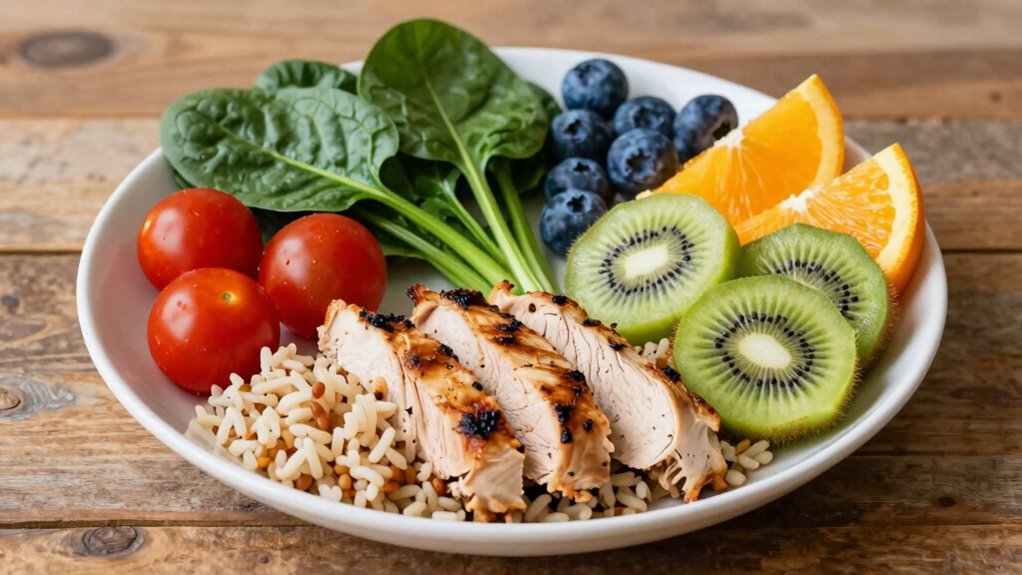
Using the Healthy Plate method makes it easier to get balanced nutrition without counting every calorie. It helps you control portion sizes naturally, so you eat just enough to satisfy your hunger. As a result, you can better manage your weight and improve your overall health. Incorporating proper ventilation techniques can further enhance your eating environment and support healthier habits. Additionally, being mindful of cosmetically safe ingredients in your food and skincare can contribute to overall wellness. Paying attention to sound healing science and creating a calming atmosphere during meals may also promote mindful eating and digestion. Understanding smart shopping strategies can help you select high-quality, affordable ingredients to support these healthy practices. Recognizing the importance of ethical consumer choices can guide you toward more responsible and sustainable food options.
Balanced Nutrition Simplified
The Healthy Plate method simplifies balanced eating by providing a clear visual guide that makes it easier to choose nutritious meals. By filling half your plate with vegetables and fruits, you naturally promote balanced nutrition without overcomplicating your choices. This approach also helps improve your snacking habits by encouraging more filling, nutrient-dense options during meals, reducing unnecessary snacking between meals. Additionally, it supports better meal timing, as you’re more likely to feel satisfied and maintain steady energy levels throughout the day. With this visual system, you don’t need to count calories or guess portion sizes, making it easier to stick to healthy eating habits consistently. Incorporating the principles of balanced nutrition can enhance overall health and well-being. Overall, this method streamlines your path to better health and weight management with simplicity and clarity.
Portion Control Benefits
Because portion control is key to maintaining a healthy weight, the Healthy Plate method makes it easier to manage how much you eat without counting every calorie. It helps you stay mindful of serving sizes, reducing reliance on calorie counting or falling for fad diets. By filling your plate with appropriate portions, you naturally limit overeating and support balanced nutrition. This approach promotes sustainable habits over quick fixes, leading to better long-term health. Use the table below to visualize portion sizes:
| Food Group | Recommended Portion | Benefits |
|---|---|---|
| Vegetables | Half your plate | Low calories, high fiber |
| Protein | One-quarter plate | Builds muscle, keeps you full |
| Carbohydrates | One-quarter plate | Provides energy, prevents cravings |
Adopting this method simplifies healthy eating and reduces the temptation of fad diets.
Step-by-Step: Applying the Healthy Plate at Every Meal

To effectively apply the Healthy Plate at every meal, start by visualizing how it divides your food. Use your plate as a guide to balance food variety and guarantee proper portions. Begin with meal prep by choosing a colorful mix of vegetables, lean proteins, and whole grains. Fill half your plate with vegetables and fruits to maximize nutrients and fiber. Next, add a serving of lean protein, like chicken or beans, to support muscle health. Complete your plate with a small portion of whole grains, such as brown rice or whole-wheat bread. This visual approach simplifies decision-making, helping you avoid overeating and ensuring your meals are nutritious. By consistently following this step-by-step method, you’ll develop healthy eating habits that last.
Common Mistakes When Using the Healthy Plate and How to Avoid Them
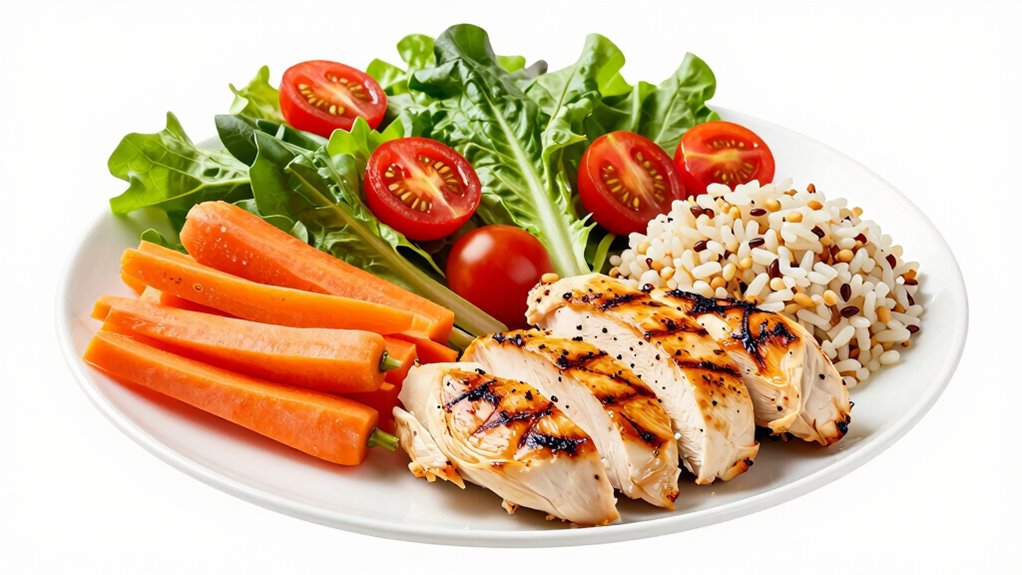
Many people make common mistakes when using the Healthy Plate that can undermine their efforts to eat nutritiously. One frequent error is misjudging portion sizes, leading to serving inaccuracies that skew your intake. These misjudgments often result in overeating or undereating certain food groups. To avoid this, be mindful of:
- Overestimating the amount of vegetables on your plate
- Underestimating protein portions
- Relying solely on visual cues without measuring
- Ignoring the recommended serving sizes for grains and dairy
These mistakes can cause imbalanced meals and hinder your progress. Remember, visual cues are helpful but not foolproof. Paying close attention to portion sizes ensures you’re accurately following the Healthy Plate guidelines and supporting your health goals.
Tips to Adjust Your Healthy Plate for Dietary Needs and Goals
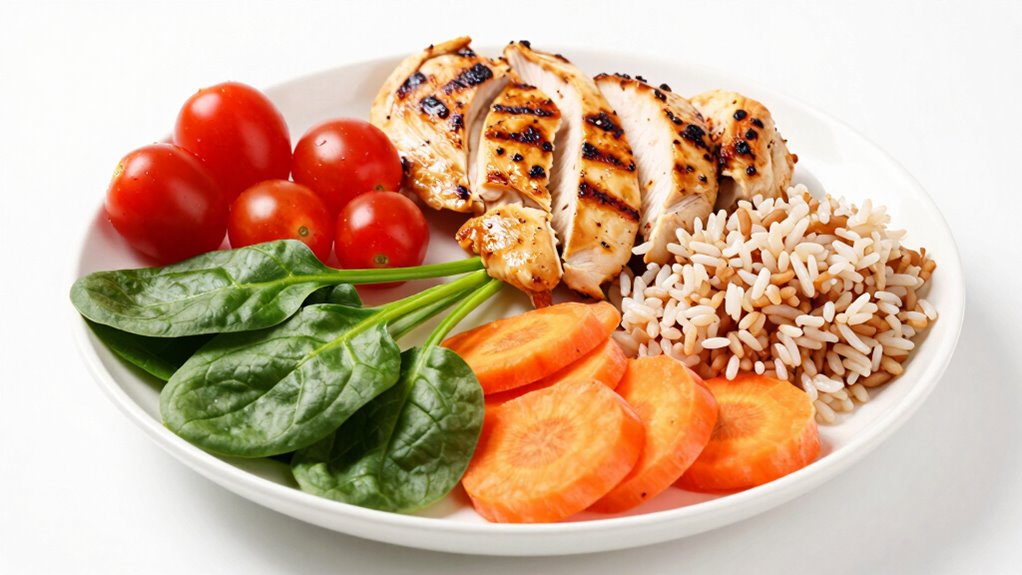
Adjusting your Healthy Plate to meet your specific dietary needs and goals requires intentional changes that align with your health priorities. Start by evaluating your ideal portion sizes for each food group, ensuring you’re not overeating or undereating. For weight management, reduce portion sizes of high-calorie foods while increasing vegetables and lean proteins. If you’re focusing on muscle building, incorporate larger portions of protein and healthy carbs. For dietary restrictions, such as low-sodium or gluten-free diets, modify the plate accordingly by choosing suitable foods. Remember, these dietary adjustments should reflect your personal goals, whether that’s weight loss, maintenance, or specific health conditions. Regularly reassess your plate to keep it balanced and aligned with your evolving needs.
Visual Examples of Healthy Plates for Breakfast, Lunch, and Dinner
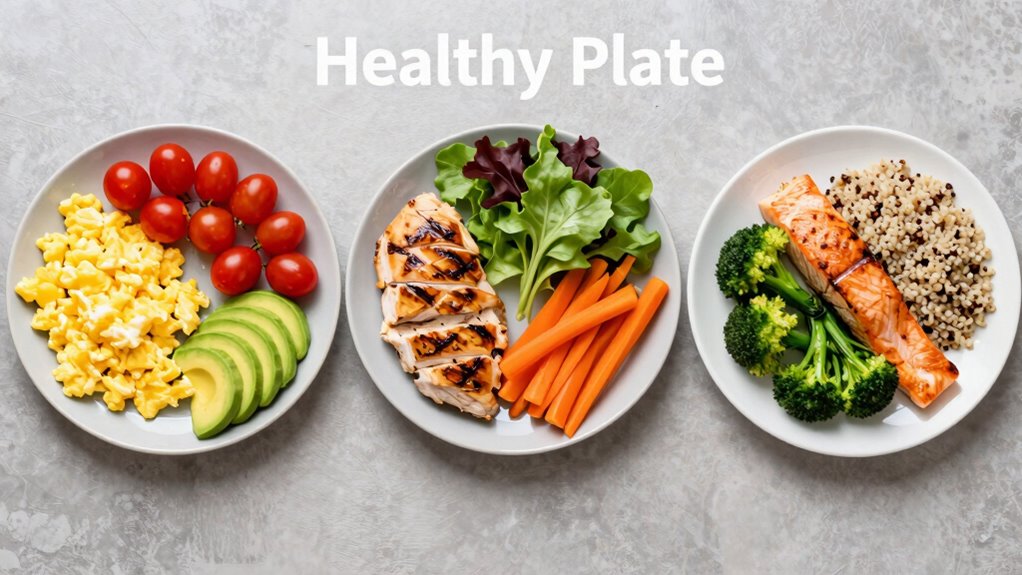
Visualizing how your healthy plate looks at each meal can make it easier to stick to your dietary goals. For breakfast, aim for a balanced mix of portion sizes with whole grains, protein, fruits, and healthy fats. At lunch, include a colorful variety of vegetables, lean protein, and whole grains to support steady meal timing. For dinner, keep portions moderate by filling half your plate with vegetables, a serving of protein, and a small portion of carbs. To help, consider these visual examples:
Visualize your plate at each meal to stay on track with your healthy eating goals.
- Breakfast: Oatmeal with fruit and nuts, a boiled egg
- Lunch: Salad with grilled chicken, quinoa, and veggies
- Dinner: Stir-fried vegetables, fish, a small serving of rice
- Snacks: Fresh fruit or nuts to maintain portion sizes and energy levels
How the Healthy Plate Simplifies Meal Planning and Portion Control
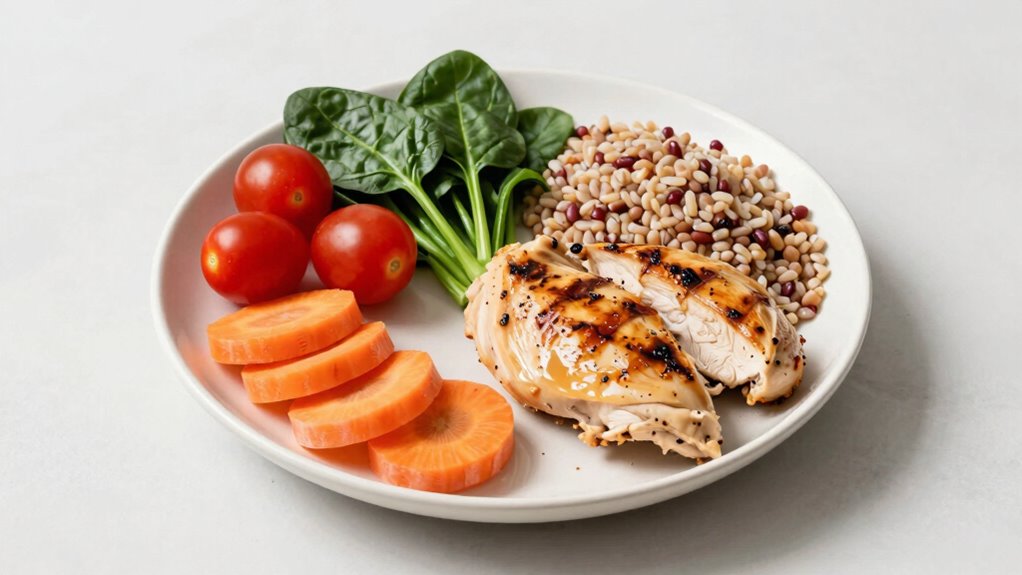
The healthy plate simplifies meal planning and portion control by providing a clear, easy-to-follow visual guide that helps you allocate food groups accurately. Instead of guessing portion sizes, you can quickly see how much of each food group to include. This makes it easier to create balanced meals without overdoing calories or nutrients. The visual approach streamlines meal prep, allowing you to assemble plates that meet your dietary goals with minimal effort. You no longer need to measure or count every ounce; the plate’s sections serve as a practical reference for proper portions. Over time, this method helps you develop habits for mindful eating and consistent portion sizes, making healthy eating more manageable and less stressful.
Can You Customize the Healthy Plate for Special Diets or Preferences?

While the healthy plate provides a straightforward way to plan balanced meals, many people wonder if they can tailor it to fit their unique dietary needs or personal preferences. Fortunately, there are various customization options that support dietary flexibility. You can adapt the plate to include:
- Vegetarian or vegan protein sources
- Gluten-free grains or alternatives
- Dairy-free or low-lactose options
- Adjusted portion sizes for specific calorie goals
These adjustments allow you to maintain the visual balance while accommodating allergies, ethical choices, or health conditions. The core concept of the healthy plate is flexible enough to be personalized, making it easier to stick with healthy eating habits that suit your lifestyle and preferences without sacrificing nutritional balance.
Final Tips to Make the Healthy Plate a Daily Habit
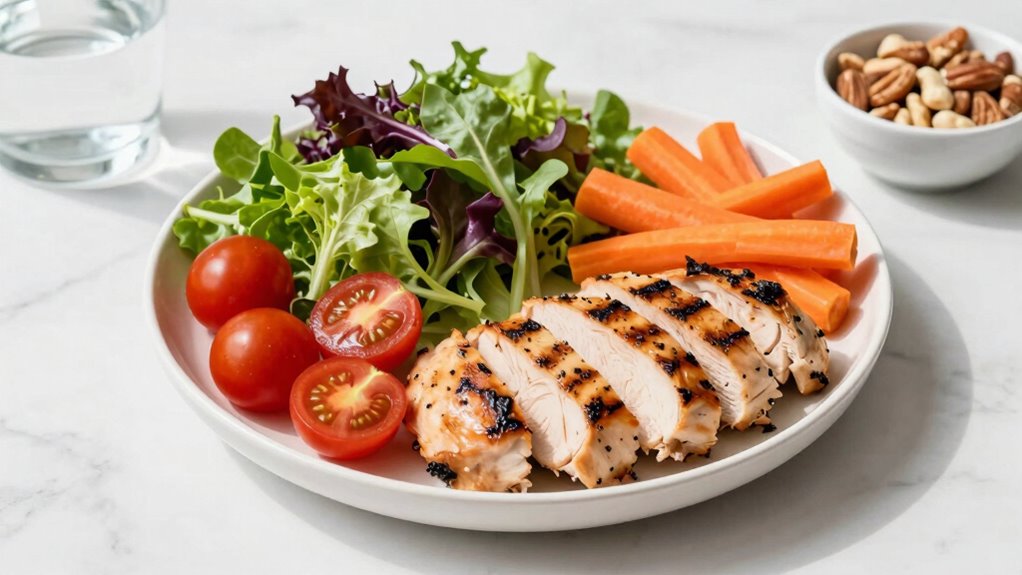
To make the healthy plate a daily habit, start with consistent meal planning so you know what to eat each day. Incorporating a variety of foods guarantees you get all essential nutrients and keeps your meals interesting. By sticking to these tips, you’ll build habits that support long-term health and well-being.
Consistent Meal Planning
Establishing a routine for meal planning guarantees you consistently create balanced plates and stick to healthy habits. To make this easier, dedicate time weekly for meal prep, so you have ready-to-eat options. This helps you avoid impulsive choices and stay aligned with the healthy plate rule. Incorporate snack ideas that complement your meals, like fresh fruit, nuts, or veggie sticks, to prevent hunger between meals. Keep a list of simple, nutritious recipes to rotate, ensuring variety without stress. Planning ahead also means you can shop smarter by sticking to a shopping list focused on whole foods. By establishing these habits, you make healthy eating effortless and sustainable, turning the healthy plate into a natural part of your daily routine.
Incorporate Variety Daily
Adding variety to your meals each day keeps your healthy plate interesting and guarantees you’re getting a wide range of nutrients. Embracing meal diversity ensures you include different food groups and flavors, which boosts your overall nutrition. Food variety prevents monotony and encourages you to try new fruits, vegetables, grains, and proteins regularly. By consciously rotating your ingredients and recipes, you make healthy eating sustainable and enjoyable. Incorporate colorful produce, whole grains, and lean proteins to maximize nutrient intake. Remember, a diverse diet not only supports your physical health but also keeps mealtime exciting. Making variety a daily habit helps you stick to your healthy plate principles effortlessly, turning balanced eating from a chore into a rewarding routine.
Frequently Asked Questions
Can the Healthy Plate Be Adapted for Children’s Meals?
Yes, you can adapt the healthy plate for children’s meals by focusing on portion control and meal customization. Use smaller plate sizes and adjust the food groups to suit their age and appetite. Incorporate colorful vegetables, fruits, lean proteins, and whole grains to make meals appealing. This approach helps teach kids balanced eating habits while allowing flexibility for their preferences, making healthy choices easier and more enjoyable.
How Does the Healthy Plate Accommodate Vegetarian or Vegan Diets?
You can easily adapt the healthy plate for vegetarian or vegan diets by emphasizing plant-based options like beans, lentils, and tofu. Instead of meat, fill your plate with colorful vegetables, whole grains, and healthy fats. Keep nutrient considerations in mind, ensuring you get enough protein, iron, and vitamin B12 from fortified foods or supplements. This approach balances variety and nutrition, making your plant-based meals both satisfying and healthy.
Is the Healthy Plate Effective for Managing Specific Health Conditions?
Yes, the healthy plate is effective for managing specific health conditions because it encourages nutritional adjustments and balanced meal planning. By visually dividing your plate into appropriate portions, you can control intake of nutrients like carbs, fats, and proteins tailored to your health needs. This simple method helps you focus on nutrient-dense foods, making it easier to follow dietary guidelines for conditions like diabetes, hypertension, or heart disease.
What Are Simple Substitutions to Make the Healthy Plate More Affordable?
To make the healthy plate more affordable, you can choose budget-friendly options like seasonal produce and store brands. Use cost-effective swaps such as canned or frozen vegetables instead of fresh, and opt for whole grains like brown rice or oats instead of pricier alternatives. Incorporating legumes, beans, and eggs can also reduce costs while maintaining nutrition. These simple substitutions help you stick to your healthy eating plan without overspending.
How Long Does It Take to See Health Improvements Using the Healthy Plate?
You’ll start noticing health improvements within a few weeks of using the healthy plate for meal planning and practicing portion control. While individual results vary, consistent healthy eating can boost your energy, improve digestion, and lower blood pressure over time. Imagine feeling more vibrant and confident each day as your habits reinforce positive changes. Stay committed, and you’ll see tangible progress in just a few weeks, inspiring you to keep going.
Conclusion
Using the healthy plate visual simplifies meal planning and helps you control portions effortlessly. Studies show that people who follow balanced plate guidelines are 30% more likely to maintain a healthy weight. By visualizing your meal this way, you reduce overeating and improve nutrition. Make it a daily habit, and you’ll find it easier to enjoy tasty, nutritious meals without guessing or counting. Start today and see how simple healthy eating can be!