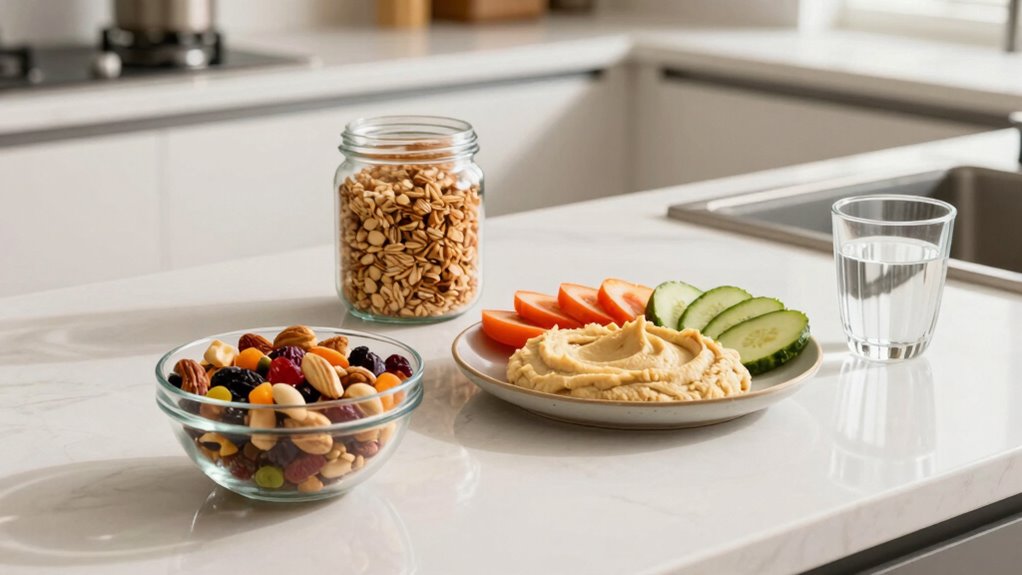

The key to stopping “accidental meals” is practicing mindful portioning and eating habits. Before snacking, pause to assess your true hunger, and use visual cues or pre-portioned containers to keep servings in check. Focus on savoring each bite and avoid eating straight from large packages or while distracted. By staying aware of your body’s signals and controlling your portions, you’ll prevent snacks from turning into unintended full meals. Keep exploring these strategies to master smarter snacking techniques.
Key Takeaways
- Practice mindful portioning by measuring snacks beforehand to prevent unintentional full meals.
- Use visual cues and small containers to maintain awareness of appropriate snack sizes.
- Pause and assess hunger before snacking to differentiate between true hunger and boredom.
- Avoid eating straight from large packages to prevent mindless overeating.
- Address emotional triggers like stress or boredom to reduce impulsive, accidental meal-like snacking.
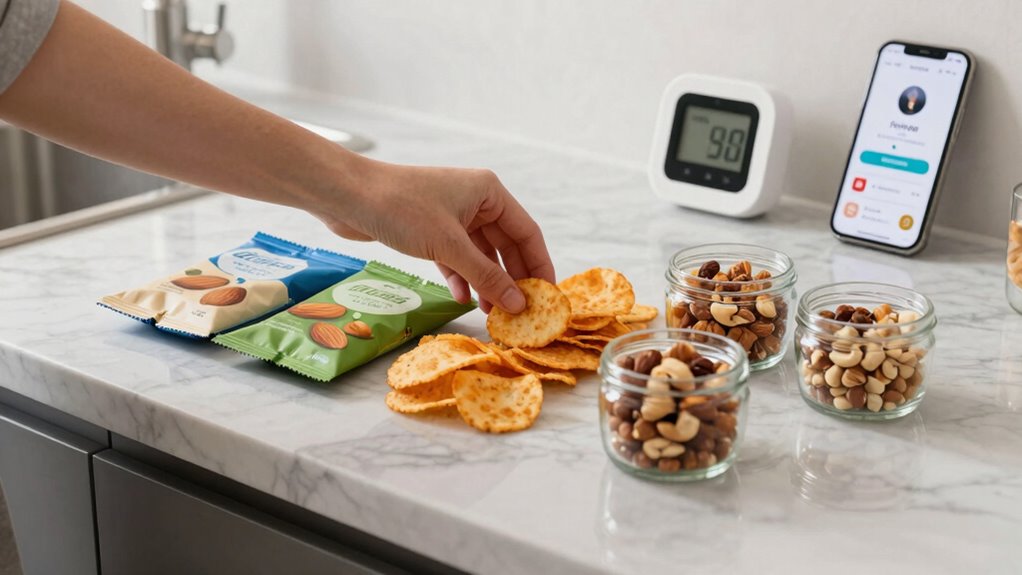
Smart snacking is all about making healthier choices that fuel your body and keep you energized throughout the day. One of the most effective ways to do this is by practicing healthy portioning and mindful eating. When you pay attention to the amount of food you consume, you prevent yourself from overeating and turning snacks into unintended full meals. Healthy portioning involves understanding serving sizes and listening to your body’s hunger cues, which helps you avoid the trap of mindless munching. Instead of grabbing large handfuls or eating straight from the bag, measure out a sensible portion beforehand. This way, you control your intake and enjoy your snacks without guilt or excess.
Mindful eating complements healthy portioning perfectly. It encourages you to slow down and truly savor each bite, which helps you recognize when you’re actually full. When you eat mindfully, you’re less likely to indulge in unnecessary calories or snack out of boredom or stress. Instead of distractedly reaching for chips while watching TV, you focus on the experience of eating. Notice the textures, flavors, and how your body feels as you eat. This heightened awareness makes it easier to stop when you’ve had enough, preventing “accidental meals,” where snacks turn into larger, unplanned eating episodes. Incorporating visual cues can enhance your ability to gauge portion sizes and stay mindful during snacking.
To implement healthy portioning and mindful eating, start with simple steps. Keep small containers or snack-sized bags handy to portion out your snacks in advance. This makes it easier to stick to appropriate serving sizes and reduces the temptation to overeat straight from larger packages. When you’re ready to snack, take a moment to pause and ask yourself if you’re truly hungry or just bored. Focus on your snack’s taste and texture, rather than eating mindlessly in front of screens or while multitasking.
Additionally, avoid the trap of emotional eating by identifying your triggers. If you notice you’re reaching for snacks out of boredom, stress, or fatigue, try to address those feelings directly instead of defaulting to food. Incorporate regular, balanced meals into your day so your hunger levels stay steady. When your body feels satisfied after proper meals, you’re less likely to seek out extra snacks that could turn into accidental meals.
Frequently Asked Questions
How Can I Identify Healthy Snack Options Easily?
To identify healthy snack options easily, start by checking snack labels for healthy ingredients like nuts, seeds, or whole grains. Avoid items with added sugars or artificial additives. Look for snacks with simple, recognizable ingredients and high fiber or protein content. Your goal is to choose options that nourish your body, so prioritize natural, minimally processed foods and read labels carefully to make smarter choices.
What Are Common Mistakes in Smart Snacking?
Think of smart snacking like steering a busy street; rushing or ignoring your surroundings leads to accidents. Common mistakes include neglecting mindful eating, which causes you to overeat, and poor snack timing, making you snack out of boredom or stress. You might also reach for convenience over nutrition, undermining your goals. Stay alert, plan ahead, and listen to your body’s signals to avoid these pitfalls and enjoy healthier choices.
How Does Portion Control Impact Calorie Intake?
Portion control directly impacts your calorie intake by helping you maintain portion awareness and avoid overeating. Choosing the right snack size prevents you from consuming excess calories, making it easier to stay on track with your health goals. When you pay attention to snack size and serve smaller portions, you naturally reduce calorie intake without feeling deprived, supporting a balanced diet and preventing accidental overconsumption during snack time.
Can Smart Snacking Aid in Weight Loss?
Think of smart snacking as your secret weapon in a weight loss battle. When you time your snacks right, you maintain steady energy and prevent overeating at meals. Proper snack timing keeps hunger at bay, like a gentle rain avoiding a flood. By choosing nutritious snacks and controlling portions, you stay on track, making weight loss more manageable. Smart snacking transforms your approach from reactive to proactive, helping you shed unwanted pounds.
What Are Quick, Nutritious Snack Ideas for Busy Days?
On busy days, you can enjoy healthy snack swaps like Greek yogurt with berries or veggie sticks with hummus for quick, nutritious options. Reach for energy-boosting bites such as nuts, seeds, or a piece of fruit to keep your energy steady. These snacks are easy to prepare and perfect for on-the-go, helping you stay fueled without sacrificing health or convenience.
Conclusion
By following the one simple rule for smart snacking—being intentional—you can avoid accidental meals and stay on track with your health goals. Did you know that 70% of people snack mindlessly, often consuming unnecessary calories? Staying mindful and planning your snacks helps you make better choices and keeps you energized throughout the day. So next time you reach for a snack, pause and ask yourself if it’s truly intentional. Your body will thank you!