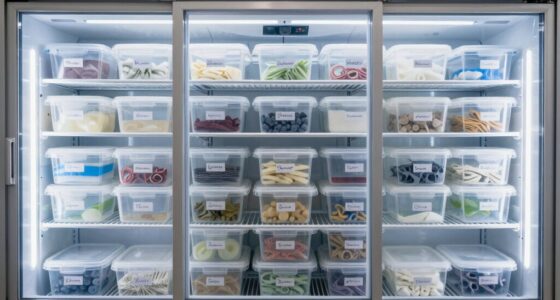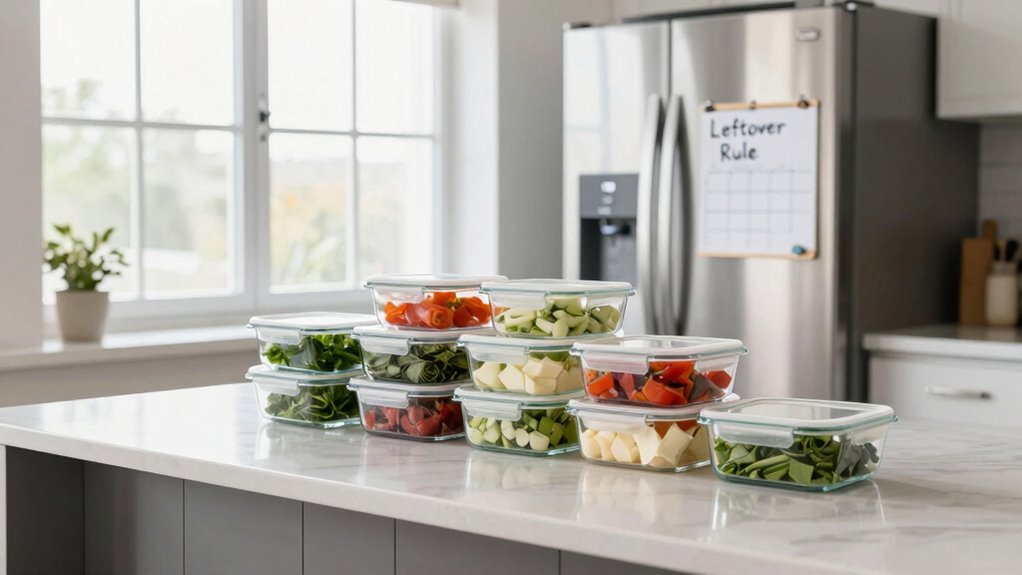

To stop “fridge roulette,” set a leftover rule: designate a specific spot in your fridge for leftovers and commit to using or discarding them within 3-4 days. Label containers with dates, and prioritize eating older items first. Keep your fridge organized and avoid piling up unused leftovers, preventing spoilage and waste. If you’re interested, there’s more to learn about making this system work smoothly and keep your kitchen efficient.

Get health and wellness essentials delivered free with Prime
- Fast, free delivery on millions of items
- Prime Video, Amazon Music and more included
- Member-only deals all year
Key Takeaways
- Designate a specific spot in your fridge for leftovers to encourage routine use.
- Commit to using or discarding leftovers within 3-4 days to prevent spoilage.
- Label leftovers with dates to track freshness and promote timely consumption.
- Portion leftovers into single servings for easy reheating and quicker meal prep.
- Regularly check and remove expired leftovers to maintain fridge organization and food safety.
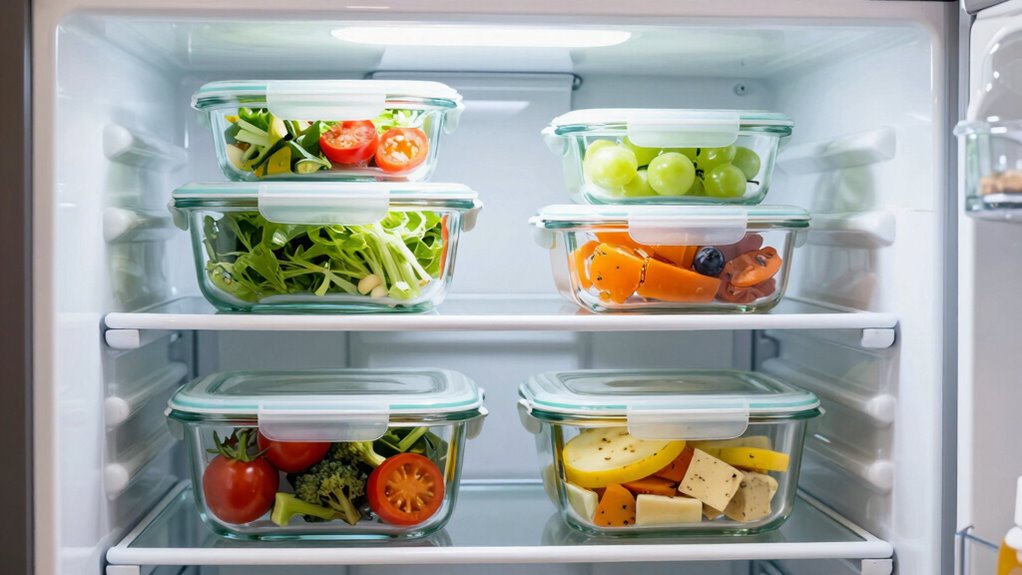
If you’ve ever opened your fridge only to find mystery leftovers lingering in the back, you’re not alone. That cluttered, unpredictable array of forgotten dishes can turn meal prep into a guessing game, leading to food waste and frustration. The key to avoiding this chaos is establishing a simple leftover rule that keeps your fridge organized and your meals intentional. Implementing this rule starts with effective meal planning and storage tips that make leftovers manageable, visible, and easy to use.
First, focus on meal planning. When you plan your weekly meals, you know exactly what leftovers to expect, reducing the likelihood of forgotten dishes. Incorporate leftovers into your next meals, such as turning roast chicken into chicken salad or roasted vegetables into a soup. By planning around what’s already cooked, you minimize waste and keep your fridge tidy. Meal planning also helps you buy only what you need, preventing excess food from piling up. When your shopping list aligns with your meal plan, you’re less likely to bring home surplus ingredients that end up forgotten.
Plan weekly meals to reduce waste and keep leftovers organized.
Alongside meal planning, storage tips are vital. Use clear, airtight containers to keep leftovers visible and fresh. Label each container with the date it was made, so you always know what’s approaching its expiration. When you’re storing leftovers, keep the oldest items at the front of your fridge or in a designated “use first” zone. This simple step ensures you’re prompted to consume leftovers before they spoil. Also, portion out leftovers into single-serving sizes, making it easier to grab and go without having to reheat large quantities or leave food uneaten for too long.
The leftover rule itself is straightforward: designate a specific spot in your fridge for leftovers and commit to using or discarding items within a set timeframe, such as three or four days. Once the time is up, either incorporate the leftovers into a meal or toss them out to prevent spoilage. This rule acts as a cue, reminding you to be proactive about leftovers rather than letting them accumulate until they become a mystery. Establishing clear food safety guidelines helps maintain both the safety and the organization of your fridge, reducing the risk of consuming spoiled food.
airtight food storage containers
As an affiliate, we earn on qualifying purchases.
As an affiliate, we earn on qualifying purchases.
Frequently Asked Questions
How Long Can Leftovers Safely Stay in the Fridge?
You should generally eat leftovers within 3 to 4 days to stay safe. Always check expiration dates on containers, and trust your senses—if food smells or looks off, discard it. Bacteria can grow quickly after that window, increasing your risk of foodborne illness. To be safe, store leftovers in airtight containers, and label them with dates so you know when to toss or eat.
What Are the Signs Leftovers Have Spoiled?
If leftovers have spoiled, you’ll notice a sour or off smell, even if the expiration date isn’t passed. Look for mold or slimy textures as well. Always do a smell test before eating, and don’t rely solely on expiration dates—they’re guidelines, not guarantees. If anything seems questionable, it’s safest to discard the leftovers to avoid food poisoning. Trust your senses and err on the side of caution.
Can Leftovers Be Frozen for Later Use?
Think of your leftovers as a treasure chest waiting to be rediscovered. Yes, you can freeze leftovers for later use; just make certain you’re freezing them promptly to lock in freshness. Label stored food with date and contents so you don’t play fridge roulette later. Freezing preserves flavors and prevents spoilage, turning yesterday’s meal into tomorrow’s delight. Just remember, proper labeling is your map to safe, delicious leftovers.
How Should Leftovers Be Stored to Prevent Spoilage?
To prevent spoilage, you should store leftovers in airtight containers and refrigerate them promptly, ideally within two hours of cooking. Follow food safety guidelines by dividing large portions into smaller, shallow containers for even cooling. Use clear labels with dates so you know when to consume or discard. Keep your fridge at 40°F (4°C) or below, and regularly check for signs of deterioration to ensure your leftovers stay safe and fresh.
Are There Leftovers That Should Never Be Refrigerated?
You should never refrigerate certain leftovers like bread, honey, or whole fruits, as doing so can spoil their texture and flavor. Food safety and proper storage techniques are essential for most foods, but some items naturally resist refrigeration. Keep in mind, not all leftovers are created equal—know which foods can be safely stored in the fridge and which are better left at room temperature to prevent spoilage and maintain quality.
As an affiliate, we earn on qualifying purchases.
Conclusion
Now that you know the leftover rule, you might think it’s just another kitchen tip. But what happens if you ignore it? Will that mysterious smell be your warning sign, or will you fall into fridge roulette once again? The choice is yours. Stay vigilant, follow the rule, and keep your fridge safe. Or risk uncovering what’s hiding in the back—something you might wish you’d never found. The fridge’s secrets await—are you ready?
single serve food storage containers
As an affiliate, we earn on qualifying purchases.
As an affiliate, we earn on qualifying purchases.
As an affiliate, we earn on qualifying purchases.
Cold & flu season Picks
humidifiers
As an affiliate, we earn on qualifying purchases.