
Most hidden salt lurks in snack foods like chips, pretzels, crackers, and trail mixes, which pack high sodium for flavor and preservation. Beverages like flavored waters, sports drinks, and even fruit juices can also contain unsuspected sodium. These sources can add up quickly, especially when combined with processed foods. Staying aware and checking labels helps you spot these sneaky salts. Keep exploring to uncover even more surprising places where salt hides in your everyday diet.
Key Takeaways
- Many packaged snacks like chips, pretzels, and crackers contain high levels of hidden sodium for flavor and preservation.
- Beverages such as sports drinks and flavored waters often include added salt that’s not immediately obvious.
- Combining salty snacks and sodium-laden drinks can significantly increase daily sodium intake.
- Reading nutrition labels is essential to identify hidden salts in seemingly healthy or low-fat products.
- Excessive hidden salt intake from various sources raises risks of high blood pressure and heart disease.
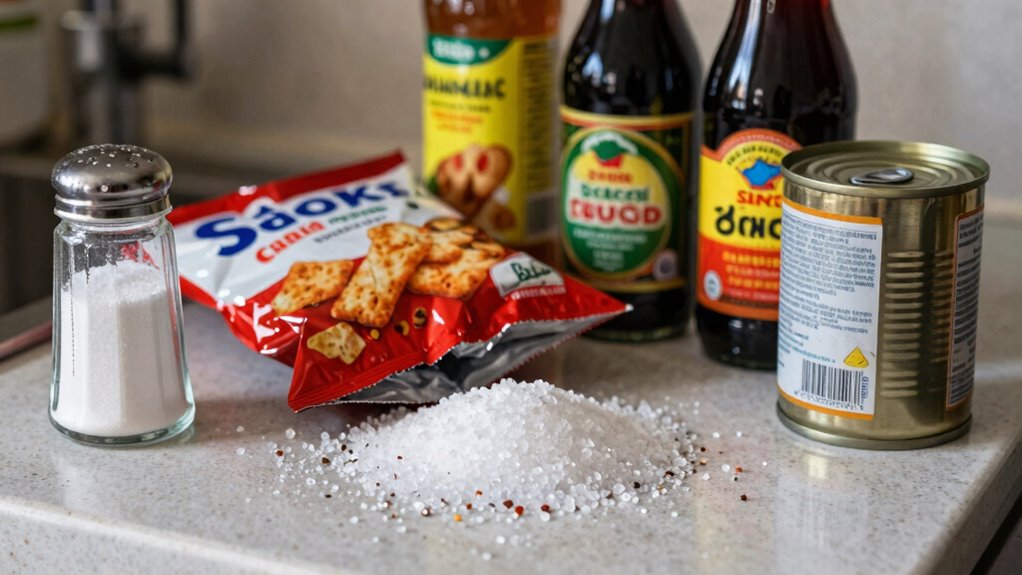
Many people don’t realize that salt hides in more foods and products than they might expect, making it easy to consume too much without noticing. One common source is the sodium in snacks. Packaged chips, pretzels, crackers, and trail mixes often contain high levels of salt to enhance flavor and preserve freshness. Even seemingly healthy options like granola bars or roasted nuts can pack a surprising amount of sodium. As you reach for your favorite snack, you might think you’re making a healthy choice, but those hidden salts can add up quickly without you realizing it. Reading labels becomes essential because the sodium content isn’t always obvious from the packaging. Many snack foods are formulated to taste irresistible, which means they often contain more salt than you’d expect for their size or nutritional profile.
Another sneaky source is hidden salt in beverages. While most people associate drinks with hydration, some beverages harbor significant amounts of sodium that can contribute to your daily intake. Sports drinks, flavored waters, and even some fruit juices can contain added salt to improve taste or preserve the product. You might not notice the saltiness at first sip, but over time, these hidden salts can accumulate, especially if you consume multiple drinks throughout the day. Many beverage manufacturers add sodium to enhance flavor or act as a preservative, often without prominently labeling it as a salty ingredient. This makes it easy to overlook how much sodium you’re consuming just from your drinks.
The combination of sodium in snacks and hidden salt in beverages creates a double whammy that can quickly push your daily intake beyond recommended levels. It’s not just about avoiding the obvious sources like fast food or processed meals; it’s also about being vigilant with what you eat and drink daily. Checking nutrition labels for sodium content is a good habit, especially with snacks and beverages that seem harmless at first glance. Be aware that even items marketed as “natural” or “low-fat” can contain significant amounts of salt. By understanding where this hidden salt lurks, you empower yourself to make better choices and reduce your risk of high blood pressure, heart disease, and other health issues linked to excessive sodium consumption. Sodium content in various foods and drinks can often be surprising, underscoring the importance of informed choices. Ultimately, awareness is your best tool in controlling your salt intake and maintaining a healthier lifestyle.
Frequently Asked Questions
Are There Any Natural Foods With High Hidden Salt Content?
Yes, natural sources can contain hidden salts. Foods like cured meats, cheeses, and certain vegetables naturally have higher sodium levels, often unnoticed. Packaged or processed versions of these foods tend to have even more hidden salts added. To reduce intake, read labels carefully and opt for fresh, unprocessed options. Remember, even natural foods can contribute to your hidden salts intake, so moderation is key.
How Can I Detect Hidden Salt in Processed Foods?
Think of ingredient labels as treasure maps, guiding you through the salty landscape. To detect hidden salt, look beyond the salty flavor and check the sodium content per serving. Compare products and choose those with lower sodium levels. Remember, words like “salt,” “sodium,” and “preservatives” reveal hidden salt. By becoming a label detective, you can outsmart sneaky salt and make healthier choices every time.
Do Organic or Gluten-Free Products Contain More Hidden Salt?
Organic or gluten-free products can still contain hidden salt, especially in organic additives and gluten-free snacks. You might assume they’re healthier, but manufacturers often add salt to enhance flavor or preserve freshness. Always read labels carefully, checking for sodium content. Even if a product is labeled organic or gluten-free, it’s wise to monitor your intake, as these options can still hide significant amounts of salt.
Can Cooking Methods Reduce the Salt Hidden in Ingredients?
Like a chef wielding a sword, your cooking techniques can cut down hidden salt. By rinsing canned foods, using fresh ingredients, and reducing salt during cooking, you actively promote salt reduction. These methods help you control salt intake, diminish hidden salt, and enjoy flavorful meals without excess sodium. Mastering cooking techniques empowers you to fight hidden salt’s sneaky tactics and make healthier choices every day.
Are Restaurant Dishes Typically Higher in Hidden Salt Than Packaged Foods?
Yes, restaurant dishes are usually higher in hidden salt than packaged foods. You might not realize it, but restaurant salt often sneaks into your meal through sauces, seasonings, and cooking techniques. Dining hidden salt can add up quickly, making your meal saltier than you expect. To cut back, ask for dishes with less salt or choose options with fresh ingredients to reduce your overall intake.
Conclusion
Now that you know where hidden salt lurks, imagine the quiet danger lurking in your everyday foods. Every slice of bread, splash of soy sauce, or processed snack could be secretly boosting your salt intake more than you realize. The next time you reach for something quick, pause and consider—what unseen salt might be hiding in plain sight? Staying aware might just be your best defense against those silent, sneaky salt sneaks.