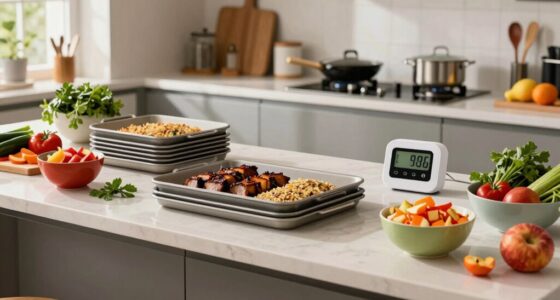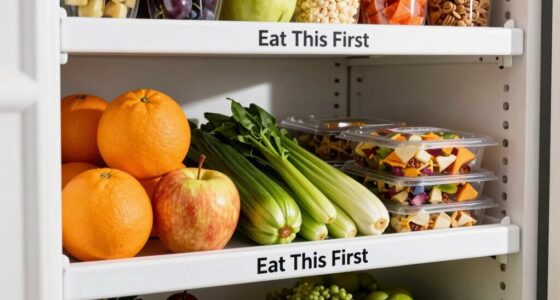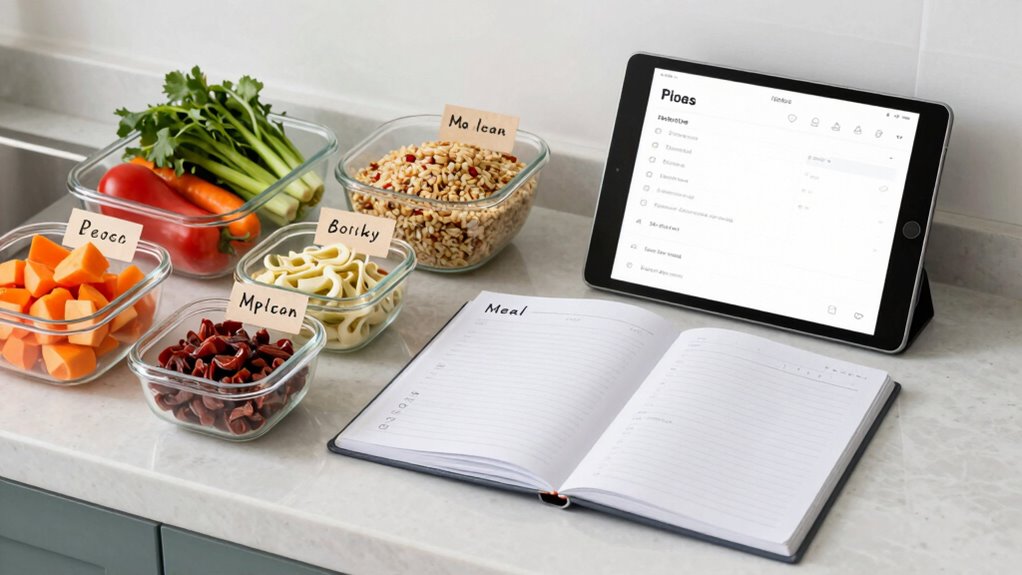

If meal planning feels overwhelming, focus on simple, flexible strategies that work for you. Use a basic list of favorite dishes and versatile ingredients that can be mixed and matched easily. Keep routines like batch cooking or theme nights to reduce decision fatigue. Automate grocery shopping with pre-made lists, and set realistic goals that fit your schedule and budget. If you want practical tips to make meal planning stress-free, learn more about creating a personal system that works for you.
Key Takeaways
- Create a simple, flexible list of favorite meals and ingredients to reduce decision fatigue.
- Focus on routine, repeating core meals and using versatile ingredients for adaptability.
- Keep meal prep minimal with small steps and set days for batching to prevent overwhelm.
- Limit choices and avoid complex recipes to simplify planning and decrease stress.
- Use templates and automation for grocery shopping and prep routines to streamline the process.
Struggling With Meal Planning? Here’s How to Keep It Simple and Stress-Free
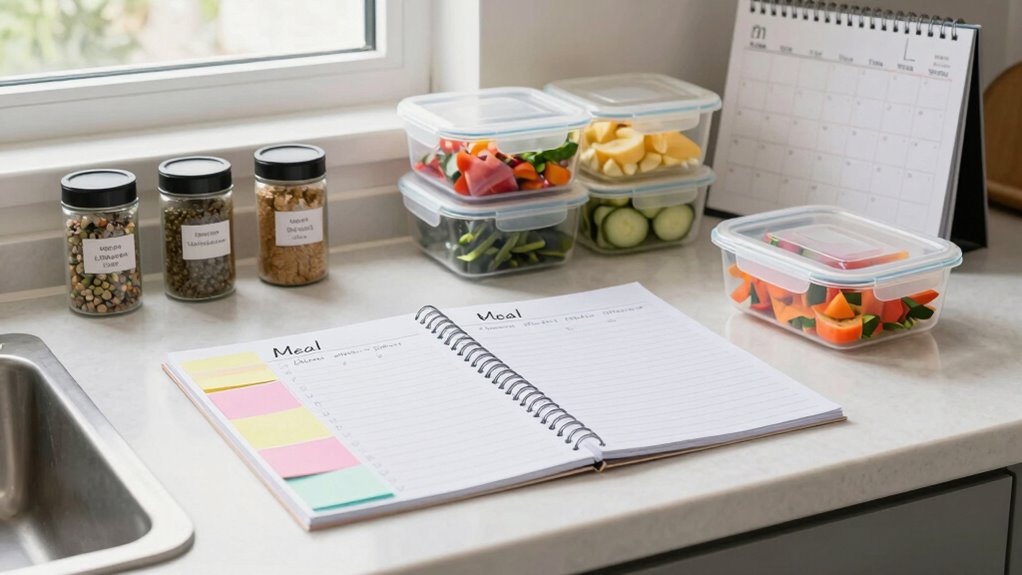
If meal planning feels overwhelming, you’re not alone. The key is to focus on mindful eating, which helps you connect with your body’s hunger cues and makes planning less stressful. Instead of obsessing over perfect menus, aim for balanced nutrition by including a variety of food groups. Keep your meal ideas simple and flexible, so you don’t feel pressured to create elaborate dishes every day. Use a basic plan that repeats weekly or adapts easily to your schedule. Remember, the goal isn’t perfection but consistency. By simplifying your approach and prioritizing intuitive choices, you’ll reduce stress and build healthier habits. Additionally, incorporating simple maintenance tips can help you sustain your meal routine with less effort and worry. Establishing a consistent routine can further streamline your meal planning process and make it feel more automatic. Incorporating time-saving strategies can make meal prep quicker and less burdensome, increasing your chances of sticking with your plan. Utilizing meal prep techniques that suit your lifestyle can also make a significant difference in maintaining your approach over time. Moreover, embracing flexible meal ideas allows you to adapt your plan based on available ingredients and changing schedules, making the process more manageable.
Why Traditional Meal Planning Feels Overwhelming: And How to Change It
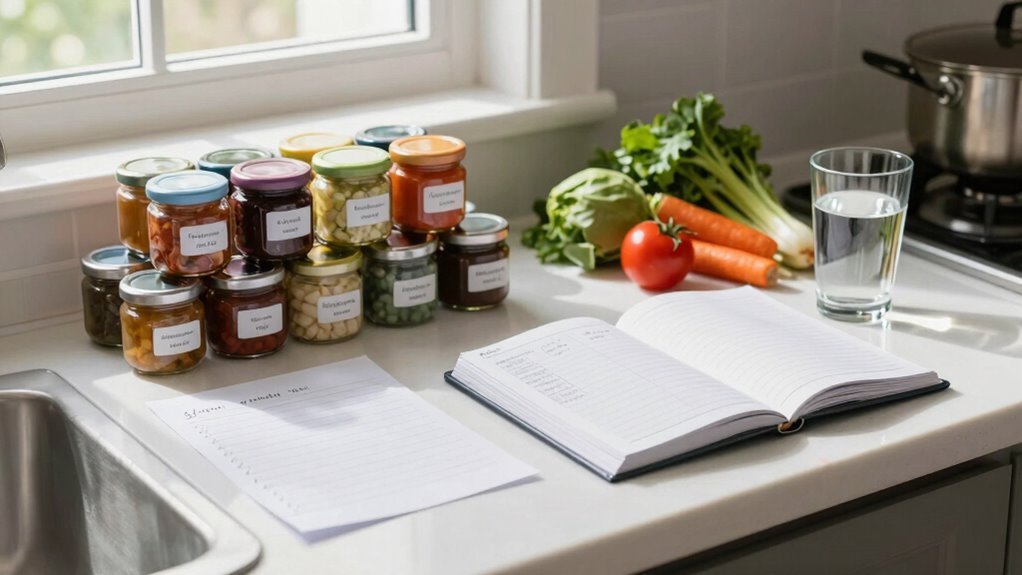
Traditional meal planning can feel overwhelming because of its complexity, rigid weekly schedules, and fear of wasting food. These factors make it hard to stay flexible and confident in your choices. But with a few simple changes, you can make meal planning more manageable and less stressful. Incorporating mindfulness practices into your routine can also help you stay present and reduce anxiety about meal decisions. Additionally, choosing versatile ingredients that can be used in multiple meals can help you avoid food waste and simplify shopping. Being aware of piercing care and hygiene can inspire you to organize your shopping trips more efficiently, making meal prep feel more dynamic and less burdensome. Regular practice and visual cues can further enhance your confidence and streamline your planning process.
Overwhelm From Complexity
Meal planning often feels overwhelming because it’s easy to get caught up in endless choices, complex recipes, and strict schedules. This complexity can make you hesitate, leading to stress and frustration. To simplify, focus on mindful eating—paying attention to how much you’re truly hungry and satisfied—rather than overcomplicating meal options. Portion control becomes your ally, helping you avoid overeating and reducing the need for elaborate recipes. Instead of juggling dozens of ingredients, stick to a few versatile staples you enjoy. This approach cuts down decision fatigue and keeps meal prep manageable. Additionally, using kitchen organization products can help streamline your kitchen setup, making meal preparation safer and more efficient. Incorporating natural pools into your space can further create a relaxing environment that supports mindful living. Being aware of affiliate disclosure requirements ensures transparency in your choices. Remember, the goal isn’t perfection but creating a sustainable system that respects your pace and preferences, making meal planning feel less like a chore and more like a mindful part of your day. Exploring easy recipes can also boost your confidence and keep the process enjoyable.
Rigid Weekly Plans
Rigid weekly plans can quickly become a source of stress and frustration, especially when they leave little room for flexibility. Sticking to strict menus makes spontaneous meals difficult and can feel overwhelming. Instead, focus on creating flexible routines that adapt to your mood and schedule. This approach helps you enjoy the process and reduces pressure. Consider these tips:
- Plan a few core meals but leave space for improvisation.
- Keep versatile ingredients on hand for spontaneous meals.
- Allow room in your schedule for unplanned dining options.
- Embrace inspiring leadership principles by adapting your meal strategy to changing circumstances and staying open to new possibilities. Incorporating training tips like flexibility and adaptability into your meal planning can enhance your overall experience and reduce stress. Recognizing the importance of scientific insights can help inform smarter choices and improve consistency in your meal routines. Additionally, understanding net worth concepts can motivate you to budget wisely for your grocery needs.
Fear of Waste
Many people feel overwhelmed by the idea of wasting food when planning their meals, leading to hesitation and hesitation often results in last-minute decisions or overbuying. This fear of food waste makes meal planning seem risky, especially if you’re worried about leftovers going bad. To combat this, focus on portion control, which helps you buy only what you need and reduces excess. Instead of preparing large portions, plan for smaller servings that can be easily used or stored. Incorporate flexible recipes that can be adjusted based on what you have. This way, you minimize food waste and feel more confident in your plan. Embracing portion control allows you to plan smarter, reduce waste, and enjoy fresh, manageable meals without the fear of throwing food away. Additionally, understanding mental wellbeing can help you develop a more positive mindset about meal planning and reducing waste. Developing mindful eating habits can further support your efforts to waste less food and make more sustainable choices.
Set Realistic Goals to Make Meal Planning Easier
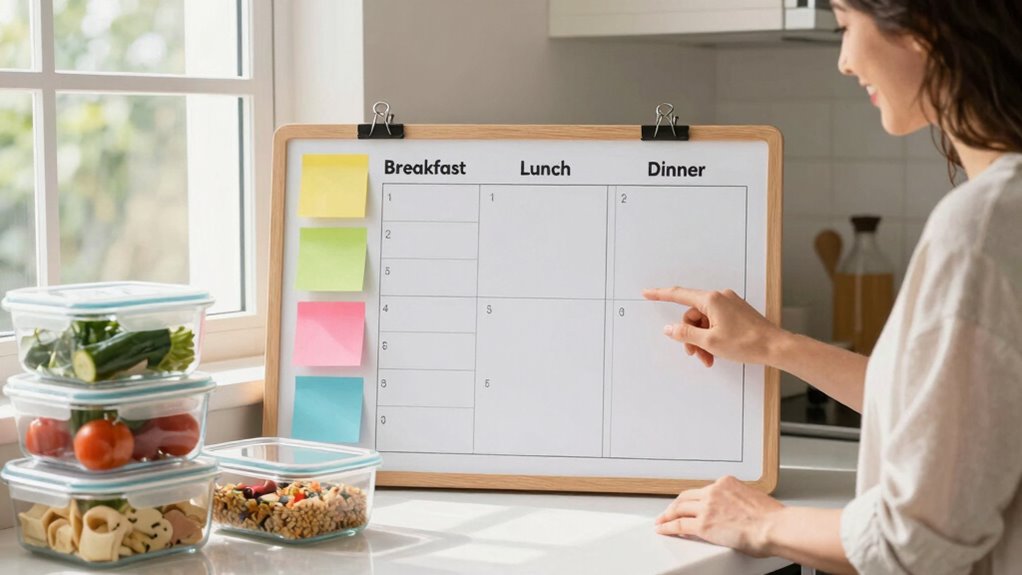
Setting realistic goals makes meal planning more manageable and less stressful. You should aim for achievable targets that fit your schedule and resources. Breaking your goals into small, clear steps helps keep you motivated and on track. Incorporating ethical considerations into your planning can also make the process more aligned with your values and promote sustainable habits. Paying attention to time zone differences when scheduling meals can help coordinate family plans and reduce confusion. Additionally, understanding existential themes can deepen your appreciation for the intentionality behind your meal choices. Recognizing cultural influences can further enhance your meal planning by respecting diverse culinary traditions and preferences. Connecting with nature can also inspire more mindful and nourishing meal choices that support overall well-being.
Set Achievable Targets
To make meal planning more manageable, establishing achievable targets that align with your lifestyle and preferences is essential. Setting realistic goals helps prevent overwhelm and keeps you motivated. Consider your budget constraints and dietary restrictions when defining these targets. For example:
- Limit meal prep time to 30 minutes daily to keep things simple and fit your schedule.
- Plan only five dinners a week to avoid feeling overwhelmed and allow flexibility.
- Select recipes that meet your dietary restrictions, ensuring you enjoy meals without stress.
Break Goals Into Steps
Breaking your meal planning goals into smaller, manageable steps makes the process less overwhelming and more achievable. This goal breakdown turns a big task into a series of simple, clear actions. With step-by-step planning, you can focus on one part at a time, such as choosing recipes, shopping, or prepping ingredients. This approach prevents feeling overwhelmed by the entire process and keeps you motivated. By setting realistic milestones, you build confidence as you complete each step. Remember, you don’t need to do everything at once. Breaking goals into smaller pieces helps you stay organized, reduces stress, and makes meal planning feel less like a chore. Over time, this method makes meal prep easier and more sustainable.
Choose a Meal Planning Framework That Fits Your Life (Batch Cooking, Theme Nights, or Flex Meals)
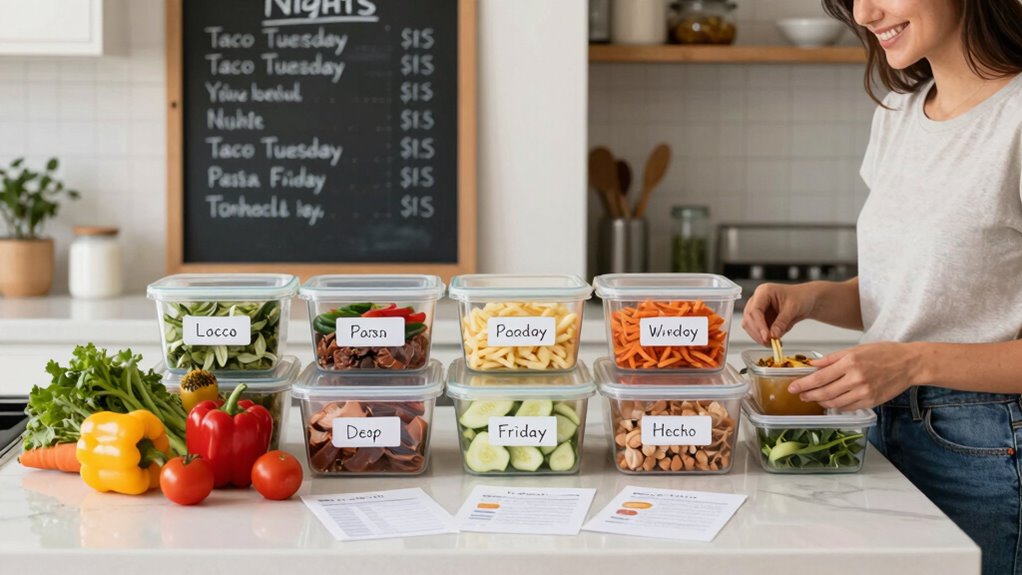
Choosing a meal planning framework that fits your lifestyle can make the process more manageable and enjoyable. Whether you prefer batch cooking, theme nights, or flexible routines, selecting the right approach simplifies meal prep and reduces decision fatigue. Here are three options to contemplate:
- Batch Cooking: Prepare large quantities of meals in advance, saving time during busy days.
- Theme Nights: Assign specific themes (e.g., Taco Tuesday, Pasta Friday) to streamline choices and add variety.
- Flex Meals: Keep ingredients on hand for quick, adaptable meals, perfect for spontaneous plans.
Pick a framework that aligns with your schedule and preferences. The goal is to create a system that feels sustainable, making meal planning less of a chore and more of a natural part of your routine.
Build a Simple Meal List That Works for You
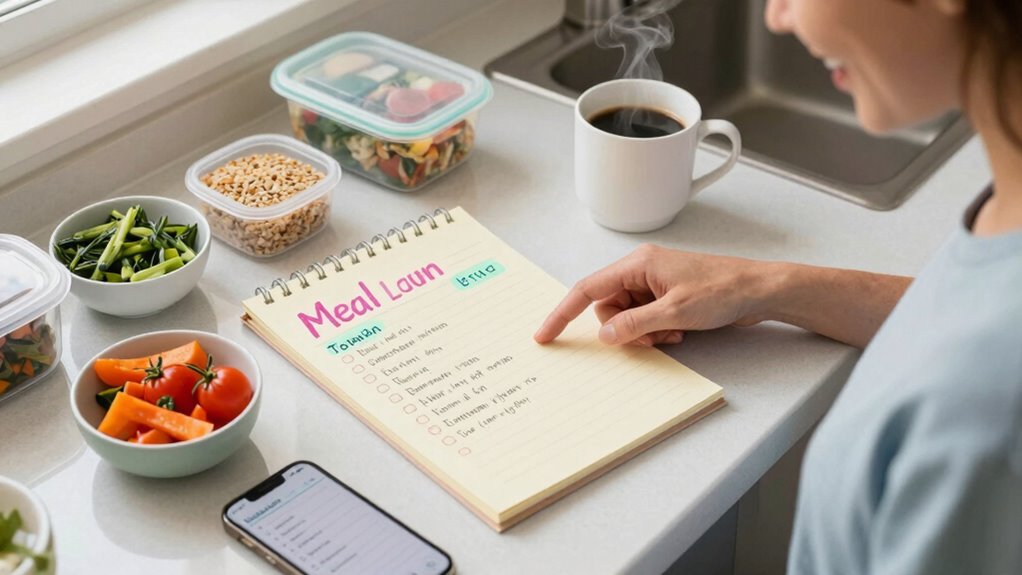
Creating a simple meal list tailored to your tastes and schedule is a practical step toward stress-free meal planning. Start by jotting down your favorite dishes and common ingredients, focusing on what you genuinely enjoy and can prepare easily. A simple list helps you avoid decision fatigue and keeps planning straightforward. Incorporate customized options that match your lifestyle—whether you prefer quick meals, vegetarian dishes, or specific cuisines. Keep it flexible; include versatile ingredients that work across multiple meals. Review your list regularly, updating it as your preferences change or new favorites emerge. With a well-crafted simple list, you’ll have a reliable reference that simplifies grocery shopping and meal prep, making the entire process less overwhelming and more enjoyable.
Create a Weekly Schedule to Cut Decision Fatigue
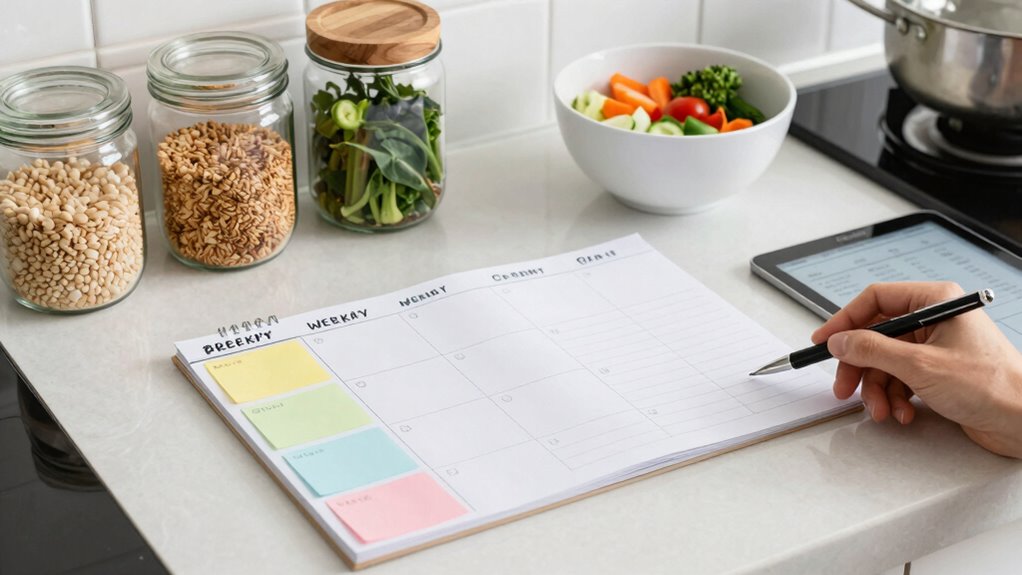
To reduce decision fatigue and make meal planning more manageable, setting up a weekly schedule is essential. A consistent plan minimizes daily choices, saving mental energy. To get started:
- Choose set days for meal prep techniques like batch cooking or prepping ingredients, so you know exactly when to do your shopping and prep.
- Develop grocery shopping strategies by listing weekly essentials based on your meal list, avoiding last-minute trips.
- Assign specific meals to each day, balancing variety with simplicity, so you don’t spend time deciding what to eat each evening.
These steps streamline your routine, help you stick to your plan, and make grocery shopping quicker and less stressful. Creating a schedule turns meal planning from a burden into an easy, automatic part of your week.
Use Tools and Templates to Automate Your Meal Prep
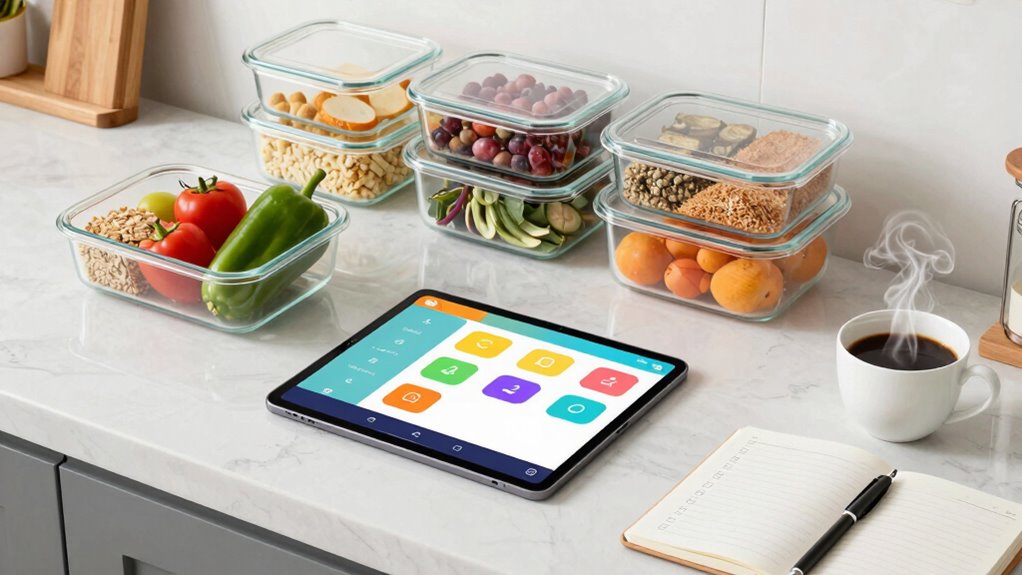
Leveraging tools and templates can substantially simplify your meal prep routine. By using meal prep automation, you reduce the time and mental effort required to plan and prepare your meals. Templates allow you to customize your meal plans quickly, saving you from starting from scratch each week. You can find pre-made templates online or create your own, tailored to your preferences and schedule. These tools help organize shopping lists, meal ideas, and prep steps, making the process more straightforward and less overwhelming. With template customization, you can adapt your plan as needed, ensuring it fits your lifestyle without extra effort. Overall, using these resources streamlines your meal prep, making it easier to stay consistent and stress-free.
Shop Smarter and Save Time With These Grocery Tips
Smart grocery shopping can save you both time and money, especially when you plan ahead. To make your grocery trips efficient, try these tips for saving time:
Plan ahead to save time and money on groceries with smart shopping tips.
- Make a detailed shopping list based on your meal plan to avoid wandering aisles.
- Shop during off-peak hours to skip crowds and reduce shopping time.
- Use grocery store apps or online ordering to pre-select items and pick them up or have them delivered.
Stay Motivated and Adjust Your Plan When Life Gets Busy
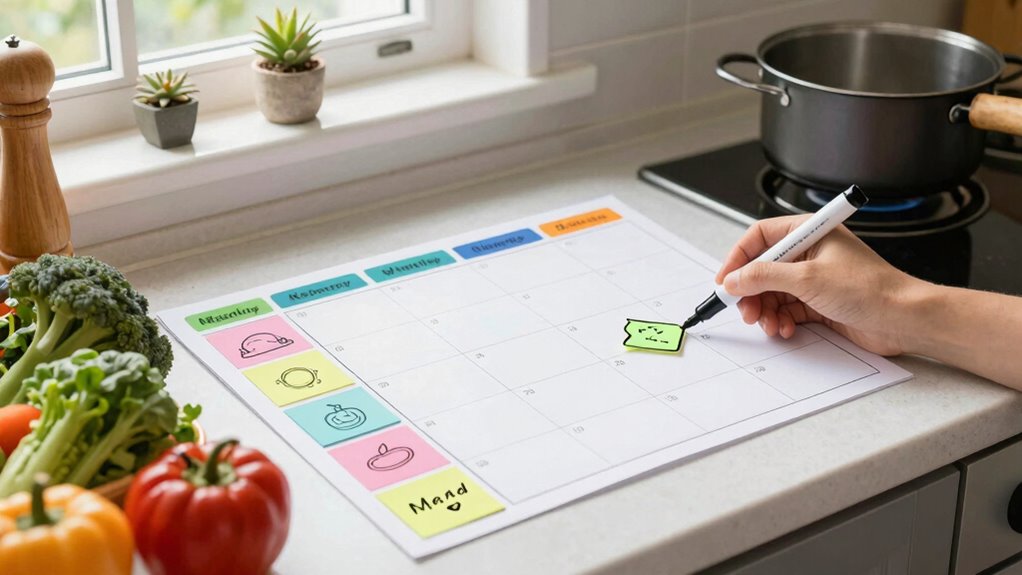
When life gets busy, sticking to your meal plan can feel overwhelming, but staying motivated is key to maintaining healthy habits. To do this, focus on mindset shifts that reinforce your commitment, like viewing flexibility as a strength rather than a setback. Motivation strategies such as reminding yourself of your goals or celebrating small wins help keep you on track. When plans need to change, adjust your meals instead of abandoning them altogether. Remember, it’s okay to swap ingredients or skip a day; the goal is consistency, not perfection. By staying adaptable and practicing positive mindset shifts, you’ll find it easier to stay motivated—even during hectic times—making meal planning less of a chore and more of a manageable routine.
Frequently Asked Questions
How Can I Start Meal Planning if I Dislike Cooking?
If you dislike cooking, start with easy prep recipes that require minimal ingredients. Choose simple dishes like salads, wraps, or one-pan meals that don’t take much time or effort. Plan your meals around what you already enjoy and can quickly assemble. Use pre-cut veggies or pre-cooked proteins to save even more time. This way, meal planning becomes less of a chore and more manageable, even if cooking isn’t your favorite activity.
What Are Quick Meal Ideas for Busy Weekdays?
If you think quick weekday meals mean sacrificing flavor, think again. Try snack prep and ingredient batching to save time and add variety. Whip up overnight oats, assemble salad jars, or prep veggie packs ahead. These methods streamline your busy week, letting you toss together tasty, nutritious meals fast. With a little prep, you can enjoy satisfying dinners without spending hours in the kitchen.
How Do I Handle Dietary Restrictions in Meal Planning?
You handle dietary restrictions by researching gluten-free options and vegan substitutions for your favorite recipes. Always read labels to make certain ingredients meet your needs. Incorporate versatile ingredients like beans, tofu, and gluten-free grains, which adapt well to various diets. Planning ahead helps, so batch cook or prep meals with these substitutions, making it easier to stick to your restrictions without sacrificing flavor or variety.
What if My Schedule Changes Unexpectedly Each Week?
Think of your week as a river that shifts course unexpectedly. When your schedule changes, stay flexible by planning for emergency meals and adaptable options. Keep a few pre-made, quick-to-prepare dishes on hand that you can whip up on short notice. This way, you can flow with the changes without stress, ensuring you always have nourishing meals ready, even when your plans unexpectedly veer off course.
How Can I Involve Family Members in Simple Meal Planning?
You can involve your family in simple meal planning by encouraging collaborative planning. Ask each member for their favorite meals or dietary preferences, and create a shared grocery list. Use a whiteboard or app to track meal ideas, making it fun and interactive. This way, everyone feels involved, and meal prep becomes a team effort, reducing stress and ensuring the plan suits everyone’s tastes and schedules.
Conclusion
So, who knew that avoiding meal planning could actually make your life easier? Sometimes, the best strategy is doing less—no elaborate plans, just simple routines. Ironically, by ditching perfection and embracing flexibility, you might actually cook more confidently. So go ahead, keep it effortless. After all, the real secret to stress-free meals isn’t planning at all; it’s knowing when to let go and trust your instincts. Bon appétit!