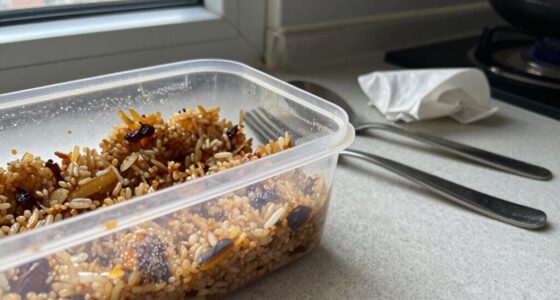
To fix food waste, try setting up an “Eat This First” shelf in your fridge. Place perishable items close to expiration or used soon on this shelf, making them easy to spot and prioritize. Organize items with clear containers or labels so you see what needs to be eaten first. Incorporating this trick helps reduce spoilage and waste while encouraging smarter shopping habits. Keep exploring for simple tips to make food management even easier.
Key Takeaways
- Organize perishable items on a designated “Eat This First” shelf to prioritize their consumption and prevent spoilage.
- Review your fridge regularly to identify items nearing expiration and plan meals around them.
- Use clear containers or labels to make quick identification easy and encourage timely use.
- Incorporate the shelf into weekly meal planning to reduce unnecessary grocery shopping and waste.
- The method boosts awareness of food habits, promotes mindful purchasing, and creates a more efficient, waste-free kitchen.

Have you ever wondered how much food you throw away each week? It’s a common question, especially when you realize the amount of uneaten or spoiled food piling up in your fridge. One simple but effective trick to cut down on waste is the “Eat This First” shelf method. It involves organizing your food so that the items you need to consume sooner are more visible and accessible. This might sound small, but it can make a big difference in how you manage your leftovers and perishable goods.
Start by incorporating this trick into your meal planning. When you’re planning your weekly meals, take a moment to look at what’s already in your fridge and pantry. Identify the items that are nearing their expiration date or those you bought with the intention of using soon. By planning your meals around these ingredients, you reduce the risk of letting them spoil. Plus, it helps you avoid unnecessary grocery shopping, which can lead to buying more food that ends up wasted. When you’re grocery shopping, keep in mind what you already have at home, and buy only what you need to complement your meal plan. This approach guarantees your fridge remains organized, and the food you purchase is more likely to be used before it goes bad.
Plan meals around soon-to-expire ingredients to reduce waste and avoid unnecessary grocery shopping.
Once you’re back from shopping, organize your fridge with the “Eat This First” shelf at eye level or in the most visible spot. Place items that are about to expire or will be used soon on this shelf. Use clear containers or labels if needed, so you always know what needs to be prioritized. This simple step encourages you to grab those items first, rather than pushing them to the back or forgetting about them altogether. As you plan your daily meals, make it a habit to check this shelf first. This way, you’re actively reducing waste by ensuring your perishable foods are consumed in time.
Additionally, this method prompts better awareness about your food consumption habits. It helps you recognize how often you buy items you don’t really need or forget about foods lurking in the back of the fridge. Over time, it can lead to smarter grocery shopping—buying only what you’ll use and avoiding impulse buys that contribute to waste. It’s about creating a visual cue that keeps your food priorities in check, making your kitchen more efficient and waste-free.
Frequently Asked Questions
How Can I Encourage My Family to Follow the “Eat This First” Method?
To encourage your family to follow the “eat this first” method, involve them in organizing the fridge and use visual cues like bright labels or colorful containers. Make it a fun family activity, so everyone feels involved and committed. Regularly remind them of the benefits, like saving food and money. When everyone participates, it becomes a natural habit, reducing waste and making meal prep easier.
Does This Technique Work Equally Well for All Types of Food?
Think of your fridge like a race—some food types sprint to the finish line faster than others. This technique works well for perishables with short shelf life, like leafy greens or dairy, but less so for items with longer shelf life like root vegetables or canned goods. Adjust your “eat this first” approach based on each food type’s shelf life, ensuring nothing sneaks past its prime.
How Often Should I Reorganize My Shelves for Optimal Freshness?
You should reorganize your shelves weekly to maintain ideal freshness. Use shelf labels to clearly mark items and their freshness timeline, making it easier to prioritize what to eat first. Regularly updating your shelf organization helps prevent spoilage and keeps your food fresh longer. By staying consistent, you’ll reduce waste and ensure you’re always aware of which foods need to be consumed soon.
Are There Specific Storage Containers That Enhance This Method?
You’re on the right track—using airtight containers and labeled storage really boosts freshness. Opt for clear, stackable containers for easy visibility, so you don’t let good food go to waste. These containers keep moisture out and odors in, making your “eat this first” shelf more effective. Remember, a place for everything and everything in its place keeps your fridge organized and food fresh longer, so you’re not chasing your tail.
Can This Trick Help Reduce Overall Grocery Shopping Costs?
Yes, this trick can boost your grocery savings by encouraging smarter shopping habits. When you prioritize eating the items at the front of your shelf, you buy less unnecessary food and reduce waste. Over time, this helps you spend less on groceries because you’re more aware of what you already have. Consistently practicing this method makes your shopping more efficient, ultimately saving you money and minimizing waste.
Conclusion
By using the “eat this first” shelf, you’re taking a simple step that echoes the wisdom of guardians past—preserving what matters and honoring your resources. Just as ancient civilizations valued their food, you can reduce waste and nurture the planet. Remember, small acts ripple outward; each meal you save is a silent victory in the fight against food waste. Embrace this trick, and let it be your modern-day act of stewardship.