
To prevent razor burn, start your shave with proper preparation. Begin by cleansing your face with warm water and a gentle cleanser to open pores and loosen dirt. Exfoliate gently to remove dead skin and reduce ingrown hairs. Apply a pre-shave oil or gel to hydrate and create a slick barrier, easing the razor’s glide. This prep lowers irritation and ensures a smoother shave—keep going to discover all the steps that can boost your comfort and skin health.
Key Takeaways
- Proper skin cleansing and exfoliation remove dirt and dead skin, reducing irritation and preventing ingrown hairs before shaving.
- Using warm water softens hair and opens pores, facilitating a smoother, less abrasive shave.
- Applying pre-shave oils or creams creates a protective barrier, minimizing tugging and razor burn.
- Hydrating the skin and hair with warm water prepares the beard for a comfortable, irritation-free shave.
- Consistent pre-shave prep improves razor glide, reduces friction, and helps prevent redness and post-shave irritation.
Why Proper Skin Preparation Is Key to a Comfortable Shave

Proper skin preparation is essential for a comfortable shave because it helps soften hair and open pores, reducing the chances of irritation. When you follow a good skincare routine, your skin becomes more receptive to shaving, making the process smoother and less abrasive. Beard maintenance also plays a role; well-maintained facial hair is easier to cut and less likely to cause tugging or pulling. By taking a few moments to prepare your skin, you minimize post-shave redness and discomfort. Incorporate gentle cleansing and warm water to loosen hair follicles and hydrate your skin. Using quality grooming tools can further enhance your shave and reduce irritation. Additionally, proper skin prep can help prevent ingrown hairs, which are common after shaving. Employing proper skin prep techniques can make a significant difference in your shaving experience. This preparation sets the foundation for a close, comfortable shave while protecting your skin from irritation and ingrown hairs, ensuring your grooming routine stays effective and irritation-free. Proper skin preparation can also improve the effectiveness of shaving creams and gels, making your shave even more comfortable.
How to Cleanse Your Skin Before Shaving for Best Results
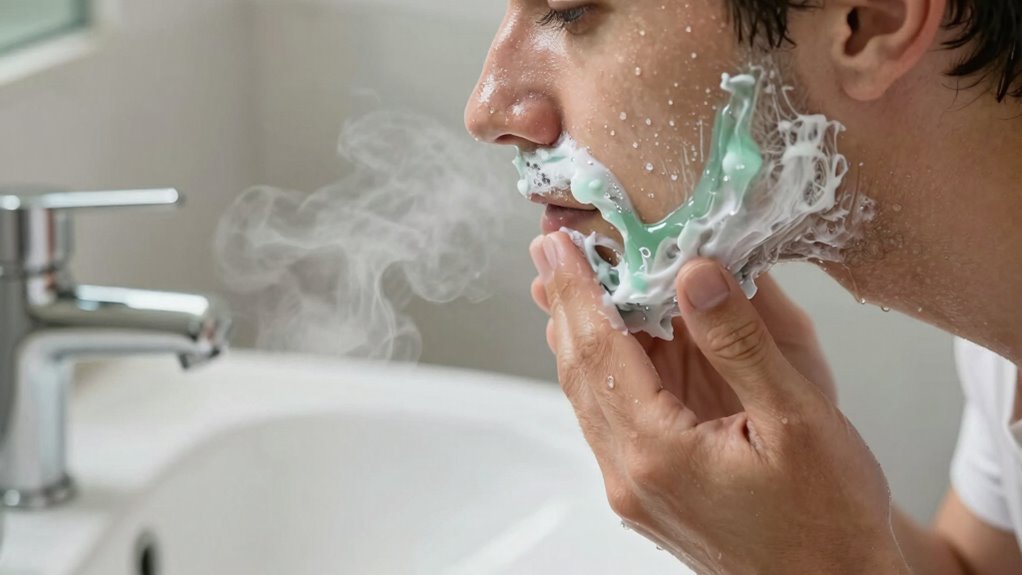
Starting your shave with a clean face sets the stage for a smoother experience. Proper cleansing guarantees your skin is hydrated and your pores are thoroughly cleansed, reducing the risk of irritation. Here’s how to get it right:
- Splash warm water on your face to open pores and loosen dirt.
- Use a gentle cleanser suited for your skin type to remove excess oil and impurities.
- Rinse thoroughly to guarantee no residue is left behind.
- Pat your face dry with a soft towel, leaving your skin slightly damp for ideal hydration.
- Incorporating best gear and knife roundups for smart shopping can further enhance your preparedness and help prevent irritation during shaving. Regular cleansing routines also prevent buildup that can cause skin issues over time, especially when combined with quality kitchen tools and equipment designed for proper maintenance. Proper skin preparation is essential for a close, irritation-free shave.
This routine primes your skin, promotes better razor glide, and prevents irritation. Clean skin with well-maintained pores helps you achieve a close shave without razor burn or ingrown hairs.
When and How to Exfoliate to Prevent Ingrown Hairs

Exfoliating at the right times can markedly reduce the chances of ingrown hairs. The key is to schedule gentle scrubbing a couple of times a week, ideally before shaving, to clear away dead skin and lift trapped hairs. Avoid exfoliating immediately after shaving, as your skin may be sensitive. Use a mild exfoliant with gentle scrubbing motions, focusing on areas prone to ingrown hairs. This helps prevent hairs from curling back into the skin. Additionally, choosing eco-friendly exfoliation products can reduce chemical exposure and environmental impact. Incorporating natural ingredients into your exfoliating routine can further support skin health and reduce irritation. Regular exfoliation is a key step in maintaining skin health and preventing issues like razor bumps. Consistency is essential—regular exfoliation keeps pores clear and smooths the skin’s surface. Using exfoliants with gentle chemical exfoliants can further assist in removing dead skin cells without irritation. Remember, the goal is to prepare your skin without causing irritation, so don’t overdo it. Proper exfoliation timing and gentle scrubbing can make a noticeable difference in reducing ingrown hairs and razor bumps.
Why Using Warm Water Opens Pores and Makes Shaving Easier

Using warm water before shaving helps soften your hair and skin, making the process smoother. When your pores open up, hair is easier to cut, reducing tugging and irritation. This simple step also lowers the chance of ingrown hairs forming after your shave. Additionally, proper preparation techniques can further enhance your shaving experience and prevent irritation. Maintaining optimal indoor air quality and humidity levels can also help prevent skin dryness and irritation, creating a more comfortable environment for your skin. Ensuring good ventilation and humidity in your space can support healthier skin and reduce irritation during shaving. Incorporating regular skin hydration routines can further improve skin resilience and comfort. Proper gear maintenance and usage can also help prevent skin issues by keeping your shaving tools clean and effective.
Softens Hair and Skin
Warm water helps soften both your hair and skin, making shaving smoother and less irritating. When your beard texture is relaxed, your razor glides more easily, reducing tugging and irritation. Plus, softened skin guarantees better razor compatibility, so you get a closer shave without discomfort. To maximize this benefit:
- Use warm water to soak your face for 1-2 minutes before shaving.
- Wet your beard thoroughly to loosen coarse hairs.
- Notice how your skin feels more supple and easier to shave.
- Achieve a more even shave, especially if you have thick or stubborn beard texture. This simple step enhances your shaving experience by preparing your skin and hair, ultimately preventing irritation and ensuring your razor works more effectively. Understanding skin and hair properties can help you optimize your shaving routine further, especially since skin elasticity plays a vital role in preventing irritation. Additionally, incorporating proper skin hydration can improve overall skin resilience and comfort during shaving, which is especially important in regions with varied climates that can affect skin condition.
Reduces Ingrown Hairs
When you apply warm water before shaving, it causes your pores to open wider, making hair removal easier and less prone to causing ingrown hairs. This is especially helpful when you’re doing beard trimming or maintaining your shave routine. Open pores allow the razor to glide smoothly over your skin, reducing the chance of hair becoming trapped beneath the surface. Proper warm water prep also softens hair and skin, which minimizes irritation and prevents razor bumps. Additionally, well-maintained razors cut more cleanly and are less likely to tug or cause ingrown hairs. Taking this simple step guarantees a closer shave while protecting your skin from the discomfort of ingrown hairs, making your shaving routine more effective and comfortable overall.
How Pre-Shave Oils and Gels Help Reduce Irritation
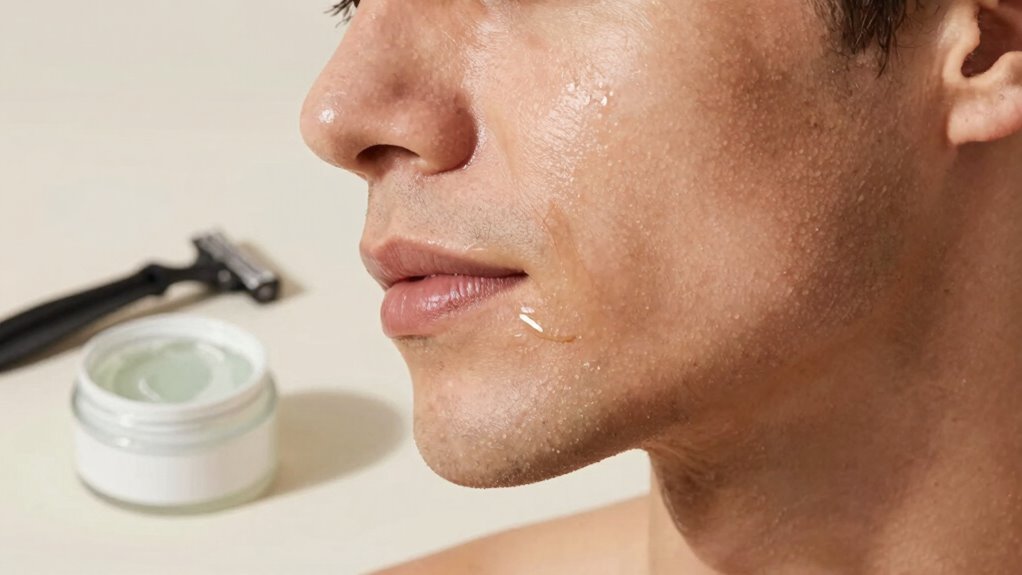
Pre-shave oils and gels work by creating a protective barrier on your skin, which helps reduce friction and minimizes irritation during shaving. This barrier also helps prevent razor burn caused by irritation or sensitivity. If you have fragrance sensitivity, these products can help reduce exposure to potential irritants, making shaving more comfortable. Additionally, they enhance skin hydration, keeping your skin soft and less prone to irritation. Using these pre-shave products is a simple step to help you avoid irritation and enjoy a more comfortable, irritation-free shave every time. Incorporating proper pre-shave preparations can further improve your shaving experience and skin health. Understanding the evolution of shaving technology can also guide you in choosing the most effective products for your skin type. Being aware of skin sensitivity can help you select the right products to prevent irritation. Recognizing the role of skin barrier health can further aid in maintaining a irritation-free shave.
Hydrate and Soften Hair for a Smoother, Less Irritating Shave
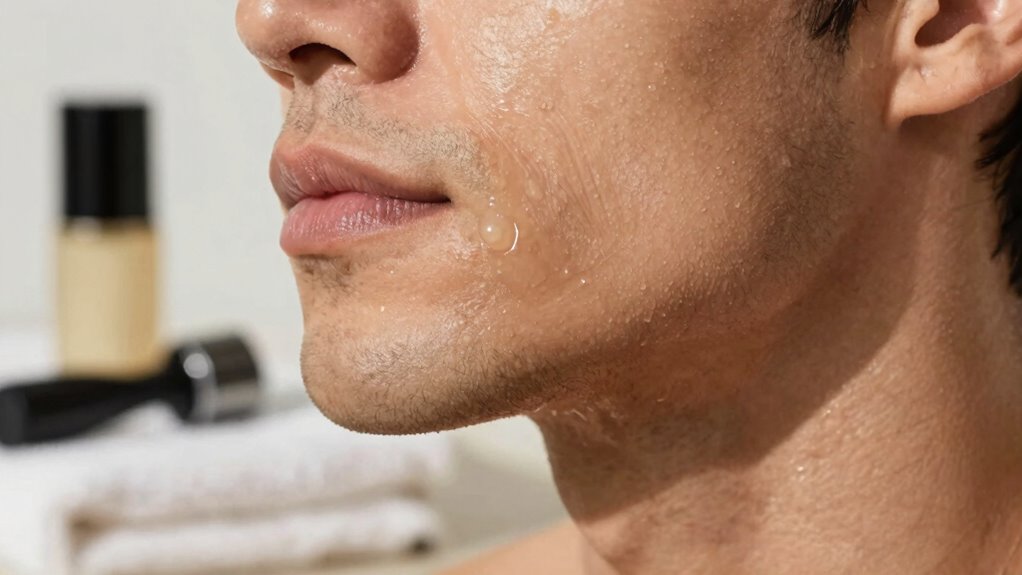
Moisturizing your facial hair before shaving softens the hair strands, making them easier to cut and reducing tugging or pulling. When you hydrate your beard, it helps smooth out your beard texture, resulting in a more comfortable shave. Softer hair means less resistance against the razor, which minimizes irritation and razor burn. If you shave frequently, maintaining proper hydration is especially important, as it prevents hair from becoming coarse and difficult to cut. Well-hydrated hair responds better to your razor, allowing for cleaner, smoother passes. Incorporating a warm, damp cloth or a splash of water before shaving can notably improve the shave experience by preparing your beard to be less resistant and more pliable. Proper hydration is a simple yet effective step for a comfortable, irritation-free shave.
How to Apply Pre-Shave Treatments for Maximum Effectiveness
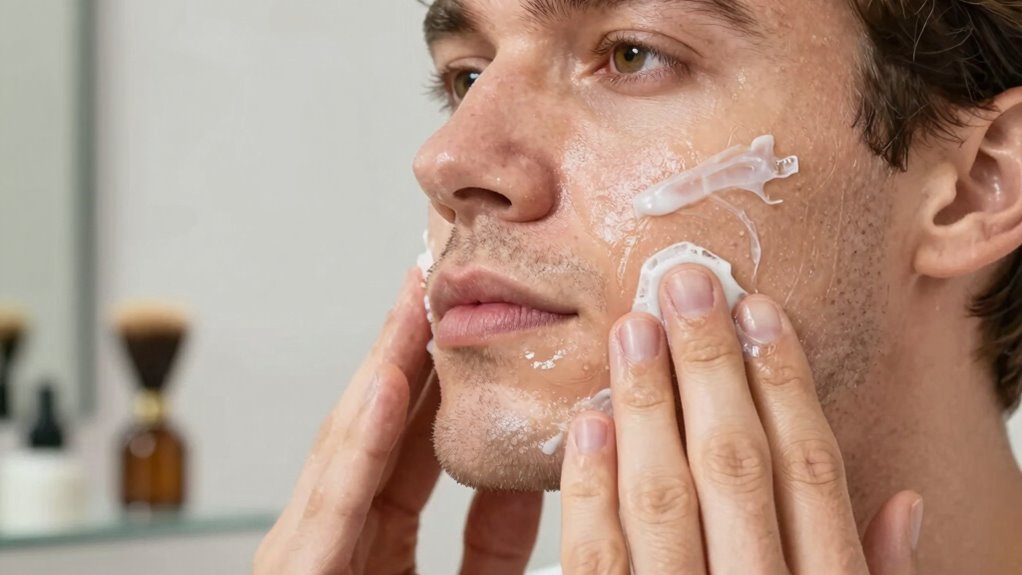
To get the most out of your pre-shave treatments, it’s essential to apply them correctly and evenly across your beard area. This ensures your skin benefits from maximum protection and lubrication, promoting proper shaving etiquette and razor safety. Follow these steps:
- Start with a clean, damp face to help the treatment penetrate.
- Use your fingertips or a brush to spread the product evenly, covering all beard areas.
- Apply a gentle, circular motion to stimulate blood flow and prepare your skin.
- Wait a minute or two before shaving to allow the treatment to work effectively.
Applying pre-shave treatments properly prevents razor burn and reduces irritation, giving you a smoother, safer shave every time.
Common Mistakes to Avoid When Preparing Your Skin for Shaving

One common mistake is skipping your pre-shave wash, which leaves dirt and oil on your skin and can cause irritation. Using dry skin before shaving increases friction and risks nicks or razor burn. Make sure to cleanse and hydrate properly to prepare your skin for a smooth shave.
Skipping Pre-Shave Wash
Skipping a pre-shave wash might seem like a minor step, but it can lead to irritation and a less smooth shave. Without this step, your skin isn’t properly prepared for the razor, increasing the risk of razor burn. Here are four reasons to never omit it:
- It helps remove dirt and excess oil, reducing bacteria that cause irritation.
- It softens facial hair, making shaving easier and reducing tugging.
- It boosts skin hydration, creating a smoother surface.
- It improves overall shaving routines by setting a clean, moisturized baseline.
Taking a moment to wash your face ensures your skin is clean and ready for a close shave, minimizing irritation and promoting healthier skin.
Using Dry Skin
Preparing your skin while it’s dry can lead to irritation and a less effective shave. If you have sensitive skin, shaving on dry skin increases the risk of razor burn and discomfort. Dry skin also makes it harder for your razor to glide smoothly, especially if you’re dealing with beard growth that’s coarse or thick. Instead, start by thoroughly wetting your face with warm water to soften hair and open pores. This step reduces friction and minimizes irritation. Avoid skipping this prep, as shaving on dry skin can cause cuts, redness, and razor bumps. Properly hydrating your skin allows for a closer, smoother shave, especially if your skin tends to be sensitive. Remember, moisture is key to preventing irritation and achieving a clean shave.
How Good Pre-Shave Prep Leads to Post-Shave Comfort
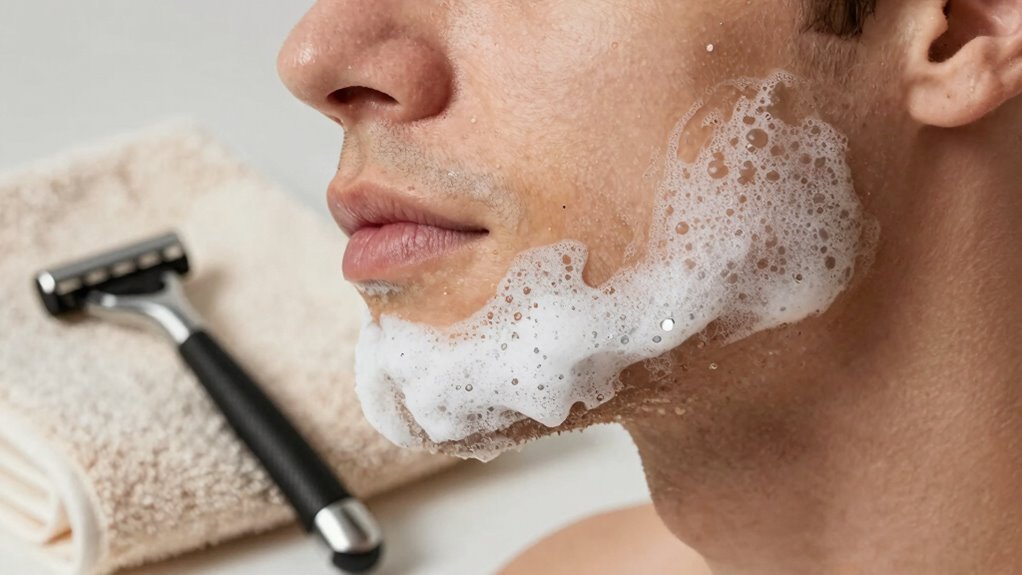
A thorough pre-shave prep sets the foundation for a comfortable post-shave experience. When you start with well-prepared skin, you reduce irritation and promote a smoother shave. Proper prep helps you maintain the ideal razor blade angle, preventing nicks and cuts. It also minimizes the need for excessive shaving frequency, giving your skin time to heal. To maximize comfort, consider these steps:
Preparing your skin before shaving ensures a smoother, irritation-free shave and faster skin healing.
- Warm your face and apply a quality pre-shave oil or cream.
- Gently exfoliate to remove dead skin cells.
- Use a sharp razor with the correct blade angle.
- Shave in the direction of hair growth, not against it.
This prep creates a glide that’s gentle on your skin, leading to less post-shave redness and irritation.
Pre-Shave Routine Checklist to Prevent Razor Burn
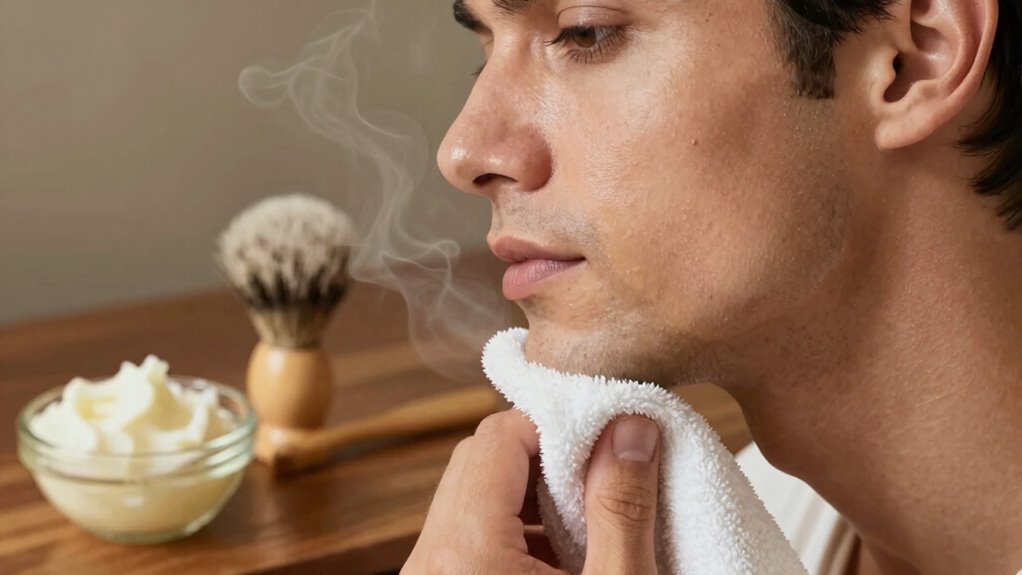
Before you start shaving, make sure your skin is well-hydrated to soften your hair. Use only warm water to open up your pores and reduce irritation. Don’t forget to apply a light layer of pre-shave oil to create a smooth barrier and minimize razor burn.
Hydrate Skin Properly
Have you ever noticed how your skin feels when it’s properly hydrated before shaving? When your skin is well-hydrated, it’s more flexible and less prone to irritation. Proper hydration provides hydration benefits like improved skin elasticity, which helps your razor glide smoothly. To hydrate effectively, consider these steps:
- Splash your face with lukewarm water to start the process.
- Use a gentle cleanser to remove dirt and excess oil.
- Apply a hydrating pre-shave oil or moisturizer to lock in moisture.
- Let it sit for a minute or two so your skin absorbs the moisture fully.
Hydrating your skin before shaving creates a softer surface, reducing tugging and razor burn. Well-hydrated skin is key to a comfortable, irritation-free shave.
Use Warm Water Only
Using warm water during your pre-shave routine helps open up your pores and softens facial hair, making the shave smoother and easier. Stick to just warm water—avoid hot water, which can irritate your skin and strip natural oils. Using only warm water aligns with effective skincare routines and prepares your skin for shaving products. It helps loosen dirt and dead skin cells, reducing the risk of clogged pores and irritation later. When rinsing your face, ensure the water is comfortably warm, not scalding. This simple step enhances the effectiveness of your shave by improving the skin’s surface and making hair softer. Remember, avoiding hot water now can prevent unnecessary irritation and razor burn, setting a solid foundation for a comfortable, irritation-free shave.
Apply Pre-Shave Oil
Applying pre-shave oil can markedly reduce irritation by creating a smooth barrier between your skin and the razor. Using beard oil or a dedicated shaving oil helps soften hair and lubricates your skin, making shaving smoother. Before applying, wash your face with warm water, then gently pat dry. Next, massage a few drops of beard oil or pre-shave oil onto your damp skin, covering all areas you plan to shave. This step prepares your skin and hair, reducing friction. Follow with your preferred shaving cream for extra lubrication. Remember, a good pre-shave oil minimizes tugging, cuts, and redness, ensuring a comfortable shave. Incorporate this step into your routine, and you’ll notice less irritation and razor burn after every shave.
Frequently Asked Questions
How Often Should I Update My Pre-Shave Routine?
You should update your pre-shave routine whenever your skincare habits or grooming routines change. Regularly evaluating how your skin responds helps you identify if your current prep is effective. If you notice irritation or discomfort, it’s time to tweak your routine—try new products or methods. Staying attentive ensures you prevent razor burn and keep your skin smooth and healthy. Adjust as needed to match your skin’s evolving needs.
Can Pre-Shave Products Cause Allergic Reactions?
Pre-shave products can definitely cause allergic reactions if you’re sensitive to certain ingredients. Even a tiny amount can trigger a reaction, so it’s crucial to check labels for potential allergens. If you have ingredient sensitivity, you might experience redness, itching, or irritation. Always do a patch test first and choose hypoallergenic options to prevent allergic reactions. Stay attentive to your skin’s response and switch products if needed.
Is There a Best Time of Day to Shave for Irritation Prevention?
You should shave in the morning for irritation prevention because your skin is fresher and less prone to redness. Morning grooming allows you to start the day with a clean, smooth face, reducing the chance of irritation. If you prefer evening shaving, make sure to hydrate your skin well beforehand and use soothing products afterward. Ultimately, choose a time that fits your routine and keeps your skin comfortable.
How Do Skin Types Influence Pre-Shave Preparation Choices?
Did you know that 15% of people have sensitive skin? Your skin type guides your pre-shave prep: if you have sensitive skin, opt for a gentle, fragrance-free cleanser and avoid harsh products. For oily skin, use a pore-minimizing toner to control excess oil and reduce irritation. Understanding your skin sensitivity and oil production helps you choose the right prep, making your shave smoother and more comfortable.
Are Natural Oils as Effective as Commercial Pre-Shave Products?
Natural remedies can be effective, but commercial formulations often contain ingredients specifically designed to soften hair and protect your skin. You might find natural oils like coconut or jojoba helpful since they moisturize and create a barrier, reducing irritation. However, commercial pre-shave products usually offer more consistent results thanks to their tested formulations. Ultimately, try both to see which works best for your skin type and shaving routine.
Conclusion
Think of your pre-shave routine as laying a solid foundation for a smooth, irritation-free shave. Just like building a sturdy house starts with a strong base, preparing your skin properly prevents razor burn and ingrown hairs. Skipping steps is like skipping the foundation—your shave might look good at first but won’t stand the test of time. Invest a few minutes beforehand, and you’ll enjoy a comfortable, irritation-free shave every time.