To improve your sleep quickly, aim to keep your bedroom temperature between 60-67°F (15-19°C). Use a thermostat, fan, or cooling bedding to maintain this range, as cooler temperatures help lower your core body temperature and promote faster sleep. Proper insulation, breathable pajamas, and adjusting your environment seasonally also make a big difference. Keep your room dark and quiet for ideal rest—discover more tips to perfect your sleep setup.
Key Takeaways
- Keep your bedroom temperature between 60-67°F (15-19°C) to promote faster sleep onset and deeper REM sleep.
- Use smart thermostats or fans to maintain a consistent, cool environment throughout the night.
- Layer bedding with breathable, moisture-wicking materials to quickly adjust warmth and prevent overheating.
- Optimize room insulation and window treatments to prevent drafts and temperature fluctuations.
- Avoid heavy blankets and pajamas; opt for lightweight, breathable sleepwear to regulate body temperature efficiently.
Why Your Bedroom Temperature Is Key to Better Sleep
Your bedroom temperature plays a crucial role in how well you sleep. When it’s too hot or cold, it disrupts your sleep hygiene, making it harder to fall asleep and stay asleep. A comfortable environment helps your body relax and signals that it’s time to rest. Your bedroom decor also influences temperature; heavy blankets or thick curtains can trap heat, while light bedding and breathable fabrics help keep you cool. Maintaining an ideal temperature ensures your body doesn’t work overtime to regulate heat, leading to more restful sleep. Creating a cozy, temperature-controlled space supports your sleep quality and sets the stage for a good night’s rest. Using a smart thermostat setup can help you precisely control your room’s temperature for optimal comfort. Additionally, sleep environment factors like airflow and humidity levels can further enhance your sleep experience. Proper cable safety in your bedroom, such as avoiding wiring hazards and managing heat buildup from devices, can prevent fire risks and contribute to a safer, more comfortable sleep environment. Paying attention to thermal comfort by adjusting these elements ensures your sleep environment remains conducive to restful sleep. Small adjustments to your room temperature management can make a significant difference in how quickly and deeply you sleep. Focus on adjusting your room’s temperature alongside your decor, and sleep improvement will follow.
What’s the Best Temperature for a Good Night’s Sleep?

Finding the ideal bedroom temperature is essential for achieving restful sleep. Experts recommend keeping your room between 60-67°F (15-19°C) to promote dream enhancement and better sleep quality. Cooler temperatures help your body lower its core temperature, signaling it’s time to rest. Mattress cooling solutions can further improve sleep by preventing overheating and maintaining a comfortable surface. When your mattress stays cool, you’ll fall asleep faster and experience deeper, more restorative sleep cycles. Too warm or too cold disrupts your sleep, making it harder to reach those vital REM stages. Adjust your thermostat or invest in cooling bedding to find that sweet spot. Remember, a well-regulated temperature supports both your dreams and overall sleep health.
How Your Sleep Environment Affects Rest and Sleep Cycles
Since your sleep environment directly influences how well you rest and cycle through sleep stages, making it conducive to sleep is essential. Good sleep hygiene involves maintaining a comfortable, clutter-free space that promotes relaxation. Your bedroom decor plays a significant role; calming colors, minimal distractions, and soft lighting help signal to your brain that it’s time to wind down. A cluttered or overstimulating environment can disrupt your sleep cycles, making it harder to fall asleep or stay asleep. Keeping your space quiet and dark further supports restorative sleep. When your bedroom environment aligns with sleep-friendly principles, it enhances your ability to transition seamlessly through sleep stages, leading to more restful, uninterrupted sleep and better overall health.
Easy Ways to Adjust Your Bedroom Temperature for Faster Sleep
Finding the right temperature can help you fall asleep faster and stay asleep longer. You should aim for an ideal sleep temperature, usually between 60-67°F, to optimize comfort. Simple strategies like adjusting your thermostat or using a fan can make a big difference in creating the perfect sleeping environment. Additionally, understanding personal finance planning can help you budget effectively for home improvements like a new thermostat or fan to enhance your sleep setup.
Ideal Sleep Temperature
Achieving the right sleep temperature is essential for falling asleep faster and enjoying more restful nights. The ideal sleep temperature typically falls between 60-67°F (15-19°C), creating an environment that promotes relaxation and comfort. Good sleep hygiene involves maintaining a consistent bedroom temperature to signal to your body that it’s time to wind down. Your bedroom decor also plays a role; lighter, breathable bedding and uncluttered spaces can help regulate temperature and prevent overheating. Keep your room cool and well-ventilated, avoiding extremes that disrupt sleep. Proper humidity control can also enhance sleep quality by preventing stuffiness and dryness. Additionally, using smart thermostats can help maintain a consistent and comfortable sleep environment automatically. Incorporating temperature regulation techniques can further optimize your sleep setup and promote better rest. Maintaining good indoor air quality by reducing pollutants and ensuring proper ventilation can also support healthier sleep patterns. Creating a comfortable sleep environment is a simple yet powerful step towards better, faster sleep.
Strategies for Adjustment
Adjusting your bedroom temperature quickly and easily can make a noticeable difference in how fast you fall asleep. To do this, focus on simple strategies like optimizing bedroom insulation and choosing the right window treatments. Proper insulation keeps your room cooler at night and prevents drafts, creating a stable sleep environment. Window treatments like blackout curtains or thermal blinds block out heat during hot nights and retain warmth when it’s cold. Use the table below to see how different options can evoke comfort or relief:
| Comfort Goal | Solution |
|---|---|
| Keep cool | Lightweight blinds, good insulation |
| Stay warm | Heavy curtains, insulated windows |
| Quick change | Portable fans or heaters for instant control |
Additionally, selecting the right best laundry detergents can help maintain your bedding’s cleanliness and comfort, contributing to better sleep quality. Regularly checking your bedroom environment for drafts or temperature fluctuations is also recommended to sustain ideal sleeping conditions. Incorporating temperature regulation devices like smart thermostats can further streamline this process and ensure consistent comfort throughout the night. Maintaining proper bedroom insulation can further enhance sleep quality by creating a more stable environment.
How Bedding and Clothing Keep Your Room Temperate and Comfortable

Your choice of bedding and clothing plays a crucial role in maintaining a comfortable room temperature. Selecting the right duvet is essential; opt for a duvet with appropriate insulation—lighter for warmer nights, thicker for cooler ones. Duvet selection directly influences how well your body stays warm without overheating. Pajama materials also matter: breathable fabrics like cotton or linen help wick away moisture and promote airflow, keeping you comfortable throughout the night. Avoid heavy, non-breathable fabrics that trap heat and cause sweating. Layering your bedding allows you to adjust your warmth easily—adding or removing blankets as needed. Similarly, choosing lightweight pajamas or moisture-wicking sleepwear can prevent overheating, ensuring your body stays at an ideal temperature for restful sleep. Incorporating sleep-friendly clothing into your bedtime routine can further enhance thermal comfort and improve sleep quality. Additionally, choosing natural fibers for your sleepwear can significantly contribute to better breathability and moisture management. Using thermal regulation techniques such as adjusting room humidity or using fans can also support maintaining a consistent, comfortable temperature throughout the night.
Common Mistakes That Ruin Your Bedroom Climate and Sleep Quality
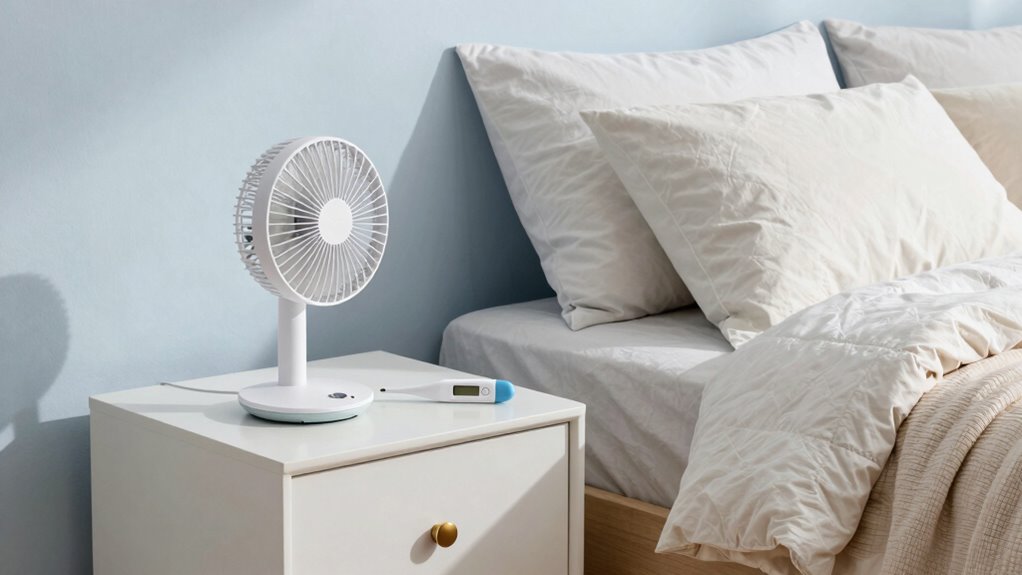
Ignoring your body’s signals can lead to overheating and sweating during the night, ruining your sleep. Additionally, neglecting proper humidity levels makes your room either too dry or too damp, both of which disturb rest. Addressing these common mistakes helps create a more comfortable and restful bedroom environment. Maintaining indoor air quality by controlling allergens and odors further enhances sleep quality and overall health. Proper ventilation ensures fresh air circulation and helps prevent the buildup of indoor pollutants. Ensuring optimal room temperature not only supports better sleep but also contributes to a healthier sleep cycle. Implementing a climate control system can help maintain consistent conditions throughout the night, promoting more restorative sleep.
Overheating and Sweating
Have you ever woken up sweaty and uncomfortable, wondering why your bedroom climate feels so off? Overheating often results from poor temperature control, making you sweat and disrupting sleep. Your sleep position matters—lying in a position that traps heat can cause excess warmth. To prevent this, choose lightweight, breathable bedding and avoid overdressing. Noise reduction is also key; loud or disruptive sounds can increase stress and body temperature, worsening sweating. Keep your room cool, ideally between 60-67°F, and ensure proper airflow. Avoid heavy blankets or snug pajamas that trap heat. Focusing on your sleep position and minimizing noise helps keep your body temperature regulated so you can rest without overheating or sweating through the night. Additionally, selecting the right performance parts for your bedroom environment, such as cooling fans or climate control systems, can further optimize your sleep quality.
Neglecting Humidity Levels
Neglecting humidity levels can silently sabotage your sleep quality and comfort. When you ignore humidity neglect, moisture imbalance occurs, leading to dry or damp air that disrupts restful sleep. Without proper humidity, your skin and respiratory system suffer, making it harder to breathe and causing discomfort. Imagine lying in a room where the air feels sticky and heavy or painfully dry, both signs of humidity neglect. Visualize:
- Dry, cracked skin on your face and hands
- A stuffy nose that won’t clear
- Sweaty sheets that cling uncomfortably
- A musty smell lingering in the air
These issues stem from an imbalance in moisture, which can considerably impair your sleep quality. Managing humidity levels ensures a more balanced, comfortable environment, helping you fall asleep faster and stay asleep longer.
Gadgets and Tech Tips to Help Control Your Sleep Environment
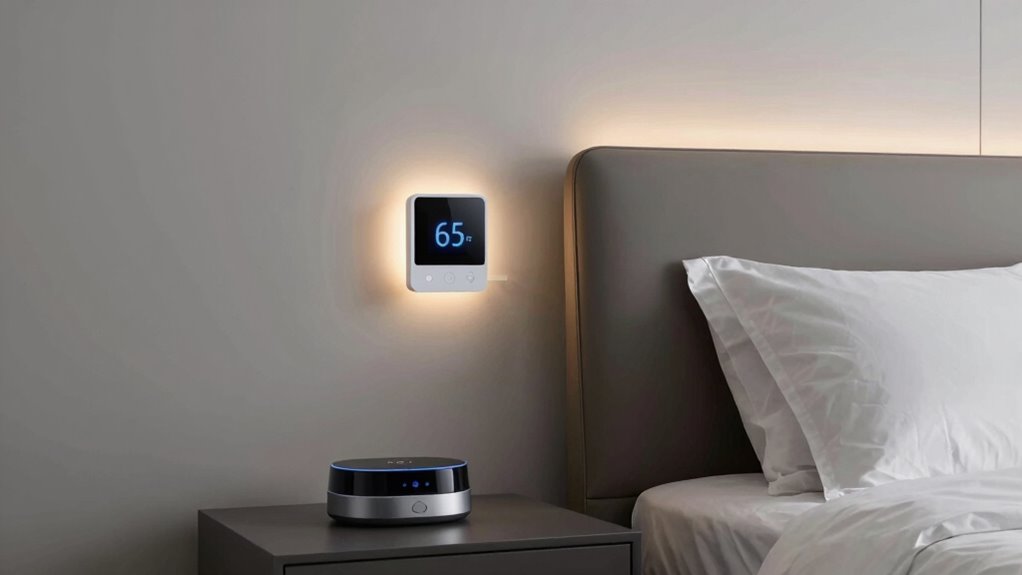
To create the ideal sleep environment, using gadgets and tech tools can make a significant difference in controlling your bedroom temperature. Smart thermostats are a game-changer, allowing you to set precise temperatures and schedule adjustments automatically. With a simple app, you can lower the heat at night and warm it up before you wake, ensuring perfect comfort. Sleep gadgets like cooling pads, white noise machines, and temperature sensors can also enhance your sleep quality. These devices help maintain a consistent environment, reducing temperature fluctuations that disturb rest. By integrating these tech tools into your bedroom, you gain more control over your sleep environment, making it easier to fall asleep faster and stay asleep longer.
How to Personalize Your Room Temperature Based on Your Preferences
To make your bedroom truly comfortable, you should modify the temperature to suit your personal preferences. Keep in mind that seasonal changes might require you to tweak the settings for ideal sleep. Finding the right balance ensures you wake up feeling refreshed every morning.
Adjust for Comfort
Everyone has their own comfort zone when it comes to room temperature, so adjusting your thermostat or using other methods to personalize your space can make a big difference. To truly optimize your sleep environment, consider how bedroom decor and sleep accessories can enhance comfort. For example, plush blankets, breathable sheets, and supportive pillows help you feel cozy without overheating. You might also add a soft, calming rug or blackout curtains to create a tranquil atmosphere. Use a fan or space heater subtly to fine-tune the temperature to your liking. Remember, small adjustments can substantially improve your sleep quality by making your bedroom feel just right for you. Personalizing your space ensures you wake refreshed and ready each morning.
Consider Seasonal Changes
As seasons change, so do your comfort needs, making it essential to adapt your bedroom temperature accordingly. Seasonal shifts bring about temperature fluctuations that can disrupt your sleep if you’re not prepared. During colder months, lower the thermostat slightly to stay warm without overheating; in warmer months, increase airflow or set a cooler temperature. Pay attention to how your body responds to these changes and tweak your settings to suit your preferences. Keep in mind that what worked in summer might not be comfortable in winter. Personalizing your room temperature based on seasonal variations helps create a consistent, restful environment year-round. Adjusting for these seasonal shifts ensures you stay comfortable and sleep soundly, no matter the time of year.
Troubleshooting Temperature-Related Sleep Problems and When to Seek Help
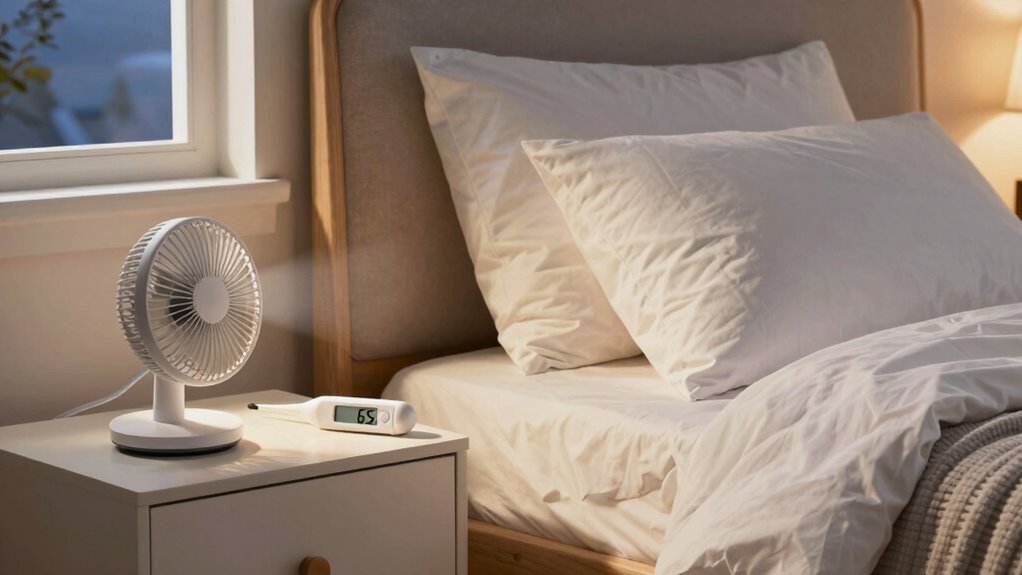
When your sleep is consistently disrupted by uncomfortable temperatures, it’s important to identify whether temperature fluctuations are the root cause. Poor temperature regulation can lead to sleep deprivation, making it harder to fall asleep or stay asleep. If adjusting your thermostat doesn’t help, consider these signs you might need professional help:
Disrupted sleep from temperature issues may signal underlying health conditions needing professional evaluation.
- Persistent hot flashes or chills despite room adjustments
- Frequent waking during the night from temperature discomfort
- Feeling exhausted even after what should be a full sleep cycle
- Symptoms like night sweats or abnormal sweating patterns
If these issues persist, consult a healthcare provider. They can evaluate underlying conditions affecting your body’s ability to regulate temperature, helping you avoid ongoing sleep deprivation and restore restful sleep. Proper diagnosis guarantees targeted treatment for your sleep health.
Simple Nighttime Routines to Maximize Your Bedroom’s Sleep-Optimizing Power
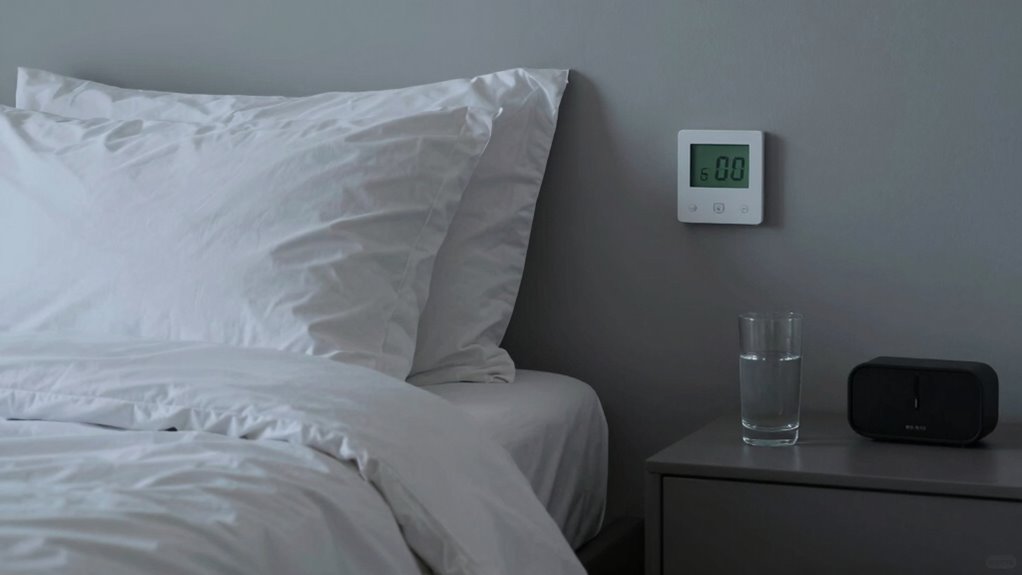
Establishing simple nighttime routines can considerably enhance your bedroom’s sleep-optimizing potential. Start by dimming your bedroom lighting at least an hour before bed to signal to your body that sleep is approaching. Avoid screens or use blue light filters, as bright light hampers melatonin production. Stick to a consistent sleep schedule, even on weekends, to improve your sleep hygiene. Incorporate relaxing activities like reading or gentle stretching to wind down. Maintaining a cool, dark, and quiet environment supports these routines and helps your body shift smoothly into sleep. By establishing these habits, you reinforce your sleep environment’s effectiveness, making it easier to fall asleep faster and enjoy restorative rest. Consistency is key to maximizing your bedroom’s sleep-optimizing power.
Frequently Asked Questions
How Does Room Humidity Affect Sleep Quality?
You’ll notice that ideal humidity levels, around 40-60%, considerably improve your sleep quality. Too much moisture causes discomfort, making you feel sticky and restless, while low humidity can dry out your skin and throat. By controlling moisture levels, you create a more comfortable environment, reducing congestion and promoting deeper sleep. Proper moisture control helps your body relax, so you wake up feeling more refreshed and ready for the day.
Can Adjustable Thermostats Improve Sleep Consistency?
Yes, adjustable thermostats, especially smart thermostats, can improve your sleep consistency. They allow you to set ideal sleep temperatures, which helps regulate your sleep patterns. With smart features, you can automate temperature adjustments based on your bedtime schedule, ensuring your room stays comfortable throughout the night. This consistent environment promotes better sleep quality and helps you wake up refreshed, making it easier to maintain regular sleep habits.
What Are the Signs of an Uncomfortable Sleeping Temperature?
If your sleep environment feels too hot or cold, you likely experience discomfort, tossing and turning or waking up frequently. You might notice sweating or chills, difficulty falling asleep, or feeling restless. Poor temperature regulation can cause these signs, making it hard to stay asleep. When your bedroom isn’t at the right temperature, your sleep quality drops. Adjusting your thermostat or using breathable bedding can help maintain a comfortable sleep environment.
Does Temperature Impact REM Sleep Duration?
Yes, temperature impacts REM sleep duration by affecting your thermal comfort. When your sleep environment is too hot or cold, your body struggles to maintain *best* core temperature, which can reduce REM sleep. Cooler, comfortable temperatures promote better thermal comfort, allowing your body to cycle smoothly through sleep stages. So, maintaining a consistent, *perfect* sleep environment helps extend REM sleep, improving overall rest and recovery.
How Quickly Can Temperature Changes Influence Sleep Onset?
Adjusting your sleep environment’s temperature can influence your sleep onset within minutes. When you optimize thermal regulation by setting your room to around 65-70°F, your body quickly responds by lowering core temperature, signaling it’s time to sleep. This process can take as little as 15-20 minutes, helping you fall asleep faster. Consistent thermal regulation creates an ideal environment, making it easier for you to shift smoothly into restful sleep.
Conclusion
By optimizing your bedroom temperature, you can fall asleep faster and enjoy deeper, more restful sleep. Studies show that around 65°F (18°C) is ideal for most people, yet only 10% sleep at this perfect temp. So, take control of your environment with simple adjustments and tech gadgets. Small changes make a big difference—giving you the restful nights you deserve. Start tonight, and see how a cooler room transforms your sleep experience!