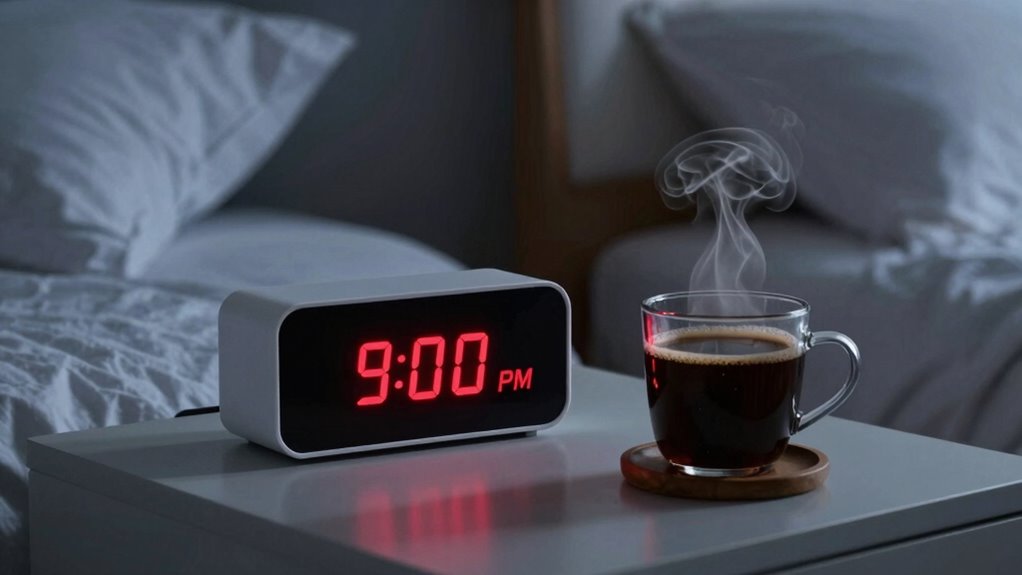

To stop late-night restlessness, set a caffeine cutoff time that aligns with your body’s ability to metabolize it—usually 3 to 8 hours before bed. Consuming caffeine too late can cause difficulty falling asleep and lighter, less restorative sleep, leading to fatigue. Adjust your cutoff based on your sleep schedule and how your body reacts. Keep in mind, managing caffeine effectively can improve your sleep quality—learn how to personalize your cutoff for better rest.
Key Takeaways
- Set a caffeine cutoff time 3 to 8 hours before your planned bedtime to prevent late-night restlessness.
- Adjust your cutoff based on personal metabolism, age, and sleep schedule for optimal rest.
- Avoid consuming caffeine after your established cutoff to ensure complete processing and better sleep quality.
- Tracking your sleep patterns helps identify the ideal caffeine cutoff time specific to you.
- Limiting caffeine late in the day promotes lighter, more restorative sleep and reduces fatigue.
How Does Caffeine Affect Your Sleep and Rest Quality?

Caffeine is a stimulant that can substantially disrupt your sleep and rest quality, especially if consumed too late in the day. When you ingest caffeine, your body begins to metabolize it, a process that varies based on factors like age, genetics, and liver function. Because caffeine stays in your system for hours, it can interfere with your ability to fall asleep or stay asleep. This sleep disruption often leads to lighter, less restorative sleep, making you feel tired and less refreshed the next day. Even small amounts of caffeine consumed in the afternoon can affect your sleep quality. Understanding how caffeine metabolism works helps you recognize why timing your intake is essential for maintaining good sleep hygiene. Microplastics in dust can also contribute to indoor air pollution, further impacting overall health and sleep quality. Additionally, piercing aftercare practices, if neglected, can lead to discomfort or infection that further hampers restful sleep. Being aware of caffeine’s effects on sleep can help you establish a cutoff time that supports better rest and overall well-being. Recognizing the metabolism rate of caffeine in your body can assist in better planning your caffeine consumption to avoid sleep disturbances, especially considering how individual differences influence caffeine processing.
What Is a Caffeine Cutoff Time, and How Can It Improve Your Sleep?

Have you ever wondered how late you can safely enjoy your coffee before it starts ruining your sleep? A caffeine cutoff time is the point when you should stop consuming caffeine to support good sleep hygiene. It’s based on your caffeine metabolism, which varies from person to person, but generally ranges from 3 to 8 hours before bedtime. By observing this cutoff, you reduce the risk of late-night restlessness. Here’s how it helps:
- Improves sleep quality by minimizing caffeine’s interference
- Promotes better sleep hygiene habits
- Allows your body enough time to metabolize caffeine
- Reduces chances of waking up feeling tired or unrested
- Understanding waterpark safety tips can help you stay alert and avoid unnecessary disruptions during late-night caffeine consumption. Incorporating personal caffeine sensitivity into your routine can further optimize your sleep schedule. Recognizing your caffeine metabolism rate can help you set a more precise cutoff time tailored to your needs. Being aware of individual differences in caffeine processing can assist you in customizing your caffeine intake for optimal rest. Additionally, staying mindful of timing and quantity can help prevent overconsumption and its effects on sleep quality.
Setting a cutoff time tailored to your caffeine metabolism helps you enjoy your favorite drinks without sacrificing restful sleep.
How to Find Your Perfect Caffeine Cutoff Time Based on Your Routine

To determine your ideal caffeine cutoff time, start by tracking your daily routine and sleep patterns. Notice when you typically feel alert and when you begin to wind down. Use this information to develop timing strategies that align with your personalized routines. For example, if you wake up early and need caffeine to kickstart your day, plan to consume your last caffeinated beverage at least six hours before bedtime. If you tend to stay up later, adjust your cutoff time accordingly to avoid interference with sleep. The key is to observe how your body responds to caffeine at different times and tailor your cutoff to your unique schedule. Incorporating sleep hygiene practices or women’s golf achievements into your routine can provide additional motivation to maintain healthy sleep habits. Paying attention to individual caffeine sensitivity can help you fine-tune your cutoff time even further. Understanding your caffeine metabolism can also enhance your ability to find a balance that keeps you energized without sacrificing restful sleep.
What Are Effective Tips to Manage Caffeine and Sleep Better?

Managing your caffeine intake effectively can markedly improve your sleep quality. By understanding caffeine metabolism, you can time your consumption better and avoid late-night disruptions. To enhance sleep hygiene and manage caffeine wisely, consider these tips:
- Limit caffeine after your personal cutoff time to give your body time to process it.
- Choose decaffeinated or herbal alternatives in the afternoon and evening.
- Establish a consistent sleep schedule, reinforcing your body’s natural rhythms.
- Keep your sleep environment cool, dark, and quiet to promote restful sleep.
- Be aware of factors like metabolism rates that influence how quickly your body processes caffeine. Recognizing your individual metabolism can help you determine the best time to cut off caffeine intake, especially since metabolic differences can significantly impact caffeine clearance. Additionally, battery care principles such as proper charging and avoiding overuse can serve as useful analogies for understanding how your body’s systems require proper management for optimal functioning. Understanding your metabolic rate can help tailor your caffeine consumption schedule for better sleep and overall health.
Common Mistakes When Setting a Caffeine Cutoff (and How to Avoid Them)
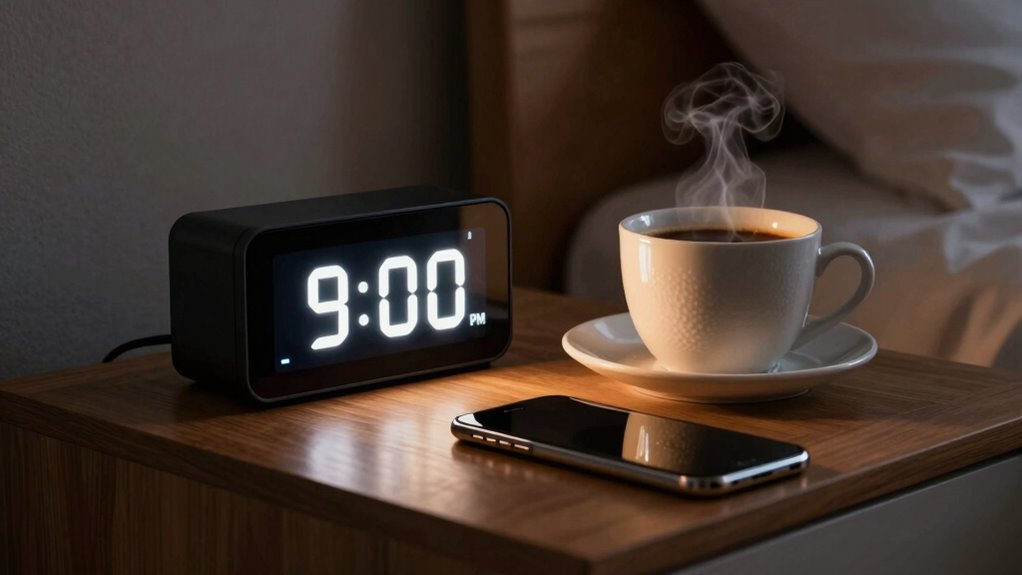
One common mistake is setting a caffeine cutoff time that’s too late in the day, which can lead to lingering effects and interfere with your sleep. Timing mistakes often occur when you underestimate how long caffeine stays in your system, causing you to consume it too late. Additionally, dosage errors happen when you drink large amounts of caffeine, thinking more will boost your alertness, but it can backfire by making it harder to fall asleep later. To avoid these pitfalls, determine your ideal cutoff time based on your sensitivity and stick to it consistently. Limit your intake to moderate amounts earlier in the day, and don’t rely on high doses to get through fatigue. Understanding caffeine metabolism can help you better plan your consumption and prevent sleep disruption, ultimately promoting healthier rest. Being aware of your individual caffeine sensitivity allows you to tailor your intake and avoid common mistakes. Recognizing how bioluminescent fungi emit light may seem unrelated, but it highlights how specific processes in nature can influence health and well-being when properly understood.
Frequently Asked Questions
Can Caffeine Impact Sleep in People Who Are Tolerant to It?
Yes, caffeine can still impact your sleep even if you’ve developed tolerance, because tolerance mainly reduces its stimulant effects during the day. However, tolerance development can lead to psychological dependence, making you crave caffeine and possibly consume more. This increased intake can interfere with your sleep patterns, causing restlessness or difficulty falling asleep, regardless of your perceived tolerance. So, be mindful of how much caffeine you’re consuming, especially late in the day.
Are There Specific Types of Caffeine That Affect Sleep Differently?
You know what they say, “Different strokes for different folks.” Some types of caffeine, like coffee or tea, are absorbed and metabolized faster, impacting sleep more than slower options like decaffeinated coffee or certain energy drinks. Your caffeine absorption rate and metabolism influence how long the stimulant stays in your system, making some sources more disruptive to sleep than others. Pay attention to these differences to protect your rest.
How Does Caffeine Intake Vary Across Different Age Groups?
You’ll find that caffeine intake varies across age groups due to age-related caffeine sensitivity and consumption patterns by age. Younger people often consume more caffeine through coffee, energy drinks, and sodas, while older adults tend to reduce intake due to health concerns and increased sensitivity. As you age, your body processes caffeine more slowly, making it essential to adjust your consumption to avoid sleep disruptions and other side effects.
Is Caffeine Withdrawal Linked to Sleep Disturbances?
You might notice sleep disturbances when experiencing caffeine withdrawal symptoms, as your body adjusts to lower caffeine levels. These withdrawal symptoms can include headaches, fatigue, and irritability, which may disrupt your sleep. The causes of sleep disturbance during withdrawal are linked to your nervous system readjusting, making it harder to fall asleep or stay asleep. So, if you’re quitting caffeine, expect some temporary sleep issues as your body recalibrates.
Can Decaffeinated Coffee Still Interfere With Sleep?
Decaffeinated coffee can still interfere with your sleep quality because of residual effects from trace amounts of caffeine. These small quantities might not seem like much, but they can accumulate and disrupt your ability to fall asleep or stay asleep, especially if you’re sensitive to caffeine. It’s best to monitor your intake and avoid drinking decaf too late in the day to protect your sleep health.
Conclusion
By setting a caffeine cutoff time, you’re fundamentally drawing a gentle curtain over the stage of your restless nights. Think of it as giving your sleep a peaceful encore, free from the encore of jittery nerves and restless thoughts. When you respect your body’s need for rest, you’re tuning into a symphony of better sleep and brighter mornings. So, mark your cue—your perfect caffeine cutoff—and let serenity take center stage tonight.