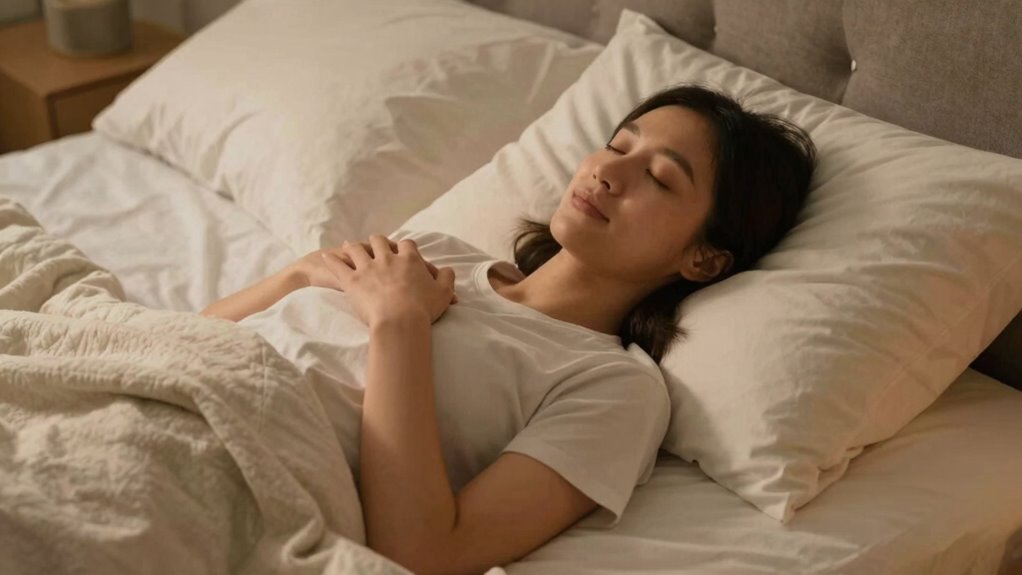

If you struggle to fall asleep, progressive muscle relaxation (PMR) offers a simple yet powerful solution. By tensing and relaxing different muscle groups, you release physical tension and calm your mind. This technique helps you recognize stress signals early and promotes deeper relaxation before bed. With routine practice, PMR becomes an automatic stress reducer, improving your sleep quality over time. Keep going, and you’ll discover how easy it is to make restful nights a regular part of your life.
Key Takeaways
- PMR helps release physical tension, calming the mind for better sleep.
- Practicing in a quiet, comfortable space enhances relaxation and sleep readiness.
- Regular PMR develops awareness of tension, enabling quick stress relief before bed.
- It’s a simple, drug-free technique that promotes overall stress reduction and improved sleep quality.
- Incorporating PMR into nightly routines can lead to more restful nights and decreased anxiety.
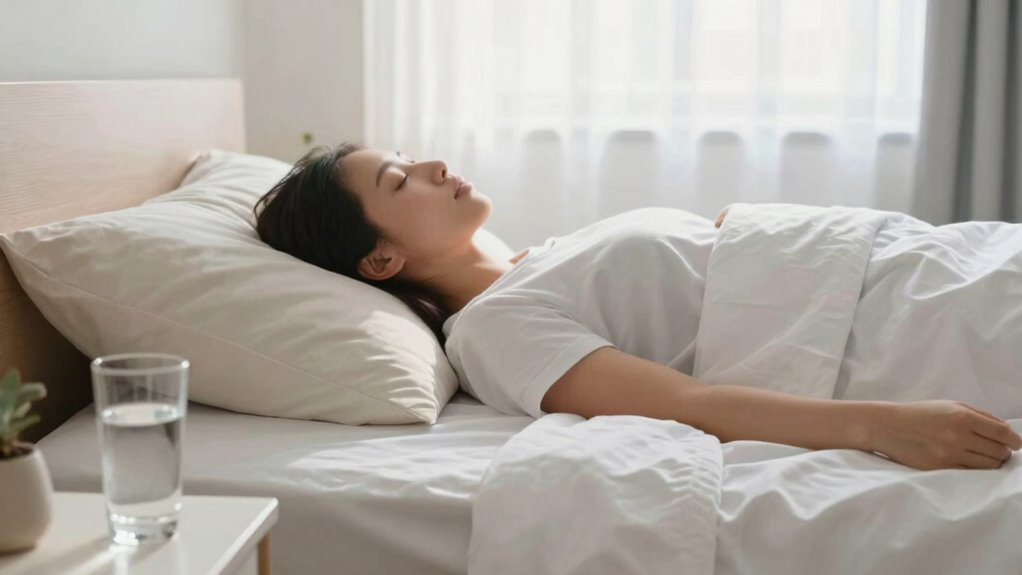
Have you ever felt overwhelmed by stress or tension in your body? It’s a common experience, especially with busy schedules and constant demands. When stress builds up, it can make it harder to relax and get a good night’s sleep. That’s where progressive muscle relaxation comes in—a simple yet powerful tool you’ll wish you’d tried sooner. This technique involves tensing and then relaxing different muscle groups, helping you release physical tension and calm your mind. It’s a practical way to incorporate mindfulness techniques into your nightly routine, promoting stress reduction and preparing your body for restful sleep.
As you begin, find a quiet, comfortable space where you won’t be disturbed. You might sit or lie down—whatever feels most relaxing. Close your eyes and take a few slow, deep breaths to center yourself. Focus on the sensation of your breath, inhaling deeply through your nose and exhaling through your mouth. With each breath, you start to tune into your body, becoming aware of areas where tension might be lurking. This heightened awareness is a key part of mindfulness techniques, helping you stay present and attentive to your body’s signals.
Start with your feet—curl your toes tightly, hold that tension for a few seconds, then release completely. Feel the difference between the tensed and relaxed state. Move upward to your calves, then your thighs, squeezing the muscles before letting go. Continue this process through your abdomen, chest, shoulders, arms, neck, and face. As you tense each group, breathe in, hold the tension for a moment, then exhale as you relax. Notice how your muscles feel softer and more relaxed after each cycle. This systematic approach not only promotes physical relaxation but also reduces mental clutter, clearing your mind of worries and stress. Incorporating this technique with home comfort strategies like adjusting your thermostat can further enhance your relaxation experience.
Progressive muscle relaxation works by helping you become more aware of tension and consciously releasing it. Over time, it trains your body to recognize and counteract stress responses more quickly. When practiced regularly, it becomes a natural part of your stress reduction toolkit, making it easier to unwind after a hectic day. The benefits extend beyond sleep—reducing anxiety, lowering blood pressure, and improving overall well-being. The more you practice, the better you’ll get at recognizing tension early and calming your mind and body with this effective technique. It’s a straightforward, drug-free method that fits into any routine, and with consistent effort, you’ll notice your nights become more restful and your days more manageable.
Frequently Asked Questions
Can Progressive Muscle Relaxation Replace Medication for Insomnia?
Progressive muscle relaxation can be a helpful relaxation technique, but it likely won’t fully replace medication for insomnia. Meditation benefits include reducing stress and promoting better sleep, making relaxation techniques a good complement. However, if your insomnia is severe, you should consult a healthcare professional. Combining relaxation methods like progressive muscle relaxation with other treatments can improve sleep quality without solely relying on medication.
How Long Does It Take to See Sleep Improvements?
You might start noticing sleep improvements within a week of regular practice, but it can take up to a month for significant changes. As you incorporate progressive muscle relaxation into your routine, it helps stabilize your sleep cycle and enhances relaxation benefits. Consistency is key; the more you practice, the quicker you’ll experience better sleep and a calmer mind, making it a valuable addition to your sleep hygiene.
Is It Suitable for Children or Pregnant Women?
Progressive muscle relaxation can be adapted for children using child-friendly relaxation techniques that make it fun and easy to follow. For pregnant women, it’s generally pregnancy-safe, but you should consult your healthcare provider first. This method promotes relaxation and better sleep without medication, making it a gentle, effective tool. Always guarantee the techniques are appropriate for your age and health status, and modify as needed for comfort and safety.
Are There Any Side Effects or Risks Involved?
You won’t experience significant side effects from progressive muscle relaxation, but muscle tension might temporarily increase if you strain or push too hard. Risks are minimal, mainly involving discomfort or dizziness if you relax too quickly. You control the relaxation response, so listen to your body and avoid overexertion. With proper practice, this technique gently reduces muscle tension and promotes calmness, making it safe for most people seeking better sleep.
Can It Be Combined With Other Sleep Techniques Effectively?
Yes, you can definitely combine progressive muscle relaxation with other sleep techniques effectively. Try pairing it with mindfulness practices or breathing exercises to deepen relaxation. For example, after tensing and relaxing muscles, focus on your breath or practice mindfulness to clear your mind. This combination can enhance your overall sleep quality, reduce stress, and make it easier to drift off peacefully. Experiment to find what works best for you.
Conclusion
So, why not give progressive muscle relaxation a try? It’s like a gentle tide washing away your worries, leaving you refreshed and ready for restful sleep. With just a little practice, you’ll find yourself drifting off faster and waking up feeling more energized. Think of it as a secret key to unseal peaceful nights—one muscle at a time. Don’t wait—your dreamland is just a few relaxed breaths away.