
If you’re restless, try this simple 10-minute routine combining mindful breathing and progressive muscle relaxation. Find a quiet space, sit comfortably, and focus on slow, deep breaths to anchor yourself in the present. Then, tense and relax different muscle groups, starting from your toes up to your face, paying attention to sensations. This powerful combination calms your mind and body quickly. Keep going, and you’ll discover more ways to unwind effectively.
Key Takeaways
- Use mindful breathing to anchor your focus and calm the mind despite restlessness.
- Incorporate progressive muscle relaxation to release tension and enhance physical awareness.
- Keep your eyes closed if comfortable to minimize external distractions during the routine.
- Maintain steady, deep breaths throughout to promote relaxation even when feeling restless.
- Practice regularly to improve your ability to relax quickly, regardless of current energy levels.
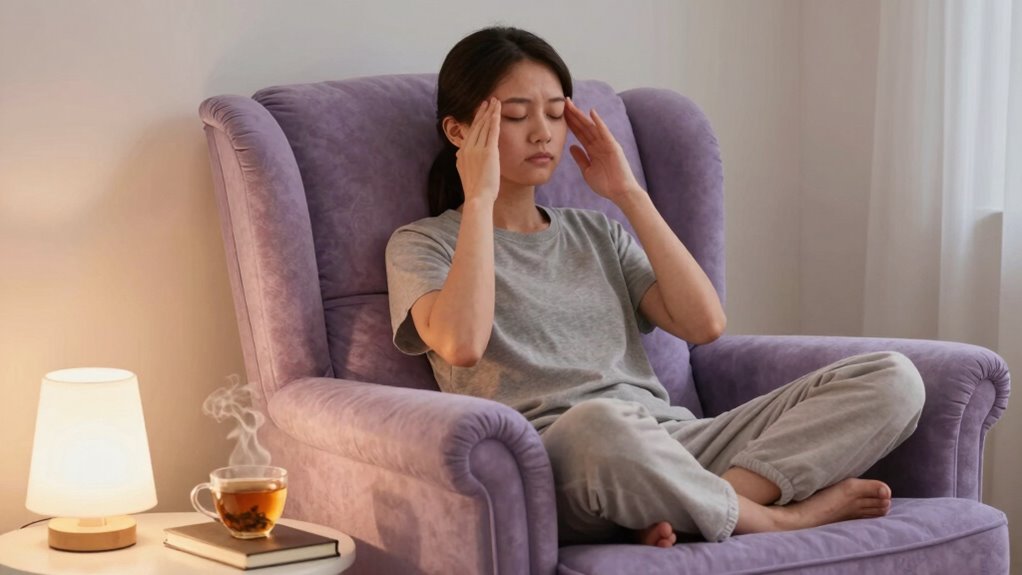
Have you ever wondered how to effectively unwind after a busy day? If you’re feeling restless, a quick, structured relaxation routine can make a big difference. It doesn’t require much time or special equipment—just your willingness to focus and breathe. Start by finding a quiet space where you won’t be disturbed. Sit comfortably, with your back straight but relaxed. The first step is to engage in mindful breathing. Close your eyes if you’re comfortable doing so, and take slow, deep breaths. Inhale deeply through your nose, feeling the air fill your lungs, then exhale slowly through your mouth. Focus solely on your breath; let each inhale and exhale anchor you to the present moment. This practice calms your nervous system, reducing stress and helping you let go of the day’s tensions. As you settle into this mindful breathing pattern, you may notice your mind wandering—when it does, gently bring your focus back to your breath. This simple act of mindfulness can be surprisingly effective in quieting a restless mind.
After a few minutes of mindful breathing, shift into progressive muscle relaxation. This technique involves tensing and then relaxing different muscle groups in your body, which helps release physical tension and promotes mental calm. Start with your toes—squeeze them tightly for a few seconds, then release. Move up to your calves, thighs, abdomen, chest, arms, shoulders, neck, and face, doing the same at each step. As you tense each group, pay attention to the sensation of tightness, then focus on the release. This not only relaxes your muscles but also increases your awareness of physical sensations, helping you stay present. It’s normal to feel a little restless at first; that’s where your focus on the muscle tension and release becomes especially valuable. Feel the difference between tension and relaxation, and let each cycle deepen your sense of calm.
Incorporating mindful breathing and muscle relaxation together can enhance your overall well-being, making it easier to manage stress and stay present. Throughout this routine, keep your breathing steady and even. The combined effect of mindful breathing and progressive muscle relaxation can reset your nervous system, making you feel more centered and less restless. Remember, the goal isn’t to eliminate all thoughts or feelings but to observe them without judgment and gently return your attention to your breath and body. With just 10 minutes, you can create a powerful mental and physical reset, helping you transition smoothly from a hectic day to a peaceful evening. Practice this routine regularly, and you’ll find that even the most restless days become easier to manage and unwind from.
Frequently Asked Questions
Can This Routine Help With Chronic Anxiety?
Yes, this routine can help with chronic anxiety. By practicing mindfulness techniques and breathing exercises, you actively calm your mind and body, reducing stress levels. Engaging in this simple, quick routine regularly helps you build resilience against anxiety triggers, even if you’re restless. It encourages you to stay present, manage your emotions better, and create a sense of calm that can make a noticeable difference over time.
Is It Suitable for Children or Teens?
Think of this routine as a gentle breeze for children and teens. It’s suitable for children’s activities and teen relaxation, helping them find calm amid chaos. With simple breathing and mindfulness, teens can easily fit this into their day. Just tweak the steps to match their age and attention span, making it a fun and effective way to teach young ones how to relax and manage stress.
How Often Should I Do This Routine Daily?
You should aim to do this relaxation routine daily, ideally once or twice a day. Incorporate mindfulness meditation and breathing exercises into your schedule to help manage stress and improve focus. Consistency is key, so choose a time that works best for you, like morning or evening. Doing it regularly will make these techniques more effective, helping you stay calm and centered even on busy or restless days.
What if I Can’t Sit Still During the Routine?
If you can’t sit still, try fidget-friendly techniques like squeezing a stress ball or tapping your fingers. Movement-based relaxation can help calm your mind while keeping your body engaged. Visualize your restless energy as waves that need gentle movement to settle, making it easier to relax without staying completely still. Incorporate small, intentional movements to stay focused and make the routine more comfortable for you.
Are There Any Contraindications for Certain Health Conditions?
Certain health conditions, like severe anxiety, heart issues, or respiratory problems, may have contraindications for relaxation routines. You should consult your healthcare provider before starting if you have any health concerns. They can advise you on safe techniques tailored to your condition. Always listen to your body, and if you feel discomfort or dizziness, stop immediately and seek medical advice. Your safety comes first.
Conclusion
Now that you have this simple 10-minute routine, relaxation is just a breath away—like finding a calm harbor in a storm. Even if you’re restless, these quick steps can anchor your mind and soothe your nerves. Remember, consistency turns small waves into a gentle tide of peace. So, set aside those ten minutes, and let this routine be your anchor whenever chaos tries to pull you under. Your calmer, more centered self awaits.