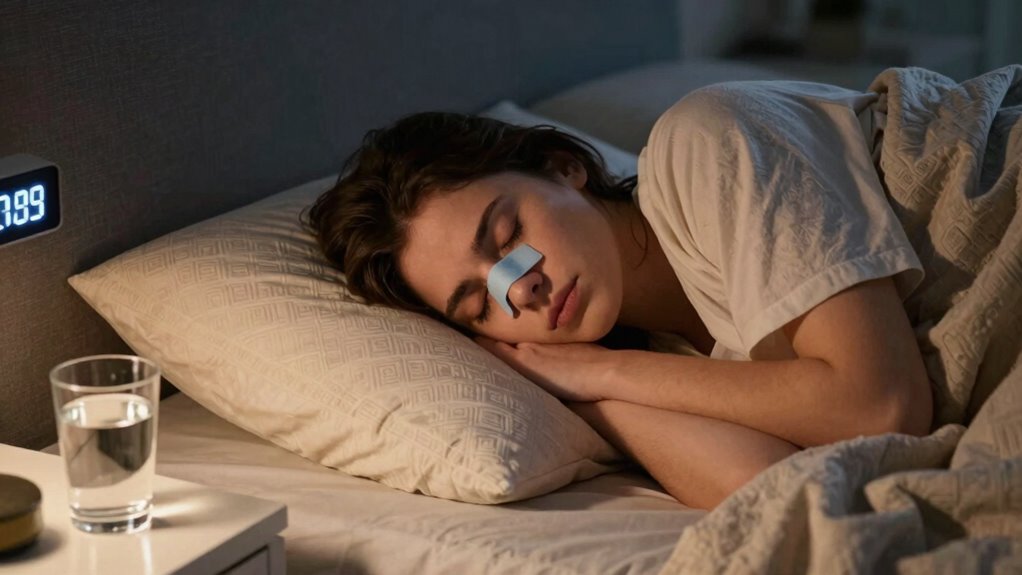

To manage snoring at home, try sleeping on your side, elevating your head, and avoiding alcohol before bed, as these can keep your airway open. If simple adjustments don’t help or your snoring is loud, persistent, or causes daytime fatigue, it’s time to see a doctor. They can check for sleep apnea or other issues. Keep exploring to discover more effective solutions and when professional help becomes essential.
Key Takeaways
- Simple home adjustments like side sleeping and elevating the head can reduce mild snoring.
- Avoid alcohol before bed to decrease muscle relaxation that worsens snoring.
- Seek medical advice if snoring is loud, persistent, or accompanied by choking or daytime fatigue.
- When lifestyle changes fail or symptoms worsen, consult a healthcare professional for proper diagnosis.
- Snoring may indicate sleep apnea, requiring professional evaluation and potential treatment beyond home remedies.
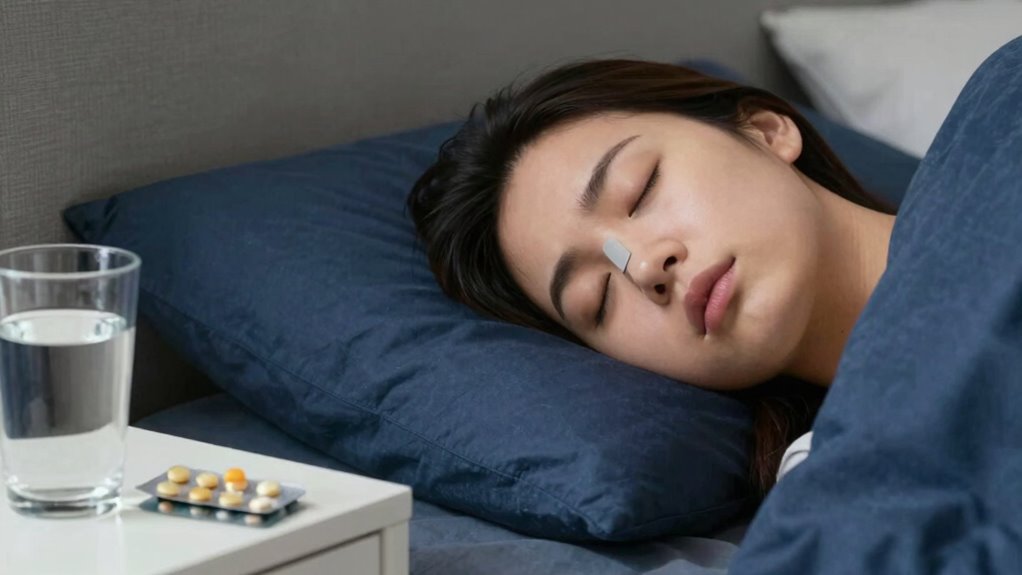
Have you ever wondered what causes snoring? It’s a common question, and understanding the basics can help you manage it better. One of the main factors that influence snoring is sleep posture. When you sleep on your back, your tongue and soft tissues tend to fall back into your airway, narrowing the passage and making it more likely for vibrations — the snoring sound — to occur. Changing your sleep position can sometimes reduce snoring noticeably. For example, sleeping on your side keeps your airway more open, decreasing the chances of obstruction. Elevating your head with an extra pillow can also help improve airflow. These simple adjustments are often enough to lessen snoring at home, especially if it’s caused by your sleep posture.
Another key factor that can worsen snoring is alcohol consumption. Drinking alcohol relaxes the muscles in your throat and tongue, which makes your airway more prone to collapse during sleep. When your airway is partially blocked, vibrations occur as air tries to pass through, resulting in snoring. If you notice snoring gets worse after a night of drinking, reducing or avoiding alcohol near bedtime can make a noticeable difference. It’s worth noting that alcohol doesn’t just relax muscles; it can also sedate you into a deeper sleep stage, where your airway muscles are naturally less active. This combination amplifies the likelihood of snoring and, in some cases, may lead to pauses in breathing, which could be a sign of sleep apnea. Additionally, understanding sleep-related breathing issues can help you recognize when snoring might be more serious.
While these at-home tips can be effective for mild snoring, it’s important to recognize when to seek medical advice. If your snoring is loud, persistent, or accompanied by other symptoms like choking, gasping, or daytime fatigue, you should consider consulting a healthcare professional. Snoring can sometimes be a symptom of more serious conditions such as sleep apnea, which requires proper diagnosis and treatment. Additionally, if changing your sleep posture or cutting back on alcohol doesn’t help, or if your snoring is affecting your partner’s sleep or your overall quality of life, it’s time to ask for expert guidance.
Frequently Asked Questions
Can Weight Loss Completely Eliminate Snoring?
Weight loss can markedly reduce snoring, but it may not completely eliminate it for everyone. Lifestyle changes like losing weight often improve airway flow and lessen tissue vibrations. However, if snoring persists, medical interventions such as CPAP therapy or surgery might be necessary. You should consider both approaches, and consulting a healthcare professional can help determine the best plan tailored to your needs.
Are There Specific Sleeping Positions That Reduce Snoring?
Sleeping on your side can reduce snoring by up to 50%, according to studies. You should try different sleeping positions to see what works best, especially focusing on positional therapy. Avoid sleeping on your back, which can cause the tongue and soft tissues to block your airway. By experimenting with sleeping positions, you may find a simple, effective way to reduce snoring without needing medical intervention.
Do Over-The-Counter Remedies Effectively Treat Snoring?
Over-the-counter remedies can sometimes help reduce snoring, especially when combined with lifestyle changes like weight management and sleeping position adjustments. Herbal supplements, such as chamomile or valerian root, may promote relaxation and improve sleep quality, potentially decreasing snoring. However, their effectiveness varies, and you should consult a healthcare professional if snoring persists, as it might indicate underlying health issues needing medical attention.
How Long Should I Try Home Remedies Before Seeking Medical Help?
You should try home remedies for about 2 to 4 weeks to assess their effectiveness. During this duration, monitor your snoring patterns and note any improvements. If you don’t notice a reduction in snoring or if your symptoms worsen, it’s time to seek medical help. Persistent snoring might indicate underlying health issues, so don’t hesitate to consult a doctor if remedy testing doesn’t produce results.
Is Snoring Always a Sign of Sleep Apnea?
Like the sirens calling sailors to treacherous waters, snoring isn’t always a warning sign of sleep apnea. While it can stem from lifestyle factors or nasal congestion, it doesn’t automatically mean apnea. Pay attention to loud, persistent snoring accompanied by choking, gasping, or daytime fatigue. If these occur, it’s wise to seek medical advice—don’t ignore the signals or assume it’s harmless.
Conclusion
Now that you know the basics of snoring and when to seek help, you’re better equipped to tackle the issue head-on. Remember, ignoring snoring is like sweeping problems under the rug—they won’t just disappear. Whether trying simple home remedies or seeing a doctor, taking action is key. Don’t let snoring steal your peace or yours loved ones’ sleep. It’s time to face it, because sometimes, you’ve got to fight fire with fire to restore restful nights.