To organize your digital files like a calm person, start by taking stock of your current clutter and prioritize what’s truly important. Create a simple folder structure with clear categories and consistent naming systems that make sense to you. Set routines for regular cleanup and use tools or automation to help keep everything in order. Building these habits will create a peaceful digital space—continue exploring these strategies to make organization effortless and sustainable.
Key Takeaways
- Regularly declutter files, deleting duplicates and outdated documents to maintain a tidy digital environment.
- Create a simple, logical folder hierarchy with clear, descriptive names reflecting content and purpose.
- Use consistent, keyword-rich naming conventions including dates for easy searchability.
- Automate routine tasks like backups, file sorting, and renaming to reduce manual effort.
- Schedule regular digital cleanup sessions to review, organize, and remove unnecessary files, fostering calmness and control.
Take Stock of Your Digital Files and Decide What’s Most Important
How often do you review your digital files to guarantee they’re still relevant and organized? Regular digital decluttering helps you stay on top of your files and prevents clutter from piling up. Begin by taking stock of what you have—delete duplicates, outdated documents, and files you no longer need. As you do this, use prioritization strategies to identify your most important files. Focus on documents that impact your work, personal life, or goals. Organize everything into clear folders based on category or urgency. This initial step creates a solid foundation for managing your digital space efficiently. Remember, digital decluttering is an ongoing process that keeps your digital environment manageable and stress-free, just as proper firewood stacking ensures safer, easier woodworking. Incorporating performance parts like well-organized files can enhance your productivity and reduce stress during busy times. Additionally, adopting digital organization strategies can help maintain your system over time, preventing clutter from returning. Regularly reviewing your workflow can further reinforce your digital organization habits and maintain your system’s effectiveness. To optimize your digital space further, consider implementing tools that support file management and automation to streamline your decluttering efforts.
Assess Your Current Digital Clutter and Identify Your Priorities
Before you can effectively organize your digital files, you need to assess the current state of your digital clutter. Start by reviewing your files and noting which ones are essential and which can be deleted or consolidated. Pay attention to your file naming habits—are they descriptive and consistent? Clarifying your naming conventions now will save headaches later. Also, evaluate the state of your digital backups. Are your files backed up securely and regularly? Identifying gaps in your backups helps prevent data loss. Incorporating Free Floating principles into your organization process can help you maintain a more relaxed and manageable digital environment. This assessment helps you see where your clutter is concentrated and prioritize what needs immediate attention. By understanding your current digital landscape, you can develop a clear plan to streamline your files and establish a calm, manageable system.
Create a Simple, Consistent Folder Structure That Works for You
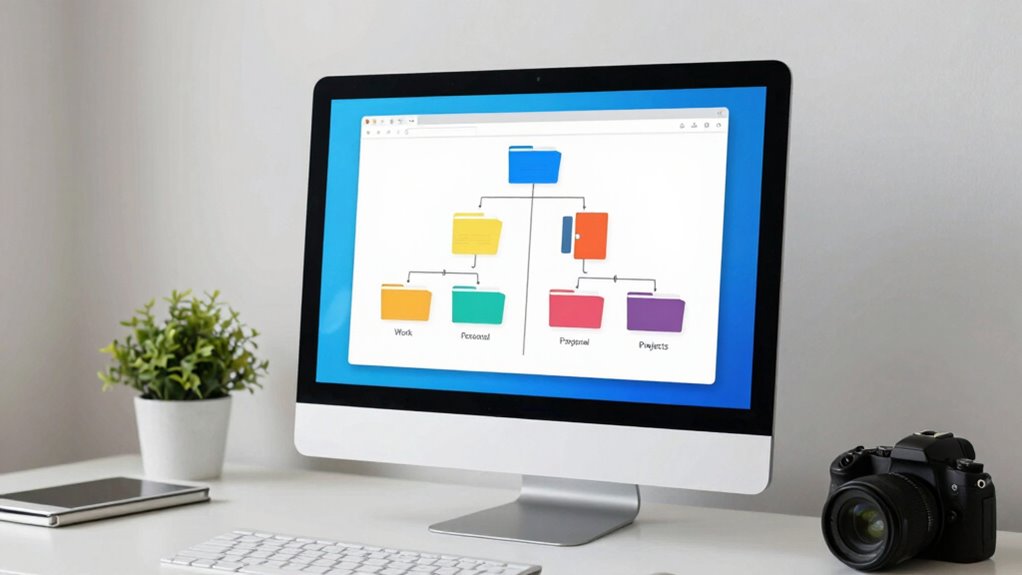
Creating a straightforward, consistent folder structure is the next step to organizing your digital files effectively. Focus on clear folder naming and hierarchy design that makes sense to you. Keep your structure simple with broad categories, then break them into subfolders as needed. This way, you avoid clutter and confusion. Use a consistent naming convention, like dates or project names, to make files easy to find. Here’s a visual example:
| Top Level Folders | Subfolders | Specific Files |
|---|---|---|
| Work | Reports, Presentations | Q1_Report.docx |
| Personal | Finances, Photos | Budget.xlsx |
| Hobbies | Photography, Travel | ItalyTrip.jpg |
| Archives | Old Projects, Documents | Old_Report.pdf |
| Miscellaneous | Downloads, Temporary | Temp_File.txt |
Stick to a logical hierarchy that suits your workflow for a calmer digital life.
Name Your Files Effectively for Easy Search and Retrieval
Choosing clear, descriptive names for your files helps you find what you need quickly. Including dates when relevant makes it even easier to track versions or recent updates. When you label files thoughtfully, searching becomes faster and less frustrating.
Use Descriptive Names
Using descriptive names for your files makes it much easier to find what you need quickly. Follow clear file naming conventions that include relevant keywords, so you can identify files at a glance. Avoid vague titles like “Document1” or “Untitled”; instead, use specific terms that describe the content, such as “ProjectProposal_April2024” or “ClientMeetingNotes.” Incorporate descriptive folder labels to organize related files logically, making navigation seamless. Consistent naming patterns help prevent confusion when searching or sorting files. Keep names concise but informative, avoiding unnecessary words. Additionally, using standardized naming conventions can improve consistency across your digital workspace. By applying these practices, your digital workspace becomes calmer and more manageable, saving you time and reducing frustration when locating important files.
Include Dates When Relevant
Including dates in your file names can substantially boost your ability to find and organize important documents quickly. When you incorporate relevant dates into your file naming, you create a clear timeline that makes it easier to locate files later. Use a consistent format, like YYYY-MM-DD, to guarantee files sort chronologically within your folder hierarchy. This helps you avoid clutter and confusion, especially if you deal with multiple versions or recurring projects. Adding dates is particularly useful for files related to reports, invoices, or events. Remember to update your naming conventions regularly and keep your folder hierarchy organized by year or month to streamline your search process. Clear, date-inclusive file names save time and reduce stress when managing your digital files.
Establish Regular Habits to Keep Your Digital Space Tidy

Creating consistent scheduling rituals helps you stay on top of your digital organization. Setting aside a specific time each week for cleanup makes it easier to maintain order. Regularly sticking to these habits keeps your digital space tidy and your files easy to find.
Consistent Scheduling Rituals
Establishing regular scheduling rituals is essential for maintaining an organized digital space. Consistent routines help you stay on top of files and prevent clutter from piling up. Use reminder systems to prompt routine reviews, ensuring files are correctly sorted and outdated items deleted. Set specific times—daily, weekly, or monthly—to review your folders and backups. To make this easier, consider this schedule:
| Frequency | Task | Tool |
|---|---|---|
| Daily | Check for new files | Reminder app |
| Weekly | Organize downloads & docs | Calendar alerts |
| Monthly | Backup & declutter | Automated tools |
Weekly Cleanup Sessions
Scheduling weekly cleanup sessions keeps your digital space organized and prevents clutter from accumulating. Regularly engaging in digital decluttering helps you stay on top of your files and maintain a tidy system. During these sessions, you should follow simple file review routines: delete unnecessary files, organize remaining ones into appropriate folders, and rename items for clarity. Consistent file review routines make it easier to find what you need and reduce stress when searching through your digital workspace. By setting aside dedicated time each week, you prevent clutter from building up and ensure your files stay manageable. Over time, these habits become second nature, transforming digital organization from a chore into a seamless part of your routine.
Use Tools and Automation to Maintain an Organized Digital Life

To keep your digital files organized and manageable, leveraging the right tools and automation can make a significant difference. Using cloud storage guarantees your files are accessible and backed up automatically, reducing clutter and loss. Automation tools help streamline tasks like sorting downloads, renaming files, and updating folders without manual effort. Consider these options:
- Set up automatic backups with cloud storage providers
- Use rules in email clients to organize attachments automatically
- Automate file naming conventions with scripting tools
- Schedule regular cleanup sessions with task automation apps
- Incorporate media literacy principles to recognize and eliminate suspicious or unnecessary files, ensuring your digital environment remains trustworthy and clutter-free.
Frequently Asked Questions
How Often Should I Back up My Digital Files?
You should back up your digital files at least once a week, especially if you frequently update or add new files. Using cloud storage makes this easier, as it can automate backups and guarantee your data is always protected. For critical files, consider daily backups. Regular backup frequency keeps your files safe, minimizes data loss, and helps you stay organized without stress, giving you peace of mind.
What Is the Best Way to Handle Duplicate Files?
Ever open your folder and find two nearly identical files? To handle duplicates efficiently, use duplicate detection software to scan and identify them quickly. Then, rely on consistent file naming conventions to keep track of versions. Delete or archive unnecessary copies, and keep your files tidy. This approach saves space, reduces confusion, and helps you stay organized without stress, turning chaos into calm easily.
How Can I Secure Sensitive Information in My Digital Folders?
You can safeguard sensitive information by applying password protection to your digital folders and files. Use strong, unique passwords and change them regularly. Additionally, employ encryption methods like AES or BitLocker to safeguard your data from unauthorized access. Always back up your encrypted files securely, and avoid sharing passwords. Implementing these steps ensures your sensitive information stays private and protected against potential threats.
Which Tools Are Best for Automated File Organization?
You want tools that effortlessly keep your digital life tidy, like cloud storage services such as Google Drive or Dropbox, which automatically sync your files. Pair them with apps like Hazel or File Juggler that use automatic tagging and rules to organize files as soon as they arrive. These tools work together, transforming chaos into calm, so you spend less time sorting and more time doing what you love.
How Do I Recover Accidentally Deleted Files Effectively?
When you accidentally delete files, act quickly by using reliable file recovery software to restore them. First, avoid saving new files to prevent overwriting. Enable accidental deletion prevention features on your devices to minimize future risks. Regularly back up your important files to cloud storage or an external drive. These steps help you recover files effectively and keep your digital life organized and stress-free.
Conclusion
Staying organized might seem time-consuming, but it’s worth the calm it brings. Even if your digital clutter feels overwhelming, remember that small, consistent habits make a big difference over time. Don’t wait for everything to be perfect—start today, and trust that your future self will thank you. Embrace the process, and you’ll find that a tidy digital space helps you stay focused, relaxed, and in control, no matter how busy life gets.