
Arriving early is the key to eliminating airport stress and making your travel smooth. Check your airline’s check-in times, plan for security lines, and aim to arrive at least two hours before domestic flights and three for internationals. Stay aware of gate opening times and boarding cues, then use the extra time to relax or prepare. Staying organized and calm transforms airport visits into a seamless experience—continue on to discover how to perfect your timing.
Key Takeaways
- Arrive early, at least 2 hours for domestic and 3 hours for international flights, to allow ample time for check-in, security, and buffer.
- Prepare and organize luggage beforehand, ensuring essentials are accessible and baggage labels are clear to streamline processing.
- Familiarize yourself with airport procedures, security guidelines, and terminal layouts to reduce confusion and delays.
- Use tools, wait time info, and airport amenities to plan your time effectively and stay relaxed during waits.
- Practice mindfulness and stress-reduction techniques to maintain calmness and enjoy a smoother, more enjoyable travel experience.
Why Planning Your Airport Arrival Time Can Reduce Travel Stress
Planning your airport arrival time is one of the most effective ways to ease travel stress. When you arrive early, you have plenty of time to organize your luggage and ensure your travel accessories are in order. Proper luggage organization helps you avoid last-minute chaos, making security checks and boarding smoother. By giving yourself a buffer, you prevent rushing and reduce anxiety about missing your flight. Plus, arriving early allows you to double-check that your essentials—like chargers, passports, and tickets—are easily accessible. This proactive approach minimizes surprises and keeps you in control. Additionally, understanding the importance of content formats can help you access helpful travel resources and updates more efficiently. Being aware of home safety features, such as smart security systems, can also give you peace of mind during your travels. Incorporating time management strategies into your planning can further enhance your travel experience. Taking a moment to review travel safety tips can help you stay prepared for unexpected situations. A well-planned schedule can also reduce stress levels, making your airport experience more relaxed. Ultimately, knowing you’re ahead of schedule transforms airport visits from stressful to straightforward, giving you peace of mind so you can focus on enjoying your trip.
Figuring Out When to Check In and Pass Security

Knowing when to check in and pass through security can make or break your travel experience. Arriving too early might mean unnecessary waiting, while arriving too late risks missing your flight. Check in counters open at specific times, often 2-3 hours before departure for domestic flights and earlier for international ones. Use the baggage drop if you’ve already checked in online to save time. Once at the airport, head straight to the check in counters or baggage drop to avoid delays. After confirming your flight and dropping off luggage, proceed directly to security. Keep an eye on the recommended check-in and security cut-off times provided by your airline. Being prepared and arriving within the best window ensures a smoother, less stressful airport experience. Understanding security procedures can also help you navigate the process more efficiently. Additionally, being aware of Free Floating guidelines can help you adapt to unexpected changes or delays in your travel timeline. Staying informed about airport procedures can further streamline your journey and reduce stress. Being familiar with security checklists can help you prepare your documents and belongings, speeding up the process. Knowing the derating requirements for your destination can also prevent unexpected delays related to altitude or temperature considerations, ensuring you are fully prepared before arriving at the airport.
Timing Your Boarding and Reaching the Gate
To guarantee you board your flight without stress, it’s important to time your arrival at the gate carefully. Staying alert to gate announcements helps you stay updated on boarding procedures and any changes. Use effective boarding strategies, such as waiting until your zone is called or listening for specific cues, to avoid unnecessary crowding. Additionally, knowing the appropriate timing for arrival can significantly reduce anxiety and ensure a smoother boarding process. Planning your pre-boarding preparations in advance can further streamline your experience. – Arrive at the gate at least 30 minutes before departure for domestic flights or 45 minutes for international flights. – Keep an eye on gate announcements for boarding groups and updates. – Avoid lingering too long after boarding begins to prevent missing your turn. Being attentive to these cues ensures a smooth transition from security to boarding, reducing last-minute rushes and stress. Proper timing and awareness of your arrival and boarding can make the entire process more manageable and less chaotic. Additionally, understanding boarding procedures can help you anticipate what to expect and reduce uncertainty during the process.
How Early Should You Arrive? Tips for Perfect Timing
To figure out when to arrive, consider your flight time and how long security lines typically take. Rushing through security can boost stress, so give yourself enough buffer. Planning ahead guarantees you stay relaxed and ready to board without last-minute panic. Understanding airport procedures helps reduce confusion and delays. Additionally, being aware of security wait times can help you better plan your arrival to minimize stress, especially since glycolic acid benefits include improving skin texture, which can be useful if you want to look fresh and relaxed for travel. Being familiar with airport layout can also help you find your gate more efficiently and avoid unnecessary walking or confusion.
Consider Flight Time
Have you ever arrived at the airport feeling rushed or anxious? Timing your arrival is vital for a smooth trip. Consider your flight time to plan accordingly:
- Early morning flights often mean shorter lines but require earlier arrival.
- International flights demand more time for luggage handling and customs.
- Check airline policies for specific check-in and baggage drop deadlines.
- Remember that water-based transportation options like shuttle services or ferries can also influence your timing, especially if your airport is near water routes.
- Incorporating essential oils for travel stress in your routine, such as a few drops of lavender or peppermint, may help keep you calm during your journey.
- Being aware of airport amenities can also help you make the most of your waiting time and reduce stress.
- Knowing about security procedures in advance can streamline your experience through the checkpoint process, saving valuable time and reducing anxiety.
- Utilizing time zone differences information can help plan your departure and arrival times more accurately, preventing unnecessary waiting or confusion.
Account for Security Lines
Security lines can be unpredictable, so it’s wise to factor in potential wait times when planning your arrival. Arriving too late can cause unnecessary stress, especially during peak hours. Aim to reach the airport at least two hours before domestic flights and three hours for international trips. This extra time allows for smooth security screening, where you’ll need to remove liquids, electronics, and belts. Don’t forget to account for baggage check, which can add extra minutes if you have checked luggage. By planning ahead, you give yourself a buffer to handle unexpected delays at security lines, ensuring you’re not rushing or stressing. Perfect timing helps you breeze through security screening and baggage check, making your overall travel experience more relaxed and enjoyable.
Managing Airport Waits Calmly and Prepared
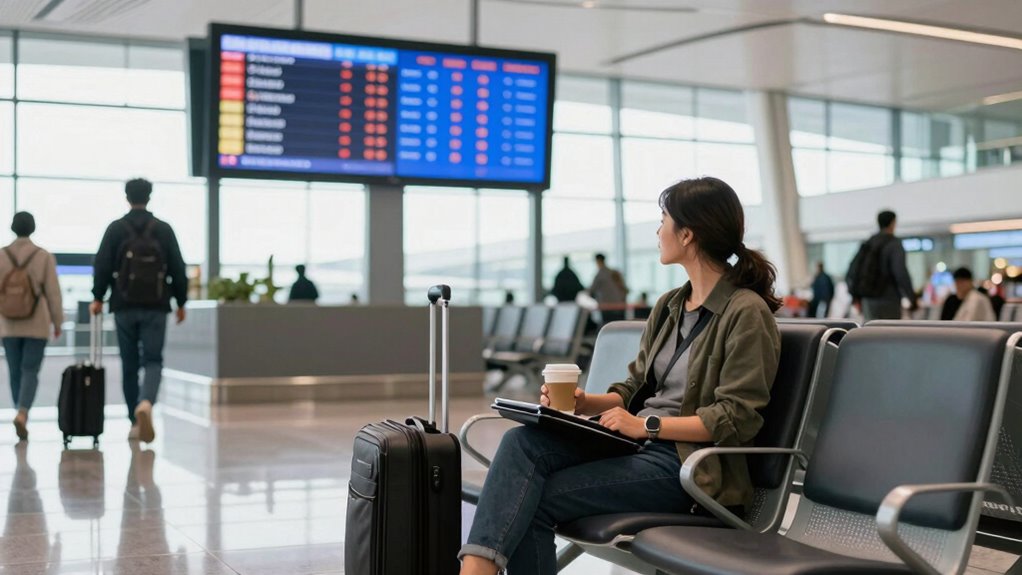
To manage airport waits calmly and prepared, start by arriving early so you can relax and focus. Pack smartly and easily access what you need, reducing stress and keeping your mind clear. Staying calm and focused helps you enjoy the experience rather than feel overwhelmed. Incorporating mindfulness techniques can further enhance your ability to stay relaxed during wait times. Additionally, understanding airport procedures can help you anticipate and navigate potential delays more confidently.
Arrive Early, Relaxed
Ever wonder how arriving early can transform your airport experience? When you get there ahead of time, you can enjoy a calmer, more organized start. Use the extra minutes to focus on luggage organization, ensuring your bags are packed efficiently and security-friendly. Take advantage of airport amenities like comfortable lounges, cafes, or shops to relax. Arriving early also means you can:
- Breeze through check-in and security without rushing
- Find a quiet spot to gather your thoughts
- Handle last-minute details without stress
This approach helps you stay relaxed and prepared, avoiding frantic scrambling. By planning to arrive early, you give yourself the gift of peace, making airport waits feel less overwhelming and more manageable. It’s a simple step that makes a big difference.
Pack Smartly, Easily
Packing smartly guarantees you’re prepared for any delays or unexpected situations at the airport. Focus on luggage organization by using packing cubes or compartments to keep essentials accessible and easy to find. This saves time and reduces frustration during security checks. Bring along essential travel gadgets such as portable chargers, noise-canceling headphones, and a universal adapter to stay connected and comfortable. Keep important documents like your passport, boarding pass, and travel itinerary in a designated, easily reachable spot. Minimize clutter by packing only what you need, which makes your bag lighter and easier to navigate. Well-organized luggage and handy gadgets ensure you’re ready for airport waits, letting you stay calm and in control even when plans change unexpectedly.
Stay Calm, Focused
Managing airport waits calmly starts with your mindset; staying patient and focused can make the experience much less stressful. Practice mindful breathing to center yourself during long lines or delays. Staying present helps you avoid unnecessary frustration, keeping you grounded in the moment. To stay calm and focused, try these strategies:
- Take slow, deep breaths to calm your nerves.
- Shift your attention to your surroundings, observing sights and sounds.
- Use the time to review your travel plans or listen to calming music.
Common Mistakes That Cause Airport Stress: And How to Avoid Them
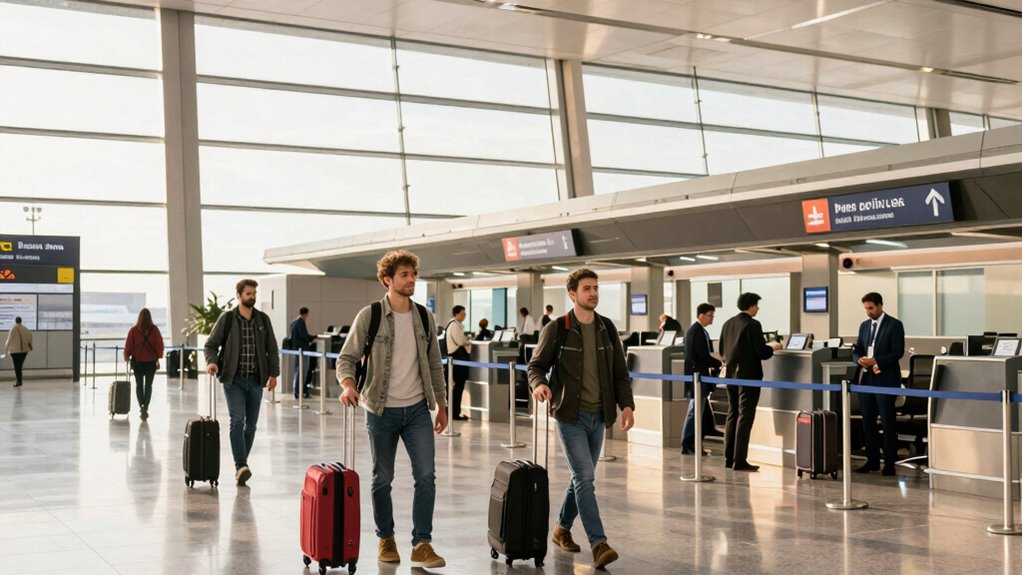
One common mistake that fuels airport stress is arriving too close to your flight’s departure time. Rushing through security and check-in increases the chance of delays, especially if customs processing takes longer than expected. Customs delays can catch travelers off guard, causing last-minute panic. Additionally, poor planning around baggage handling can add to your stress—if your bags aren’t ready or if baggage claim is crowded, it slows your entire process. To avoid this, aim to arrive early, giving yourself ample time for unexpected holdups. Double-check baggage requirements and ensure your luggage is properly labeled. Staying ahead of these potential issues keeps the process smooth, so you can focus on relaxing and enjoying your journey rather than stressing out over avoidable setbacks.
Frequently Asked Questions
How Can I Stay Relaxed During Unexpected Airport Delays?
To stay relaxed during unexpected airport delays, practice mindfulness techniques like deep breathing or grounding exercises to center yourself. Engage in calming rituals, such as listening to soothing music or reading a favorite book. Keep a positive mindset, remind yourself delays are temporary, and stay patient. Focusing on the present moment helps reduce anxiety and keeps you calm, allowing you to better handle the situation with ease and confidence.
What Are the Best Apps to Monitor Real-Time Airport Updates?
You should use apps like FlightAware or FlightRadar24 for real-time airport updates, as they send mobile alerts about delays and gate changes. Additionally, apps like GateGuru and Airport Maps help you navigate airport terminals efficiently with detailed airport maps. These tools keep you informed and reduce stress, so you can stay relaxed even when unexpected delays happen. Make sure to enable notifications for the most current updates during your travels.
How Do I Handle Last-Minute Gate Changes Effectively?
Imagine yourself breezing through the airport, even as gate changes unfold. Stay calm by quickly checking your airline’s app or airport monitors for the new gate. Use gate change strategies like setting alerts and asking staff for updates. During the boarding process, keep your boarding pass handy and arrive early at the new gate. These tips help you adapt seamlessly and keep stress at bay, making your journey smoother.
What Should I Do if I Miss My Check-In Window?
If you miss your check-in window, act quickly by contacting your airline’s customer service to explain your situation. They can inform you about check-in policies and may offer solutions like rebooking or special accommodations. Stay calm and polite, and have your flight details ready. Prompt communication increases your chances of resolving the issue smoothly, helping you get back on track without unnecessary stress.
How Can I Minimize Stress When Traveling With Children?
To minimize stress when traveling with children, plan ahead by packing entertainment like coloring books and tablets loaded with games. Use packing tips such as packing snacks, extra clothes, and comfort items to keep everyone comfortable. Keep children engaged with toys or stories during delays, and maintain a calm attitude to set a positive tone. Remember, a prepared approach makes the journey smoother and more enjoyable for everyone involved.
Conclusion
By mastering the timeline of your airport journey, you turn chaos into a well-choreographed dance. Think of your travel plans as a symphony—you’re the conductor guiding each note perfectly. When you plan ahead, check in early, and stay calm during waits, you prevent stress from taking center stage. With this rhythm, your trip becomes a smooth melody, making the airport feel less like a storm and more like a breeze.