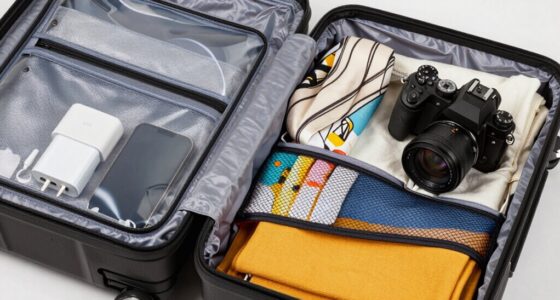
Spend 15 minutes checking your vehicle’s essentials before hitting the road. Inspect fluids, tires, battery, and lights to catch potential issues early. Pack a small emergency kit, confirm your documents are organized, and make sure everything is in proper working order. If you schedule a quick maintenance check and troubleshoot common problems now, you can prevent breakdowns and enjoy your trip stress-free. Keep going to discover the full list of simple steps that keep your journey smooth.
Key Takeaways
- Conduct a quick vehicle inspection, checking fluid levels, tire condition, and lights to identify potential issues before departure.
- Verify that the battery is healthy, terminals are secure, and all electrical components are functioning properly.
- Ensure emergency supplies, spare parts, and essential documents are organized and easily accessible.
- Confirm tire pressure, tread depth, and inspect for any damage or uneven wear to prevent flats or blowouts.
- Review your route, planned stops, and safety equipment to minimize surprises and ensure a smooth, stress-free trip.
Why a 15-Minute Car Checkup Can Save Your Road Trip
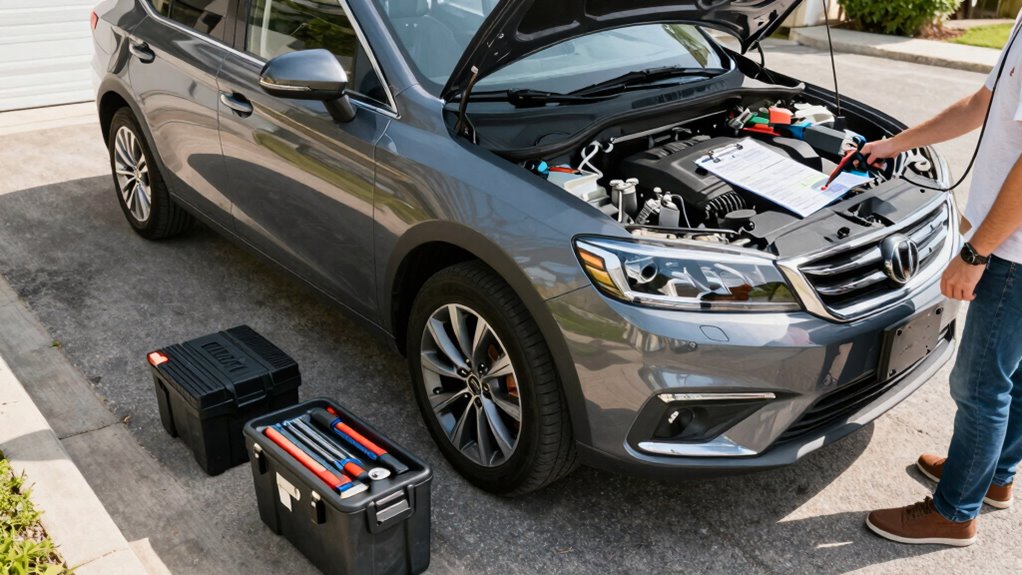
A quick 15-minute car checkup before hitting the road can prevent unexpected breakdowns and costly repairs. By inspecting your vehicle, you ensure maximum fuel efficiency, saving you money on gas during your trip. A well-maintained engine runs smoother, which directly boosts fuel economy. Additionally, checking your interior comfort—such as adjusting seat positions and ensuring climate controls work properly—makes your drive more enjoyable. Vehicle maintenance and comfort are key for long hours on the road, helping you stay relaxed and alert. Taking this short time to review essential features can catch minor issues early, preventing bigger problems later. Doing a simple pre-trip inspection can identify potential concerns before they become serious. Incorporating a vehicle safety check into your routine can further enhance your confidence on the road. Regularly performing vehicle diagnostics can detect underlying issues that might not be immediately obvious. Prioritizing caregiver emotional health during your trip can help reduce stress and improve your overall well-being on the road. Ultimately, this quick check sets the stage for a smoother, safer, and more comfortable journey, giving you peace of mind from start to finish.
Check Fluids and Tires to Prevent Breakdowns

Since low or dirty fluids and underinflated tires are common causes of breakdowns, making a point to check them before your trip is essential. Start by inspecting your oil levels; if they’re low or dirty, top them off or get an oil change. Check your windshield wipers to confirm they’re functioning properly, especially for unexpected weather. Don’t forget to examine your tires for proper inflation—underinflated tires can lead to blowouts or poor fuel efficiency. Also, look for any signs of damage or uneven wear. Keeping fluids topped off and tires properly inflated reduces the risk of overheating, tire blowouts, and engine trouble. Additionally, being aware of regional flavors and pairings can make your journey more enjoyable if you plan to enjoy local coffee or tea stops along the way. Remember that proper vehicle maintenance is key to avoiding roadside emergencies, so consider scheduling a quick checkup before your trip. Performing a projector calibration check can ensure your home cinema setup remains optimal, but on the road, maintaining your vehicle is critical to prevent unexpected breakdowns. Regularly reviewing your vehicle manual can provide specific guidance tailored to your car model and help prevent issues. For example, inspecting your essential oils for vehicle comfort might help you stay relaxed during long drives, especially if you enjoy aromatherapy. Taking these simple steps now can save you from inconvenient breakdowns on the road, letting you enjoy your trip stress-free.
Make Sure Your Battery and Lights Are Road-Ready
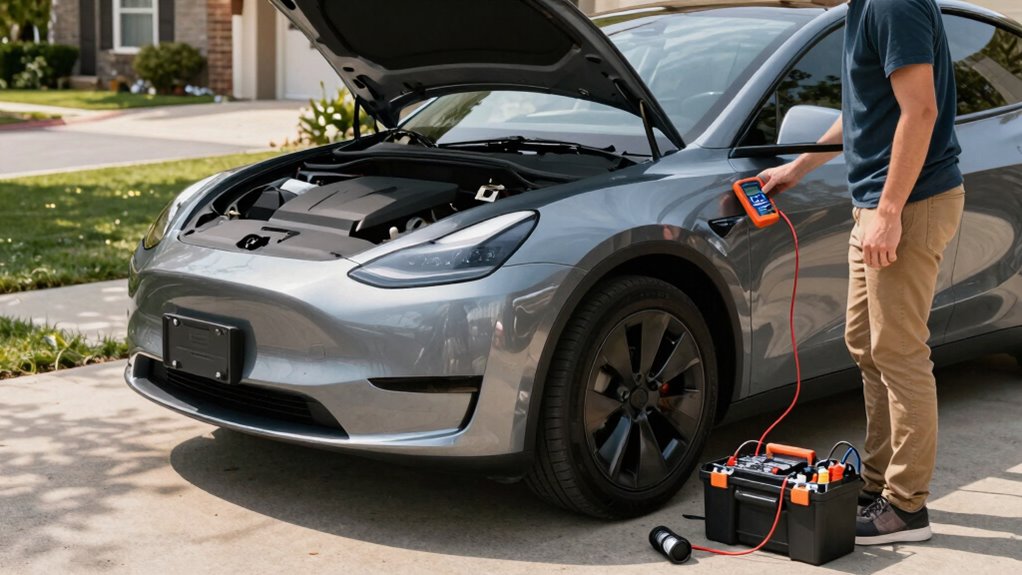
Before hitting the road, make certain your battery is strong enough to start your vehicle and replace it if needed. Test all your lights to make sure they’re working properly, so you’re visible and legal on the road. Taking these simple steps keeps you safe and prevents unexpected breakdowns. Additionally, ensure your vehicle’s pre-trip maintenance is up to date to help avoid mechanical issues during your trip. Regular vehicle inspections can identify potential problems early, saving you time and money. Remember that vehicle battery health can impact your ability to start your trip smoothly.
Battery Check and Replacement
To guarantee your vehicle is ready for the road, you need to thoroughly check the battery and lights. Start by evaluating your battery health—look for corrosion, swelling, or leaks, which can indicate it’s nearing the end of its life. If your battery shows signs of weakness, consider replacement options like a new battery or a quick recharge if possible. Testing the battery’s voltage with a multimeter can reveal if it’s holding a proper charge; a reading below 12.4 volts suggests it’s time for a replacement. Don’t forget to inspect the terminals for tightness and corrosion. Ensuring your battery is in good shape prevents unexpected breakdowns, and having a reliable, road-ready battery will give you peace of mind throughout your trip. Additionally, understanding your electric dirt bike’s horsepower can help you better prepare for varied terrains and ensure optimal performance on your journey. Regularly checking your vehicle’s electrical system can also prevent potential issues during your trip, keeping you safe and on schedule, especially since battery maintenance is crucial for urban and rural rides alike. Being aware of your vehicle’s electrical components can help you address minor issues before they lead to major problems.
Lights Functionality Test
Ensuring your vehicle’s lights are functioning properly is essential for safety and compliance on the road. Start by checking that your headlights are correctly aligned, providing clear visibility without blinding other drivers. Test your indicator functionality, making sure all turn signals operate smoothly and reflect accurately on your dashboard. Walk around your vehicle to verify that brake lights, reverse lights, and tail lights turn on and off properly. If any light is dim or flickering, replace the bulb immediately. Proper headlight alignment improves night driving safety, while functional indicators prevent miscommunication with other drivers. Regular inspection of your lighting system can help identify potential issues before they lead to breakdowns. Additionally, inspecting your ceiling fans for proper functioning can serve as a reminder to check other essential vehicle features. Keeping your vehicle’s electrical connections clean and secure can prevent flickering lights and electrical failures, further enhancing your vehicle’s reliability. Taking a few minutes to confirm all lights are in working order helps you avoid breakdowns and ensures you’re prepared for any road conditions ahead. Maintaining vehicle safety features like lights not only prevents breakdowns but also promotes overall work-life harmony by reducing stress during your trip. Performing a vehicle maintenance check regularly can further enhance your readiness and prevent unexpected issues.
Pack a Compact Emergency Kit for Unexpected Issues

Packing a compact emergency kit guarantees you’re prepared for unexpected issues on the road. Use an emergency supplies checklist to include essentials like first aid, tools, and snacks, all in a portable case. This small kit can make a big difference when emergencies arise unexpectedly. Regularly check and update your kit to include roadside safety supplies if needed, ensuring it’s always ready for any situation. Incorporating vehicle maintenance items can also help prevent breakdowns before they occur.
Emergency Supplies Checklist
Having a compact emergency kit in your vehicle is essential for handling unexpected issues on the road. It ensures you’re prepared for minor setbacks and maintains roadside safety. An organized kit can help you quickly address vehicle maintenance problems or assist if you’re stranded. Keep these items handy:
- First aid supplies for minor injuries
- Flashlight with extra batteries for visibility
- Jumper cables to jump-start your vehicle
- Basic tools like screwdrivers and pliers
- Emergency blanket for warmth and comfort
These essentials help you respond effectively to small breakdowns or emergencies, reducing stress and preventing further issues. Regularly check and replenish your supplies to stay ready. A well-stocked emergency kit is a small investment that provides peace of mind during your road trip.
Compact and Portable Kit
When unexpected issues arise on the road, a compact emergency kit allows you to respond quickly without cluttering your vehicle. Pack essential spare parts like fuses, a small tool kit, and jumper cables to handle common problems. Including items such as a flashlight, first-aid supplies, and basic toiletries ensures you’re prepared for minor incidents or delays. This portable kit should be lightweight and organized, making it easy to grab when needed. While roadside assistance can be a safety net, having your own kit minimizes downtime and keeps you self-sufficient. Keep it in a dedicated space in your vehicle so you can access it instantly. A well-packed, compact emergency kit is your best defense against unexpected road mishaps. Cultural insights can also help you pack items that are most relevant for your travel destinations.
Test Your Brakes and Suspension for Safety
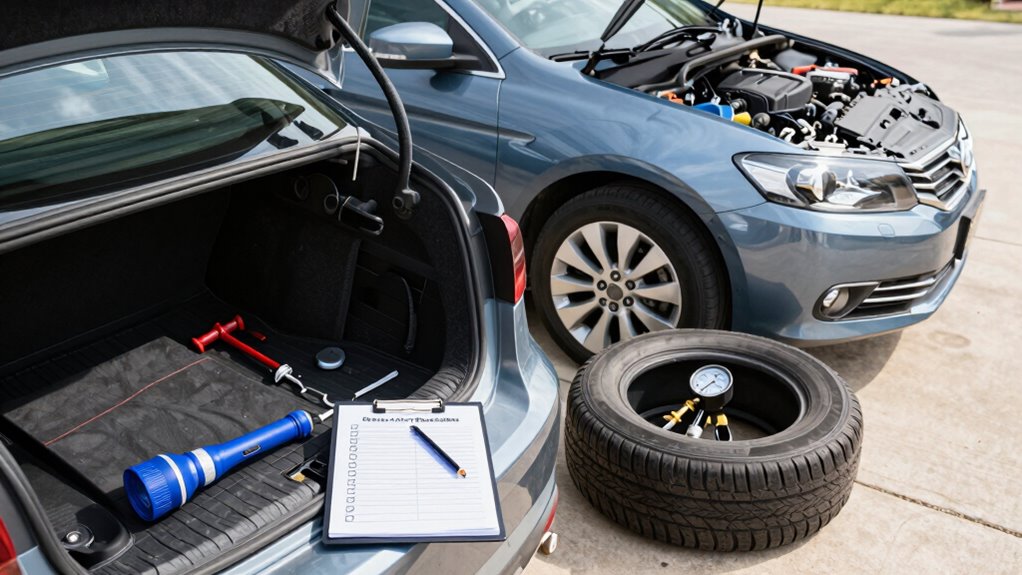
Before hitting the road, it’s essential to verify your brakes and suspension are in top condition, as they directly affect your safety. Perform a quick brake inspection by pressing the pedal firmly to ensure it feels firm and responsive. Check for any unusual noises or vibrations when braking. For suspension check, push down on each corner of your vehicle; it should rebound smoothly without excessive bouncing. Look for uneven tire wear or sagging that indicates suspension issues. Also, listen for clunking sounds over bumps and inspect for fluid leaks. Make sure brake fluid levels are adequate and brake pads aren’t worn thin. Confirm that shocks and struts are functioning properly. These simple steps can identify potential problems before your trip, keeping you safe and confident on the road.
Plan Your Route and Rest Stops to Reduce Stress
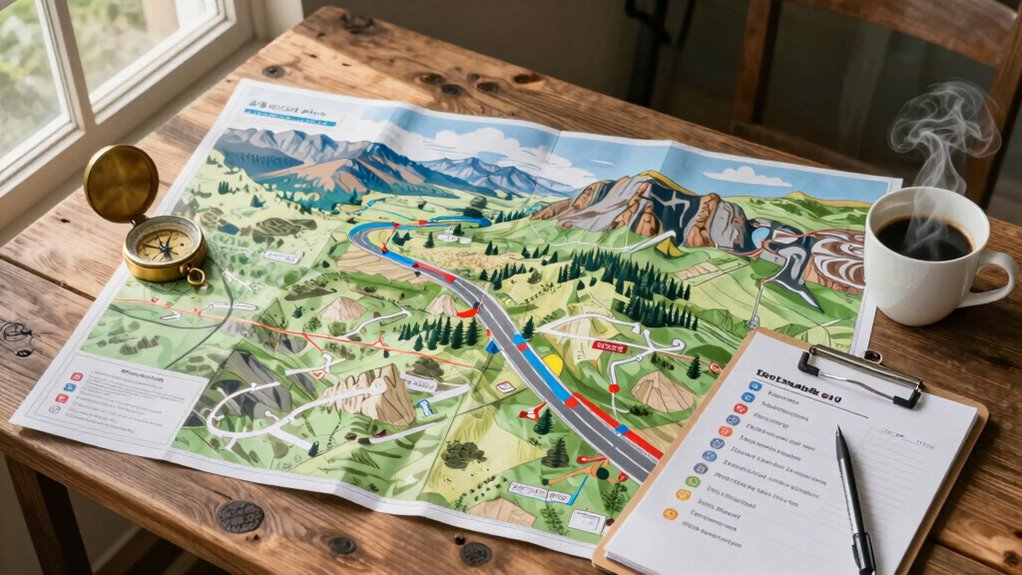
Planning your route and rest stops ahead of time can considerably reduce stress during your trip. A well-crafted road trip itinerary helps you avoid unnecessary detours and keeps you on track. Incorporate scenic route planning to enjoy beautiful views and keep the drive engaging. Use a detailed map or app to identify ideal stopping points, including fuel, food, and restroom breaks. To maximize efficiency, consider this table:
| Rest Stop Type | Duration | Benefits |
|---|---|---|
| Fuel Stations | 10-15 min | Refuel, stretch |
| Scenic Views | 15-20 min | Refresh mind |
| Food Stops | 20-30 min | Reenergize |
| Rest Areas | 15-20 min | Relax, reset focus |
This approach ensures a smoother, less stressful journey, letting you enjoy the trip rather than worry about last-minute planning.
Organize Your Travel Documents and Apps for Easy Access

Having your travel documents and apps organized saves time and prevents stress during your road trip. You’ll quickly access essential items when needed, avoiding last-minute searches. Keep a digital and physical folder with your travel insurance details, passport, and ID. Use apps to store copies of your passports and important documents for backup. Consider bookmarking key websites like your airline, hotel, or car rental in your browser for instant access. Pack a small, organized folder or digital folder on your phone with:
- Travel insurance policy details
- Passport and visa copies
- Driver’s license and registration
- Emergency contact info
- Reservation confirmations
This prep guarantees you won’t scramble for vital info, so you stay focused on enjoying the journey.
Schedule a Quick Maintenance Check If Needed
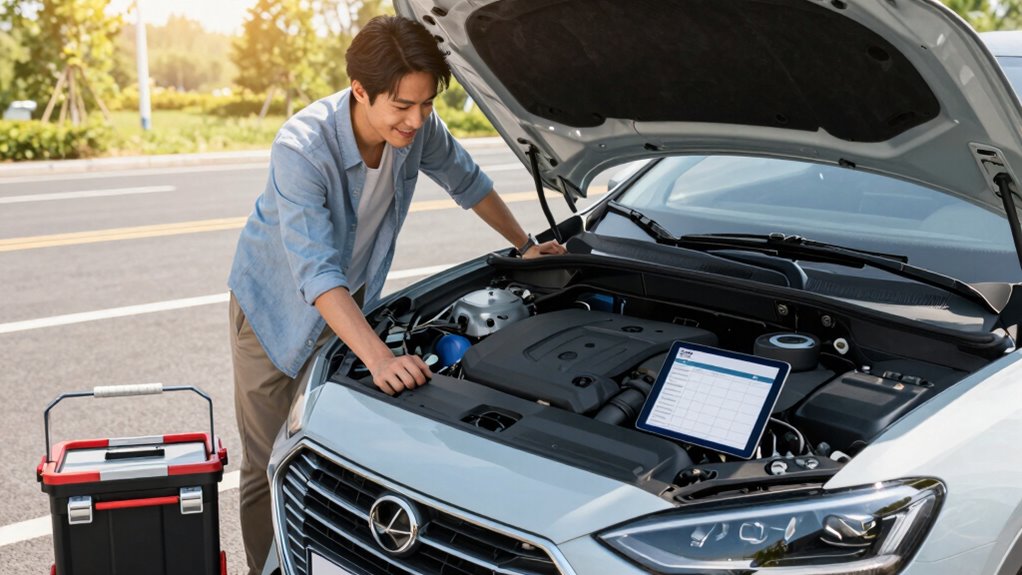
Before hitting the road, take a moment to check your vehicle’s fluid levels and tire condition. Ensuring these are in good shape can prevent breakdowns and keep your trip smooth. If anything looks off, schedule a quick maintenance check to address it before you go.
Check Fluid Levels
Checking your fluid levels is a crucial step before hitting the road, as low or dirty fluids can lead to breakdowns or costly repairs. Start by inspecting the oil level to ensure it’s at the recommended mark, preventing engine damage. Next, check the windshield fluid; a full reservoir keeps your visibility clear. Don’t forget to peek at the coolant and brake fluid levels, which are essential for safe driving. Here’s what to look for:
- Oil level within the safe range
- Adequate windshield fluid supply
- Coolant level in the radiator
- Brake fluid topped up
- Power steering fluid if applicable
Taking a few moments to verify these fluids can save you time and money later, ensuring your vehicle runs smoothly and safely throughout your trip.
Inspect Tire Condition
Inspecting your tires is just as important as checking fluid levels. Start by measuring your tire pressure to ensure it matches the manufacturer’s recommended PSI; under- or over-inflated tires can cause poor handling and rapid wear. Next, check the tread depth using a simple penny test—if the tread doesn’t cover Lincoln’s head, it’s time for a replacement. Uneven wear or visible damage indicates a need for a quick maintenance check. Properly inflated tires with sufficient tread improve fuel efficiency and reduce the risk of blowouts. If anything looks off, schedule a maintenance appointment before hitting the road. Taking these few minutes to assess your tires now can prevent breakdowns and keep your trip safe and smooth.
Troubleshoot Common Car Problems Before You Leave
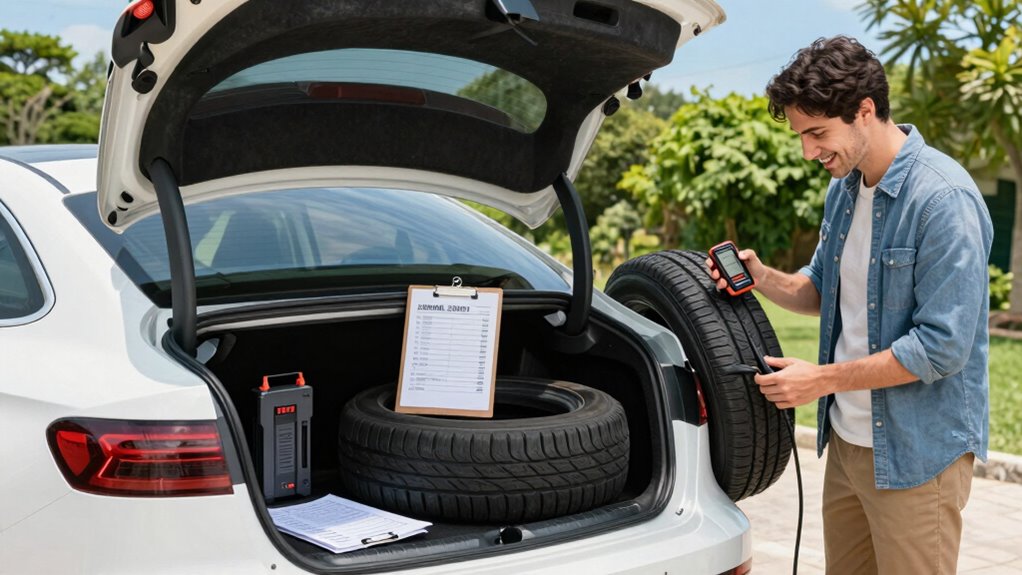
Ensuring your car runs smoothly on a road trip starts with identifying and fixing common issues that could disrupt your journey. Check your tire pressure to prevent flats and uneven wear, and top off fluid levels like oil, coolant, and windshield washer fluid to avoid overheating or visibility problems. Look for warning lights on your dashboard and listen for unusual sounds that could signal mechanical issues. Inspect belts and hoses for cracks or wear, and guarantee your battery terminals are clean and secure. By addressing these potential problems ahead of time, you reduce the risk of breakdowns and unexpected delays.
- Proper tire pressure and tread condition
- Adequate fluid levels, including oil and coolant
- No warning lights on the dashboard
- Belts and hoses free of cracks or leaks
- Secure, clean battery terminals
Final Checklist : Ready to Hit the Road With Confidence
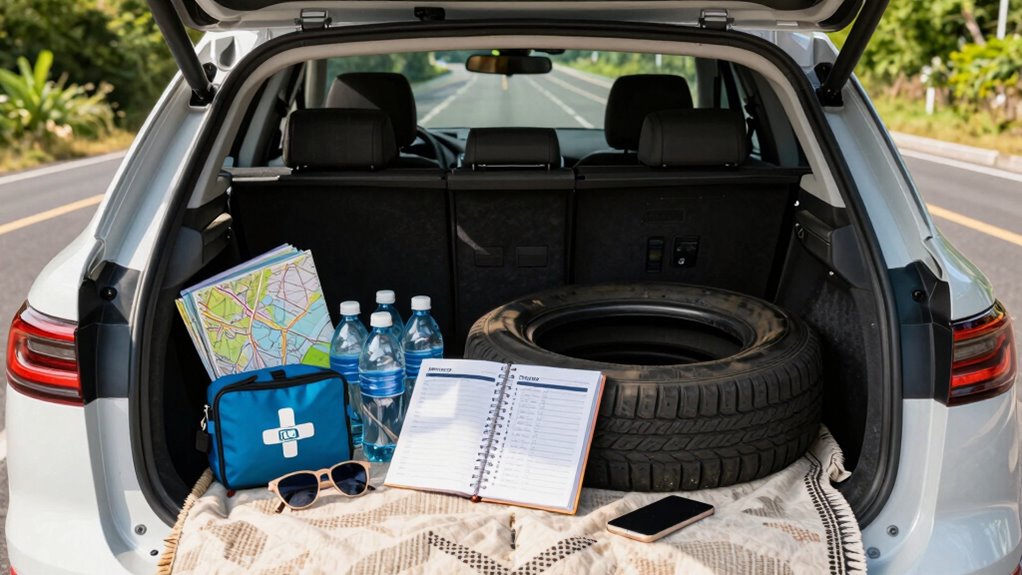
Before you hit the road, it’s important to go through a final checklist to confirm everything’s in place for a smooth journey. Make sure your vehicle has enough fuel, and double-check tire pressure and fluid levels. Pack travel snacks to keep everyone energized between roadside attractions, and verify your phone is charged for navigation. Confirm your route and download offline maps if needed. Check that your emergency kit is complete and accessible. Remember to bring any necessary documents, like your driver’s license and insurance info. Finally, do a quick mental run-through of your plans, including potential stops and sightseeing spots. With everything checked, you’ll feel confident and ready to enjoy the trip without surprises. Now, you’re all set to hit the road with peace of mind.
Frequently Asked Questions
How Often Should I Check My Car’s Fluids Before a Long Trip?
You should check your car’s fluid levels and do oil checks at least once a week before your long trip. Make sure the coolant, brake fluid, transmission fluid, and windshield washer fluid are all at proper levels. Before hitting the road, give everything a quick look, especially if you’re traveling for several days. Regular checks help prevent breakdowns and keep your vehicle running smoothly throughout the journey.
What Specific Tools Should I Include in My Emergency Kit?
Think of your emergency kit as your vehicle’s lifeline. You’ll want a well-stocked first aid kit for minor injuries and a tire repair kit to handle unexpected flats. Include a flashlight, extra batteries, jumper cables, basic tools, and a multi-tool for versatile fixes. Don’t forget to pack roadside flares and a whistle for signaling help. These essentials guarantee you’re prepared for most roadside surprises, turning potential chaos into manageable hiccups.
How Can I Identify Early Signs of Brake or Suspension Issues?
You can spot early brake warning signs by paying attention to squealing noises, a spongy brake pedal, or a vibrating steering wheel. For suspension symptoms, notice uneven tire wear, drifting while driving, or a bumpy ride. If you experience any of these signs, it’s best to get your brakes and suspension checked promptly to prevent breakdowns or accidents. Regular maintenance helps catch issues before they become serious.
What Are the Best Apps to Plan and Track My Route and Stops?
You should use apps like Google Maps or Waze for GPS navigation and route optimization, ensuring you find the fastest and most efficient routes. These apps help you plan stops, avoid traffic, and adapt your trip in real-time. Additionally, apps like Roadtrippers or Furkot let you customize your stops, find attractions, and optimize your entire route, making your trip smoother and more enjoyable from start to finish.
When Is It Necessary to Schedule a Professional Maintenance Check?
Ever notice how a sudden squeal or warning light can signal trouble? You should schedule a professional maintenance check based on your car maintenance schedule, especially if you’re hitting certain mileage milestones or driving in tough conditions. Timing a professional inspection guarantees your vehicle stays reliable. Typically, it’s best to get an inspection every 6 to 12 months or as recommended by your manufacturer, preventing unexpected breakdowns on your trip.
Conclusion
A quick 15-minute check can truly make the difference between a smooth trip and unexpected stress. Think you don’t have time? Investing those few minutes now saves you hours of hassle later. Plus, it’s easier than you think—just a little prep keeps your car reliable and your mind at ease. So, why risk a breakdown? Take that quick check; your future self will thank you for it.