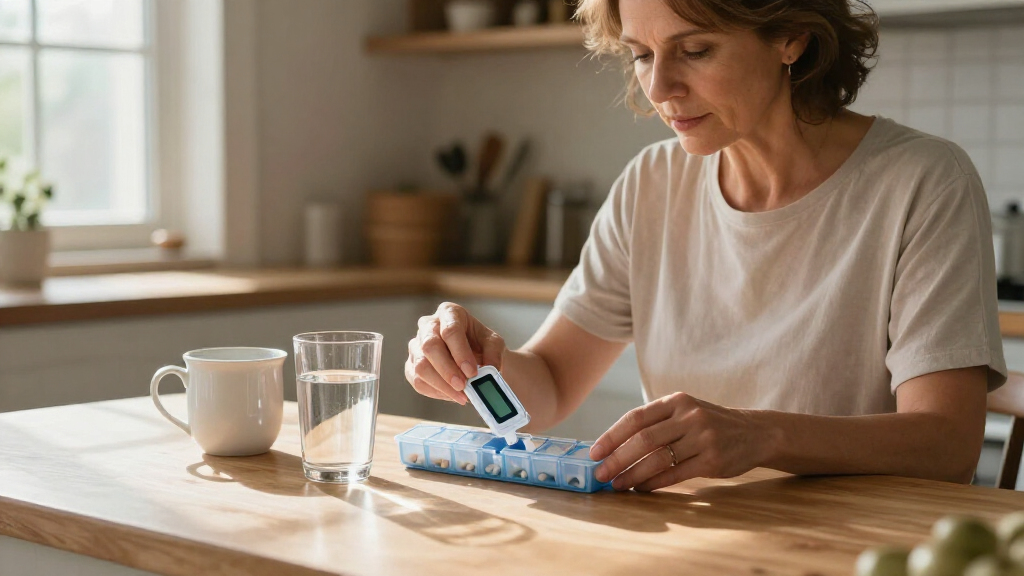
For an all-around medication routine, the LiveFine WiFi Automatic Pill Dispenser stands out for remote medication monitoring, while the MedCenter 31-Day Organizer offers a simpler monthly layout with talking alarms. For app-connected dose reminders, the 28-Day Automatic Pill Dispenser with App Control is another strong option. The main tradeoffs are how much capacity you need, whether reminders must reach a caregiver, and how much setup and locking complexity suits the user. Some models favor straightforward alarms; others add Bluetooth, WiFi, or app controls that can improve oversight but require more setup. Read on for the full breakdown of all 15 options and how to match one to your routine.

Get health and wellness essentials delivered free with Prime
- Fast, free delivery on millions of items
- Prime Video, Amazon Music and more included
- Member-only deals all year
Key Takeaways
- Remote oversight is the clearest differentiator: LiveFine adds WiFi-based monitoring, while Bluetooth models generally focus on nearby app connection and reminders.
- Monthly capacity changes the routine: The MedCenter 31-Day Organizer and Ellie Monthly model suit buyers who want fewer refill sessions than a seven-day organizer requires.
- Alarm style matters as much as connectivity: Talking, light-up, LCD, and app alerts suit different hearing, vision, and phone-use habits.
- Access controls are useful only when they fit the user: Digital locks and dual locks can limit accidental access, but may add steps for someone who needs simple independent use.
- There is no single best format for every schedule: Four-dose, AM/PM, travel-sized, and multi-tray designs each address different medication routines, so capacity and daily dose count should guide the shortlist.
| MedCenter 31-Day Pill Organizer with 4-Time Talking Alarm |  | Best for Clear Monthly Planning | Monthly capacity: 31 days | Compartments per day: 4 | Daily dose labels: Morning, noon, evening, and night | VIEW LATEST PRICE | See Our Full Breakdown |
| 28-Day Automatic Pill Dispenser with App Control, LCD Display, Digital Lock, and Alerts, 2-Tray, White |  | Best for Remote Caregiver Monitoring | Capacity: 28 pill slots across 2 trays | Dosing capacity: Up to 28 days once daily or 14 days twice daily | Setup: On-device with voice guidance or through the app | VIEW LATEST PRICE | See Our Full Breakdown |
| Betife 28-Day Smart Automatic Pill Dispenser with Bluetooth |  | Best for Frequent Daily Doses | Capacity: 28 days | Connectivity: Bluetooth | App: Pillcalendar | VIEW LATEST PRICE | See Our Full Breakdown |
| Colorwing Smart Pill Dispenser with Bluetooth Reminders and Dual Lock |  | Best for Easier One-Touch Access | Capacity: 31 slots | Access: Palm-activated press-release picker box | Security: Fingerprint scanner and mechanical backup key | VIEW LATEST PRICE | See Our Full Breakdown |
| Windtrace Automatic Pill Dispenser with Alarm |  | Best for Straightforward Scheduled Dispensing | Compartments: 28 | Daily reminders: 1 to 6 times | Dosage rings: 6 | VIEW LATEST PRICE | See Our Full Breakdown |
| Bluetooth Automatic Pill Dispenser with Alarm and App Reminders |  | Best for Flexible Schedules | Compartments: 31 | Dose rings: 7 | Daily doses: Configurable from 1 to 6 | VIEW LATEST PRICE | See Our Full Breakdown |
| Bluetooth Smart Pill Organizer with App Alerts, 7-Day Travel Dispenser with LCD and Safety Lock |  | Best for Travel and Adherence Tracking | Capacity: Up to 10 capsules per compartment | Days: 7 days | Material: BPA-free, food-grade PP plastic | VIEW LATEST PRICE | See Our Full Breakdown |
| Med-Q Electronic Pill Dispenser with Alarm |  | Best for Simple, App-Free Reminders | Compartments: 14, for 7 days of morning and evening doses | Alarms: 1 or 2 per day | Alarm behavior: Beeps and flashes for 5 minutes, then repeats every 30 minutes until opened or Next Alert is pressed | VIEW LATEST PRICE | See Our Full Breakdown |
| Smart Pill Organizer with Alarm and Light-Up Compartments, 7-Day AM/PM |  | Best Compact Rechargeable Pick | Compartments: 14 | Organization: 7-day AM/PM | Reminders: Customizable sound and light alerts | VIEW LATEST PRICE | See Our Full Breakdown |
| Vaydeer Smart 7-Day Pill Organizer with Alarm, 14 AM/PM Compartments |  | Best for Moisture-Conscious Storage | Compartments: 14, for 7 days of AM/PM doses | Daily alarms: Up to 7 | Reminder cycle: Repeats every 5 minutes; 1 minute of sound and 4 minutes of screen flashing | VIEW LATEST PRICE | See Our Full Breakdown |
| Daviky Automatic Pill Dispenser with Smart Reminders |  | Best for Travel | Battery: Rechargeable lithium battery | Battery life: Up to one month per charge | Reminders: Medication reminders | VIEW LATEST PRICE | See Our Full Breakdown |
| 1Mii T5 Smart Pill Dispenser with Open-Ear Headphones |  | Best for Flexible Alerts | Compartments: 5 | Dividers: Removable | Alerts: Sound, vibration, screen light, and app notifications | VIEW LATEST PRICE | See Our Full Breakdown |
| LiveFine WiFi Automatic Pill Dispenser with Remote Medication Monitoring |  | Best for Caregiver Monitoring | Compartments: 28 | Daily doses: Up to 9 | Dosage rings: 9 interchangeable rings | VIEW LATEST PRICE | See Our Full Breakdown |
| Ellie Monthly Pill Organizer with Smart Alarms and Notifications |  | Best for Month-Long Adherence Tracking | Medication capacity: Up to 30 days | Small compartments: Each fits an entire bottle of small pills | Large compartments: Each fits up to 7 large pills | VIEW LATEST PRICE | See Our Full Breakdown |
| Carroself Pill Dispenser with App Reminders, 28 Compartments for Up to 4 Daily Doses |  | Best for Battery-Free App Tracking | Power: Battery-free | Compartments: 28 | Daily doses: 1–4 | VIEW LATEST PRICE | See Our Full Breakdown |
| smart pill organizers for medication management | Compartments |
|---|---|
| MedCenter 31-Day Pill Organize | — |
| 28-Day Automatic Pill Dispense | — |
| Betife 28-Day Smart Automatic | — |
| Colorwing Smart Pill Dispenser | — |
| Windtrace Automatic Pill Dispe | 28 |
| Bluetooth Automatic Pill Dispe | 31 |
| Bluetooth Smart Pill Organizer | — |
| Med-Q Electronic Pill Dispense | 14, for 7 days of morning and evening doses |
| Smart Pill Organizer with Alar | 14 |
| Vaydeer Smart 7-Day Pill Organ | 14, for 7 days of AM/PM doses |
| Daviky Automatic Pill Dispense | — |
| 1Mii T5 Smart Pill Dispenser w | 5 |
| LiveFine WiFi Automatic Pill D | 28 |
| Ellie Monthly Pill Organizer w | — |
| Carroself Pill Dispenser with | 28 |
More Details on Our Top Picks
MedCenter 31-Day Pill Organizer with 4-Time Talking Alarm
The MedCenter 31-Day is the most straightforward choice here for someone who wants a full month laid out in familiar morning, noon, evening, and night doses. Its removable daily boxes make it easier to carry a day’s medication or let a caregiver check one day at a time. The talking alarm adds an audible prompt without requiring a phone or app, unlike the Bluetooth-connected Betife and Colorwing models. That simplicity also limits flexibility: users must set the alarm times themselves, and there is no app-based dose history or remote monitoring. Its large, high-contrast labels support visibility, but the plastic build may feel less sturdy than buyers expect. I’d choose this over Windtrace when month-long, clearly labeled daily organization matters more than automated dispensing.
Pros:- Organizes 31 days in one system
- Four labeled dose periods per day support complex schedules
- Talking alarm provides an audible reminder without a smartphone
- Removable daily boxes make doses easier to carry and check
Cons:- Users must set the talking alarm times themselves
- Plastic construction may not suit buyers seeking a more durable-feeling organizer
- Does not provide app-based dose tracking or remote alerts
Best for: People managing several daily doses who want a visible month-long system and caregivers who need removable day-by-day boxes.
Not ideal for: Buyers who want app-based adherence records, remote caregiver alerts, or a dispenser that releases doses automatically.
- Monthly capacity:31 days
- Compartments per day:4
- Daily dose labels:Morning, noon, evening, and night
- Reminder system:Talking alarm
- Daily boxes:Removable
- Labels:Large, high-contrast
Our verdict“Choose the MedCenter if a clearly labeled, removable month of four-times-daily doses matters more than app monitoring or automatic dispensing.”
28-Day Automatic Pill Dispenser with App Control, LCD Display, Digital Lock, and Alerts, 2-Tray, White
For households where a caregiver needs to check adherence from elsewhere, this 28-day automatic dispenser offers the most explicit remote-monitoring setup in this group: the app supports schedule changes, dose history, and alerts. It also allows voice-guided on-device setup, giving it a useful middle ground between app control and the MedCenter’s fully manual approach. Two trays hold 28 slots, but that means capacity shifts with the schedule: it covers up to 28 days once daily or 14 days twice daily. By comparison, the Betife supports up to six daily alarms, while this model’s stated capacity is tied to once- or twice-daily use. A digital lock and sealed lid add access control and humidity protection, but this is intended for home use, not regulated care settings.
Pros:- App supports remote schedule setup, dose history, and caregiver alerts
- Voice guidance enables setup at the device
- LED, voice, buzzer, and melody alert options
- Digital lock and sealed, desiccant-equipped lid add access and moisture protection
Cons:- Capacity falls from 28 days to 14 days for twice-daily dosing
- Not intended for nursing homes or other regulated institutions
- Remote features depend on app use and a compatible phone
Best for: Families managing medication at home who want remote dose alerts and history alongside voice-guided setup for the person using the dispenser.
Not ideal for: Nursing homes and regulated institutions, or people whose schedules require more than two doses per day over a long refill cycle.
- Capacity:28 pill slots across 2 trays
- Dosing capacity:Up to 28 days once daily or 14 days twice daily
- Setup:On-device with voice guidance or through the app
- Display:LCD
- Alerts:LED light, voice, buzzer, or melody
- Security:Digital lock; lid can be locked or unlocked through the app
- Storage:Sealed lid with built-in desiccant pack
- Intended use:Home and non-institutional use
Our verdict“Pick this model for home medication routines that benefit from caregiver alerts and dose history, provided its once- or twice-daily capacity fits the schedule.”
Betife 28-Day Smart Automatic Pill Dispenser with Bluetooth
The Betife is the strongest fit for medication plans with several reminders each day: it supports up to six daily alarms, more than the one-to-six schedule described for the Windtrace but with added app tracking. Its Pillcalendar app records doses and missed medication, with weekly and monthly statistics that can help users spot patterns. At the same time, physical buttons and an LCD preserve a way to operate the unit without relying entirely on the app. That hybrid setup is more flexible than the app-focused remote monitoring of the 28-Day Automatic Pill Dispenser, though the Betife’s listed Bluetooth connection does not offer the same stated remote caregiver alerts. Fingerprint access and a mechanical backup lock add access controls, but fingerprint performance is not specified. Buyers who dislike app setup may prefer the simpler MedCenter.
Pros:- Supports up to six daily alarms
- App tracks doses and missed medication with weekly and monthly statistics
- LCD and physical buttons provide an alternative to app control
- Fingerprint access includes a mechanical backup lock
Cons:- Bluetooth app setup may be inconvenient for people who prefer a manual device
- Fingerprint unlocking performance is not specified
- Remote caregiver alert capability is not stated
Best for: People with multiple daily medication times who want dose logs and app reminders, while keeping physical controls available.
Not ideal for: Users who want a fully manual organizer, or buyers who need clearly specified remote caregiver monitoring beyond Bluetooth app tracking.
- Capacity:28 days
- Connectivity:Bluetooth
- App:Pillcalendar
- Daily alarms:Up to 6
- Display:LCD screen with 8 icons
- Controls:6 physical buttons
- Security:Fingerprint unlocking and mechanical backup lock
Our verdict“Choose the Betife if you need frequent daily reminders and app-based dose records but still want physical controls on the dispenser.”
Colorwing Smart Pill Dispenser with Bluetooth Reminders and Dual Lock
The Colorwing puts easy physical access ahead of detailed adherence records: its palm-activated press-release picker is designed for seniors and people with arthritis who may find small lids or fiddly compartments frustrating. It also combines fingerprint access with a mechanical backup key, plus custom voice or tone reminders and weekly or monthly dose plans. Compared with Betife, the standout difference is this access-focused design and its stated rechargeable battery life of more than 30 days in energy-saving mode; Betife instead specifies up to six daily alarms and app-based dose statistics. Colorwing’s 31 slots offer a longer listed slot count than the 28-slot Windtrace, but its Bluetooth features still require a compatible phone. Setup may also call for help, which can undercut the appeal of its one-touch routine.
Pros:- Palm-activated press-release access is designed for easier use
- Fingerprint scanner and mechanical backup key provide two access methods
- Custom voice recordings or alert tones support scheduled reminders
- Rechargeable battery is rated for over 30 days in energy-saving mode
Cons:- Bluetooth app features require a compatible phone
- Initial setup may require assistance
- Dose-history and adherence-statistics features are not specified
Best for: Seniors and people with arthritis who need simpler dose access, with a caregiver available to help configure the Bluetooth app and schedule.
Not ideal for: People who want a fully app-independent setup, or buyers who need detailed dose-history features clearly specified.
- Capacity:31 slots
- Access:Palm-activated press-release picker box
- Security:Fingerprint scanner and mechanical backup key
- Reminders:Custom voice recording or 3 alert tones
- Dose scheduling:Weekly or monthly plans
- Dose rings:7 reversible rings
- Battery:1200 mAh; 2-hour charging time; rated for 30+ days in energy-saving mode
- Connectivity:Bluetooth 5.0; free companion app with no subscription required
Our verdict“Choose Colorwing when accessible one-touch retrieval and dual locks matter more than clearly documented app-based dose statistics.”
Windtrace Automatic Pill Dispenser with Alarm
Windtrace makes sense for buyers who want scheduled medication prompts without adding a Bluetooth app or caregiver-monitoring system. Its 28-compartment removable tray and six dosage rings support a range of routines, while a loud alarm and flashing blue light offer both audible and visual signals. The sliding retrieval window is intended to make access easier after a reminder. Compared with the month-long MedCenter, Windtrace automates scheduled dispensing rather than separating doses into removable daily boxes; compared with the Colorwing, it skips fingerprint access and app support in favor of a simpler battery-powered setup. The tradeoff is that configuration may take some effort: the product information points users to the manual or instructional video, and the supplied AA batteries need eventual replacement.
Pros:- Loud alarm and flashing light provide two reminder types
- Removable 28-compartment tray supports refilling
- Six dosage rings help adapt the schedule
- Sliding retrieval window is designed for easier access
Cons:- Setup may require consulting the manual or instructional video
- Uses four AA batteries rather than a rechargeable battery
- Does not offer stated app tracking or remote caregiver alerts
Best for: People who want a battery-powered dispenser with scheduled audio and visual prompts, removable refill access, and no app requirement.
Not ideal for: Buyers who need remote monitoring, fingerprint security, or a full 31-day capacity in one refill.
- Compartments:28
- Daily reminders:1 to 6 times
- Dosage rings:6
- Alerts:Loud alarm and flashing blue light
- Display:LCD
- Power:4 AA batteries included
- Included items:Dispenser, 6 dosage rings, instruction manual, and 4 AA batteries
Our verdict“Pick Windtrace for uncomplicated scheduled dispensing with visual and audible cues, but choose Colorwing or the 28-Day app model for connected monitoring.”
Bluetooth Automatic Pill Dispenser with Alarm and App Reminders
The 31-compartment layout and configurable dose rings make this the most adaptable option here for people whose routine changes across the week or month. It supports one to six daily doses, while the Med-Q Electronic Pill Dispenser is limited to morning and evening doses across seven days. Voice alerts, light cues, and app reminders provide several ways to notice a scheduled dose, and the push-button retrieval is designed to reduce the grip strength needed to access medication. A fingerprint lock and backup key add access control that the unlocked Med-Q lacks. The tradeoff is added upkeep: this unit needs charging or a power connection, and app reminders depend on Bluetooth. I’d choose it for flexible planning and access control, not for someone seeking a simple, low-maintenance weekly box.
Pros:- 31 compartments and configurable dose rings support weekly or monthly schedules
- Voice, visual, and app reminders offer multiple cues for scheduled doses
- Push-button retrieval is designed for users with limited hand strength
- Fingerprint lock with backup key restricts medication access
Cons:- Rechargeable power requires charging or a nearby power connection
- App reminders depend on a Bluetooth connection
Best for: People with changing medication schedules who need multiple daily dose options, easier pill retrieval, and a lock to limit access.
Not ideal for: People who want a no-app, low-maintenance organizer or need reminders to work beyond Bluetooth range.
- Compartments:31
- Dose rings:7
- Daily doses:Configurable from 1 to 6
- Reminders:Voice alerts, visual light cues, and app notifications
- Connectivity:Bluetooth
- Battery:1200mAh rechargeable
- Security:Fingerprint lock and backup key
Our verdict“Choose this for flexible dose planning and controlled access; skip it if you want a basic organizer without charging or Bluetooth dependence.”
Bluetooth Smart Pill Organizer with App Alerts, 7-Day Travel Dispenser with LCD and Safety Lock
This seven-day model suits buyers who want a portable routine with app-based adherence history, rather than the longer schedule capacity of the 31-compartment Bluetooth Automatic Pill Dispenser. Its LCD, loud buzzer, and clear rotating lid pair a digital prompt with a visible way to identify the dose, while the mechanical safety lock helps prevent casual access. A battery life listed at over three months also means less charging or battery attention than rechargeable picks such as the Vaydeer Smart 7-Day Pill Organizer. The limit is its focus on a single week: it does not match the broader schedule flexibility of larger dispensers. Full smart features require a smartphone and app, and twisting open the battery compartment may be difficult for some users. It makes most sense for app users who want a compact organizer they can carry between home and work.
Pros:- App integration supports dose scheduling, reminders, and adherence history
- LCD and loud buzzer provide clear local reminders
- Mechanical safety lock helps prevent unauthorized access
- Listed battery life of over three months reduces battery changes
Cons:- Full smart functionality requires a smartphone and app installation
- Battery compartment opens by twisting, which may challenge users with limited hand strength
- Seven-day capacity is less suited to longer schedule planning than 31-compartment options
Best for: Smartphone users who travel or commute and want weekly dose reminders, adherence history, and a lock in a compact organizer.
Not ideal for: People who need monthly medication capacity, avoid apps, or have difficulty twisting small battery compartments open.
- Capacity:Up to 10 capsules per compartment
- Days:7 days
- Material:BPA-free, food-grade PP plastic
- Power source:1 CR2450 3V lithium coin cell battery, included
- Battery life:Over 3 months
- Features:Bluetooth, app alerts, LCD display, loud buzzer, mechanical safety lock, clear rotating lid
- Manufacturing:Made in an FDA-registered facility
Our verdict“Pick this for portable weekly organization and app-based adherence records, but not for monthly planning or app-free use.”
Med-Q Electronic Pill Dispenser with Alarm
The Med-Q is the straightforward choice for someone who needs a prompt to take morning and evening medication but does not want Bluetooth, charging, or an app. Its alarm beeps and flashes to point to the compartment, then repeats at intervals if the dose is not addressed. That local reminder system is simpler than the app history and safety lock on the Bluetooth Smart Pill Organizer, but it also means no adherence tracking and no access lock. The 14 removable compartments have large day labels and easy-open lids, which can help with visibility and portability. Two AA batteries are listed to last about 14 months, though they are not included. Setup requires a family member, so this is a better fit when someone can help prepare it than for a person who must manage the initial setup alone.
Pros:- Flashing light and audible alarm indicate which compartment to open
- Large day labels and easy-open lids simplify daily access
- Removable compartments can be taken along separately
- Battery life is listed at about 14 months, with a low-battery indicator
Cons:- Does not lock, so it offers no barrier to unauthorized access
- Initial setup requires help from a family member
- Two AA batteries are not included
Best for: People with a steady twice-daily, weeklong routine who want audible and visual prompts without smartphone features.
Not ideal for: People who need a lock, app-based adherence records, more than two daily doses, or independent initial setup.
- Compartments:14, for 7 days of morning and evening doses
- Alarms:1 or 2 per day
- Alarm behavior:Beeps and flashes for 5 minutes, then repeats every 30 minutes until opened or Next Alert is pressed
- Capacity:About 7 large pills per compartment
- Battery:2 AA batteries, not included
- Battery life:About 14 months
- Dimensions:8.75 × 4.5 × 1 inches
- Locking:Does not lock
Our verdict“Choose the Med-Q for uncomplicated twice-daily reminders without an app, provided someone can help with setup and a lock is not needed.”
Smart Pill Organizer with Alarm and Light-Up Compartments, 7-Day AM/PM
This organizer keeps medication planning to the basics: 14 AM/PM compartments for a week, plus sound reminders and a light that identifies the scheduled compartment. Its compact dimensions and included USB cable suit people who want a rechargeable alternative to the Med-Q Electronic Pill Dispenser, which uses replaceable AA batteries and has larger listed dimensions. Compared with the Vaydeer Smart 7-Day Pill Organizer, this model offers less detail about alarm customization and protection against moisture, so it is the simpler of the two rechargeable weekly picks. The main uncertainty is its battery specification, listed as both 700mAh and 1000mAh; typical use is described as about two weeks per charge. I’d favor it for compact AM/PM sorting, not for buyers who need a clearly specified battery or expanded scheduling features.
Pros:- Fourteen labeled compartments organize doses by day and time
- Sound and light alerts help identify the scheduled dose
- USB charging avoids routine replacement of disposable batteries
- Compact listed dimensions suit home use or travel
Cons:- Battery capacity is inconsistently listed as both 700mAh and 1000mAh
- Typical battery life is about two weeks, so regular recharging is needed
- No app connectivity or locking feature is specified
Best for: People who want a compact, rechargeable organizer for a consistent morning-and-evening weekly medication routine.
Not ideal for: Buyers who need a verified battery capacity, longer-term schedule flexibility, or a lock and app-based tracking.
- Compartments:14
- Organization:7-day AM/PM
- Reminders:Customizable sound and light alerts
- Battery capacity:Listed inconsistently as 700mAh and 1000mAh
- Battery life:Approximately two weeks of typical use
- Charging:USB cable included
- Dimensions:Approximately 8.07 × 4.53 × 1.22 inches
Our verdict“Pick this for compact rechargeable AM/PM sorting, but choose a more clearly specified model if battery planning or added safeguards matter.”
Vaydeer Smart 7-Day Pill Organizer with Alarm, 14 AM/PM Compartments
For a fixed weekly AM/PM routine, the Vaydeer adds storage protection and alarm control that the more compact rechargeable organizer does not specify. Its individually sealed compartments and desiccant chambers are designed to limit moisture exposure during storage or travel, while the metal outer shell gives it a different build from the plastic Med-Q. The organizer can run alarms without an app, offers up to seven daily alarms, and lists up to 30 days of battery life per charge. That makes it a stronger choice than the Smart Pill Organizer with Alarm and Light-Up Compartments for buyers prioritizing sealed storage and more alarm settings. The tradeoffs are its 14-compartment weekly limit and variable capacity based on pill size and shape. Bluetooth is optional, but app-based setup or records may call for it.
Pros:- Sealed compartments and desiccant chambers help limit moisture exposure
- On-device alarms can be set without using the optional app
- Battery life is listed at up to 30 days per charge
- Three volume levels and adjustable reminder duration offer control over alerts
Cons:- Each compartment’s capacity depends on pill size and shape
- App-based setup or medication records may require Bluetooth connectivity
- Fourteen compartments cover one week of AM/PM doses rather than longer schedules
Best for: People with a consistent weekly AM/PM routine who want rechargeable reminders and extra measures to limit moisture exposure.
Not ideal for: People who need monthly capacity, predictable space for unusually large pills, or app-based records without Bluetooth setup.
- Compartments:14, for 7 days of AM/PM doses
- Daily alarms:Up to 7
- Reminder cycle:Repeats every 5 minutes; 1 minute of sound and 4 minutes of screen flashing
- Default reminder duration:30 minutes, adjustable
- Volume levels:3
- Battery and charging:500mAh; USB-C charging takes about 1.5 hours
- Battery life:Up to 30 days per charge
- Materials:Metal outer shell; PP inner tray
- App connectivity:Optional Bluetooth
Our verdict“Choose the Vaydeer for a weekly routine where sealed storage and configurable alarms matter more than monthly capacity.”
Daviky Automatic Pill Dispenser with Smart Reminders
The Daviky focuses on a straightforward travel routine: medication reminders, smooth-opening access, and a compact design, without much setup detail in the supplied product information. Its rechargeable battery is rated for up to a month per charge, which may suit trips where frequent charging is inconvenient. Compared with the 1Mii T5, Daviky offers less detail about compartments and alert choices, but it avoids relying on the T5’s app-linked voice reminders and included headphones. That simplicity comes with a real limitation: the product data does not say how much medication it holds or how doses are divided, so it is hard to judge whether it fits a complex regimen. I’d choose it for portability and basic prompts, not for detailed dose tracking.
Pros:- Provides medication reminders to support a regular routine
- Rechargeable battery is stated to last up to a month per charge
- Compact design is suited to travel
- Smooth-opening access is intended to make retrieval easier
Cons:- Compartment count and medication capacity are not provided
- Alert types and scheduling options are not specified
- No app tracking or caregiver monitoring is listed
Best for: Travelers who want a compact reminder device and a rechargeable battery for trips away from home.
Not ideal for: People managing several medications or doses each day who need documented compartment capacity, dose tracking, or multiple alert modes.
- Battery:Rechargeable lithium battery
- Battery life:Up to one month per charge
- Reminders:Medication reminders
- Access:Smooth-opening access
- Portability:Compact design for travel
- Compartment details:Not specified
Our verdict“Choose Daviky for compact travel use and basic reminders, but pick the 1Mii T5 if you need known compartments and several alert options.”
1Mii T5 Smart Pill Dispenser with Open-Ear Headphones
The 1Mii T5 suits people who may miss a single type of reminder: it combines sound, vibration, screen light, and app notifications, with an LCD showing alarm times and compartment information. Its five compartments have removable dividers, so the layout can adapt to different pill sizes or a shorter travel supply. Compared with the Daviky, the T5 provides more clearly described organization and alert choices; compared with the larger-capacity LiveFine, it is a more portable option but cannot hold a month of doses. The open-ear headphones add voice reminders, though those require the app to be running, and the stated battery life is only “weeks” rather than a precise duration. This is a flexible personal organizer, not a high-capacity remote-monitoring system.
Pros:- Offers sound, vibration, screen-light, and app notifications
- Five compartments include removable dividers for flexible organization
- LCD displays alarm times and compartment information
- Safety lock and portable design support travel use
Cons:- Voice reminders through the included headphones require the app to be running
- Battery life is described only as weeks per charge
- Five compartments offer less capacity than 28-compartment options such as LiveFine
Best for: People who travel with a small medication supply and want to choose between discreet vibration, visual prompts, and sound alerts.
Not ideal for: Users who need a month-long supply, remote caregiver monitoring, or voice reminders that work independently of a running app.
- Compartments:5
- Dividers:Removable
- Alerts:Sound, vibration, screen light, and app notifications
- Display:LCD
- Connectivity:Bluetooth
- Battery life:Weeks per charge, according to the description
- Included accessory:Open-ear headphones
- Safety feature:Built-in safety lock
Our verdict“Pick the 1Mii T5 for flexible alerts and a compact, adjustable layout; choose LiveFine instead when capacity and remote monitoring matter more.”
LiveFine WiFi Automatic Pill Dispenser with Remote Medication Monitoring
LiveFine is the strongest fit here for a complex schedule that someone else may need to follow: its 28 compartments support customizable timing for up to nine daily doses, while WiFi app access offers remote medication tracking and alerts. A lockable cover adds a layer of control, and LED and adjustable sound alarms give the user local prompts even when a caregiver is not checking the app. Compared with Ellie’s 30-day organizer, LiveFine gives more explicit support for multiple doses per day and a lockable dispenser; Ellie, by contrast, emphasizes adherence reports and caregiver updates. The tradeoff is dependence on WiFi and app setup for remote features, plus a battery backup of only four hours. I’d favor it when schedule complexity and remote oversight outweigh portability.
Pros:- 28 compartments and schedules for up to nine daily doses support complex routines
- Mobile app provides remote medication tracking and alerts
- Lockable cover with manual key helps limit unauthorized access
- LED and adjustable sound reminders provide local prompts
Cons:- Remote monitoring requires WiFi and app setup
- Battery backup is limited to four hours
- Less suited to travel than compact options such as the 1Mii T5
Best for: Caregivers coordinating a person’s frequent daily doses who want remote medication tracking and a lockable dispenser.
Not ideal for: Travelers, people without reliable WiFi, or anyone who needs extended operation during a power interruption.
- Compartments:28
- Daily doses:Up to 9
- Dosage rings:9 interchangeable rings
- Connectivity:WiFi
- Monitoring:Remote medication tracking via mobile app
- Alarms:LED reminders and adjustable sound alarms
- Battery backup:4 hours
- Security:Lockable cover with manual key
Our verdict“Choose LiveFine when a caregiver needs remote oversight of a multi-dose routine; skip it if WiFi access or portability is a priority.”
Ellie Monthly Pill Organizer with Smart Alarms and Notifications
Ellie stands apart for people who need a longer view of whether doses are being taken: it holds up to 30 days of medication and uses Hall effect sensors to support adherence tracking, reports, refill reminders, and caregiver updates. That makes it more focused on ongoing follow-through than the Daviky, whose supplied details cover reminders and portability but not tracking. LiveFine offers more specified support for up to nine doses a day and a lockable cover, while Ellie’s appeal is a month-long supply and smart alarms that adjust to the user’s schedule. Its capacity has limits: large compartments fit up to seven large pills, and the description does not establish how the sensors or machine-learning alarms perform in every routine. I’d choose Ellie for adherence visibility, not maximum pill volume.
Pros:- Stores up to 30 days of medication
- Hall effect sensors support adherence tracking and reports
- Medication and refill reminders support routine management
- Caregiver updates can keep another person informed
Cons:- Large compartments fit up to seven large pills each
- The description does not specify a daily-dose limit or compartment layout
- Smart alarm technology is described as patent pending
Best for: People managing a month-long medication supply who want adherence reports, refill reminders, and caregiver updates.
Not ideal for: Users whose large pills require more than seven per compartment or who need clearly documented support for many daily doses and a lockable cover.
- Medication capacity:Up to 30 days
- Small compartments:Each fits an entire bottle of small pills
- Large compartments:Each fits up to 7 large pills
- Sensors:Hall effect sensors
- Notifications:Medication reminders and caregiver updates
- Tracking:Adherence reports and refill reminders
- Smart alarms:Adjust to the user’s schedule using machine learning
Our verdict“Choose Ellie for month-long organization and adherence visibility, but favor LiveFine if you need a stated high-dose schedule and a lockable cover.”
Carroself Pill Dispenser with App Reminders, 28 Compartments for Up to 4 Daily Doses
Carroself pairs a 28-compartment layout with app-based reminders and dose logging, while its battery-free design avoids managing another device charge. Removable cartridges make it easier to organize or refill doses away from the main unit, and a last-dose indicator adds a quick physical check alongside the app’s missed-dose notifications and history. Compared with LiveFine, Carroself supports fewer daily doses—up to four rather than nine—and does not list remote caregiver monitoring. It does, however, spell out a supply range of one to four weeks and capacity of up to 11 pills per compartment, depending on pill size. That qualification matters for larger tablets. I’d choose this for app-supported self-management and refill flexibility, not for high-dose schedules or broader language support.
Pros:- App supports reminders, dose logging, missed-dose notifications, and reminder history
- 28 compartments organize a one-to-four-week supply for one to four daily doses
- Removable cartridges and a last-dose indicator support refill and dose checks
- Battery-free design avoids charging or replacing dispenser batteries
Cons:- Capacity of up to 11 pills per compartment varies with pill size
- Supports up to four daily doses, fewer than LiveFine’s stated maximum of nine
- App language support is listed as English only
Best for: Self-managing users who want app reminders and dose logs, removable cartridges, and a dispenser that does not require batteries.
Not ideal for: People taking more than four daily doses, needing caregiver-focused remote monitoring, or requiring app support in a language other than English.
- Power:Battery-free
- Compartments:28
- Daily doses:1–4
- Supply duration:1–4 weeks
- Capacity:Up to 11 pills per compartment, depending on pill size
- Cartridges:Fully removable
- Dose tracking:Built-in last-dose indicator
- App:CARROSELF REMINDER; reminders, dose logging, missed-dose notifications, reminder history, and profiles
- Language and labeling:English app support; customizable stickers for morning, noon, evening, and night
Our verdict“Choose Carroself for battery-free organization with app logging and removable cartridges, but pick LiveFine for more than four daily doses or remote caregiver monitoring.”
How We Picked
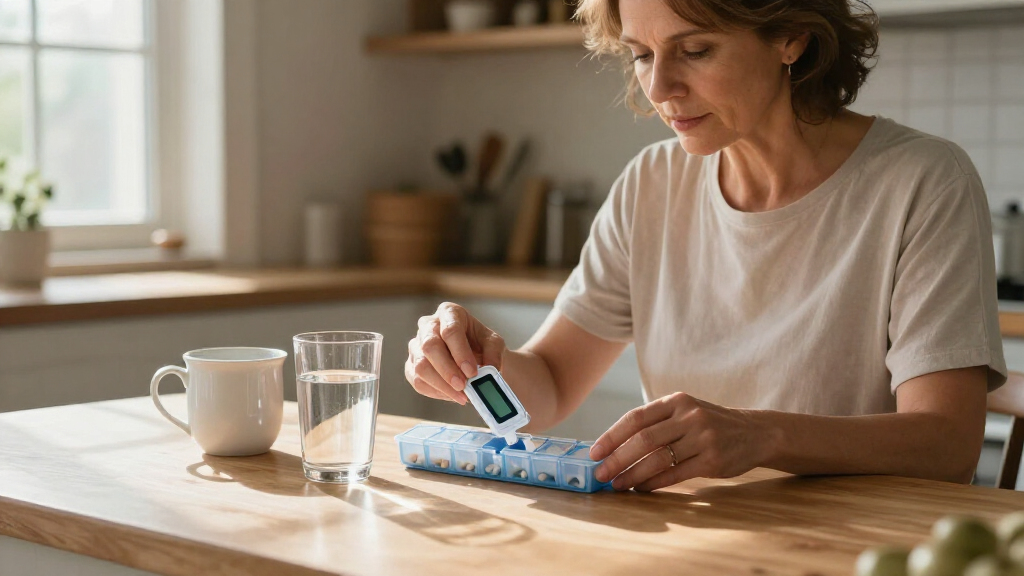
I compared these smart pill organizers for medication management by the practical problems they aim to solve: missed doses, confusing schedules, limited caregiver visibility, and frequent refilling. I weighed capacity and dose layout alongside reminder options, app or network connectivity, access controls, portability, and the likely effort required to set up and maintain each device. A feature earned more weight when it could make a routine easier to follow, rather than simply adding another control or alert.
The ranking favors products that appear to balance clear reminders, usable capacity, and a sensible daily workflow. Models with remote monitoring or broader app control rank well for buyers who need oversight, while simpler alarm-based organizers suit people who want fewer setup demands. No connected organizer can replace medication instructions or confirm that a dose was swallowed; buyers should check device compatibility, alert behavior, and refill procedures before relying on one.
Factors to Consider When Choosing Smart Pill Organizers For Medication Management
Choosing a dispenser starts with the routine it needs to support, not the number of connected features on the box. I would match the compartment layout and alert method to the user’s actual schedule, then decide whether caregiver updates and locking features justify extra setup.
Match the capacity to the refill routine
A longer supply can reduce how often someone sorts medication, but it also means more pills are loaded at once and the organizer may take up more space. Monthly models can suit a stable regimen, while weekly formats are easier to inspect and adjust when prescriptions change. Count doses per day as well as days of storage; a 28-compartment design does not necessarily accommodate every schedule equally well. A common mistake is choosing by total compartment count without checking whether each compartment holds the required pills. Ask who will refill it and how often that person can reliably do so. For changing prescriptions, a smaller capacity may be safer and easier to verify.
Choose reminders the user will notice and understand
Audible alarms, spoken prompts, visual signals, and phone notifications reach people in different ways. A phone alert may be missed if the phone is muted, charging elsewhere, or not used regularly; a device alarm may be hard to hear in a noisy home. Multiple alert types can help, but only if the user understands what each signal means and how to clear it. Match the interface to hearing, vision, dexterity, and comfort with smartphones. Before buying, check whether reminders repeat, how they stop, and what happens after a missed alert. Simple, consistent cues often serve a routine better than a dense set of notifications.
Decide whether app connectivity solves a real problem
Bluetooth and WiFi serve different needs: Bluetooth commonly connects a nearby phone to the organizer, while WiFi can support remote access when the device and service allow it. Remote monitoring can help a caregiver follow a routine from another location, but it brings setup, account, and connectivity questions. Check whether the app works with the user’s phone and whether alerts depend on an internet connection. Do not assume an app notification proves medication was taken; many systems report an event such as a compartment opening rather than confirming ingestion. If a caregiver needs updates, clarify exactly what information is shared and who can see it. If no one will use the app, a well-placed alarm may be the more dependable choice.
Treat locks as a usability tradeoff
Locking features may help prevent accidental access, mix-ups, or access by others, but they can also make routine use harder. Consider who needs to load the organizer, who needs to retrieve a dose, and what happens if a key, code, phone, or power source is unavailable. A lock is not a substitute for secure medication storage or professional guidance about safe access. Before selecting a locked model, make sure the intended user can operate it independently or has reliable assistance. Also check whether the lock applies to the full supply or only to scheduled compartments. Choose the least complicated access control that addresses the household’s actual concern.
Plan for portability, power, and upkeep
A compact weekly organizer may be easier to carry, while a larger multiweek device may be more suitable for a fixed place at home. Think through travel length, medication storage instructions, and whether doses need to remain in original packaging. Check the power method and any low-battery or outage behavior; a connected reminder system is less useful if it stops alerting without warning. App updates, cleaning, refill checks, and replacing batteries are recurring tasks, not one-time setup details. Buyers often focus on smart features and overlook whether the person responsible can keep the device maintained. Favor a format that fits the home and travel routine without adding a new source of confusion.
Pay for oversight only when it will be used
More connectivity and monitoring can be worthwhile when a caregiver needs updates or when routines are managed across households. Those features bring extra setup and may rely on compatible devices, network access, or an active app. For a person who takes medication independently and wants a timely cue, a straightforward alarm may cover the need with less friction. Compare the ongoing responsibilities of each option: someone must configure schedules, respond to alerts, and keep contact details current. The wrong purchase is often the most feature-rich device rather than the one that fits the user’s habits. Choose the level of technology that the user and caregiver will actually maintain.
Frequently Asked Questions
Is a WiFi pill dispenser better than a Bluetooth model for caregiver monitoring?
WiFi is usually the more relevant connection when a caregiver needs access from another location, while Bluetooth is often intended for a phone near the organizer. The exact remote features vary, so check whether the device sends missed-dose alerts or only records dispenser activity. Neither connection can prove that a person swallowed medication. Consider the reliability of the home network and who will manage app setup before choosing. If no one needs remote updates, a simpler local reminder may be easier to maintain.
Should I choose a monthly organizer or a weekly one?
A monthly organizer can cut down on refill frequency, but it may be larger and harder to revise when a prescription changes. Weekly formats make it easier to review a shorter period and may suit people whose regimen is adjusted often. The number of daily doses matters too: a long calendar span is not useful if compartments cannot fit the schedule. Think about who fills the organizer and how errors will be checked. If medication changes regularly, a shorter refill cycle can make the routine easier to verify.
Can an app reminder confirm that medication was taken?
Usually, an app can report a reminder, a compartment opening, or another device event, but that does not establish that the dose was swallowed. Check the product’s exact wording about what it tracks rather than treating all alerts as adherence confirmation. For caregiver use, agree on what an alert means and what follow-up is expected. A device should support a medication plan, not replace instructions from a clinician or pharmacist. If reliable confirmation is medically important, ask the care team what monitoring method is appropriate.
What should I check before buying a locked pill dispenser for an older adult?
Confirm that the person can open or use the device without assistance at the scheduled dose time. Ask who will load it, manage the code or key, and help if the device loses power or its controls fail. A lock can reduce accidental access, but extra steps may frustrate someone with limited dexterity, memory, or vision. Check whether the dispenser provides a clear cue when a dose is ready and whether a caregiver can handle setup. The best choice balances access safeguards with dependable independence.
How do I choose between an alarm-only organizer and one with app alerts?
Start with where the user is when doses are due and which signals they reliably notice. An alarm-only model may be a better fit when the user wants a straightforward cue and does not routinely use a smartphone. App alerts can help when a caregiver needs notifications or when phone-based reminders fit an established routine. Confirm whether alerts require Bluetooth nearby, WiFi, or a specific app setup. If the extra technology creates a setup burden without addressing a real need, the simpler organizer may be more dependable day to day.
Conclusion
Best overall: I would start with the LiveFine WiFi Automatic Pill Dispenser for households that need remote medication monitoring. Best value in simplicity: the MedCenter 31-Day Organizer makes sense for buyers who want a monthly layout and talking alarms without centering the routine on an app. Best premium-style connected pick: the 28-Day Automatic Pill Dispenser with App Control suits people seeking app control, an LCD, and locking features in one device. Best for beginners: Windtrace’s alarm-based format is a more direct starting point for someone who wants an automatic dispenser without making app setup the main task. For travel, compare the compact Bluetooth 7-Day model; for four daily doses, look closely at Carroself’s 28-compartment layout. My final choice would hinge on the user’s schedule, refill support, and willingness to manage connected features—not on the longest feature list.