Creating a doorway routine helps you clearly mark the start and end of your workday, making it easier to log off and switch to personal time. Simple actions like turning on your computer or reviewing your tasks set a mental boundary, while shutting down devices and tidying up signal the end. This consistent routine strengthens your boundary, boosts productivity, and protects your mental health. Keep going to discover more practical tips for establishing effective remote work boundaries.
Key Takeaways
- The doorway routine signals the start and end of work, creating a clear mental boundary for remote workers.
- Incorporate specific actions like turning on/off your computer or reviewing tasks to reinforce transition points.
- Establish consistent routines to help your brain associate certain behaviors with logging off and on.
- Use the routine to promote full disconnection from work activities, supporting personal time and reducing stress.
- Flexible scheduling within the doorway routine allows work hours to align with personal productivity peaks.
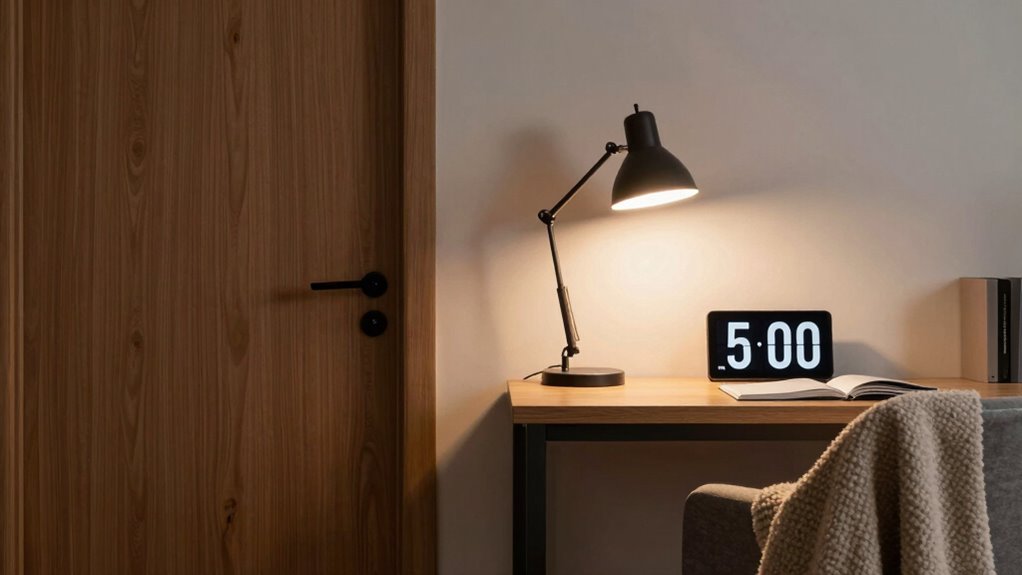
As remote work becomes increasingly common, setting clear boundaries is essential to maintain productivity and personal well-being. One effective strategy is establishing a “doorway routine”—a specific set of actions you perform when starting and ending your workday. This routine helps you mentally shift into work mode and, just as importantly, switch off when the day’s done. It’s a simple but powerful way to create boundaries that protect your time and energy, especially when your home blurs the lines between personal and professional life.
Incorporating flexible scheduling into your routine allows you to better manage your work hours. When you have the freedom to adjust your start and finish times, you can align your work with your natural productivity peaks and personal commitments. For instance, if you’re more focused in the mornings, you might start early and finish earlier, leaving the evenings free for relaxation or personal projects. This flexibility reduces stress and helps prevent burnout, making it easier to stick to a clear boundary between work and personal life. Your doorway routine can include a specific start time that signals the beginning of your workday, such as turning on your computer, making a cup of coffee, or reviewing your to-do list. Conversely, your end-of-day routine might involve shutting down your laptop, tidying your workspace, and physically stepping away from your desk.
A vital element of this boundary-setting process is the digital detox that follows your workday. Once you log off, avoid checking work emails or messages. Instead, dedicate this time to activities that rejuvenate you—reading, exercising, or spending time with loved ones. This digital detox ensures you disconnect fully from work obligations and prevents the creeping of work-related stress into your personal time. It reinforces your boundary, making it clear that the workday is over and your personal time begins. Additionally, using self-watering planters or other tools to manage household tasks efficiently can help streamline your home routines, freeing up more time for personal activities and relaxation.
Consistency is key. The more you stick to your doorway routine, the more your brain associates these actions with the start and end of your workday. Over time, this builds a mental boundary that makes it easier to “switch off,” even when your workspace is just a few steps away. Remember, these routines aren’t about rigidity but about creating reliable signals that help you regain control of your schedule. When you prioritize a structured transition—marked by a flexible schedule and a digital detox—you protect your well-being, boost your productivity, and maintain a healthier balance between work and life.
Frequently Asked Questions
How Can I Enforce My Boundaries With Demanding Clients?
You can enforce your boundaries with demanding clients by establishing clear client communication upfront, setting expectations early on. Be consistent with boundary reinforcement, politely reminding clients of your working hours and limits. Use firm but respectful language to assert your boundaries, and don’t hesitate to follow through on consequences if they’re not respected. This approach helps protect your time and maintains professional respect while ensuring your boundaries are honored.
What Technology Tools Aid in Establishing Remote Work Boundaries?
Ever wonder how to create clear work boundaries? Tools like digital detox apps help you disconnect after hours, while notification management features on your devices prevent constant interruptions. These tools let you set specific work hours, so you’re not tempted to check emails or messages outside of them. By actively managing notifications and scheduling digital detox periods, you reinforce your boundaries and protect your personal time from work encroachment.
How Do I Manage Interruptions During My Doorway Routine?
To manage interruptions during your doorway routine, practice mindful shifts by calmly shutting down work and informing others of your routine. Stay consistent with your routine to create clear boundaries, so interruptions become less frequent over time. You can also set specific times to check messages or calls outside your routine, ensuring you stay focused and relaxed when logging off. This consistency helps reinforce your boundary, making interruptions easier to handle.
What Are Signs I’M Overworking Despite Having Boundaries?
If you notice signs like persistent fatigue, difficulty concentrating, or feeling emotionally drained, you’re likely overworking despite your boundaries. These symptoms signal a work-life imbalance and emotional exhaustion. Pay attention to how you feel at the end of each day. If work continues to weigh heavily on you, consider adjusting your routines or setting clearer limits to protect your well-being and restore balance.
How Can I Involve Family or Housemates in My Boundary Routine?
You can involve family or housemates in your boundary routine by inviting their participation and explaining your need for focused work time. Encourage family participation by sharing your schedule and asking for cooperation during specific hours. Similarly, foster housemate cooperation by establishing clear signals or routines that indicate when you’re logging off. This way, everyone understands and respects your boundaries, making it easier to disconnect and maintain work-life balance.
Conclusion
By establishing clear boundaries like your doorway routine, you create a healthy separation between work and personal life. Did you know that 60% of remote workers struggle to disconnect after work hours? Implementing simple habits can drastically improve your well-being and productivity. So, make your doorway routine a non-negotiable—it’s your gateway to better work-life balance. When you log off intentionally, you give yourself the space to recharge and truly enjoy your personal time.