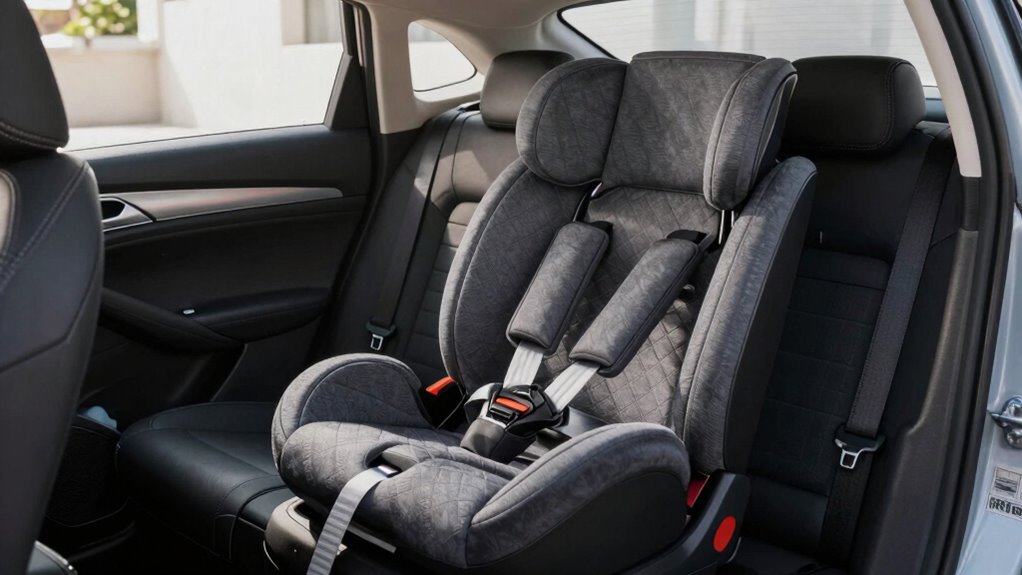

To prevent returns and guarantee your child’s safety, always double-check that the car seat fits properly. Confirm it’s securely installed with minimal wiggle, and that harness straps are snug and at the right level. Make sure accessories don’t interfere with installation, and regularly assess fit as your child grows. Proper positioning and stability are key. To learn more about maintaining a perfect fit for your child’s safety, keep exploring these vital tips.
Key Takeaways
- Verify the seat fits your child’s current height and weight, and adjust harness straps accordingly.
- Ensure the seat is securely installed with minimal movement, using vehicle seat belt or LATCH system.
- Check that harness straps are snug, lying flat against the child’s chest, and positioned correctly at or below shoulders.
- Confirm the head support is snug without forcing the child’s head forward or leaving gaps.
- Perform regular stability checks and re-adjustments as your child grows to maintain proper fit and safety.

Graco Tranzitions 3-in-1 Harness Booster Car Seat, Forward Facing Car Seat, Highback, to Backless Booster, Proof
3-in-1 harness booster helps protect your child, from toddler to youth
As an affiliate, we earn on qualifying purchases.
As an affiliate, we earn on qualifying purchases.
Why Properly Checking Your Child’s Car Seat Fit Matters
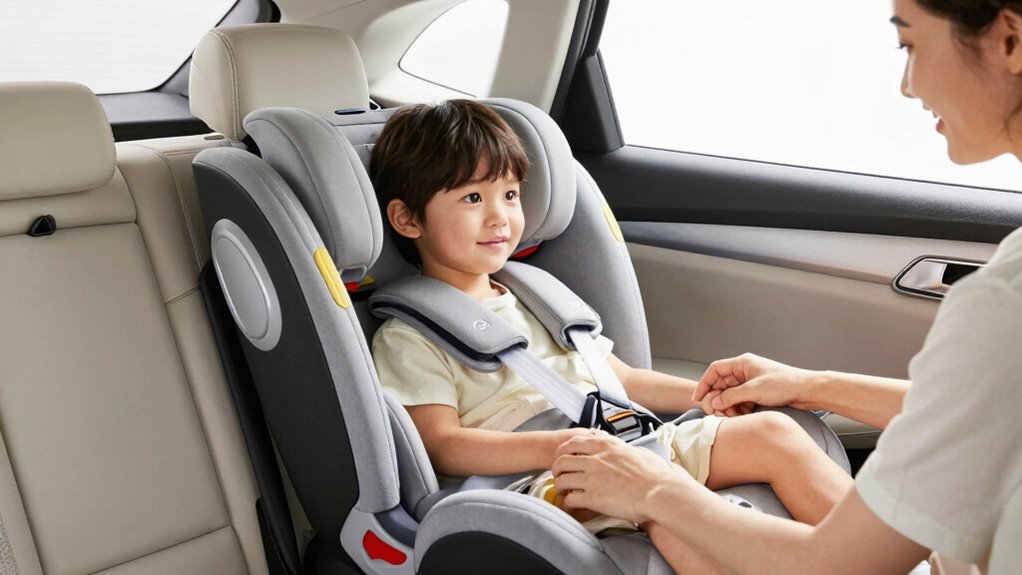
Ensuring your child’s car seat fits correctly is vital for their safety and comfort. When you verify the fit, you help prevent injuries in case of an accident and ensure your child remains secure. Car seat accessories, like padding or harness covers, can improve comfort but shouldn’t interfere with proper installation or fit. Child safety regulations set strict standards for car seat performance, making correct fit essential to meet these guidelines. A poorly fitted seat can compromise safety, increasing the risk of injury. Regularly checking the fit ensures your child remains protected as they grow. Proper installation techniques are crucial to ensure the seat’s effectiveness and safety. Additionally, being aware of warning signs of improper fit can help you identify issues before they become unsafe. By paying attention to how the seat fits and using approved accessories appropriately, you’re actively safeguarding your child’s well-being during every journey.

Bucklebee Easy Car Seat Buckle Release Aid for Children Unbuckle Car Seat Release Tool – Button Pusher – Opener for Nails – Buckle Release (1 Pack Teal)
Proven product designed to reduce the unbuckling force for a child or caregiver. Car seat buckle release tool…
As an affiliate, we earn on qualifying purchases.
As an affiliate, we earn on qualifying purchases.
How Your Child’s Size and Growth Impact Seat Fit

Your child’s height and weight determine when they outgrow their current seat. As they grow, you’ll need to adjust straps properly to guarantee a snug, safe fit. Be aware of growth spurts that can quickly change their size and impact seat fit, so regular checks are essential. Incorporating inclusive casting in your selection process can help ensure the seat suits children of diverse sizes and shapes. Additionally, understanding growth patterns can aid in predicting when adjustments might be necessary, promoting ongoing safety and comfort. Recognizing developmental milestones can also help anticipate changes in your child’s size and ensure continued proper fit. Staying informed about survival gear can also help parents be prepared for emergencies while managing your child’s safety needs. Monitoring water safety tips is crucial for parents to prevent accidents during poolside activities or aquatic outings.
Height and Weight Limits
How does your child’s size influence the fit of a convertible car seat? Your child’s height and weight determine whether they meet the seat’s specified limits, which is essential for proper seat belt positioning. Car seat labels clearly indicate these limits, helping you decide if the seat is appropriate. If your child exceeds the maximum weight or height, they won’t fit safely, and the seat won’t provide paramount protection. Conversely, if they’re below the minimums, the seat may not fit correctly or offer proper restraint. Always check the labels and confirm your child’s measurements fall within the recommended ranges. Proper sizing guarantees the seat fits securely and the seat belt functions as intended, keeping your child safe during every ride. Regularly reassessing your child’s growth and understanding HRV insights can help you stay informed about safe and effective car seat use. Additionally, understanding Car seat labels is vital to ensure compliance with safety standards and optimize fit.
Adjusting Straps Properly
As your child grows, adjusting the car seat straps becomes vital to maintain a secure and proper fit. Ensure the harness snugness is just right—snug enough that you can’t pinch excess strap at the shoulders but still comfortable. Proper strap positioning is essential; straps should lie flat without twists and be positioned at or just below your child’s shoulders in rear-facing seats, and at or just above in forward-facing seats. Regularly check the fit each time you install the seat, especially as your child gains weight or height. If the straps are too loose, your child won’t be protected in a crash. Tighten the straps accordingly, and always double-check that the harness is snug and correctly positioned for maximum safety and comfort. child growth patterns can help caregivers anticipate when adjustments are necessary to maintain optimal safety, ensuring the seat continues to fit correctly as your child develops. Additionally, understanding community-based safety practices influenced by Indigenous culture can enhance safety initiatives tailored to specific communities and traditions. Maintaining proper strap fit is crucial, as proper adjustment ensures the harness performs effectively during an accident. Incorporating regular safety checks into your routine can further improve your child’s protection and comfort in the car.
Growth Spurts and Fit
Growth spurts can quickly change your child’s size, making it necessary to regularly reassess the fit of their convertible car seat. As your child grows, the seat padding may become less effective at providing comfort and safety. Check that the head support still fits snugly without forcing their head forward or leaving gaps. Proper head support is essential for protecting against side impacts and maintaining correct posture. If your child’s head is pressing against the seat padding or if there’s noticeable looseness, it’s time to adjust or upgrade the seat. Remember, a well-fitting seat adapts to growth, ensuring safety and comfort through every stage. Regularly verifying the fit keeps your child secure as they grow, preventing discomfort and potential safety issues. Proper seat fit is crucial for maximizing safety and comfort during every growth phase. Additionally, understanding child safety standards can help you select the best seat for your child’s changing needs. Monitoring growth measurements can also assist in ensuring the seat remains appropriate for your child’s current size. Staying informed about connected safety features can further enhance your child’s protection as they grow. Keeping track of seat adjustment guidelines can help you ensure the seat remains properly fitted over time.

JHKLS ISOFIX Interface Belt Latch Guide, 2 Pcs Car Seat ISOFIX Interface Buckle Fixed Guide Groove Car Seat Bracket Connector, Black
【ISOFIX Interface Belt Latch Guide】Suitable for most models in the current market (Connect the child seat bracket and…
As an affiliate, we earn on qualifying purchases.
As an affiliate, we earn on qualifying purchases.
Positioning Your Child Correctly in a Convertible Car Seat

Properly positioning your child in a convertible car seat is essential for their safety and comfort. First, verify the harness straps are at or slightly below your child’s shoulders in rear-facing mode and at or above in forward-facing mode. The straps should lie flat without twists, and the chest clip should be at armpit level. Using appropriate car seat accessories, like padding or harness covers, can improve seating comfort and help achieve a snug fit. Make sure your child’s legs have enough room to move comfortably, and their hips sit deep into the seat. Adjust the harness snugly so you can’t pinch any excess webbing at the shoulder. Correct positioning reduces the risk of injury and ensures your child is both safe and comfortable during the ride. Additionally, regularly checking the tightness of the harness ensures continued protection as your child grows. Being aware of seat positioning tips can further enhance safety and comfort for your child. Paying close attention to proper seat adjustment can help prevent common installation errors and maximize safety. Remember that the proper seat installation is crucial for optimal protection and should be checked regularly to maintain safety standards.

Pro Goleem Car Seat Head Support Infant, Soft Infant Car Seat Insert, 2 in 1 Carseat Head Support for Newborn, Perfect for Car Seat, Stroller, Swing, Bouncer, Gray and Black
[Support Head and Neck for Baby] The infant car seat head support give support to the head and…
As an affiliate, we earn on qualifying purchases.
As an affiliate, we earn on qualifying purchases.
How to Check Your Car Seat’s Installation for Safety
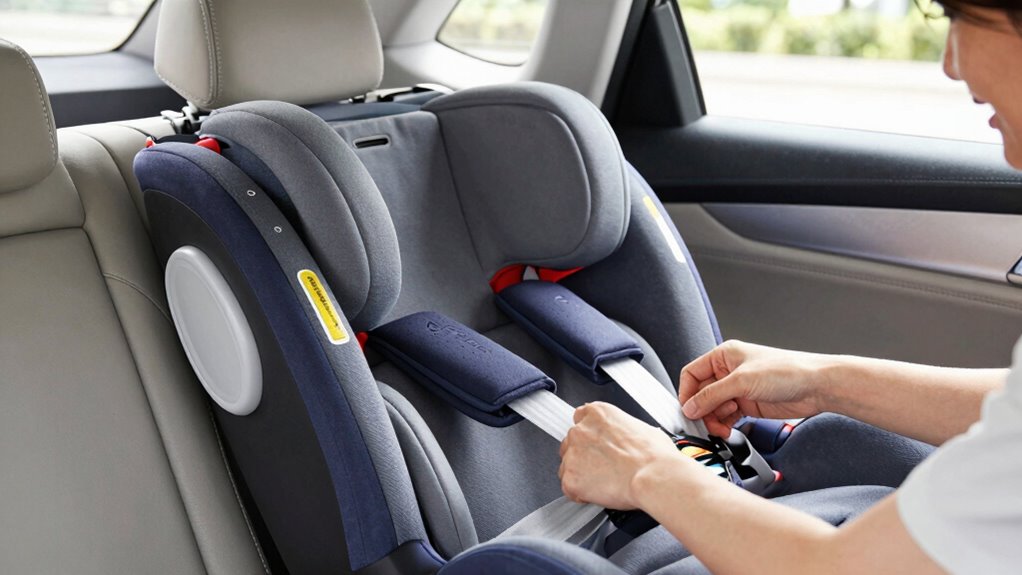
Ensuring your car seat is installed correctly is crucial for your child’s safety. Start by checking the vehicle compatibility, as different cars may require specific installation methods or accessories. Use the car seat accessories, such as level indicators or locking clips, to confirm proper fit and stability. Make sure the seat doesn’t wiggle more than an inch side to side or front to back when tested at the belt path. Double-check that the harness system is snug and the seat is tightly secured using either the seat belt or LATCH system. After installation, give the seat a firm shake to ensure it stays firmly in place. Regularly revisit these checks, especially after adjusting the seat or changing vehicles, to keep your child safe on every trip.
Ensuring the Harness Fits Snugly and Comfortably

A secure harness is essential for your child’s safety and comfort during every ride. To ensure the harness fits snugly, adjust it so that you can’t pinch any excess fabric at the shoulder and it lies flat against your child’s chest. Comfort depends on fabric choices; soft, breathable materials prevent irritation. Color options can also help you easily distinguish the harness from other car seat components. Use the table below to compare key features:
| Feature | Details |
|---|---|
| Fabric choices | Breathable, hypoallergenic fabrics |
| Fit adjustment | Tight but snug, no slack |
| Color options | Bright or neutral for visibility |
Always double-check the harness fit after adjustments for maximum safety and comfort. Proper harness fit is vital for ensuring your child’s protection in case of sudden stops or accidents. Additionally, regularly inspecting the harness and its components helps maintain optimal safety standards.
Common Mistakes That Could Put Your Child at Risk

Even a small mistake in installing or adjusting the car seat can compromise your child’s safety. For example, neglecting regular car seat cleaning can lead to buildup of dirt and debris, reducing the seat’s effectiveness and comfort. Incorrectly securing the harness or misaligning the seat can increase the risk of injury during a crash. Using travel accessories without proper installation can also be dangerous, as they might interfere with the seat’s safety features. Always double-check the seat’s position and tightness, and follow the manufacturer’s instructions carefully. Avoid rushing through these steps, and don’t forget to clean the seat periodically to maintain safety and hygiene. Staying vigilant reduces risks and ensures your child’s protection on every trip.
Best Tools and Tips for Checking Your Car Seat Fit
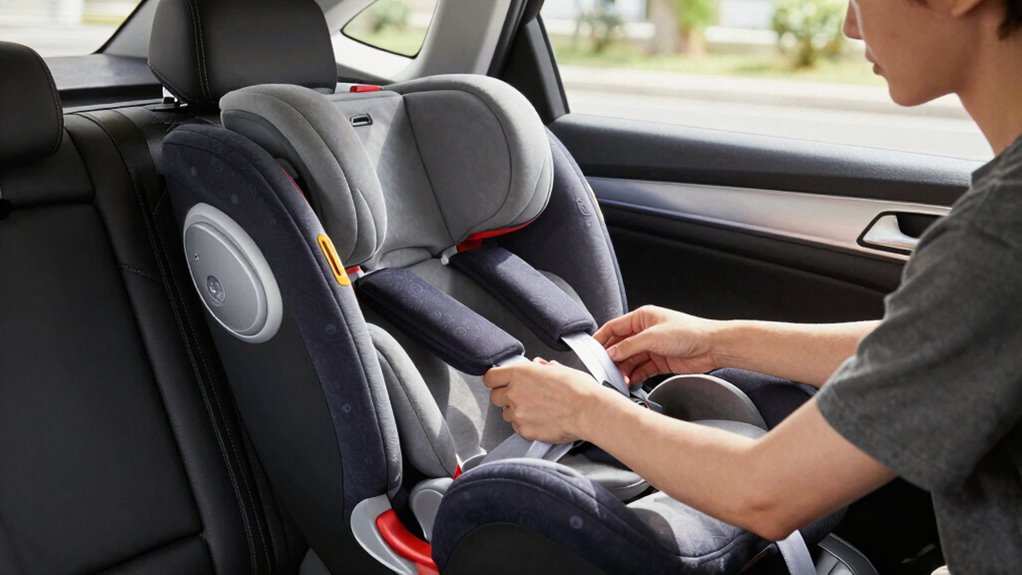
To make sure your child’s car seat fits correctly, using the right tools and following key tips can make all the difference. Start with a car seat level indicator or a bubble level app to ensure proper angle. Keep a tape measure handy to check harness tightness—should be snug but not uncomfortable. Use car seat accessories like foam padding or harness covers to improve fit and comfort if needed. Always verify that the seat meets child safety standards by checking for certification labels. Additionally, consult the vehicle’s owner manual for specific fitting instructions. Remember, a proper fit isn’t just about comfort; it’s about safety and compliance with child safety standards. These tools and tips help prevent misfits that could compromise your child’s safety.
How to Adjust the Seat as Your Child Grows
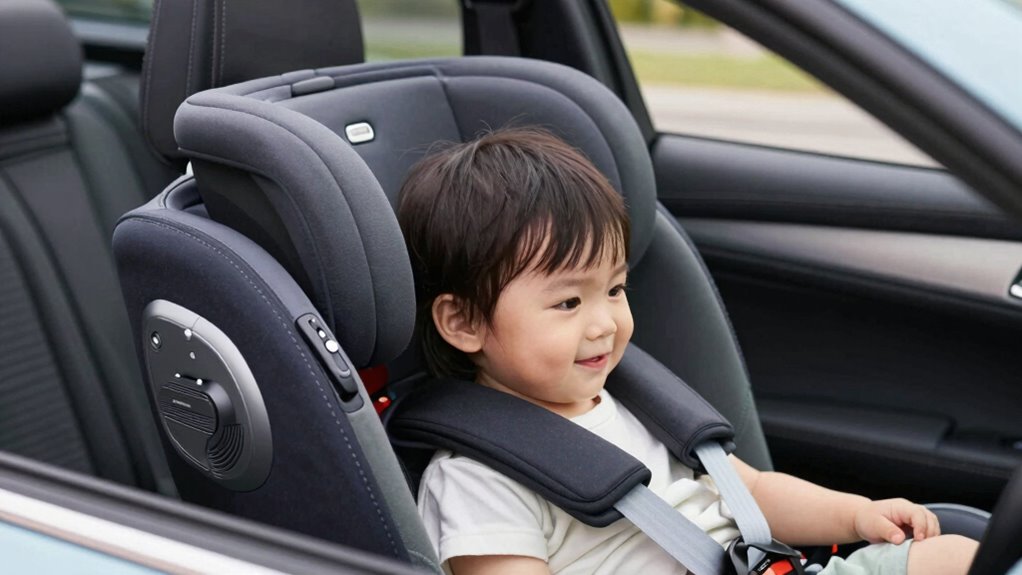
As your child grows, adjusting the car seat is essential to maintain safety and comfort. Child growth means the seat needs regular modifications to ensure proper fit. First, check the harness height; it should be at or just above your child’s shoulders for forward-facing seats, and at or below for rear-facing. Make seat adjustments by loosening the harness, repositioning it in the correct slots, and then tightening it securely. When your child’s height or weight changes, also adjust the seat’s recline angle or headrest, if applicable. Always double-check that the harness straps lie flat against your child’s chest and are snug enough to prevent slipping. Regular seat adjustments keep your child protected and comfortable as they grow.
Evaluating Fit Differences in Various Vehicle Types

Different vehicle types can considerably influence how a convertible car seat fits and functions. Your vehicle’s size, shape, and seat angles affect vehicle compatibility and how easily you can achieve proper seat positioning. For example, compact cars may have limited space, making installation tricky, while larger SUVs offer more room for adjustments. When evaluating fit differences, consider:
- The shape and contour of the vehicle seat, affecting stability and comfort
- The presence of seat belts or LATCH anchors that impact installation ease
- The angle of the seat, which influences how well the car seat sits and reclines for safety and comfort
Being aware of these factors helps ensure your convertible seat fits securely and correctly, reducing the risk of improper installation and enhancing your child’s safety.
Why a Proper Fit Can Prevent Returns and Keep Your Child Safe
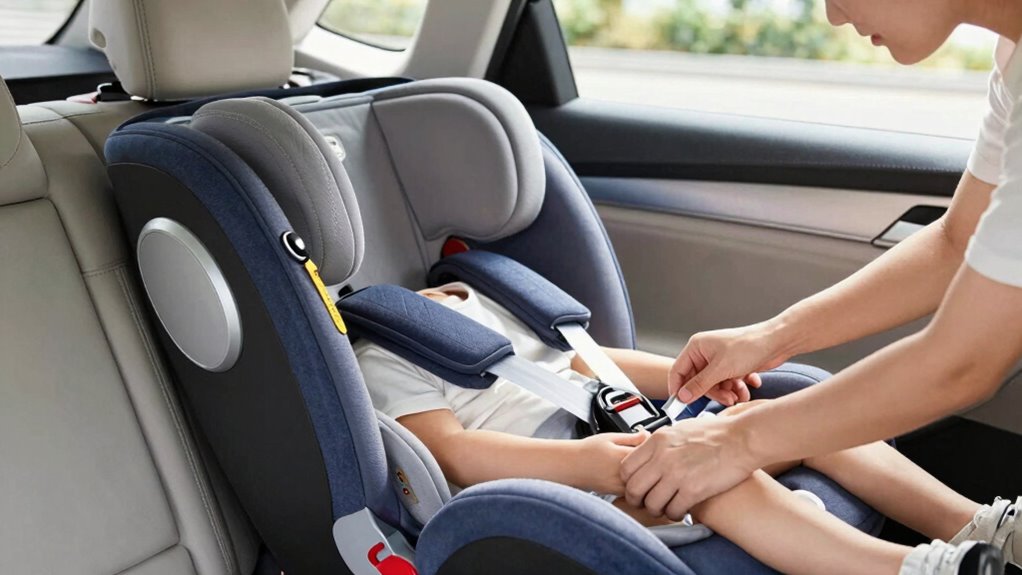
A proper fit guarantees your child’s safety and can prevent unnecessary returns. You need to check that the seat is aligned correctly, the harness is snug, and the installation is secure. Paying attention to these details helps keep your child safe and avoids costly mistakes.
Ensuring Proper Seat Alignment
Ensuring your child’s convertible car seat is properly aligned is essential for their safety and comfort. A well-aligned seat prevents unnecessary movement and guarantees the harness sits correctly against your child’s body. Proper seat padding helps provide a snug fit, reducing gaps that could compromise protection. Make sure the harness positioning is at the correct height—usually at or just below the shoulders for rear-facing and at or above for forward-facing. Check that the seat base is flush against the vehicle seat, avoiding any tilting or gaps. Keeping these elements aligned minimizes the risk of injury in an accident and prevents the need for returns due to improper fit.
- Adjust seat padding to eliminate gaps and improve comfort
- Verify harness positioning is at the correct height for your child
- Ensure the seat base sits flush against the vehicle seat
Checking Harness Tightness
Checking the harness tightness is a key step in making sure your child’s car seat provides maximum safety. You want to verify the harness snugness is firm enough that you can’t pinch any slack at the shoulder. A loose harness can increase the risk of injury during a sudden stop or crash. Proper seat positioning also plays a role; the harness should be at the correct height for your child’s size, and the chest clip should sit at armpit level. Double-check that the straps lie flat and are not twisted. When correctly secured, the harness should keep your child snugly in place without causing discomfort. Regularly inspecting harness tightness helps prevent unnecessary returns and keeps your little one safe on every trip.
Confirming Correct Installation
Proper installation of your child’s car seat is essential for safety and can prevent costly returns or adjustments later on. To confirm correct installation, start by checking that the seat is securely anchored using the vehicle’s seat belt or LATCH system, ensuring minimal movement. Confirm that the car seat materials are in good condition and free of damage, as worn or damaged parts can compromise safety. Use the installation accessories, like level indicators or tether straps, to ensure the seat is at the correct angle and tightly secured.
- Verify that the seat does not move more than an inch side-to-side or front-to-back
- Double-check that all straps and latches are properly engaged
- Consult the manufacturer’s instructions for specific fit and safety guidelines
Frequently Asked Questions
How Often Should I Recheck My Child’s Car Seat Fit?
You should recheck your child’s car seat fit every few months or whenever there’s a significant change, like growth or a new car. During each check, make certain the seat belt adjustment is snug and the car seat installation remains secure. Regularly verifying the fit helps prevent safety issues and ensures your child is protected. Don’t forget to do a quick fit check before each trip for peace of mind.
What Signs Indicate My Child’s Seat Is Not Fitting Properly?
You’ll notice if your child’s seat isn’t fitting properly when the seat belt isn’t positioned correctly—should sit snug across the shoulder and chest, not the neck or face. Check if seat padding adjustments are needed; too much or too little padding can affect fit. Also, make sure the seat doesn’t move more than an inch side to side or front to back when secured, indicating a loose fit.
Can Seat Fit Vary Between Different Car Models?
You might think seat fit is the same across all cars, but car model compatibility definitely varies. Different vehicles have unique interior shapes and seat angles, influencing how well a convertible seat fits. To guarantee safety, you should try seat fit adjustments tailored to your car’s specific model. Always test the seat in your vehicle before final installation, and consult your car’s manual or manufacturer for compatibility tips.
Are There Specific Tools to Measure Seat Fit Accurately?
Yes, there are specific tools to gauge seat fit accurately. You can use a flexible tape measure for precise seat measurement, making sure the car seat fits snugly and securely. Some manufacturers also offer fit verification tools or sizing guides to help you confirm compatibility. Always double-check the measurements against the car seat’s specifications, as this ensures proper fit and safety, preventing uncomfortable or unsafe installations.
How Do I Know if the Harness Tension Is Correct?
Imagine you’re a tech whiz fixing a vintage radio—checking harness snugness is just as precise. You should feel a firm but comfortable hold, with no slack or pinching. When seated, adjust the seat positioning if needed, then test by trying to pinch the harness at the child’s shoulder; if you can’t, it’s snug enough. Proper seat positioning and harness tension keep your child safe and secure.
Conclusion
When you take the time to check your child’s car seat fit, you’re not just avoiding returns—you’re safeguarding their life. Proper fit is the ultimate shield against accidents, giving you peace of mind in every trip. Think of it as a magic armor that grows with your child, ensuring safety and comfort at every stage. Never underestimate the power of a well-fitted seat—it’s the most important investment you’ll make for your child’s future.