
Wi-Fi slowdowns happen because of interference from other devices, outdated hardware, network congestion, or poor settings. Common causes include crowded channels, thick walls, or multiple devices competing for bandwidth. Fixes like switching to less crowded channels, repositioning your router, updating firmware, or reducing interference can boost speed. If these simple steps don’t help, upgrading your hardware or internet plan might be necessary. Keep exploring to uncover more ways to improve your connection.

Get health and wellness essentials delivered free — and shop member deals
- Fast, free delivery on millions of items
- Access to Prime Big Deal Days deals on October 6–7
- Prime Video, Amazon Music and more included
Key Takeaways
- Wi-Fi slowdowns often result from channel congestion, interference, or outdated hardware and firmware.
- Environmental obstacles like thick walls or electronic devices can weaken Wi-Fi signals and cause slow connections.
- Overloaded networks with multiple devices sharing bandwidth reduce speed and stability.
- Using less crowded channels and switching to 5 GHz frequency can improve performance.
- Upgrading routers, updating firmware, or optimizing placement are simple fixes to enhance Wi-Fi speed.
Wi-Fi router with dual band 5GHz
As an affiliate, we earn on qualifying purchases.
As an affiliate, we earn on qualifying purchases.
Signs Your Wi-Fi Is Slow and How to Recognize Them
If your internet feels sluggish or your devices are taking longer than usual to load pages, it’s a clear sign that your Wi-Fi might be slow. One key indicator is poor signal strength, which causes spotty connections or frequent drops. If your devices struggle to maintain a stable connection or load websites quickly, it’s a sign of weak signal strength. Additionally, check device compatibility—older devices may not support the latest Wi-Fi standards, resulting in slower speeds. If some devices work fine while others lag, it could be due to compatibility issues. Recognizing these signs helps you identify whether your Wi-Fi is underperforming and whether upgrading your router or adjusting device settings might improve your connection. Understanding network performance can help you better troubleshoot and optimize your setup. Moreover, knowing the importance of contrast ratio in image quality can be applied to your network’s clarity, helping you understand how different factors affect overall performance. Regularly monitoring your network’s signal strength can prevent prolonged issues and ensure a smoother internet experience. Additionally, paying attention to interference sources such as other wireless devices or thick walls can significantly impact your Wi-Fi’s speed and reliability. Being aware of channel congestion in your area can also help you choose less crowded frequencies for better performance.
As an affiliate, we earn on qualifying purchases.
How Router Settings Affect Your Wi-Fi Speed
Your router settings play a crucial role in determining your Wi-Fi speed, as they control how data is transmitted between your devices and the internet. Ensuring your router firmware is up to date is essential because updates fix bugs, improve stability, and enhance performance. Outdated firmware can slow down your connection or cause dropouts. Additionally, channel selection directly impacts speed; if your router operates on a congested channel, interference from neighboring networks can reduce your Wi-Fi performance. Manually choosing a less crowded channel can markedly improve bandwidth. Regularly monitoring your network helps identify issues early and ensures optimal performance. Keeping your firmware up-to-date is an important part of maintaining your network’s health, as outdated firmware can lead to slower speeds. Using proper network management techniques can further optimize your Wi-Fi setup and prevent potential issues. Properly maintaining your router’s firmware and selecting the right channel are simple yet effective steps to maximize your Wi-Fi’s potential. Additionally, understanding wireless standards can help you choose the best settings for your devices and improve overall speed. Regularly reviewing your network configuration can prevent unnecessary slowdowns and keep your Wi-Fi running smoothly.
As an affiliate, we earn on qualifying purchases.
Wi-Fi Interference: Causes and How to Reduce It
Wi-Fi interference occurs when other electronic devices or networks disrupt the signal between your router and connected devices, causing slower speeds and dropped connections. This wireless interference often results from devices like cordless phones, microwaves, or neighboring Wi-Fi networks operating nearby. A common cause is frequency overlap, where multiple networks or devices use the same or overlapping channels, leading to signal congestion. To reduce interference, switch your router to a less crowded channel, especially on the 2.4 GHz band, or upgrade to a dual-band router that can operate on the clearer 5 GHz frequency. Keep electronic devices away from your router, and consider using Wi-Fi analyzers to identify sources of interference. Managing wireless interference can *considerably* improve your Wi-Fi stability and speed, especially when you identify sources of interference using specialized tools. Additionally, understanding frequency management can help optimize your network setup for better performance, as research shows that proper channel selection can significantly reduce signal congestion. Implementing interference mitigation strategies is also essential for maintaining a reliable connection.
As an affiliate, we earn on qualifying purchases.
Why Devices Using Bandwidth Can Slow Down Your Wi-Fi

Devices that use a lot of bandwidth can substantially slow down your Wi-Fi connection because they consume a large portion of the available data stream. These bandwidth hogs, like streaming videos or large downloads, can choke your network, leaving less for other devices. To manage this, device prioritization becomes essential; it allows you to allocate bandwidth to critical tasks while limiting less important ones. The table below shows common bandwidth hogs and their typical impact:
| Device Type | Bandwidth Usage | Effect on Wi-Fi |
|---|---|---|
| Streaming Video Apps | High | Slows browsing, gaming |
| Large Downloads | Very High | Causes lag |
| Cloud Backup Services | Moderate | Slight slowdown |
| Video Conferencing | Moderate | Potential lag |
| Smart Home Devices | Low | Minimal impact |
Prioritizing devices helps keep your Wi-Fi running smoothly despite bandwidth hogs. Additionally, understanding these bandwidth hogs can help you optimize your network and prevent slowdowns. Managing bandwidth consumption effectively is key to maintaining a stable and fast Wi-Fi connection.
How Network Congestion Impacts Your Wi-Fi Performance
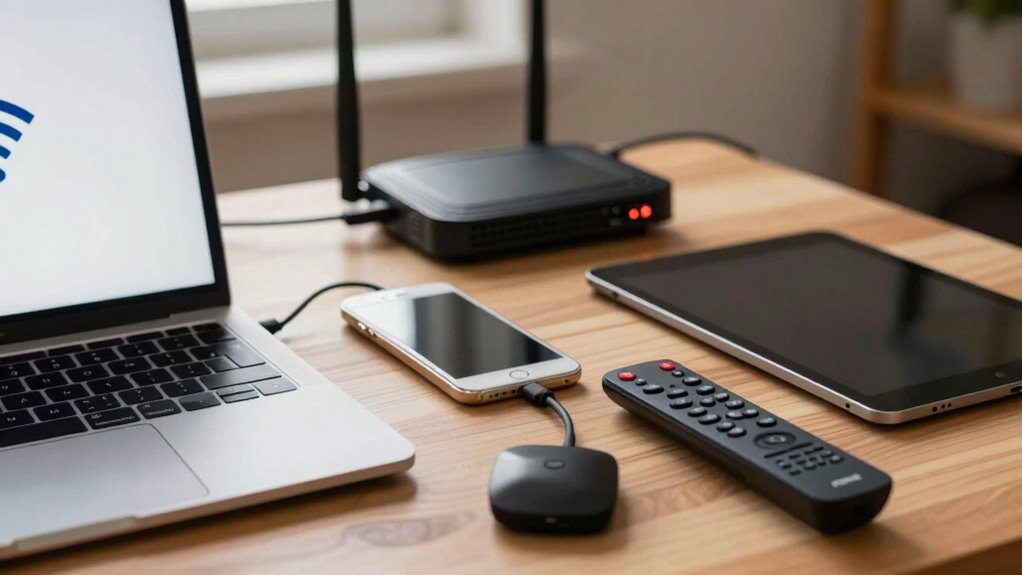
When multiple devices and applications compete for bandwidth simultaneously, network congestion occurs, markedly slowing down your internet speeds. High channel load happens when many devices connect to the same Wi-Fi network, forcing bandwidth sharing among them. This increased demand reduces the available bandwidth for each device, causing lag and buffering. As more devices stream videos, download files, or play online games, the network becomes overwhelmed, leading to slower performance. Congestion especially impacts crowded environments like homes with many users or offices with numerous connected devices. To improve your Wi-Fi speed, reducing the number of active devices or optimizing your router’s channel settings can help lower channel load and ease bandwidth sharing. Implementing network management techniques can also help prioritize critical devices and applications, ensuring smoother connectivity for everyone. Optimizing your Wi-Fi channels can further reduce interference from neighboring networks, enhancing overall speed and stability. Using quality of service (QoS) settings on your router can assign priority to essential devices, further alleviating congestion issues. Additionally, selecting a battery inverter generator with appropriate capacity can ensure your network devices remain powered during outages, maintaining consistent performance and reducing disruptions. Properly managing Wi-Fi interference from other electronic devices can also significantly improve your connection quality. This way, everyone gets a fairer share of the network’s resources.
Easy Ways to Boost Your Wi-Fi Speed at Home or Office
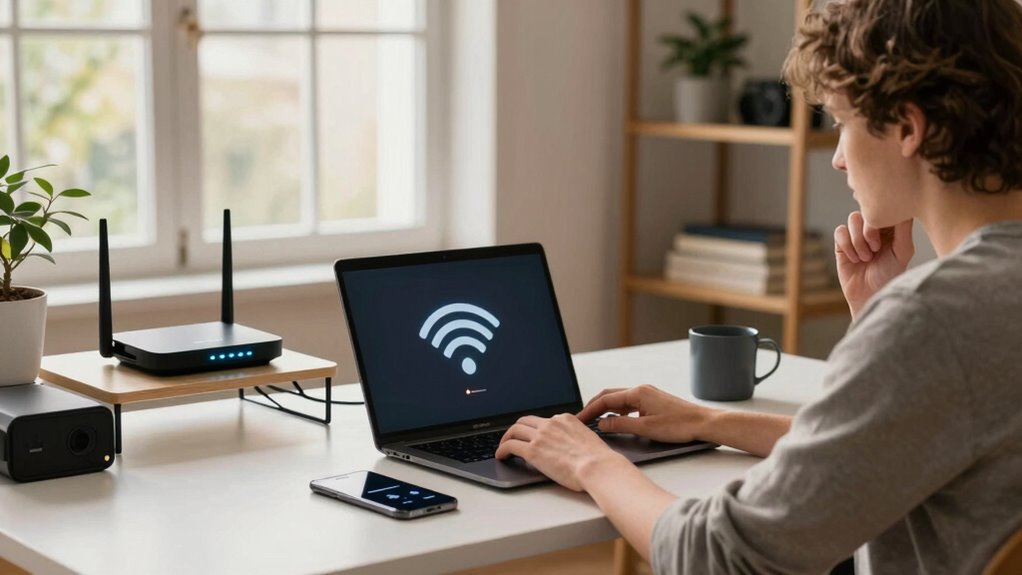
To improve your Wi-Fi speed, start by optimizing your router’s placement—position it centrally and off the floor. Reduce wireless interference by keeping other electronics and thick walls away from your router. These simple adjustments can make a noticeable difference in your connection quality. Additionally, choosing the right location can prevent common issues caused by physical barriers that weaken signal strength, much like selecting durable best woods for farmhouse tables to ensure longevity. Being aware of molecular-scale circuit challenges can also help you understand how small environmental factors impact signal efficiency at the microscopic level. Incorporating mindful practices such as yoga and meditation can help reduce stress caused by connectivity issues, promoting a calmer approach to troubleshooting. Recognizing the importance of free floating systems in your network setup can further optimize performance by minimizing interference and signal loss.
Optimize Router Placement
Optimizing your router placement is one of the simplest and most effective ways to improve your Wi-Fi speed. Proper router placement directly impacts signal strength, which determines how well your devices connect. Keep your router in a central location, elevated off the floor, and away from walls or large metal objects that can block signals. Avoid placing it near appliances or thick furniture that could interfere with the wireless signal. Positioning your router in a open, high spot helps distribute the signal evenly throughout your space, reducing dead zones. This simple adjustment can considerably boost your Wi-Fi performance, ensuring faster speeds and more reliable connections. Remember, the better your router’s placement, the stronger your Wi-Fi signal and the smoother your internet experience.
Reduce Wireless Interference
Have you noticed your Wi-Fi slowing down when multiple devices are in use? Wireless interference is often the culprit, especially if your network shares a crowded frequency band. Devices like cordless phones, microwaves, and neighboring Wi-Fi networks can disrupt your signal. To reduce wireless interference, try switching your router to a less congested frequency band, such as moving from 2.4 GHz to 5 GHz. This band is typically less crowded and offers faster speeds. Also, keep your router away from other electronic devices and thick walls that can cause signal clashes. Minimizing interference helps your Wi-Fi operate smoothly, providing faster, more reliable connections for all your devices. Simple adjustments like these can considerably boost your home or office Wi-Fi performance.
Should You Upgrade Your Router or Switch Internet Plans?
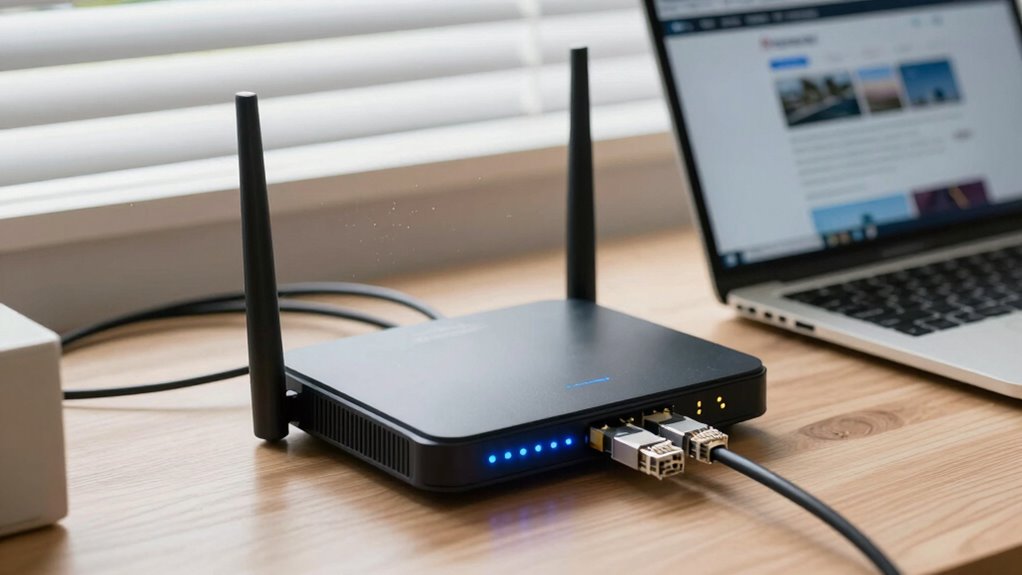
If your Wi-Fi speeds are consistently slow despite troubleshooting, upgrading your router or switching to a higher-tier internet plan could be the solution. A fiber upgrade can dramatically boost your connection, especially if you’re still on DSL or cable. Before making a decision, do a plan comparison to see what options are available in your area. Sometimes, a new router with the latest Wi-Fi standards can improve speed and coverage without changing your plan. However, if your current plan is limited or outdated, upgrading to a faster plan might be more effective. Consider your needs and budget carefully—sometimes a simple router upgrade suffices, but other times, a plan change provides the necessary bandwidth for smooth, reliable Wi-Fi.
Troubleshooting Persistent Wi-Fi Slowdowns: Next Steps
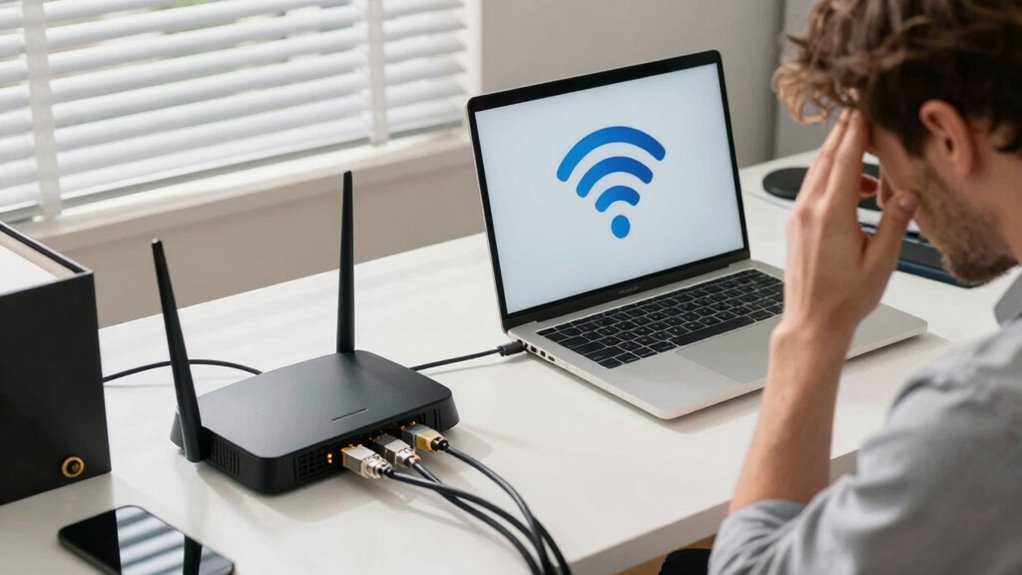
When upgrading your router or switching internet plans doesn’t resolve slow Wi-Fi issues, it’s time to take a more systematic approach. First, check for channel congestion by using tools like Wi-Fi analyzers to identify less crowded channels. Switching your router to a less congested channel can substantially improve speed. Next, verify your router’s firmware is up to date; manufacturers often release updates that fix bugs and enhance performance. Restart your router after updating to ensure changes take effect. If problems persist, try relocating your router to a central, open spot to reduce interference. These steps address common issues that cause persistent slowdowns, helping you optimize your Wi-Fi network without unnecessary replacements or upgrades.
Frequently Asked Questions
How Can I Identify if My Wi-Fi Issue Is Hardware or Software Related?
To identify if your Wi-Fi issue is hardware or software related, start with hardware diagnostics by checking your router and modem for physical damage or overheating. Then, perform software troubleshooting by restarting your device, updating network drivers, and resetting network settings. If the problem persists after software fixes, it’s likely hardware-related. This approach helps you pinpoint the cause and choose the right solution efficiently.
What Are Some Hidden Sources of Wi-Fi Interference in My Home?
Did you know that over 50% of Wi-Fi issues stem from hidden interference sources? Microwave ovens can disrupt your signal when in use, especially if they’re near your router. Additionally, neighboring networks often cause congestion, leading to slower speeds. To fix this, move your router away from appliances and close to your devices, and change your Wi-Fi channel to avoid overlapping with nearby networks for improved performance.
How Does the Number of Connected Devices Impact Wi-Fi Speed?
When many devices connect to your Wi-Fi, device congestion occurs, which slows down your internet speed. Each device shares bandwidth, so the more devices active, the less bandwidth available for each. This reduces overall speed and causes buffering or delays. To improve performance, limit the number of connected devices during heavy usage or upgrade your router to handle more connections efficiently, ensuring smoother internet for everyone.
Can Malware or Background Apps Slow Down My Wi-Fi Connection?
Malware impact can considerably slow down your Wi-Fi because it uses bandwidth and system resources without your knowledge. Background apps also eat up your connection, running updates or syncing data unnoticed. These hidden processes reduce your available bandwidth, causing sluggish speeds. To fix this, scan your device for malware and close unnecessary background apps. Regular maintenance and security checks keep your Wi-Fi fast and protect your device from slowdowns caused by malicious activity.
What Advanced Tools Are Available to Diagnose Wi-Fi Network Problems?
Think of diagnosing Wi-Fi issues like a detective piecing together clues. You can use advanced tools like network analysis to monitor traffic and identify bottlenecks, or signal mapping to visualize coverage gaps. These tools help you pinpoint interference or weak spots, giving you a clear picture of your network’s health. With this insight, you can optimize your setup and fix slowdowns more effectively and efficiently.
Conclusion
By understanding these Wi-Fi slowdowns, you can troubleshoot like a pro and keep your connection running smoothly. Think of your Wi-Fi as a busy highway—sometimes it needs a little traffic control to stay clear. With simple fixes and smart upgrades, you’ll clear the congestion and enjoy faster internet. Don’t let slow Wi-Fi hold you back; take control and keep your digital world flowing seamlessly like a well-oiled machine.
Fall Picks
fall essentials
As an affiliate, we earn on qualifying purchases.