
TL;DR

Get health and wellness essentials delivered free with Prime
- Fast, free delivery on millions of items
- Prime Video, Amazon Music and more included
- Member-only deals all year
SINTEF researcher Sandra Klonteig says neurotechnology may eventually help identify brain activity patterns linked to anxiety and depression and show whether treatments are working. The report describes research approaches such as eye-tracking and non-invasive brain measurements, but does not report a validated diagnostic tool or clinical trial showing improved outcomes.
SINTEF research scientist Sandra Klonteig says neurotechnology could eventually help doctors identify brain changes associated with anxiety and depression and assess whether a treatment is working. The development is a research prospect, not a report of a new approved test or treatment: the methods described are being studied to better understand brain activity and mental health.
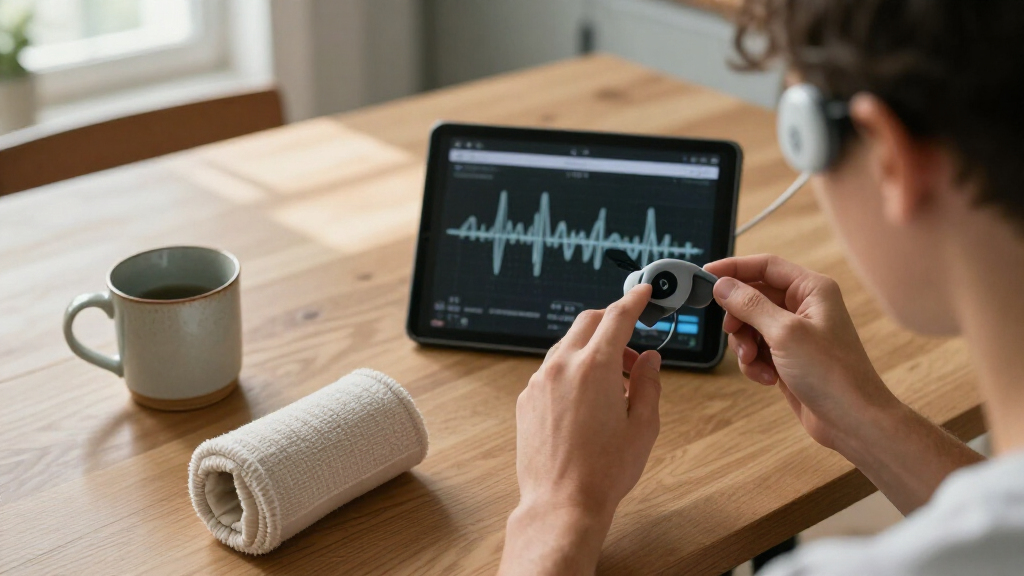
Klonteig, who works at SINTEF Digital and pursued her doctorate at OsloMet, studies the brain using sensors and neurotechnology. The field includes methods to measure brain activity and, in some applications, to influence or regulate it. The report focuses on assessment and research into mental health rather than a specific device ready for routine clinical use.
One method discussed is functional near-infrared spectroscopy (fNIRS), which measures changes in blood flow that can indicate which brain areas are active. The report also describes eye-tracking as a way to study attentional bias: how a person directs attention toward negative or threatening information. Researchers are also examining functional brain networks, or how different regions communicate.
Klonteig said biological changes may appear before clinical signs are visible. In principle, measurements could help clinicians see earlier whether a treatment is having an effect, including when symptoms have not yet changed, or indicate that another approach may be needed. The source does not give evidence that these methods can currently make such decisions reliably for individual patients.
Could Shorten Treatment Guesswork
Anxiety and depression affect many people, and finding a suitable treatment can take time. The World Health Organization reports that more than one billion people are living with mental health disorders; anxiety and depression are among the most common. If future tools can reliably track relevant biological changes, clinicians might gain information beyond a patient’s reported symptoms when evaluating care.
That possibility matters because a clearer indication of whether a treatment is helping could reduce prolonged uncertainty and support more individualized decisions. Klonteig framed this as potential, not a demonstrated benefit. The report provides no clinical outcome data, accuracy figures or evidence that neurotechnology-led treatment selection improves recovery.
non-invasive brain activity sensors for mental health
As an affiliate, we earn on qualifying purchases.
As an affiliate, we earn on qualifying purchases.
From Brain Signals to Care
The report places this work within a wider, rapidly developing neurotechnology field. Research cited includes non-invasive measurements of brain activity, implantable chips tested in mice, studies of new drugs for neurodegenerative disease, and the use of artificial intelligence in stroke detection. These examples cover different conditions and stages of research; they do not establish that the same techniques are ready for anxiety or depression care.
Klonteig’s approach centers on measuring brain activity without invasive procedures. She said sensor-equipped headgear is more practical for broad research than brain procedures performed on every patient. The underlying scientific task is to determine which brain patterns relate meaningfully to mental disorders and whether those patterns can inform clinical decisions.
“The potential within neurotechnology is too significant to ignore. This is where the solutions of the future lie.”
— Sandra Klonteig, research scientist at SINTEF
eye-tracking devices for anxiety and depression
As an affiliate, we earn on qualifying purchases.
As an affiliate, we earn on qualifying purchases.
Clinical Evidence Still Needed
The report does not identify a specific neurotechnology system that has been validated to diagnose anxiety or depression, predict an individual’s response to treatment, or guide routine care. It also gives no study size, accuracy measures, clinical trial results or timeline for deployment. The precise brain mechanisms behind these disorders remain an area of research, according to Klonteig.
It is also unclear how researchers would distinguish signals linked to a particular disorder from other influences on brain activity, or how measurements would be applied across different patients and treatments. The proposed benefits should therefore be understood as goals for future research, not established results or a replacement for clinical assessment.
functional near-infrared spectroscopy (fNIRS) device
As an affiliate, we earn on qualifying purchases.
As an affiliate, we earn on qualifying purchases.
Research Must Test Clinical Use
The next step described in the report is to improve understanding of brain mechanisms associated with anxiety and depression and develop ways to measure them. SINTEF’s work includes non-invasive sensor-based approaches. Further studies would need to establish whether the signals are consistent, useful for treatment decisions and capable of improving patient outcomes before such methods could be relied on in ordinary care.
No specific trial date, product launch or regulatory milestone is provided. For now, the development remains research into how brain measurements might complement existing assessment and treatment, with its practical value still to be tested.
brain monitoring wearable for mental health
As an affiliate, we earn on qualifying purchases.
As an affiliate, we earn on qualifying purchases.
Key Questions
Is there a new neurotechnology treatment for anxiety or depression?
No new treatment is announced in the report. It describes research into measuring brain activity that may eventually help clinicians understand disorders or assess treatment response.
What technologies are researchers studying?
The report mentions fNIRS, which tracks changes in blood flow in the brain, eye-tracking to study attention, and analysis of functional brain networks. It also discusses non-invasive sensor-equipped headgear.
Can these tools show whether a treatment is working now?
The report presents this as a possible future use. It does not provide evidence that the methods currently make reliable treatment decisions for individual patients.
When could neurotechnology be used in routine mental health care?
No timeline is given. Researchers would first need to establish that measurements are reliable and that using them improves clinical decisions or patient outcomes.
Source: rss
Halloween Picks
halloween
As an affiliate, we earn on qualifying purchases.